How Many Days in Jiuzhaigou?
One full day is enough for the main national park highlights, but your complete trip should also allow time for the journey from Chengdu and, ideally, nearby Huanglong.

Plan your Jiuzhaigou trip with a practical guide to Jiuzhaigou National Park in northern Sichuan, including the Y-shaped three-valley route, park tickets, top lakes and waterfalls, the best time to visit, where to stay, and how to travel from Chengdu by high-speed train. Use this guide to build a 2–3 day trip combining Jiuzhaigou Valley with nearby Huanglong.
Plan a first trip to Jiuzhaigou with practical advice on how many days to stay, how to explore Jiuzhaigou National Park in one full day, when to visit, where to stay near the park entrance, how to arrive from Chengdu by high-speed train, and how to combine Jiuzhaigou with nearby Huanglong.
Allow one complete sightseeing day inside Jiuzhaigou National Park, using the park shuttle buses and walking paths to explore highlights across Rize Valley, Zechawa Valley and Shuzheng Valley. Add arrival and departure time around the park day, and include Huanglong if your schedule allows.
One full day is enough for the main national park highlights, but your complete trip should also allow time for the journey from Chengdu and, ideally, nearby Huanglong.
Autumn is famous for colorful forests reflected in turquoise lakes, while summer brings lush scenery and strong water flow. Spring and winter offer different landscapes and generally quieter travel periods.
Jiuzhaigou is arranged around three main valleys in a Y-shaped layout. Most first-time visitors combine shuttle buses with walking sections and focus on the strongest sights in all three valleys rather than walking the entire park.
Build a private trip around your train schedule, hotel location and travel pace, with station transfers, Jiuzhaigou sightseeing, Huanglong and optional extensions through Sichuan.
Next, understand the park's Y-shaped layout, the three valleys, sightseeing bus system, major lakes and waterfalls, ticket rules and the most efficient route for a first visit.
Jiuzhaigou Valley Scenic and Historic Interest Area is a UNESCO World Heritage Site in northern Sichuan's Aba Tibetan and Qiang Autonomous Prefecture, within the southern Minshan Mountains. Known for clear alpine lakes, waterfalls, forest ecosystems and karst landscapes, the park follows a distinctive Y-shaped sightseeing layout formed by Rize Valley, Zechawa Valley and Shuzheng Valley.
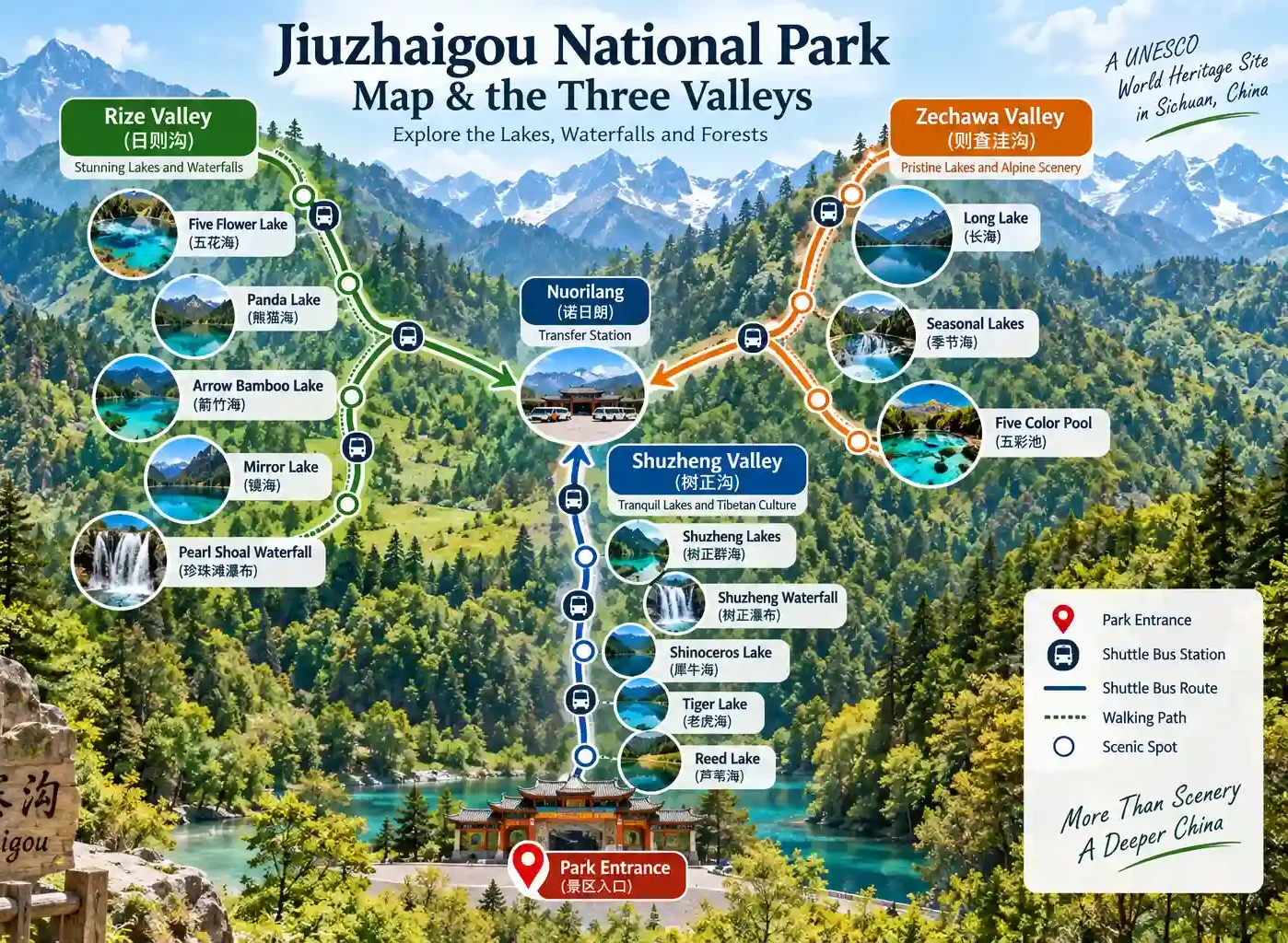
Shuzheng Valley forms the lower arm of Jiuzhaigou's Y-shaped sightseeing network, running from the park entrance toward the central Nuorilang area. From there, the route branches into Rize Valley and Zechawa Valley. Sightseeing buses cover the longer distances, while walking paths and boardwalks connect lakes, waterfalls, forests and scenic viewpoints throughout the three valleys.
Rize Valley contains many of Jiuzhaigou's most recognizable lakes and waterfalls. Key stops include Five Flower Lake, Mirror Lake, Panda Lake, Arrow Bamboo Lake and Pearl Shoal, making this valley an important part of most first-time Jiuzhaigou routes.
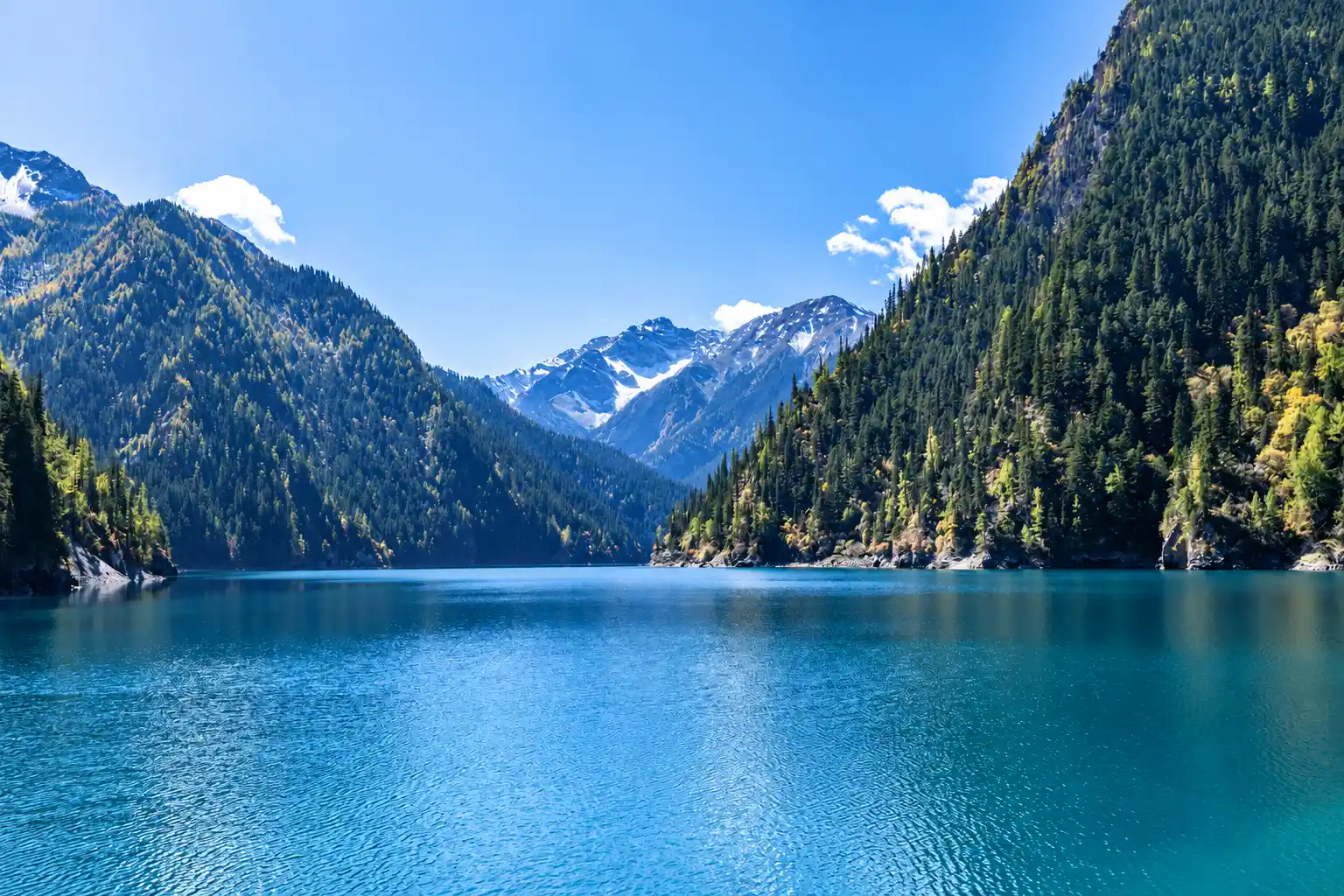
Zechawa Valley leads toward some of the park's highest sightseeing areas. Long Lake and Five-Color Pond are the principal highlights, while the Seasonal Lakes change noticeably with rainfall and water levels throughout the year.
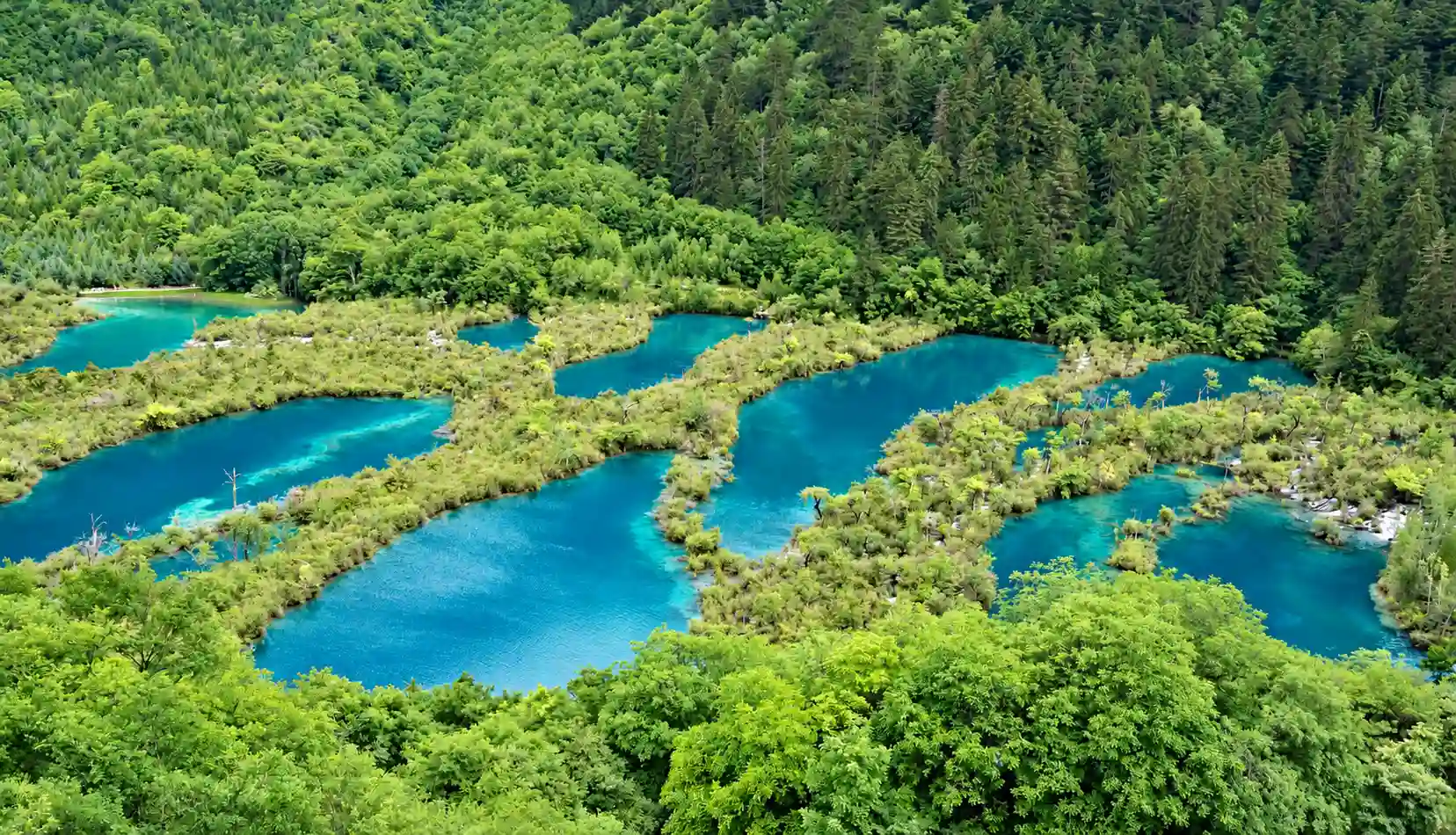
Shuzheng Valley runs between the park entrance and the Nuorilang area and contains a long sequence of lakes, waterfalls and forest scenery. Highlights include Rhinoceros Lake, Tiger Lake, Shuzheng Lakes, Sparkling Lake and Reed Lake.
No. Jiuzhaigou's sightseeing buses connect the main sections of the national park, so most visitors use the shuttle network for longer transfers and walk selected boardwalk sections between nearby lakes and waterfalls. This makes it possible to cover the three-valley highlights in one carefully planned sightseeing day.
Jiuzhaigou National Park uses dated, real-name reservations and daily visitor limits. Reserve your ticket through an official online booking channel before traveling to the valley, bring the original passport or identification document used for the reservation, and allow a full sightseeing day for the park.
Jiuzhaigou limits daily visitor numbers and popular dates can sell out before the travel day. Secure your dated reservation first, then coordinate your hotel, train, Huanglong visit and road transfers around that confirmed date.
Jiuzhaigou requires advance real-name reservations. Current official booking channels include the “Jiuzhaigou Tourism Official Platform” mini program on WeChat or Alipay. Do not depend on arriving at the entrance and purchasing a ticket on the spot.
International travelers should enter their passport details accurately when booking and carry the same original passport used for the reservation when entering the scenic area.
Jiuzhaigou covers three major valleys. Entering near the start of the day's admission period gives you much more flexibility for sightseeing-bus transfers, walking sections, lakes and waterfalls before the park closes.
Visitors explore Jiuzhaigou using the internal sightseeing bus network and designated walking paths rather than driving private vehicles between scenic stops. Follow the day's operating instructions because bus routing can change with visitor flow and park conditions.
Do not plan your trip around same-day ticket availability. Recent 2026 official notices require online reservations and repeatedly advise visitors not to travel without a confirmed booking. Popular autumn dates and Chinese public holidays can reach the daily visitor limit in advance.
Ticket prices, visitor limits and current peak-season entry information checked against Jiuzhaigou National Park official notices in September 2026. Operating hours, open scenic areas, visitor limits and booking procedures may change because of season, weather, safety conditions or temporary park notices. Recheck the latest official notice shortly before travel.
Jiuzhaigou's best-known attractions are spread across Rize, Zechawa and Shuzheng valleys. For a first visit, prioritize the most distinctive turquoise lakes, travertine waterfalls and layered lake systems rather than trying to stop at every scenic point inside the park.
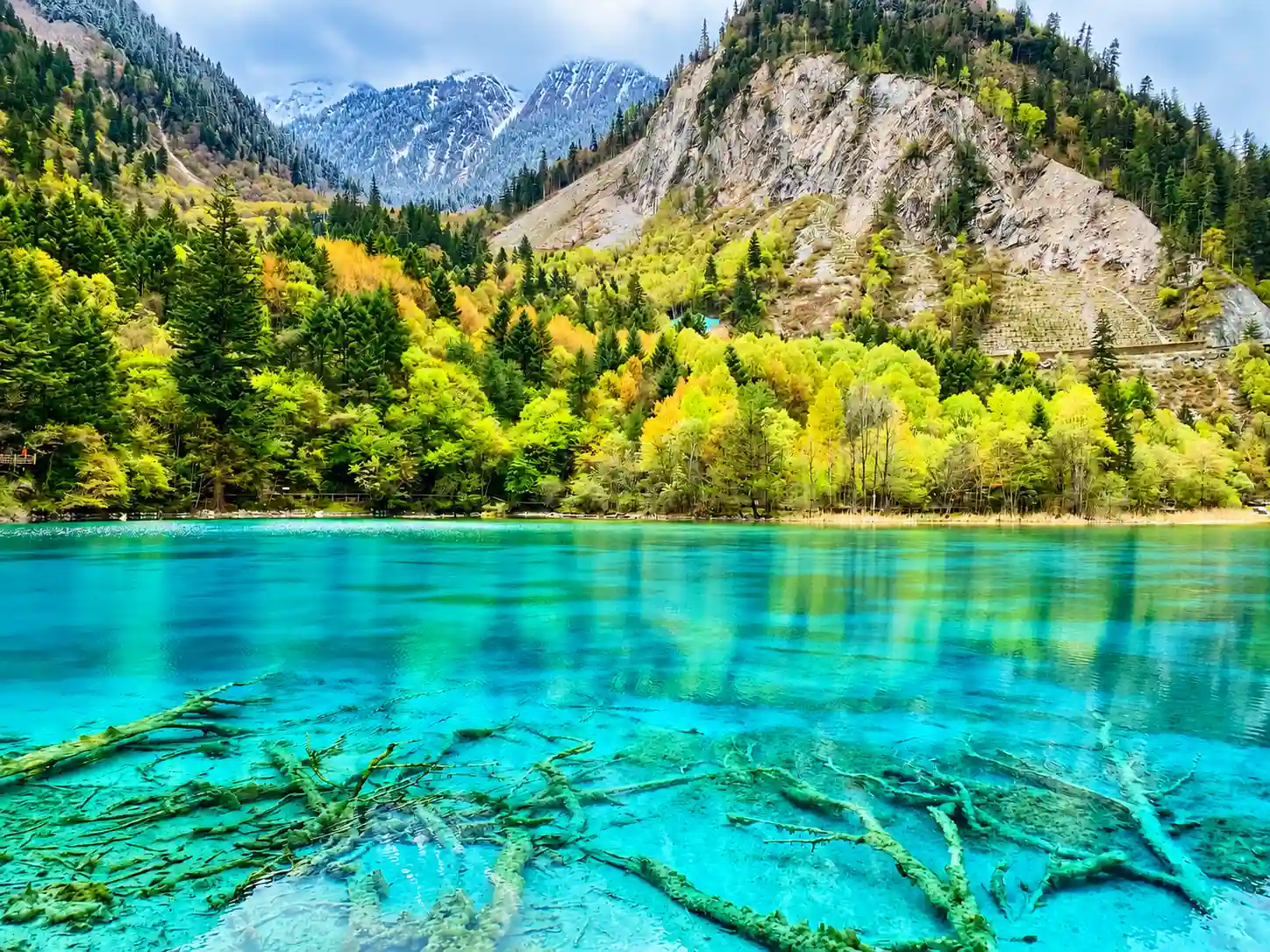
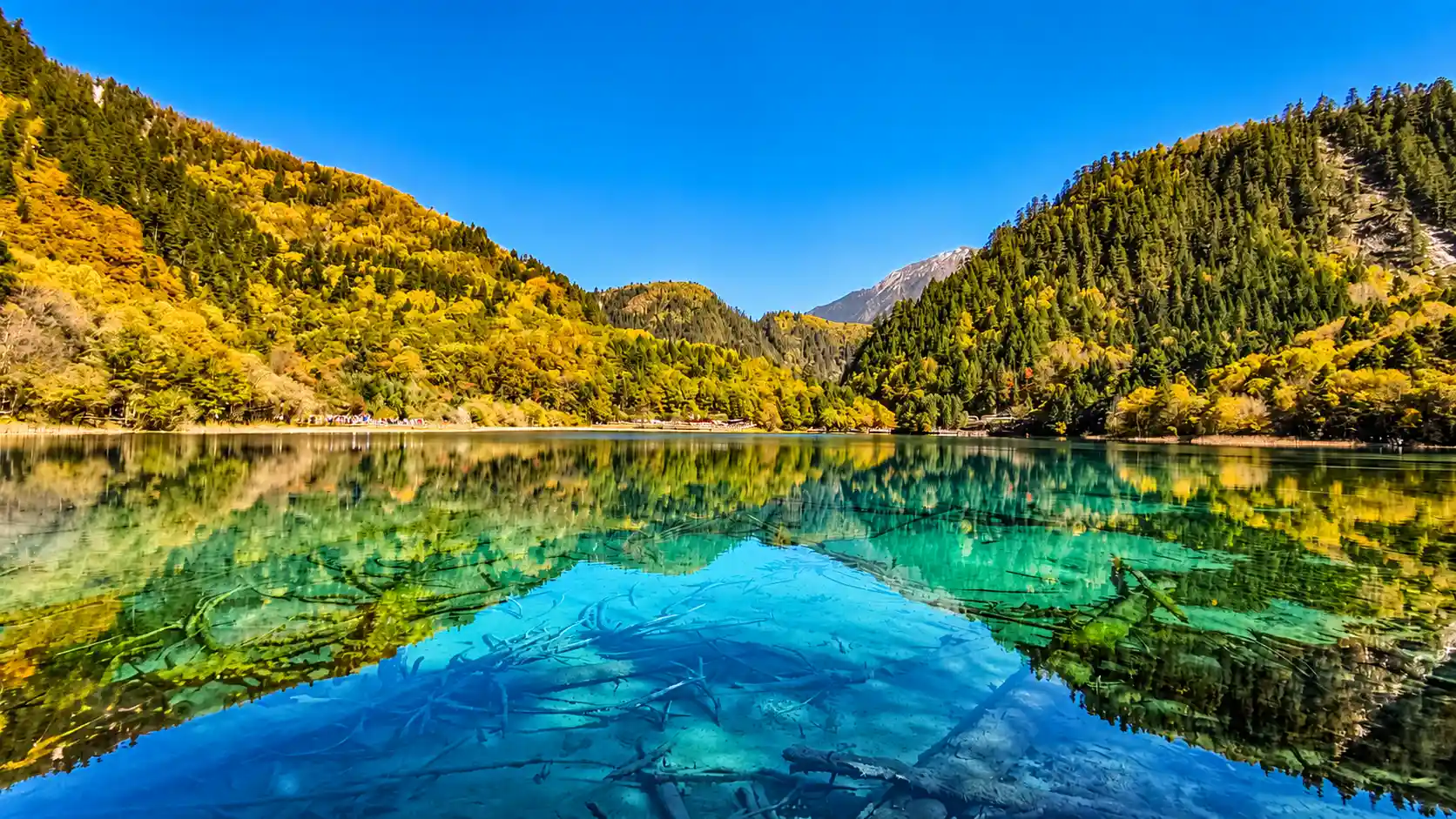
Five Flower Lake is one of Jiuzhaigou's most recognizable sights, known for exceptionally clear water and layers of turquoise, blue, green and yellow created by the lakebed, aquatic vegetation, surrounding forest and changing light. Located in Rize Valley, it is a priority stop on most first-time routes through the national park.
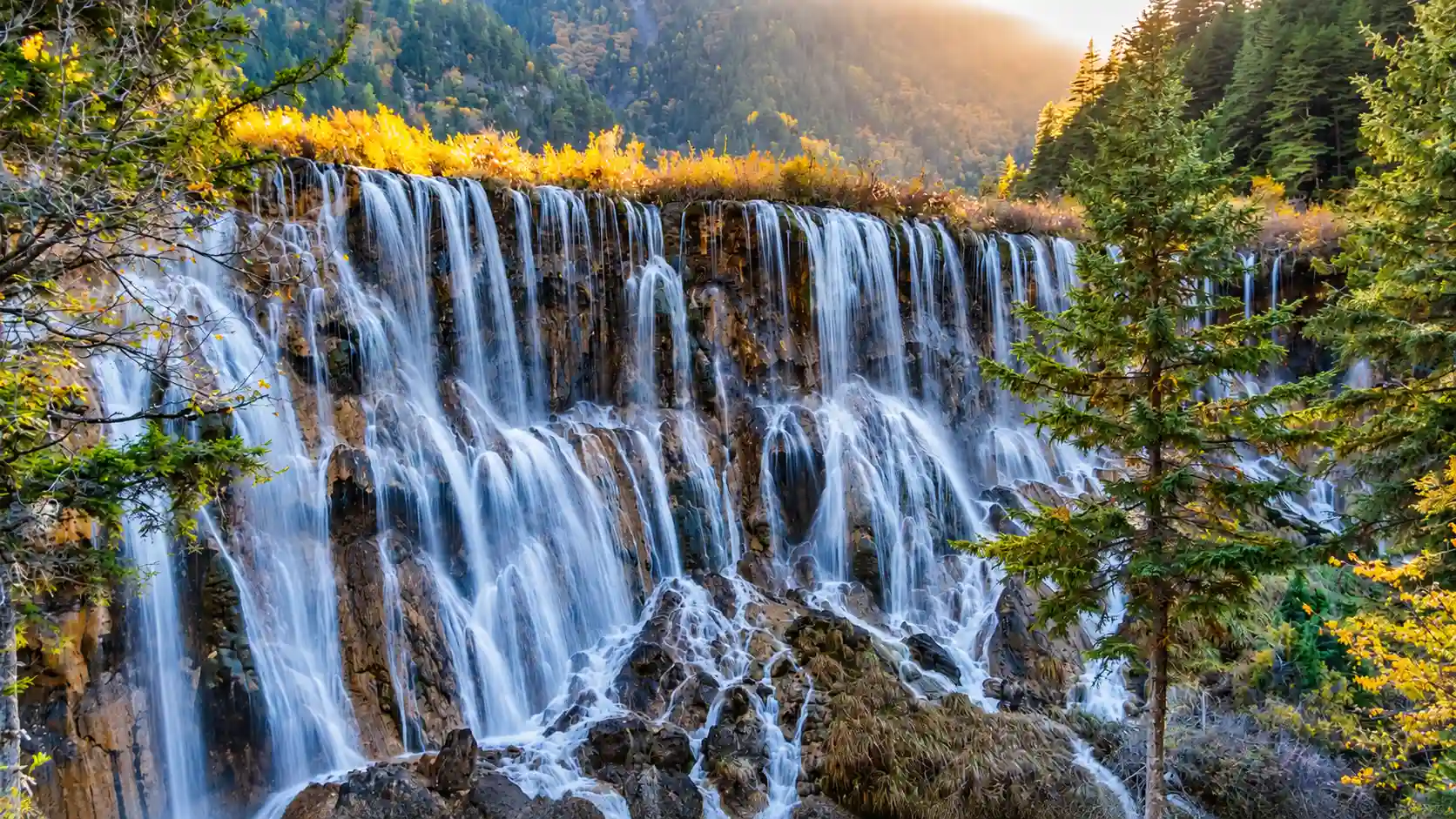
Near the central junction of Jiuzhaigou's main valleys, Nuorilang Waterfall spreads across a broad travertine escarpment. Its location near the park's central transport hub makes it one of the easiest major waterfalls to include in a full-day sightseeing route.
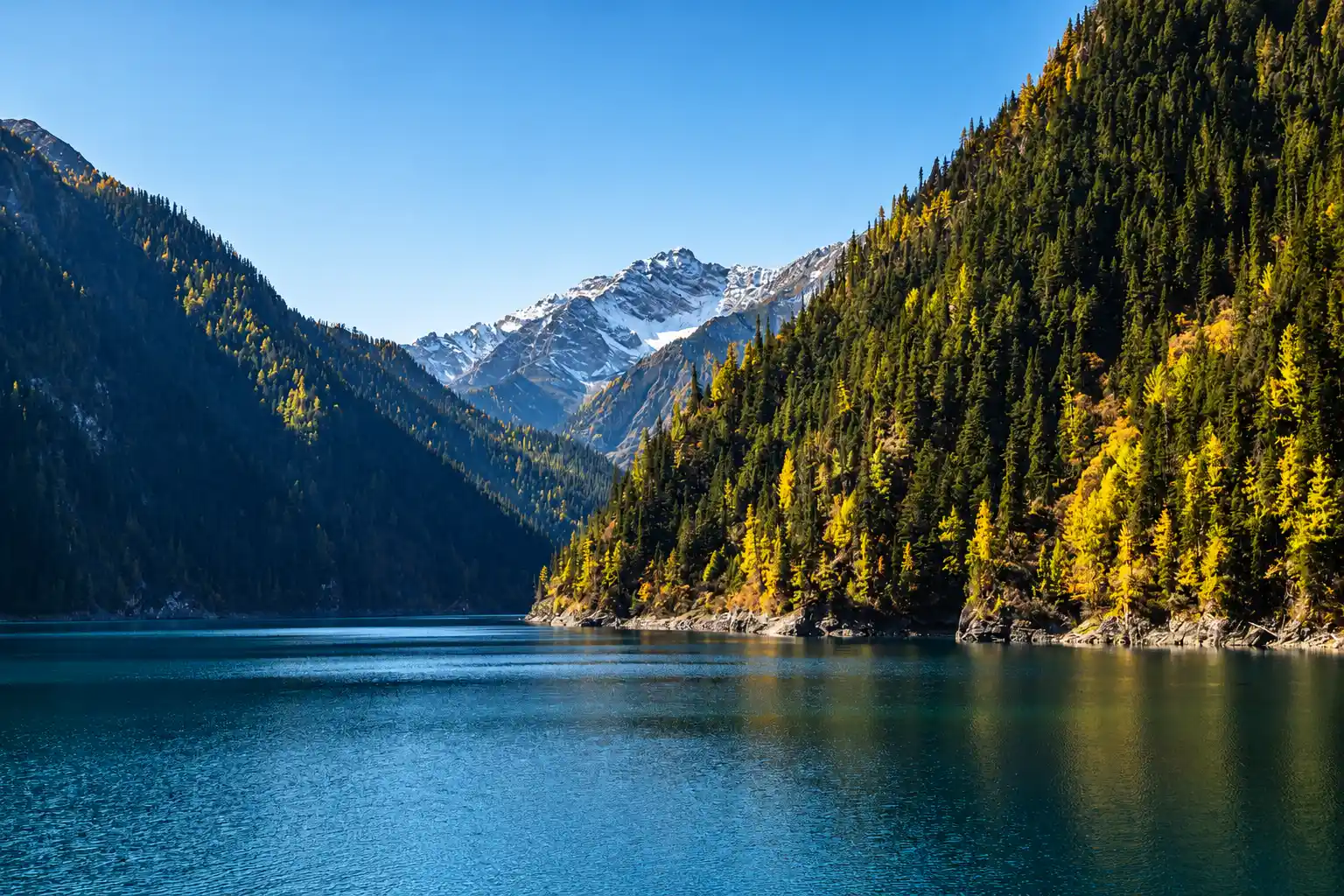
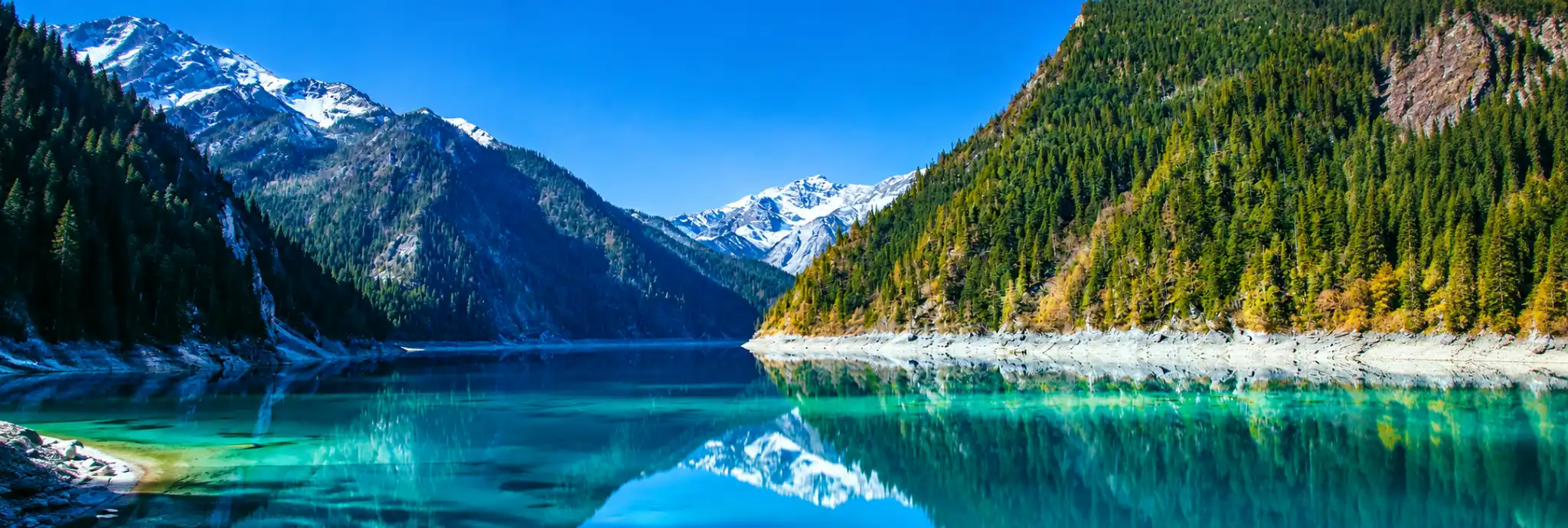
Long Lake sits at the upper end of Zechawa Valley and is Jiuzhaigou's highest, deepest and largest lake. Forested mountains surround the long alpine basin, creating a very different landscape from the smaller turquoise lakes lower in the park.
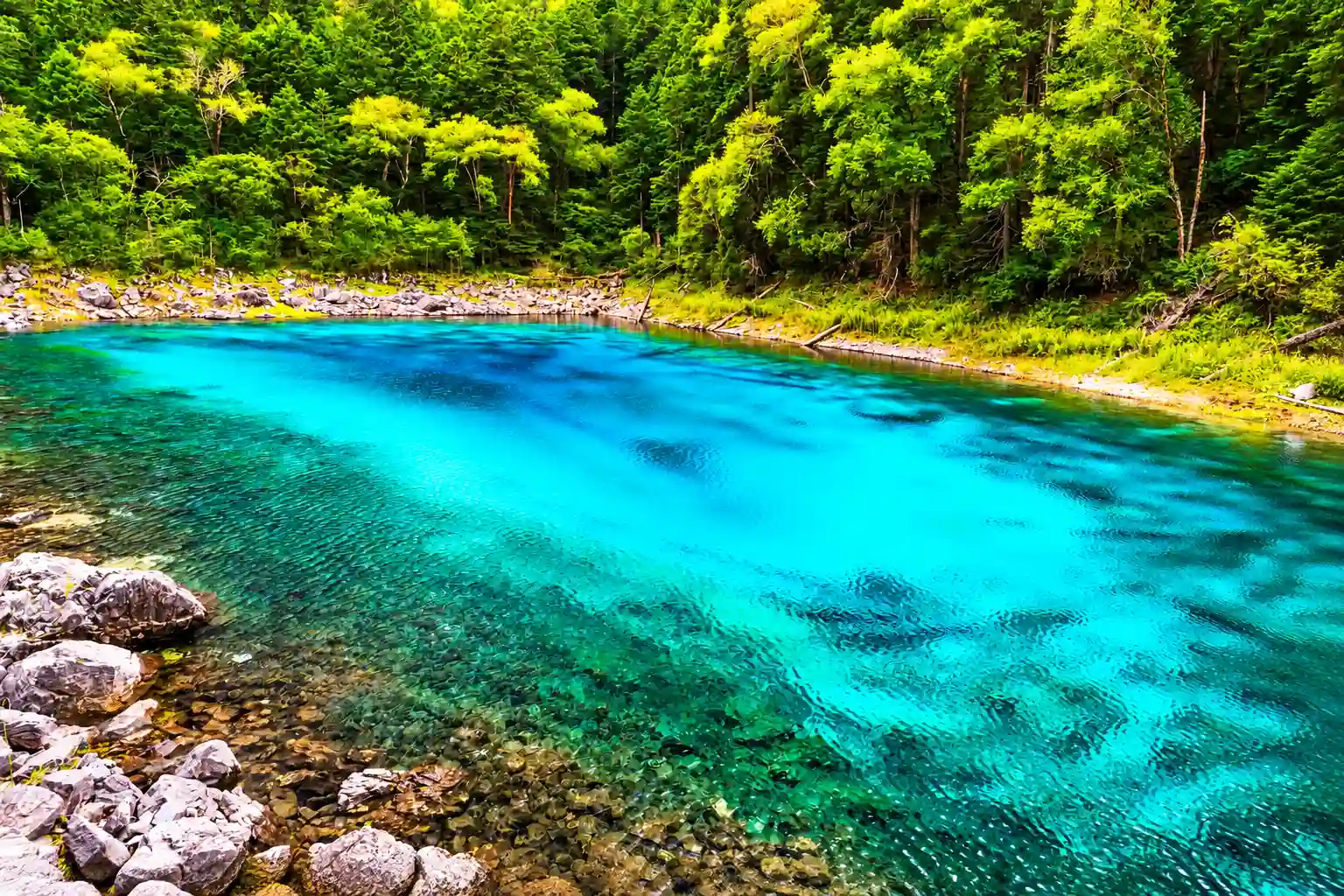
Small compared with Jiuzhaigou's larger lakes, Five-Color Pond stands out for intense blue, turquoise and green water. It lies below Long Lake in Zechawa Valley and is usually paired with Long Lake on the same sightseeing section.
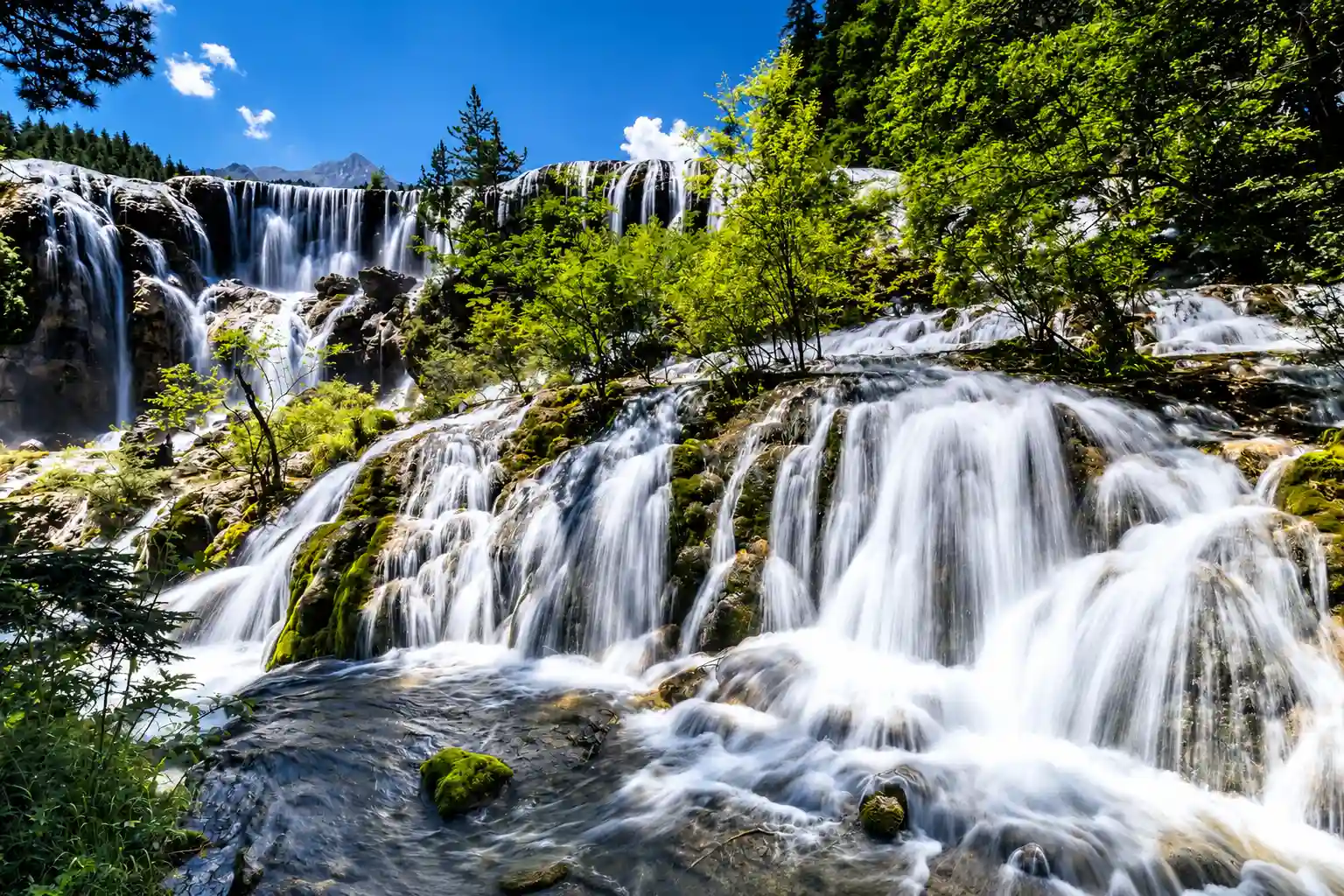
Water spreads across the broad travertine surface of Pearl Shoal before dropping into Pearl Shoal Waterfall below. The combination of fast-moving shallow water, forest and cascading falls makes this one of Rize Valley's strongest walking sections.
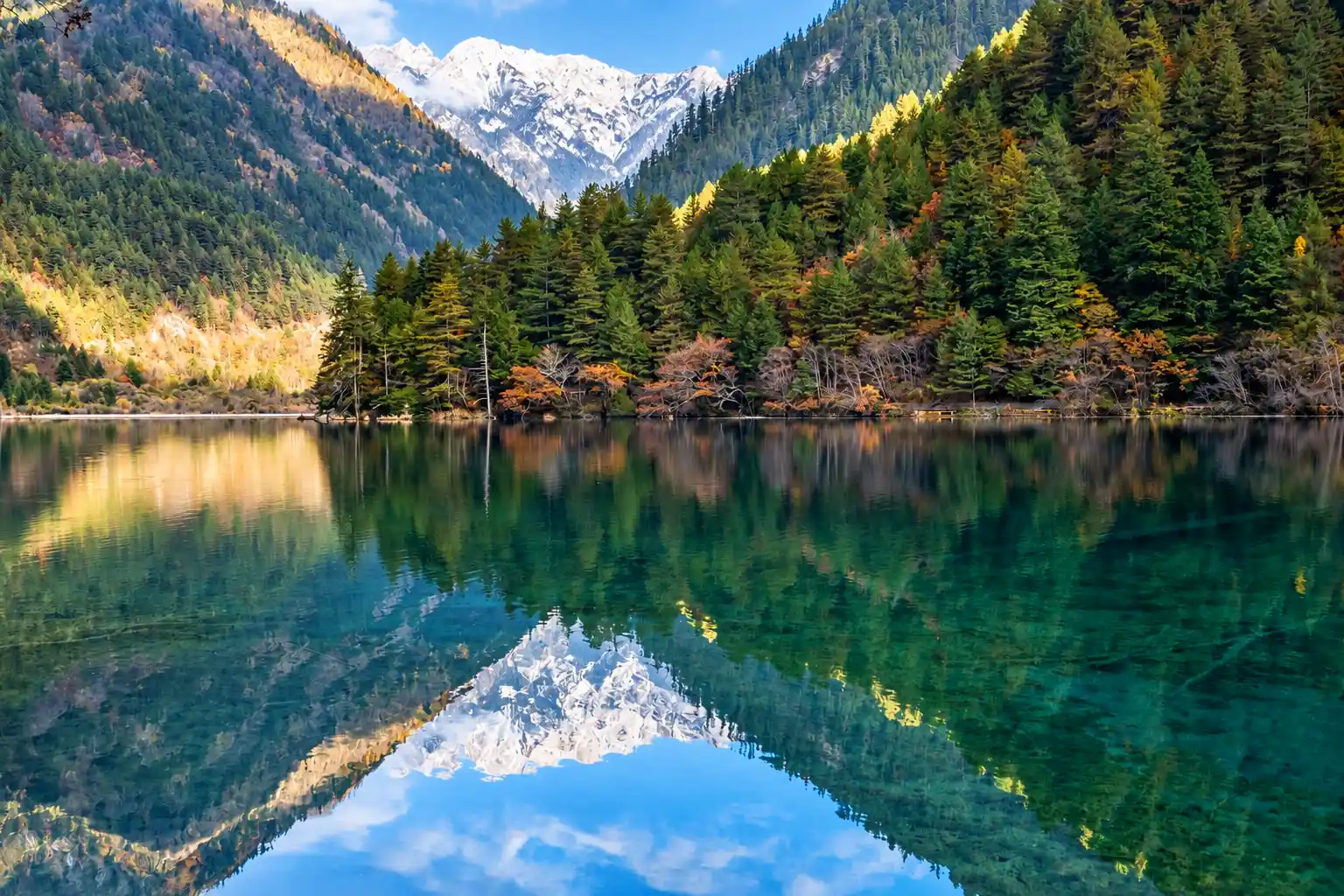
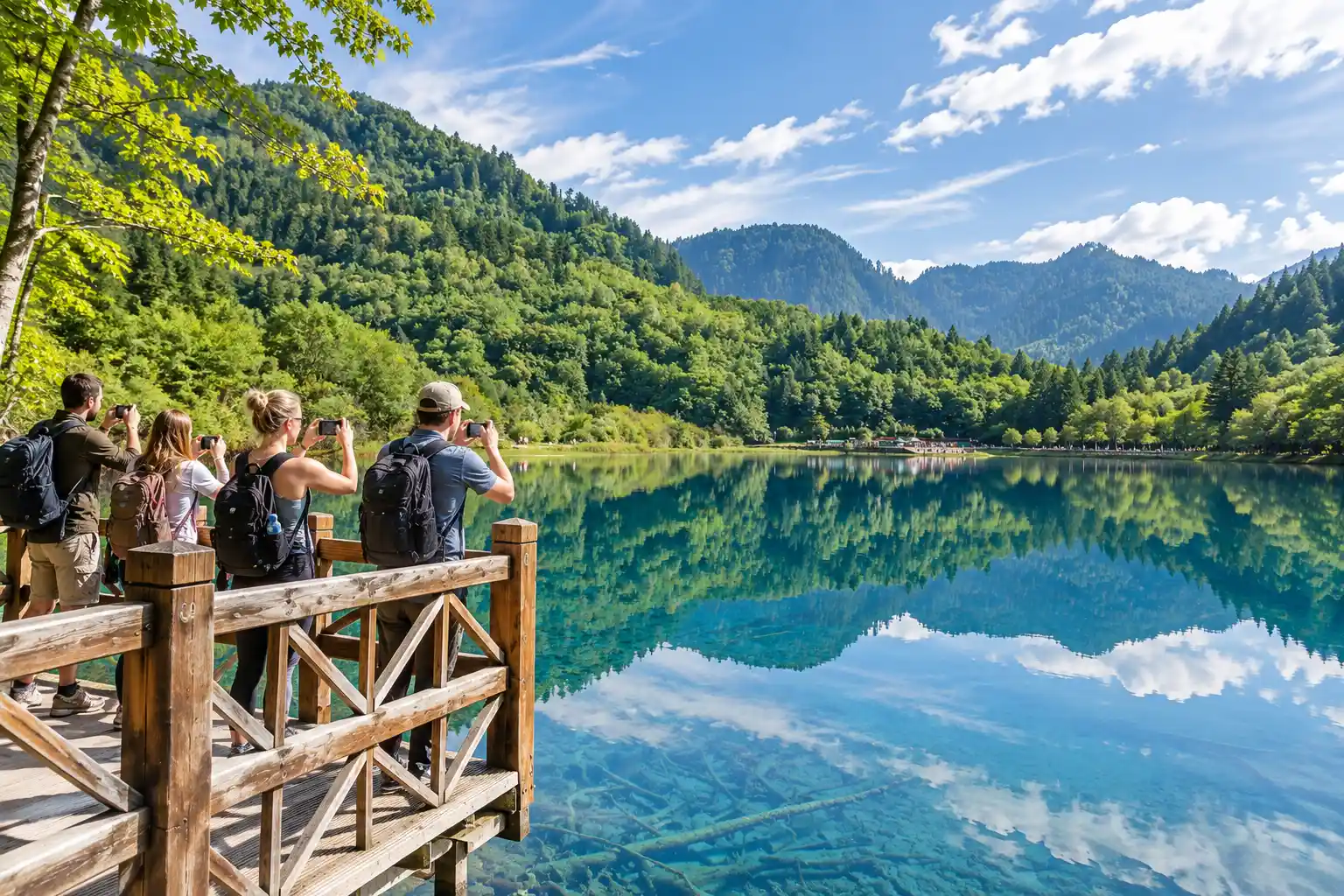
Mirror Lake is best known for calm-water reflections of surrounding mountains, forests and sky. Conditions are often strongest when the air is still, which is why early morning can be especially rewarding for photographers.
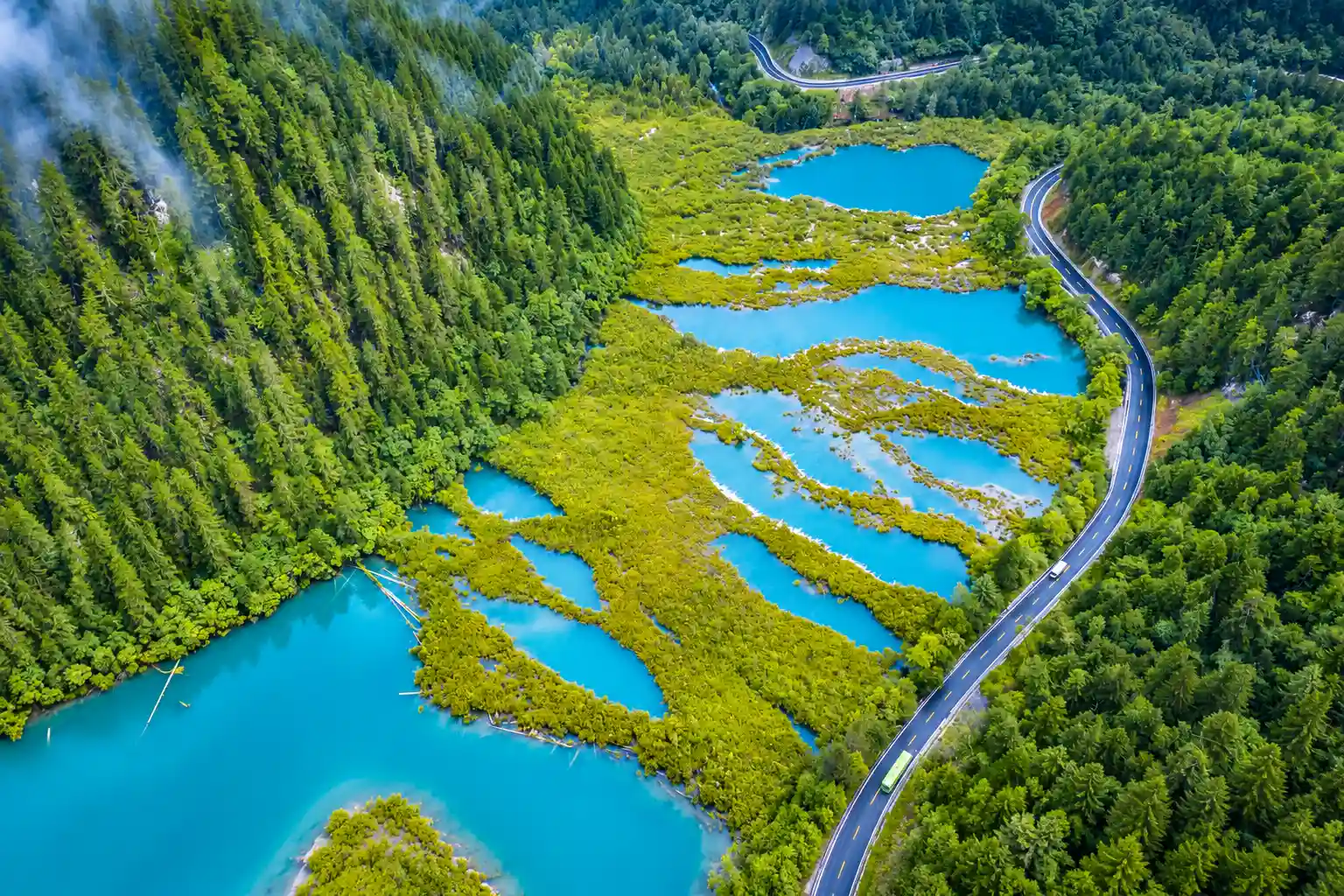
Shuzheng Lakes form a layered system of 19 interconnected lakes separated by forest, travertine banks and small cascades. The area is especially useful for slowing down and walking between several closely spaced landscapes.
A well-planned full day can cover major highlights across all three valleys, but trying to stop at every lake usually creates a rushed visit. Prioritize Five Flower Lake, Pearl Shoal, Long Lake, Five-Color Pond, Nuorilang Waterfall and selected Shuzheng Valley stops, then use the park buses for the longer transfers.
Jiuzhaigou is more than a checklist of famous lakes. The best visit combines scenic boardwalks, autumn photography, Tibetan cultural experiences and local food with the park's sightseeing-bus network. Focus on a few meaningful experiences instead of rushing from viewpoint to viewpoint.
Do not spend the entire day moving between scenic stops by bus. Jiuzhaigou's walking paths and boardwalks connect neighboring lakes, forests, shoals and waterfalls, giving you a much closer view of the landscape than the sightseeing bus alone.
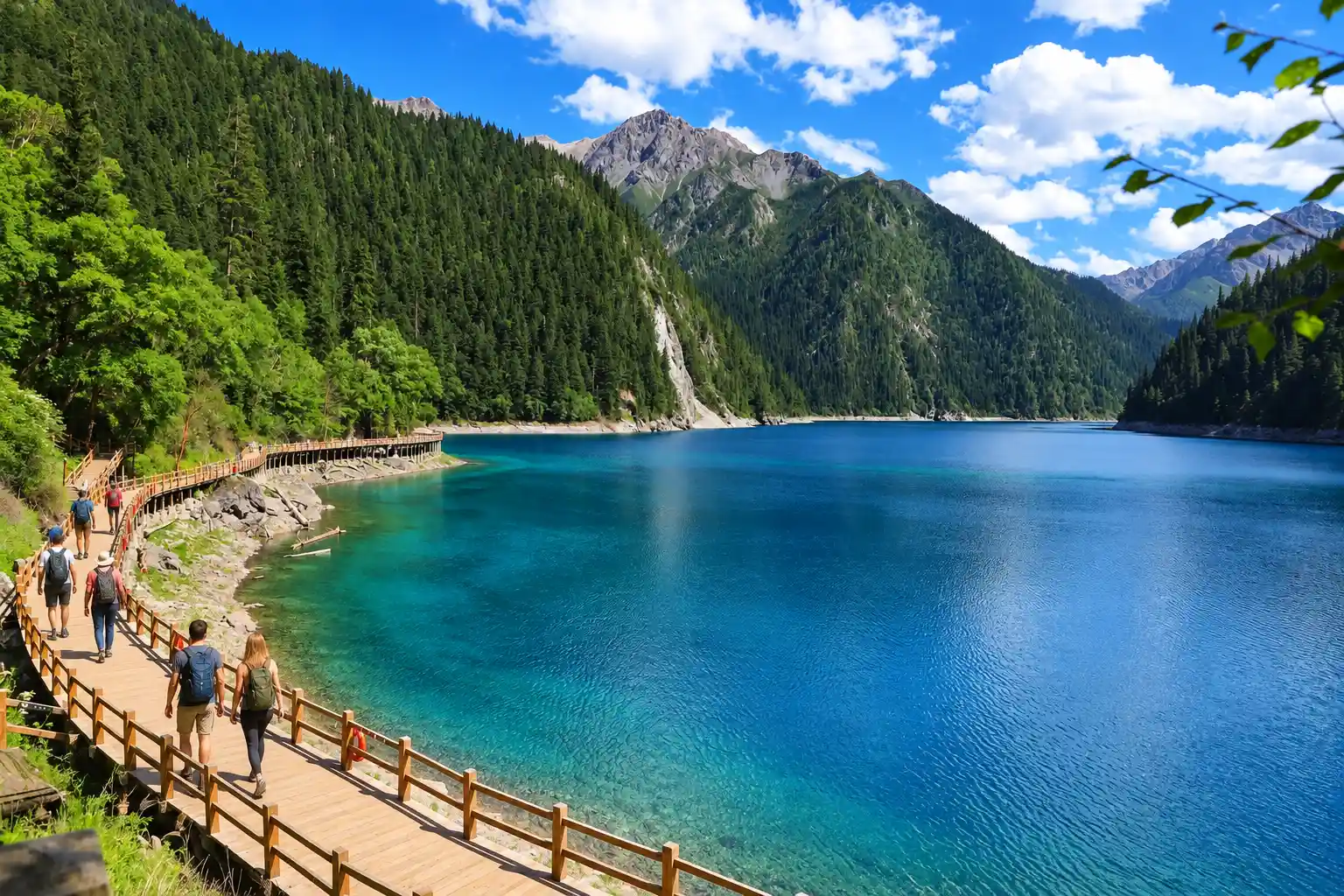
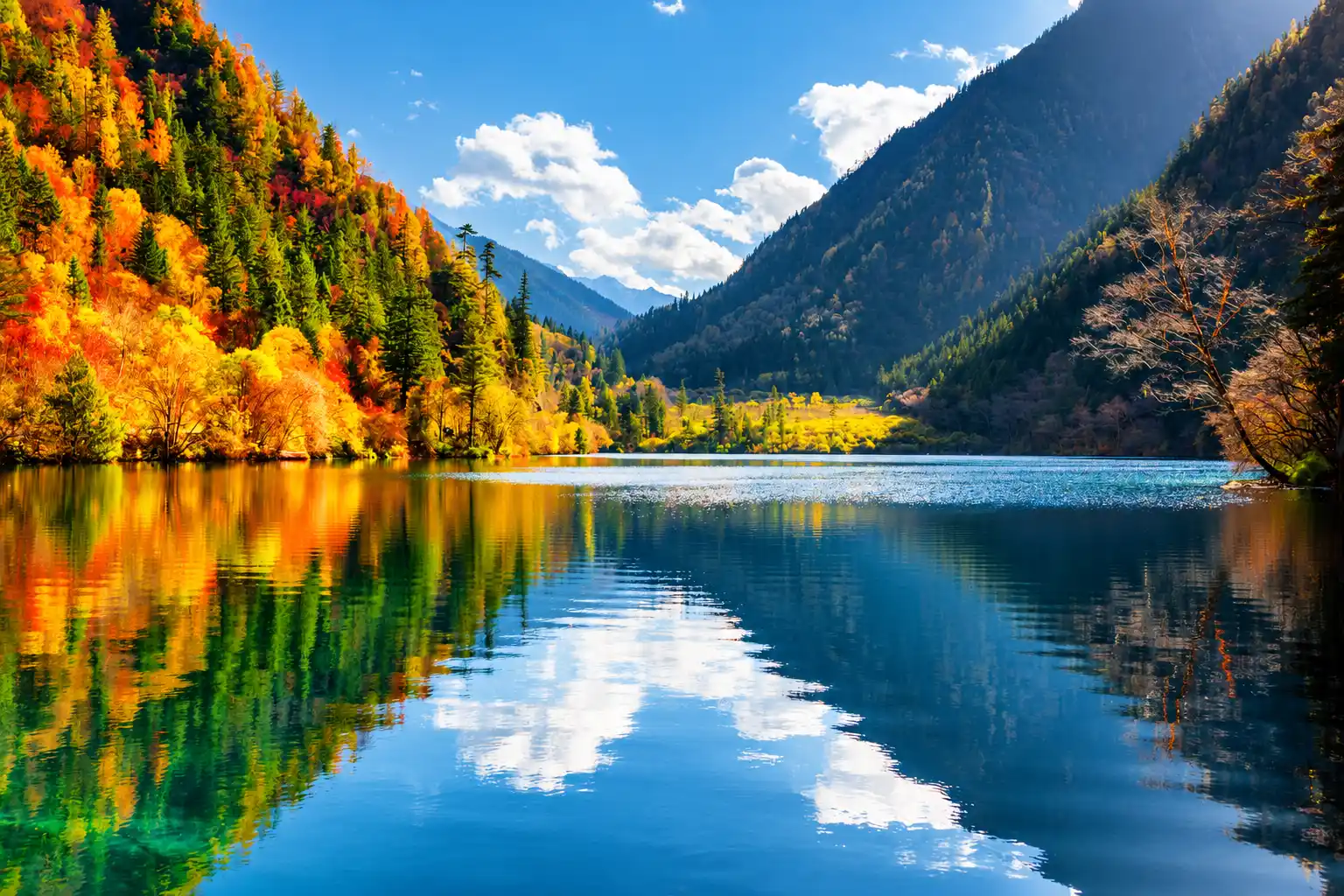
Autumn brings Jiuzhaigou's best-known combination of red, orange and golden forests reflected in clear blue and turquoise lakes. The contrast between colorful foliage, mountain scenery and water makes this the park's signature photography season.
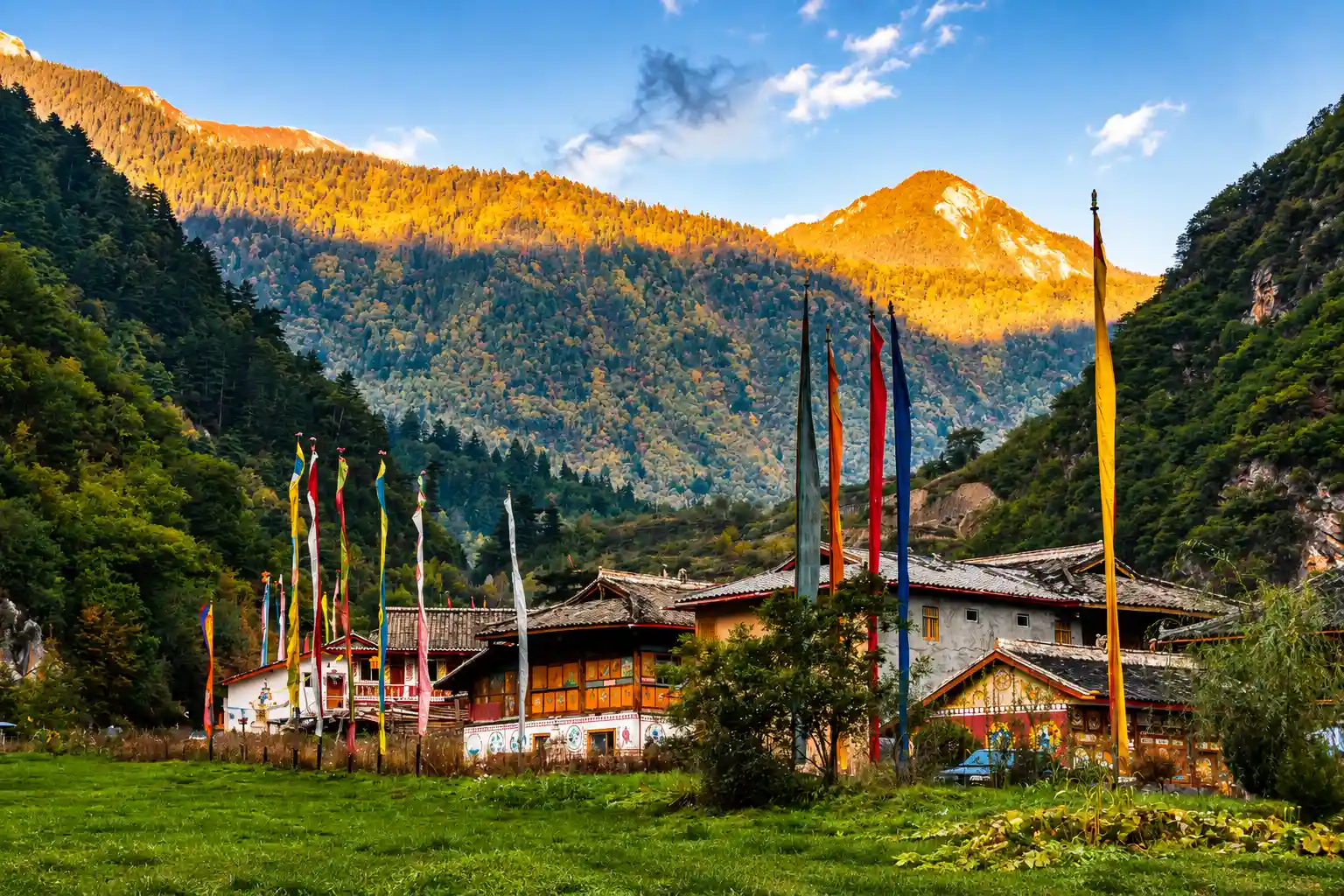
Jiuzhaigou means “Nine Village Valley,” a name connected with the Tibetan villages of the area. Village architecture, local traditions and Tibetan cultural heritage provide important context for a destination often known mainly for its lakes and waterfalls.
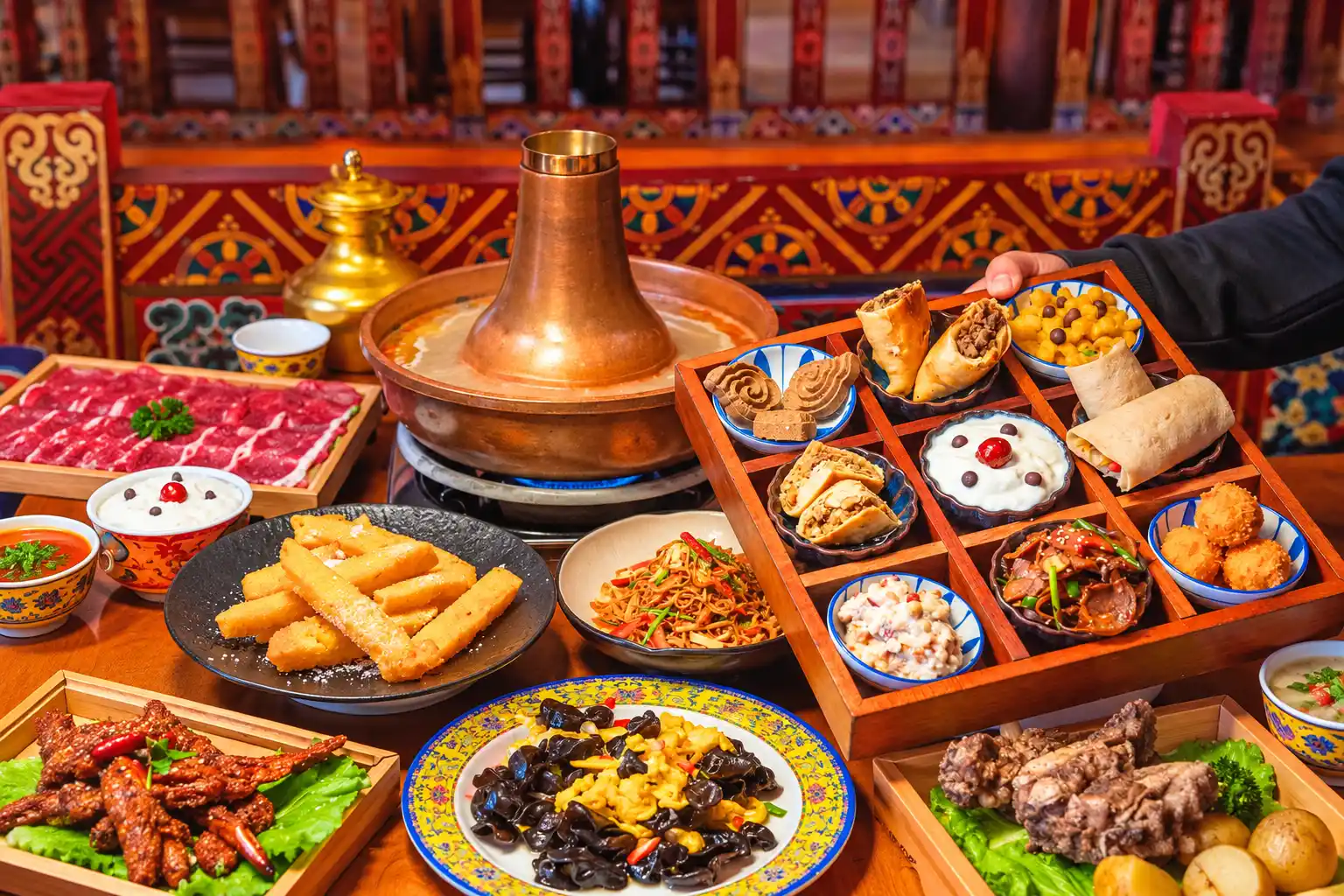
Food around Jiuzhaigou combines local Tibetan traditions with familiar Sichuan flavors. Depending on the restaurant, you may find yak meat, Tibetan-style dishes and warming regional meals that are especially welcome after a full day of mountain sightseeing.
The next step is deciding which valley to explore first, when to use the sightseeing bus and which sections are worth walking. A realistic one-day park route helps you cover the major Jiuzhaigou highlights without turning the day into a race between scenic stops.
A well-planned day can cover the strongest highlights across Rize Valley, Zechawa Valley and Shuzheng Valley. Use the park's sightseeing buses for the long transfers, walk selected scenic sections and prioritize signature lakes and waterfalls instead of trying to stop at every viewpoint.
Start with the high-priority sights in Rize Valley, return toward the central Nuorilang area for a transfer and lunch break, continue into Zechawa Valley for Long Lake and Five-Color Pond, then finish through selected Shuzheng Valley stops on the way back toward the entrance.
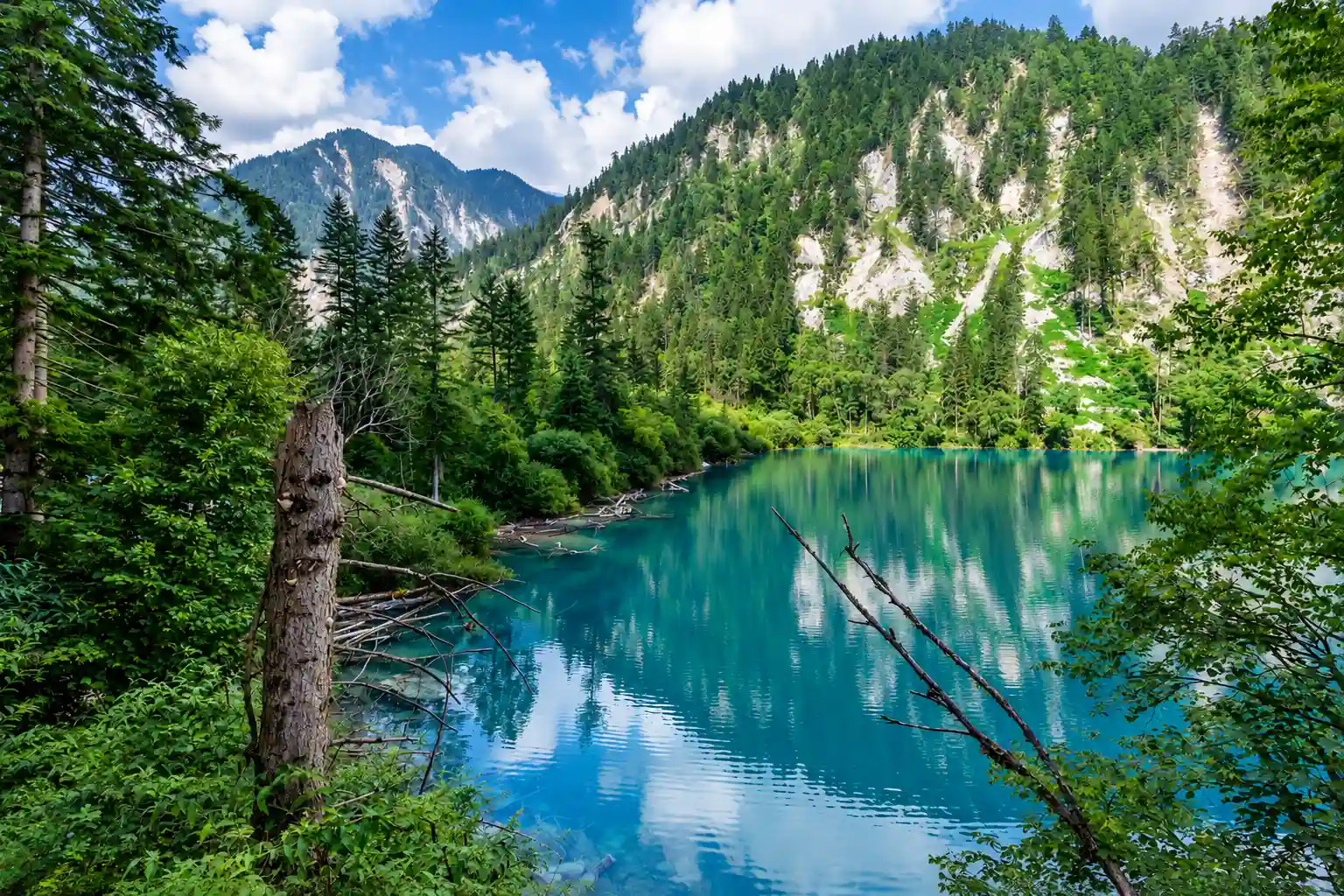
Begin with Rize Valley and focus on its strongest scenery rather than attempting every stop. Five Flower Lake should be a priority, with Arrow Bamboo Lake, Panda Lake, Pearl Shoal, Pearl Shoal Waterfall and Mirror Lake added according to open areas, bus routing and the time available that morning.
See Five Flower Lake ↑
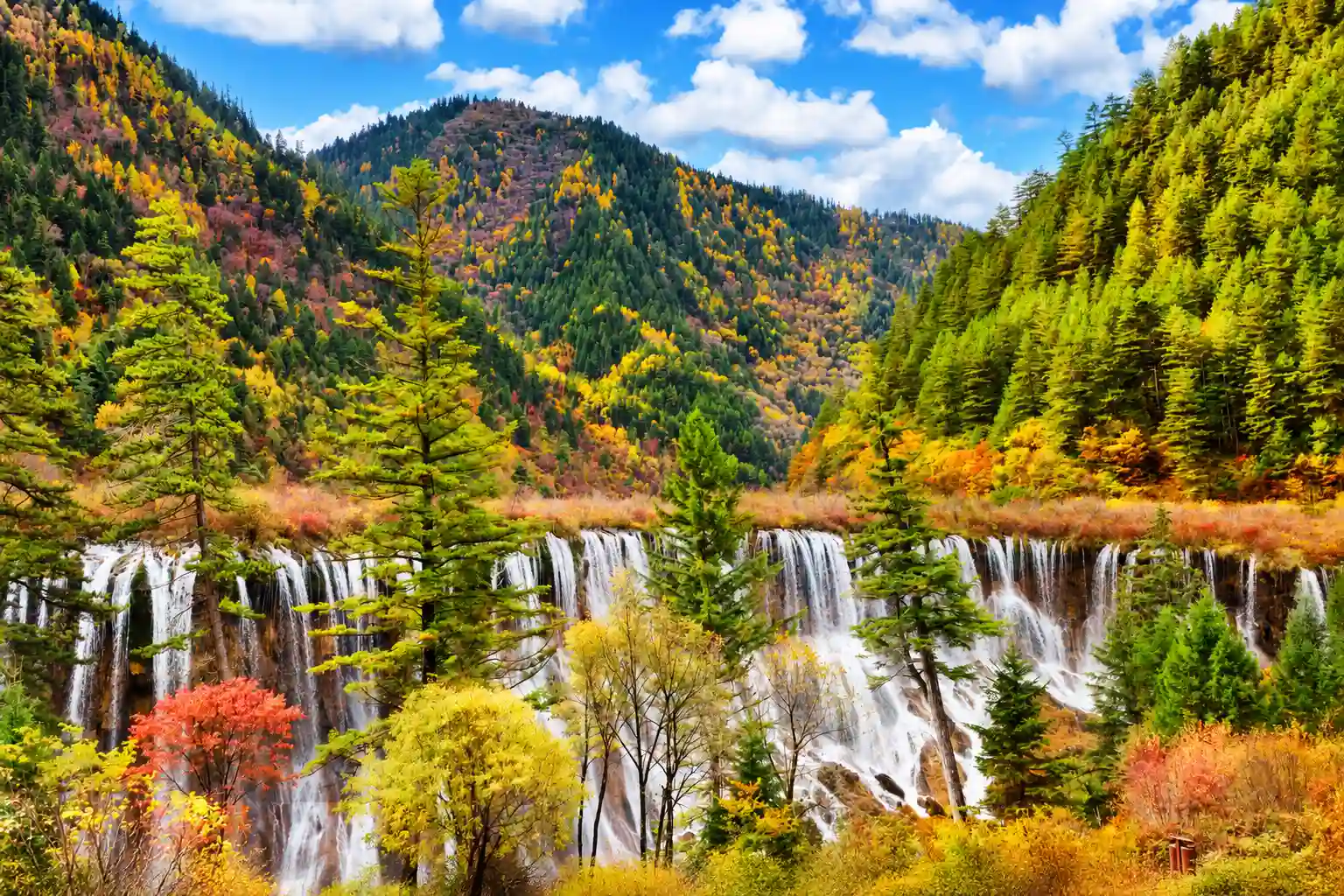
The Nuorilang area sits at the central junction of Jiuzhaigou's sightseeing network and is the most practical place to pause around midday. The Nuorilang Service Center is the park's main dining and visitor-service hub, with meal and snack options available before you continue toward Zechawa Valley. Include nearby Nuorilang Waterfall without creating unnecessary backtracking.
See Nuorilang Waterfall ↑
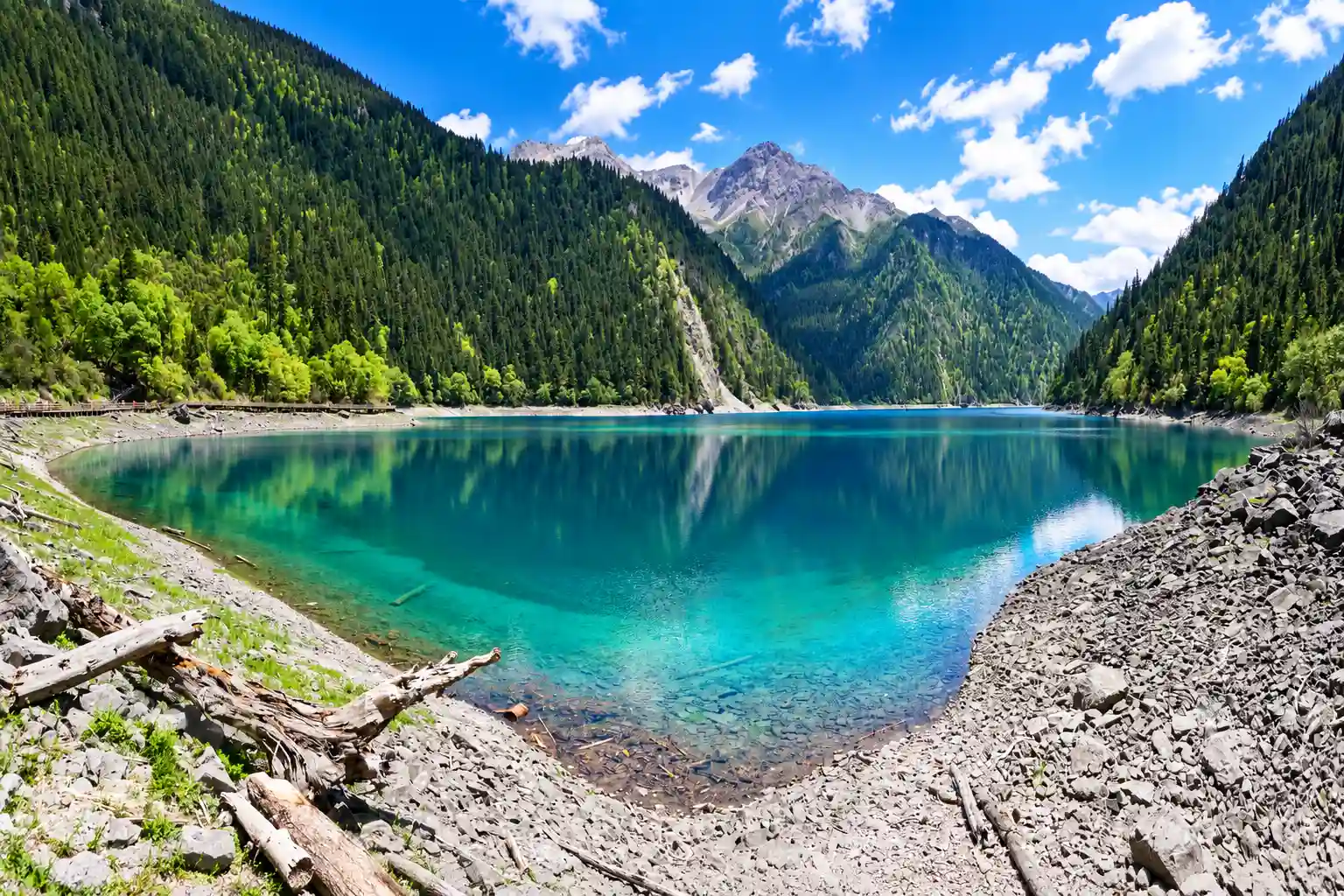
Continue into Zechawa Valley for Long Lake and Five-Color Pond. These two sights form the essential first-time combination in this branch of the park. Keep a comfortable walking pace at the higher elevations and avoid adding unnecessary stops if you want enough time for Shuzheng Valley later in the day.
See Long Lake ↑
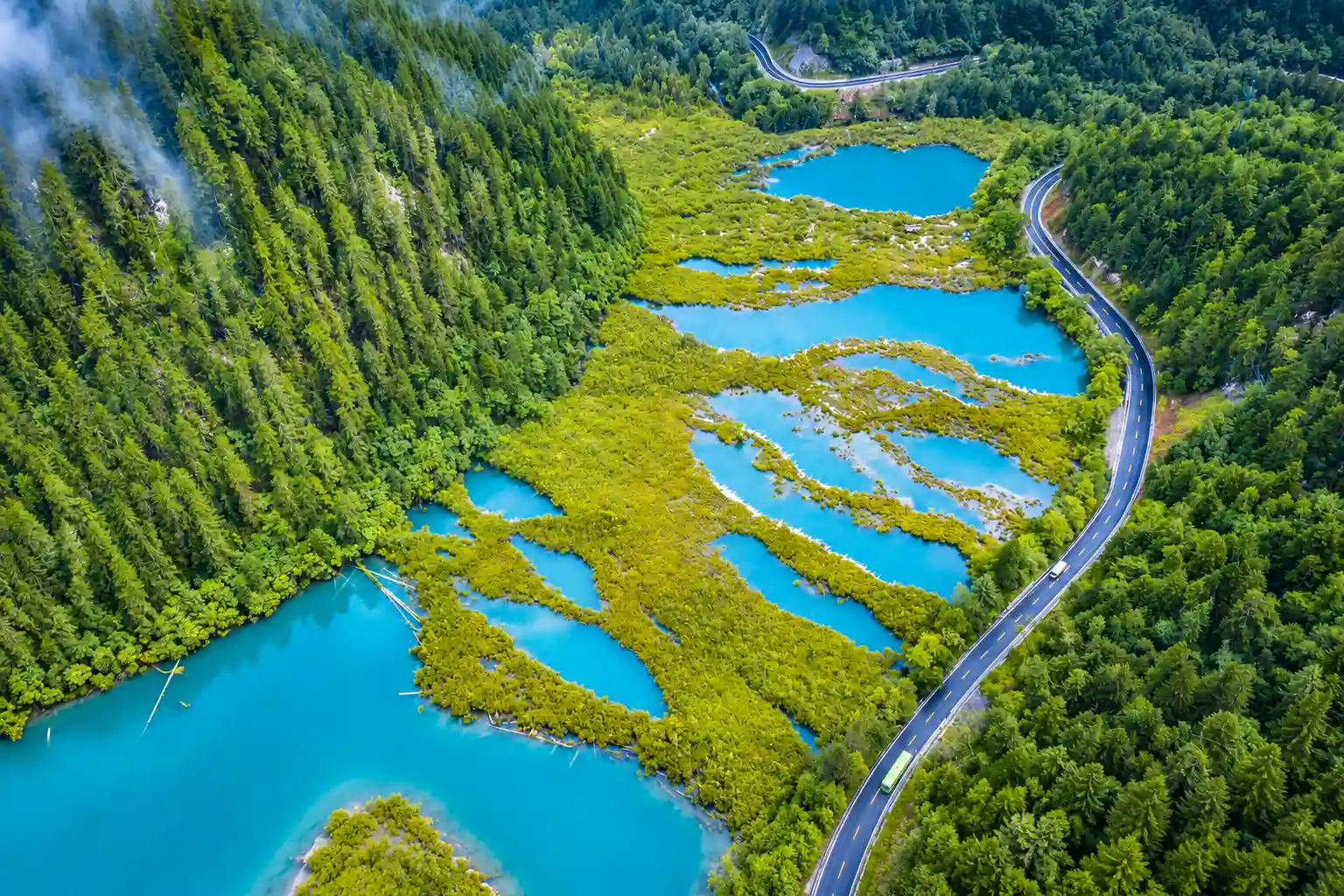
Use your remaining time for selected Shuzheng Valley sights as you work back toward the park entrance. Rhinoceros Lake, Tiger Lake, Shuzheng Lakes, Sparkling Lake and Reed Lake are all possible stops, but choose according to daylight, energy and the day's bus service rather than trying to complete the entire list.
See Shuzheng Lakes ↑Jiuzhaigou can adjust sightseeing-bus dispatch, open scenic areas and visitor flow according to weather, safety conditions and real-time crowds. On the day of your visit, follow current park instructions first and use this route to decide which sights to prioritize when choices are available.
A full day is enough for Jiuzhaigou National Park's main highlights, but the complete trip also needs time for regional transfers. For most first-time visitors, three days gives the best balance between Jiuzhaigou, nearby Huanglong and the journey to and from the valley.
This is the most practical first-time itinerary: arrive in the Jiuzhaigou area, dedicate one complete day to the national park, then combine nearby Huanglong with your onward journey.
Travel from Chengdu toward Huanglongjiuzhai Railway Station, continue by road into Jiuzhaigou and check into accommodation near the national park entrance. Keep the evening light so you can start early the next morning.
Enter early and explore the main highlights across Rize Valley, Zechawa Valley and Shuzheng Valley. Use sightseeing buses for the longer transfers and selected walking sections for lakes and waterfalls.
Visit Huanglong for its colorful travertine pools and high-mountain scenery, then continue toward your railway station, airport or next destination in Sichuan.
Choose two days only when time is tight, or add a fourth day if you prefer a slower pace, more flexibility or additional time around the Jiuzhaigou area.
A compact itinerary for travelers who want one complete national park day and can keep arrival and onward travel efficient.
Add breathing room around the main sightseeing day so transfers, weather, mountain altitude and local experiences do not make the journey feel rushed.
Jiuzhaigou National Park's main highlights can fit into one carefully planned sightseeing day, but reaching the valley still requires regional transport and a road transfer. Allow separate time for arrival and departure, and add Huanglong when your schedule and travel pace allow.
For most first-time travelers coming from Chengdu, the easiest route is a high-speed train from Chengdu East Station to Huanglongjiuzhai Railway Station, followed by a road transfer to the Jiuzhaigou park entrance. Flights, long-distance coaches and private transfers provide alternatives, while sightseeing buses handle the long distances inside Jiuzhaigou National Park.
High-speed rail has made Jiuzhaigou much easier to reach from Chengdu. Take the train to Huanglongjiuzhai Railway Station, then continue by scenic-area coach or private road transfer to your hotel near the park entrance. If you are also visiting Huanglong, organize both destinations around the same regional transport gateway.
Chengdu East Station has high-speed rail connections to Huanglongjiuzhai Railway Station. The fastest journey takes about 1 hour 39 minutes, making rail the most practical gateway for many travelers starting in Chengdu. Check the current train schedule before booking because departure times and train frequency can change.
Fastest: ~1 hr 39 minHuanglongjiuzhai Railway Station is about 93 km from Jiuzhaigou National Park, with the road transfer taking roughly 2 hours under normal conditions. Scenic-area direct coaches connect the station with Jiuzhaigou, and private transfers are useful when you have luggage, a hotel check-in or a more complicated itinerary.
~93 km · ~2 hoursHuanglongjiuzhai Railway Station is also well positioned for Huanglong Scenic Area, which is about 27 km away. This makes it practical to place Huanglong on your arrival or departure side of the trip instead of making a separate long return journey from Jiuzhaigou.
Explore Huanglong & Nearby Places ↓Jiuzhai Huanglong Airport is another gateway to the region and lies about 80 km from Jiuzhaigou National Park. Flights can be useful when your origin city has a suitable connection, but you will still need a road transfer from the airport to Jiuzhaigou or Huanglong.
About 80 km from the parkLong-distance coaches also connect Chengdu and other Sichuan cities with the Jiuzhaigou area. They can work for travelers who prefer an all-road journey, but high-speed rail plus a local transfer is usually easier to fit into a short first-time itinerary from Chengdu.
Alternative to RailInside Jiuzhaigou, use the sightseeing bus network for long transfers between Rize, Zechawa and Shuzheng valleys, then walk selected boardwalk sections between nearby lakes and waterfalls. The park may adjust bus routing according to crowds, weather and operating conditions.
See the Park Route ↑
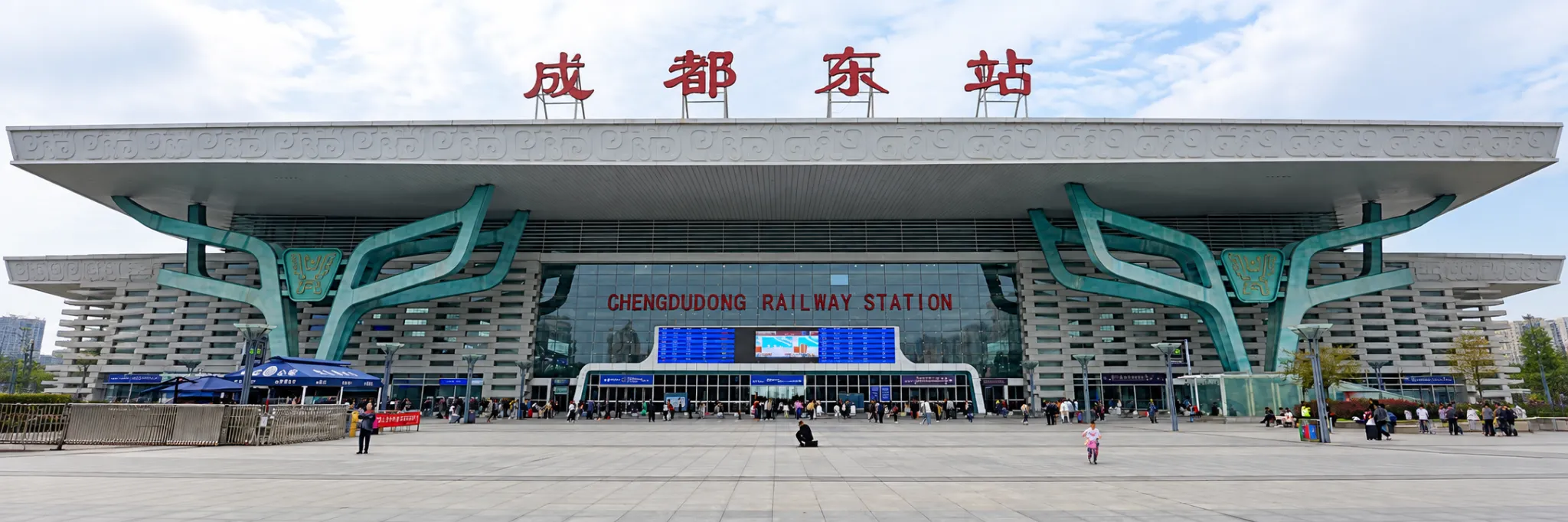
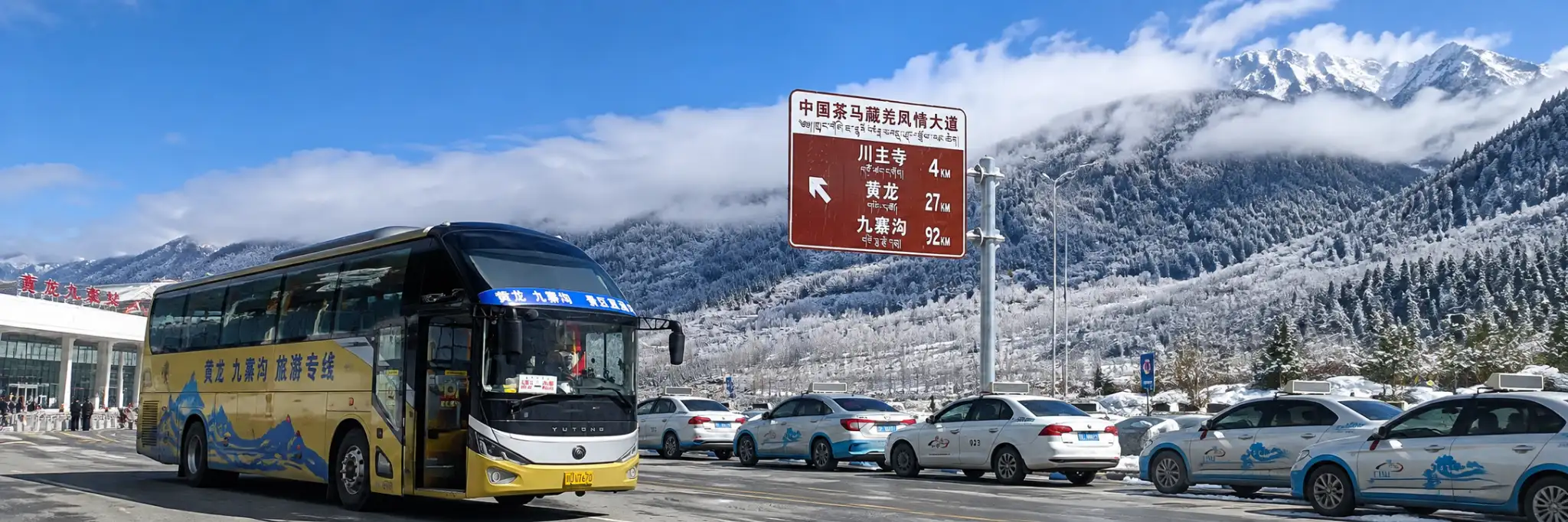
A private transfer can connect Huanglongjiuzhai Railway Station, Huanglong, your Jiuzhaigou hotel and the park entrance around your train schedule, luggage and preferred travel pace.
The best time to visit Jiuzhaigou depends on the landscape you want to see. October is the classic choice for colorful autumn forests, summer brings lush scenery and strong water flow, spring offers fresh greenery and mountain flowers, while winter transforms the valley with snow, ice and significantly fewer visitors.
If your priority is the famous combination of turquoise lakes and colorful forests, October is the strongest overall choice. Autumn color usually develops progressively through the valley, with mid-October onward often bringing some of the richest foliage. The trade-off is demand: autumn is also one of Jiuzhaigou's busiest travel periods, so park tickets, trains and hotels should be reserved early.
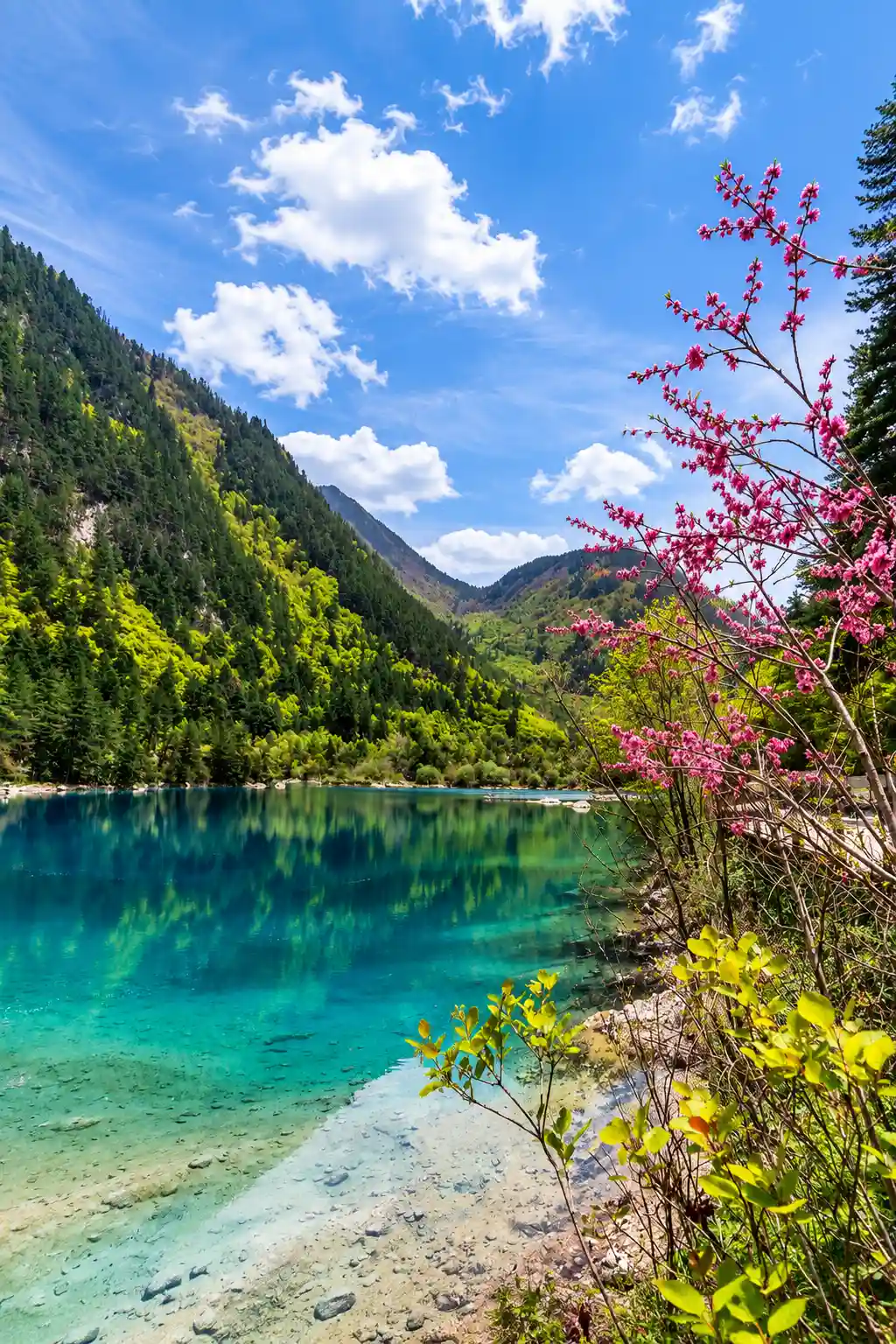
Spring brings a gradual return of green vegetation, mountain flowers and thawing lakes. Conditions can look very different between lower and higher elevations, so the landscape often shows traces of winter and spring at the same time.
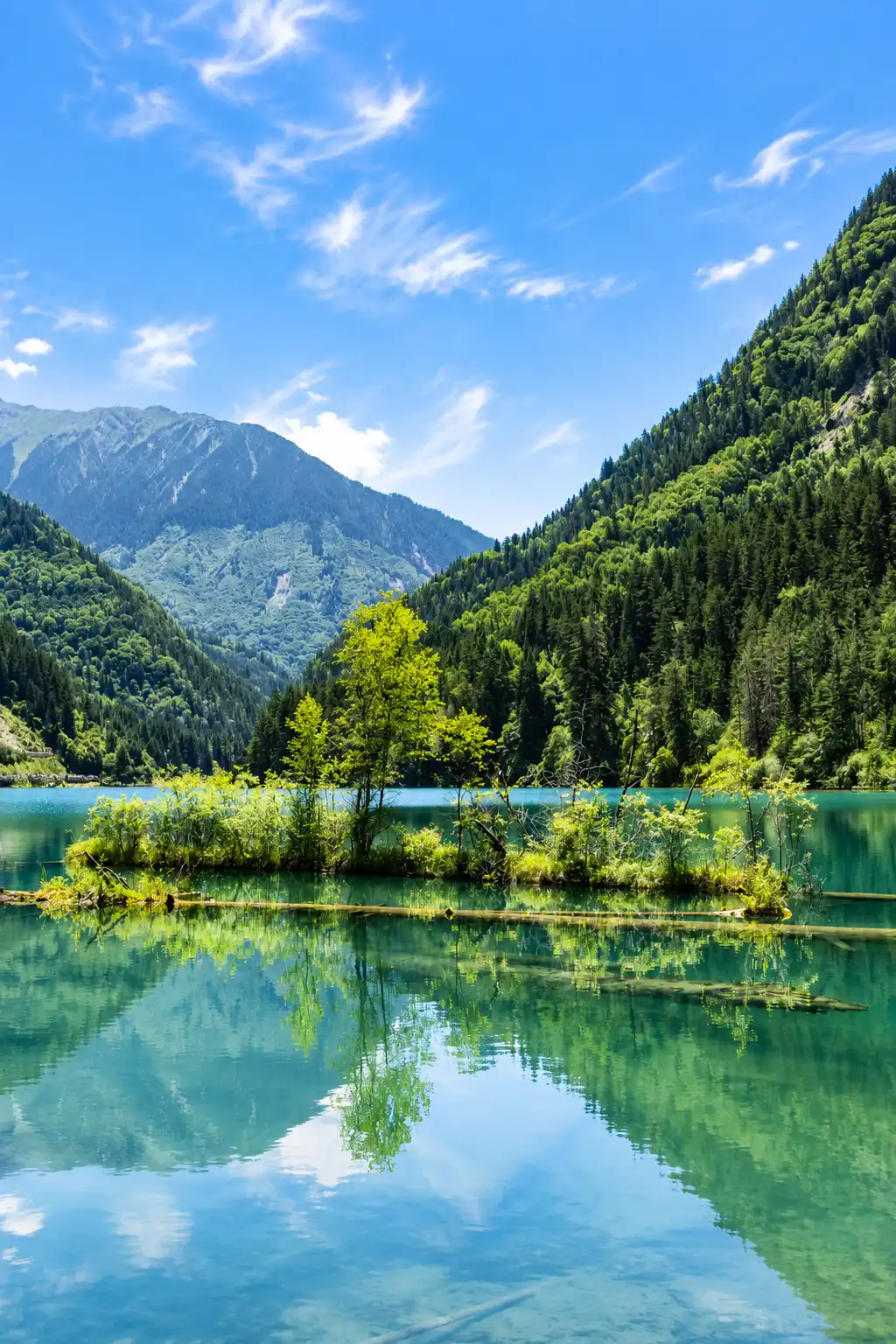
Summer is lush, cool for its latitude and especially strong for forests, streams and waterfalls. Jiuzhaigou's official 2026 summer guidance describes an average temperature of about 18°C, but rainfall is common enough that lightweight rain protection should stay in your daypack.
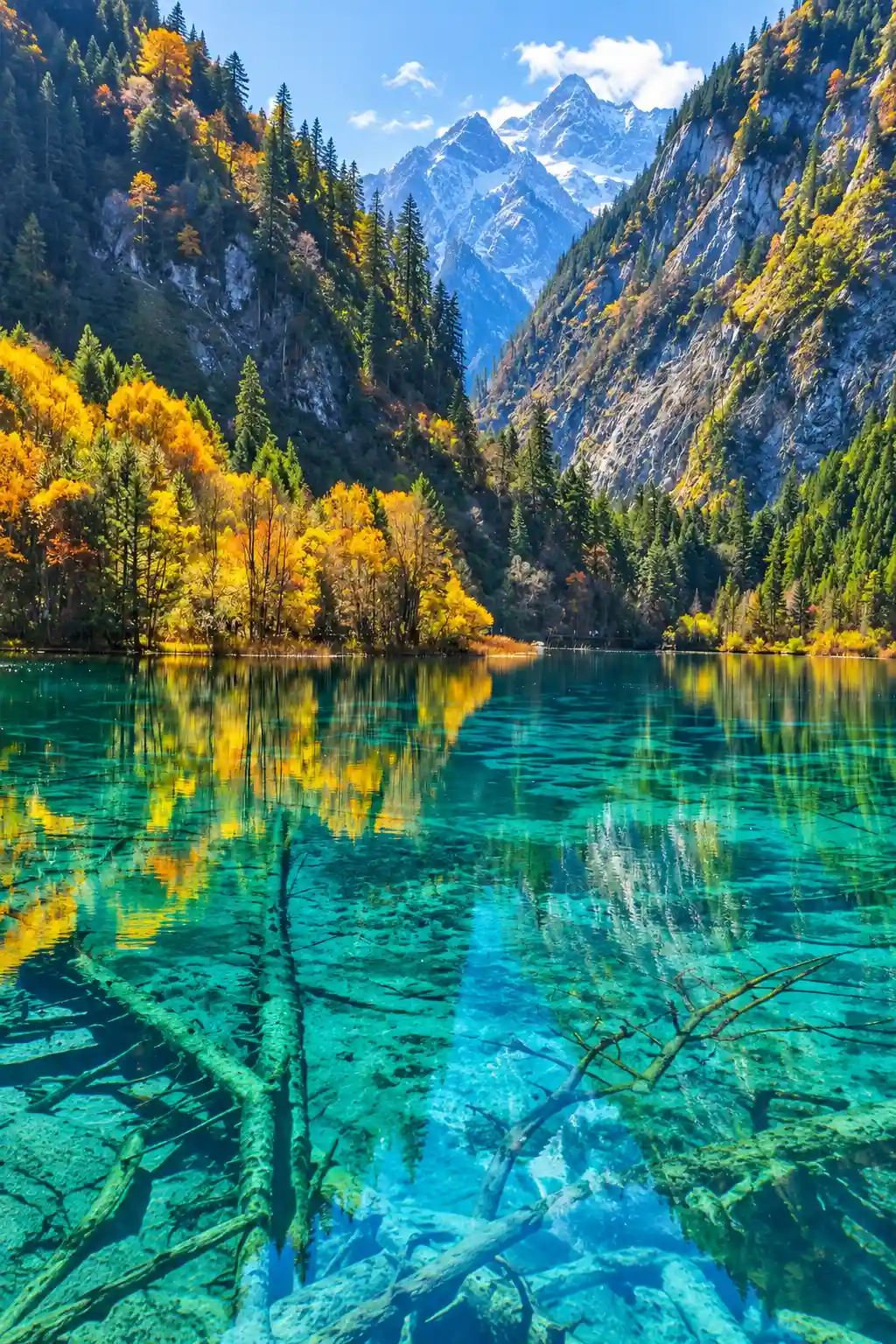
Autumn creates Jiuzhaigou's classic postcard landscape: red, orange and golden forest reflected in clear blue and turquoise lakes. October is the key month, with especially strong foliage often developing from around mid-October. Demand is also highest, so advance booking is essential.
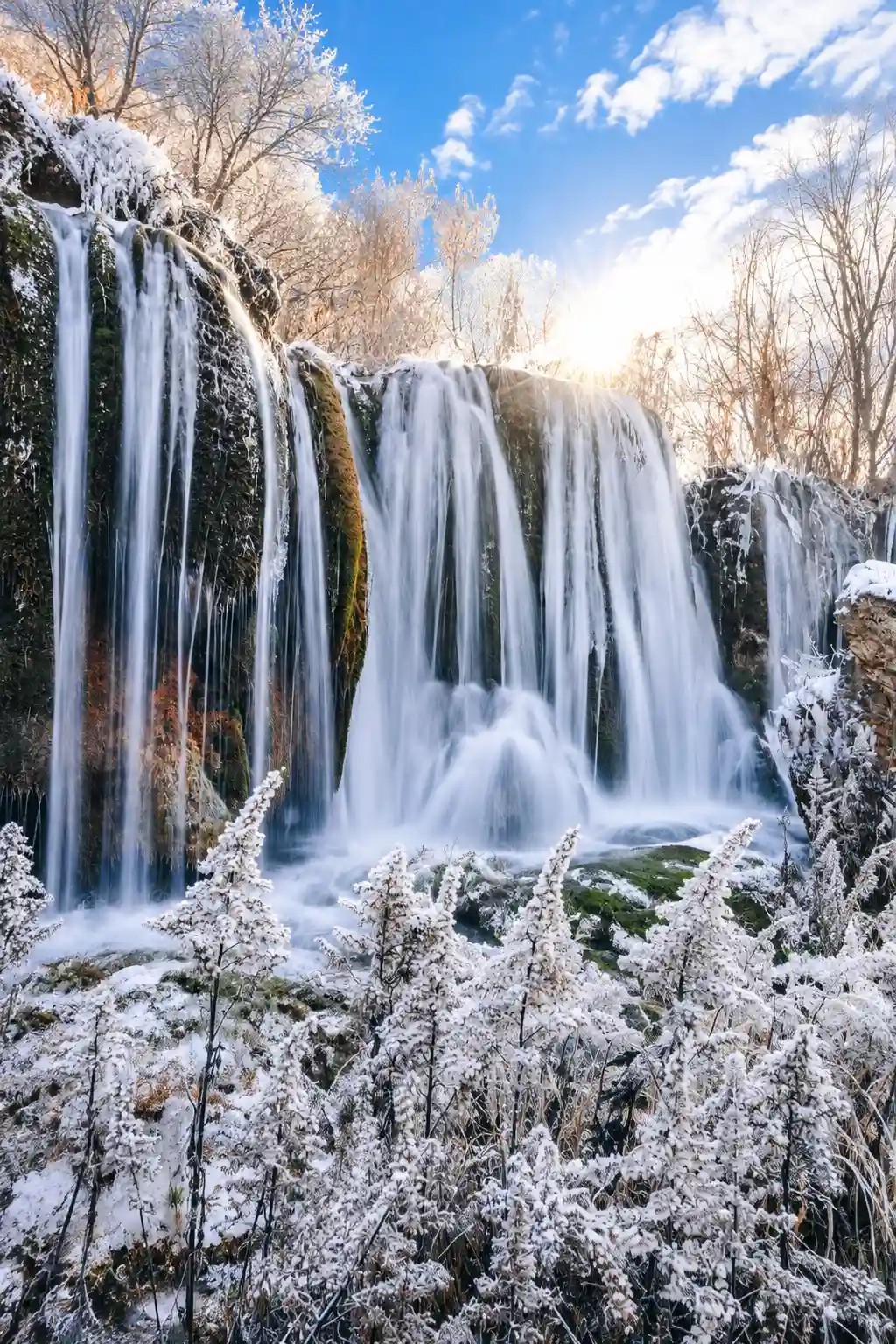
Winter brings snow-covered mountains, icy waterfalls, exceptionally clear lakes and a quieter atmosphere. Some scenic spots or boardwalks may operate on seasonal rotation for conservation and safety, so check the latest official winter notice before building a route around specific stops.
The strongest autumn-color period can coincide with very high visitor demand. If October is your priority, reserve park tickets, high-speed trains and accommodation early. If you prefer more flexibility, late spring, summer or winter can provide a very different Jiuzhaigou experience without making autumn the only “correct” time to visit.
For most first-time visitors, location matters more than hotel category. Staying close to the Jiuzhaigou National Park entrance makes an early start much easier, while quieter resort areas work better if hotel facilities and mountain surroundings matter more than walking access to the gate.
If Jiuzhaigou National Park is the main reason for your trip, staying as close to the entrance as practical is the easiest choice. It reduces morning transfer time, makes an early park entry simpler and gives you direct access to restaurants and visitor services around the tourism area.
Staying near the gate removes an unnecessary road transfer before a long sightseeing day and makes it easier to arrive close to the beginning of the park's entry period.
After hours of buses, boardwalks and walking inside the three valleys, a nearby hotel means you can return to your room without adding another lengthy transfer.
The wider Zhangzha tourism area offers local hotels, guesthouses and more comfortable full-service properties, so you do not need to choose a remote resort simply for higher room quality.
If you only have two or three days, staying close to the scenic-area entrance protects valuable sightseeing time and keeps the itinerary easier to manage.
Stay slightly farther from the gate if you want a broader choice of restaurants, shops and value-oriented hotels. This remains a practical base for the national park, but check the actual distance from your hotel to the entrance rather than relying only on a “Jiuzhaigou” address.
Choose Zhongcha Valley if the hotel itself is part of the experience. This area has high-end mountain resorts and quieter surroundings, but you should expect to use a vehicle to reach Jiuzhaigou National Park rather than simply walking to the entrance.
A night closer to Huanglong or a regional transport gateway can make sense when an early train, late arrival or Huanglong sightseeing day controls your schedule. It is usually not the best base for your main Jiuzhaigou National Park day, because you would add unnecessary road travel before entry.
Hotels across the wider Jiuzhaigou area can use similar destination names even when they require very different morning transfers. For a first trip, prioritize the real travel time to the Jiuzhaigou National Park entrance, especially if you plan to enter early during autumn or another busy travel period.
Huanglong is the most natural extension to a first Jiuzhaigou trip because it adds a very different landscape of colorful travertine pools and high-mountain scenery while fitting well with the Huanglongjiuzhai railway gateway. Other nearby scenic areas are better treated as optional additions when you have extra time.
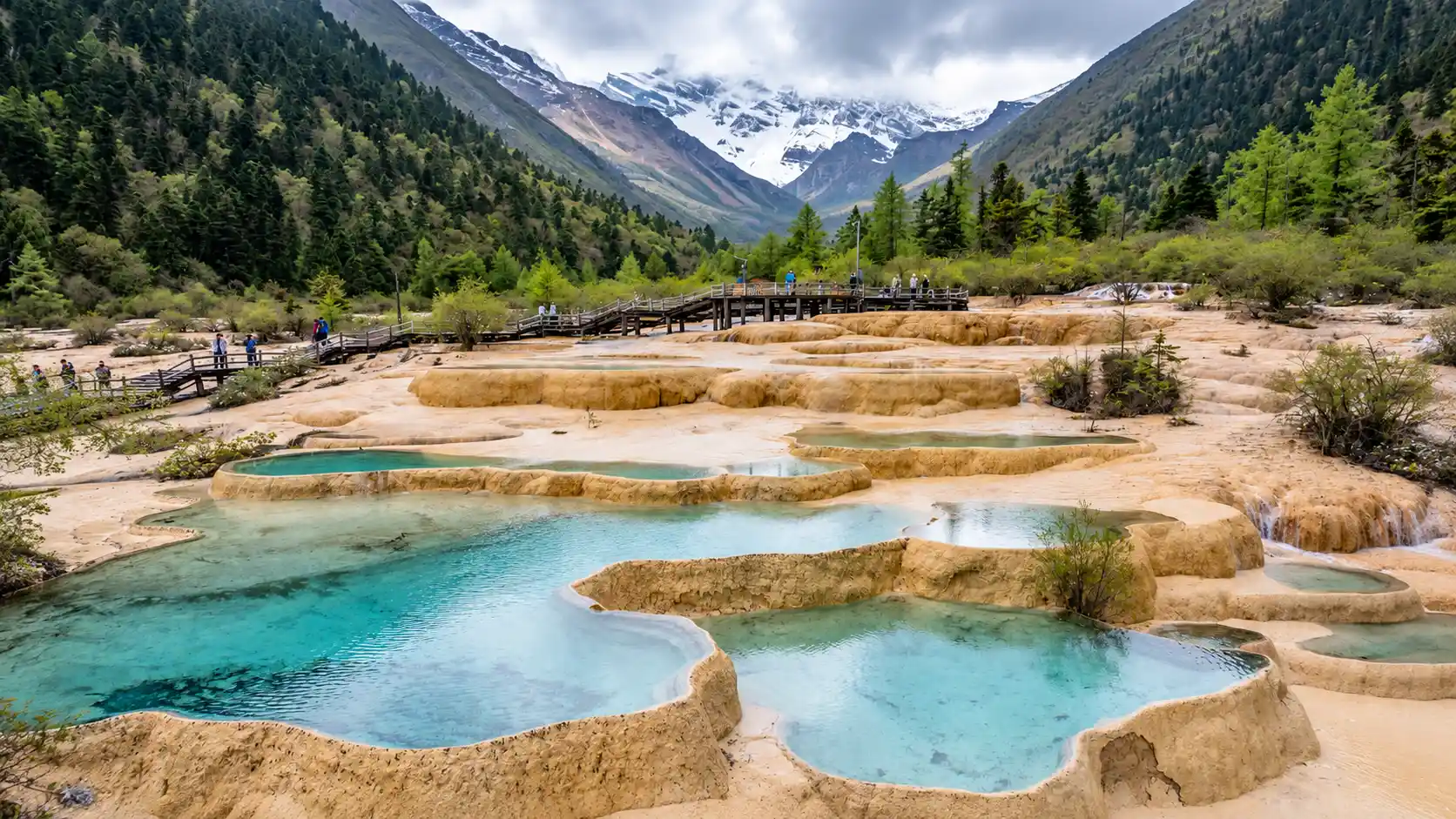
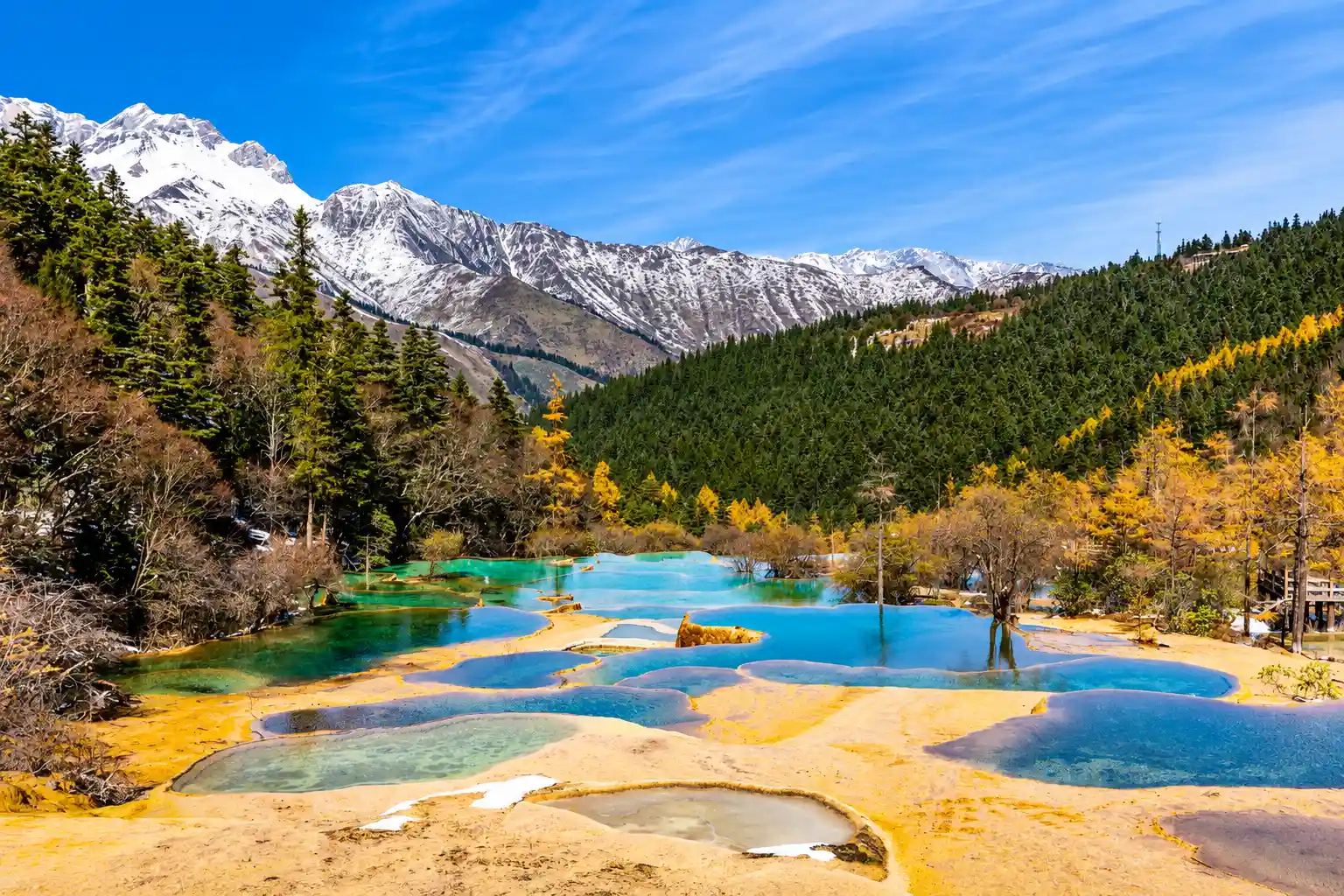
Huanglong is a UNESCO World Heritage Site famous for extensive travertine pools, limestone terraces, waterfalls, forests and snow-capped mountain scenery. Its landscape is very different from Jiuzhaigou's deep blue and turquoise lakes, which is why the two destinations work so well in the same Sichuan itinerary.
These are useful optional extensions, not required stops on a first Jiuzhaigou trip. Add one only when you have another free day or want a quieter alternative to the main national park.
Shenxianchi is one of the main scenic alternatives promoted around the wider Jiuzhaigou destination. Consider it when you have an additional day and want another nature-focused excursion without repeating the exact same national park sightseeing experience.

Jiawu Lake and the surrounding panda-themed scenic area provide another option for travelers staying longer in Jiuzhaigou County. It works better as an additional local outing than as a replacement for your main Jiuzhaigou National Park day.
Love Sea is another scenic option in the wider Jiuzhaigou area for travelers who want to slow the trip down and see more of the surrounding county. It makes the most sense after the core Jiuzhaigou and Huanglong experiences are already covered.
For a first trip, Jiuzhaigou National Park plus Huanglong already creates a strong and varied mountain itinerary. Add Shenxianchi, Jiawu Lake or other nearby scenic areas only when you have additional time rather than compressing Jiuzhaigou's main sightseeing day.
Jiuzhaigou is straightforward once the key logistics are organized. Confirm your dated park entry, transport into the valley, accommodation near the entrance and the day's weather before arrival, then use the park's sightseeing buses and walking paths to manage the sightseeing day itself.
Complete the important reservations before you travel so your park day is not lost to ticket, transport or hotel logistics.
Review the current entry window, seasonal ticket pricing, sightseeing-bus ticket and real-name booking requirements before choosing your park day.
Build the journey around your Chengdu high-speed train, Huanglongjiuzhai Railway Station and the road transfer between the station, Huanglong and Jiuzhaigou.
Use the three-valley layout and the one-day route strategy to decide which lakes and waterfalls deserve priority when sightseeing time is limited.
Choose the season based on autumn color, summer water, winter snow or quieter spring scenery. Jiuzhaigou is a mountain destination, so pace yourself and allow for changing temperatures during the day.
A customized Jiuzhaigou trip can coordinate your train arrival, road transfers, hotel, national park day and Huanglong visit around a realistic schedule instead of planning each piece separately.
Jiuzhaigou is easy to enjoy once the transport pieces line up. A private or customized journey can coordinate high-speed rail, regional road transfers, Huanglong, accommodation and your Jiuzhaigou park day around one realistic travel schedule.
The national park itself is only one part of the journey. Your overall plan also needs to connect Chengdu, the regional railway or airport gateway, your Jiuzhaigou hotel, Huanglong and the return journey. A customized itinerary can organize those pieces around your arrival time, travel pace and number of days.
Share your travel dates, number of travelers, starting city and the places you want to include. Your Jiuzhaigou journey can then be built around those priorities instead of forcing you into a generic fixed route.
These are planning styles rather than rigid packages. Use them to decide how much of the journey you want organized around Jiuzhaigou National Park.
Build a focused two- to four-day journey around Jiuzhaigou National Park and Huanglong, with the key regional transfers arranged around your train or flight schedule.
Start in Chengdu and connect the high-speed rail journey, station pickup, Jiuzhaigou accommodation, national park day and return transport in one coordinated itinerary.
Use Jiuzhaigou as part of a broader Sichuan trip rather than treating it as a separate journey. This works well when you also want to include Chengdu and other destinations in the same China itinerary.
You do not need to choose a fixed tour before asking for help. Start with your available dates and travel priorities, then decide whether a compact Jiuzhaigou trip or a wider Sichuan itinerary makes more sense.
Continue your planning with guides and itineraries that connect Jiuzhaigou with Chengdu and the wider China journey. These resources cover regional tours, first-time travel planning, destinations and practical advice for building a complete trip.
Combine Chengdu's giant pandas and Sichuan culture with Huanglong's colorful travertine pools and a full sightseeing day inside Jiuzhaigou Valley. This longer route works well for travelers who want Jiuzhaigou to be part of a broader Sichuan journey rather than a short standalone trip.
Explore Chengdu's giant pandas, Sichuan cuisine, tea-house culture and nearby UNESCO destinations before or after your Jiuzhaigou journey.
Plan the wider journey with practical advice on destinations, transportation, travel costs, entry requirements and essential China travel preparation.
Understand where to go, how long to stay and how to prepare for payments, transportation, mobile apps and everyday travel on your first China journey.
Compare China's seasons and month-by-month travel conditions when combining Jiuzhaigou with destinations in other parts of the country.
Browse destinations across China and compare historic cities, mountain regions, cultural routes and scenic landscapes when deciding where Jiuzhaigou fits into your complete itinerary.
These answers cover the most common questions first-time visitors ask when planning a Jiuzhaigou trip, including how many days to stay, park tickets, transportation from Chengdu, Huanglong, accommodation, altitude and the best time to visit.
Most first-time visitors should allow two to three days for the Jiuzhaigou area. One full day is enough for the main highlights inside Jiuzhaigou National Park, while additional time is useful for arrival, departure and nearby Huanglong. A three-day Jiuzhaigou and Huanglong trip is a practical first-time itinerary.
Yes. A well-planned full day can cover major highlights in Rize Valley, Zechawa Valley and Shuzheng Valley by combining the sightseeing buses with selected walking sections. Prioritize the strongest lakes and waterfalls rather than trying to stop at every scenic point in the park.
October is the classic choice for first-time visitors because the valley combines colorful autumn forests with clear blue and turquoise lakes. Autumn is also one of the busiest periods. Summer is excellent for lush forests and waterfalls, while winter brings snow, ice scenery and generally fewer visitors.
For many travelers, the easiest route is to take a high-speed train from Chengdu East Railway Station to Huanglongjiuzhai Railway Station, then continue to Jiuzhaigou by road transfer. The station also works well when combining Jiuzhaigou with Huanglong on the same trip.
Yes. Jiuzhaigou uses a dated, real-name reservation system with daily visitor limits. Busy dates can sell out, especially during autumn and Chinese public holidays, so do not rely on buying admission only after arriving at the park entrance. Bring the original identification document used for your booking.
Yes. Huanglong is the strongest addition to a first Jiuzhaigou trip because its colorful travertine pools, terraces and high-mountain scenery are very different from Jiuzhaigou's lake-and-waterfall landscapes. The two destinations also fit naturally into the same regional transport route.
For most first-time visitors, staying close to the Jiuzhaigou National Park entrance is the most convenient choice. It makes an early start easier and reduces unnecessary road transfers before and after a long sightseeing day. Resort areas farther away work better if hotel facilities and a quieter mountain setting are a higher priority.
No. Visitors should stay outside the protected scenic area and enter Jiuzhaigou National Park through the official entrance for sightseeing. Choose accommodation near the park entrance if you want the easiest start on your sightseeing day.
Jiuzhaigou is a high-altitude mountain destination, and some sightseeing areas are above 3,000 meters. Most visitors can explore normally, but it is sensible to walk at a comfortable pace, stay hydrated and avoid overexertion, especially on your first day or when visiting higher areas such as Long Lake. Travelers with relevant medical concerns should seek individualized medical advice before visiting high-altitude areas.
Tell us your travel dates, available time, preferred hotel style and where your China journey begins. Our local team can build a private Jiuzhaigou itinerary connecting Chengdu, Huanglong, high-speed rail, road transfers and other Sichuan destinations.
Plan My China Trip