
Why Is the Temple of Heaven Important?
The Temple of Heaven is one of the most important sites in imperial China and a UNESCO World Heritage Site in central Beijing. Built during the Ming Dynasty by the Yongle Emperor, this temple complex was where emperors from the Ming and Qing dynasties worshipped heaven and prayed for good harvests.
Unlike the Forbidden City, which served as the ancient Chinese royal palace, the Temple of Heaven was created for sacred imperial rituals, heaven worship, and ceremonial buildings connected to ancient Chinese cosmology.
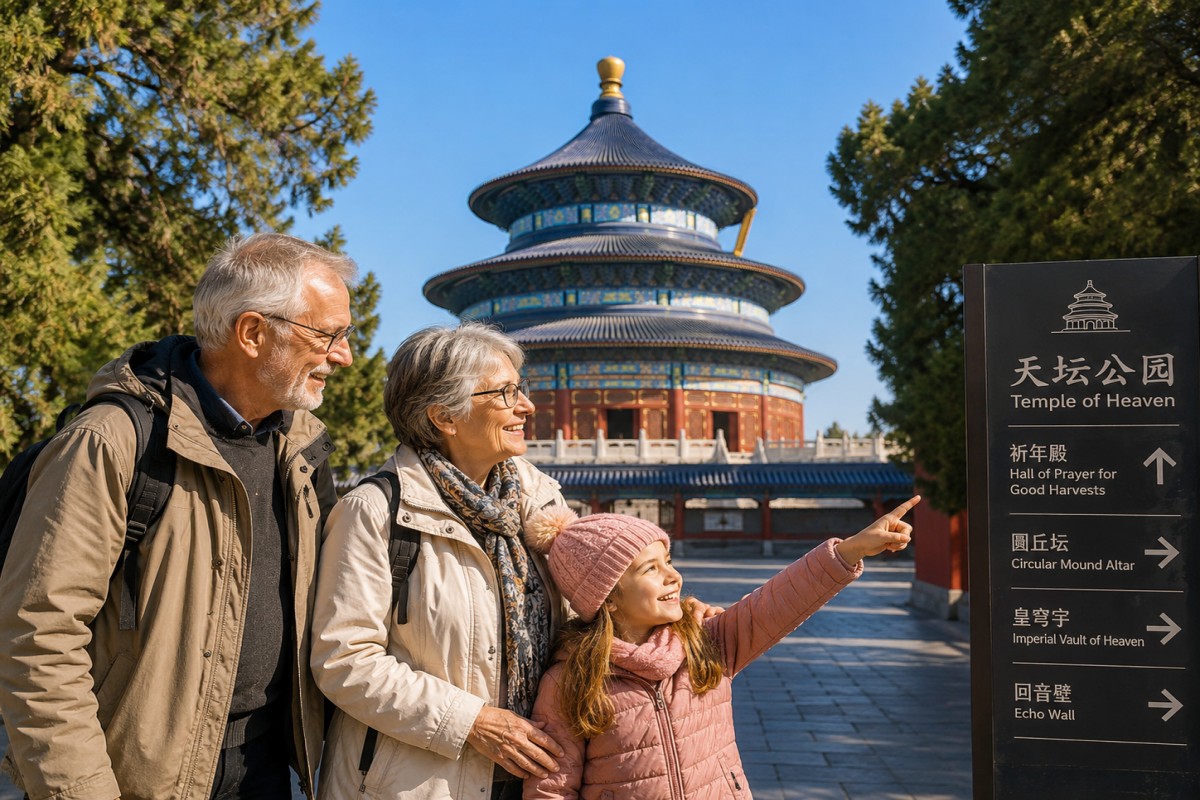
Today, visitors explore the Hall of Prayer for Good Harvests, Circular Mound Altar, Imperial Vault, and famous Echo Wall while enjoying the surrounding park where locals practise tai chi and traditional activities.
Imperial Rituals
See where emperors prayed for good harvests.
Symbolic Architecture
Discover the circular design and ancient cosmology.
Famous Highlights
Visit the Echo Wall and Circular Mound Altar.
Local Beijing Life
Explore the surrounding park and morning tai chi.
Why Was the Temple of Heaven Important in Ancient China?
In ancient China, emperors ruled as the “Son of Heaven” and believed their power came from heavenly authority. The Temple of Heaven was the imperial sacrificial altar where the emperor personally prayed for good harvests, favorable weather, and national prosperity.
During the Ming and Qing dynasties, these ceremonies were considered essential for maintaining harmony between heaven and earth. If floods, droughts, or famine occurred, people believed the emperor could lose the Mandate of Heaven.
Every winter solstice, the emperor and all his retinue traveled from the Forbidden City to the Temple of Heaven to perform sacred rituals according to a strict calendar. Ordinary Chinese citizens were forbidden from entering the temple grounds during these ceremonies.
The most important ritual was the Prayer for Good Harvests ceremony, which made the Temple of Heaven the spiritual heart of imperial China for nearly 500 years.
Why Was the Temple of Heaven Important in Ancient China?
The Temple of Heaven is famous for its architecture and landscape design. The entire complex follows ancient Chinese cosmology, where circles represent heaven and squares symbolize earth.
This symbolic layout appears throughout the temple complex:
Circular halls representing heaven
Square foundations representing earth
Blue roofs symbolizing the sky
Ceremonial buildings aligned by feng shui principles
The whole temple complex was designed to reflect harmony between humans, nature, and the cosmos.
Hall of Prayer for Good Harvests
The Hall of Prayer for Good Harvests is the most famous building inside the Temple of Heaven complex. This completely wooden hall stands on a marble stone base and was used by emperors to pray for good harvests during important imperial ceremonies.
The building is also one of the finest examples of traditional Chinese architecture. Built without nails, the hall combines symbolic design with advanced engineering from the Ming Dynasty.
Its pillars carry important meaning:
Four inner pillars represent the four seasons
Twelve middle pillars represent the twelve months
Twelve outer pillars represent the twelve traditional Chinese hours
Lavishly carved dragons, blue roof tiles, and circular architecture all symbolize heaven and imperial authority.
Circular Mound Altar
The Circular Mound Altar was the most sacred imperial sacrificial altar inside the Temple of Heaven.
This empty circular platform was used during the winter solstice ceremony when the emperor personally prayed to heaven. The altar contains nine surrounding rings symbolizing the nine levels of heaven.
At the center stands the “Heart of Heaven” stone, where the emperor conducted rituals connected to heaven worship and national prosperity.
The Circular Mound Altar perfectly reflects ancient cosmology and the symbolic layout of the entire complex.
Imperial Vault and the Famous Echo Wall
The Imperial Vault of Heaven stored sacred tablets used during imperial rituals.
Surrounding the Imperial Vault is the famous Echo Wall, a smooth circular wall known for its remarkable acoustic effect. Sounds can travel clearly along the wall, showing the advanced architectural knowledge used in ancient Chinese religious buildings.
Both the hall and the Echo Wall remain among the most popular highlights inside this historic heaven temple.
Temple of Heaven vs Forbidden City
Many travelers compare the Temple of Heaven with the Forbidden City because both were central to imperial China during the Ming and Qing dynasties.
However, their purposes were very different.
The Forbidden City served as the ancient Chinese royal palace where emperors ruled the empire and administered earthly matters. The Temple of Heaven was the spiritual center where emperors worshipped heaven and performed sacred ceremonies connected to heavenly authority.
Together, these two imperial complexes explain both the political and religious foundations of ancient China.
Exploring the Surrounding Park
Today, the Temple of Heaven park covers around 267 hectares and is one of the most popular public spaces in central Beijing. Since opening to ordinary Chinese citizens in 1918, the former imperial complex has become a lively cultural park.
Visitors entering from the East Gate or North Gate can explore:
Historic pine woods
Imperial gardens
Ancient buildings
Ceremonial buildings
The Vermilion Steps Bridge
Seven Star Stone Group
The surrounding park is especially famous in the morning when locals practise tai chi, sing opera, dance, and play traditional music throughout the temple grounds.
This blend of imperial history and local Beijing life makes the Temple of Heaven one of the most unique attractions in China.
Why the Temple of Heaven Is a UNESCO World Heritage Site
The Temple of Heaven became a UNESCO World Heritage Site because of its outstanding architecture and landscape design, symbolic layout, and importance in Chinese culture.
UNESCO recognizes the Temple of Heaven as one of the greatest surviving ceremonial sites from one of the world’s great civilizations.
Its religious buildings situated across the entire complex reflect ancient cosmology, feng shui principles, and the spiritual traditions of imperial China.
Best Things to See at the Temple of Heaven
Hall of Prayer for Good Harvests
The Hall of Prayer for Good Harvests is the most iconic building in the Temple of Heaven complex. Its circular design, blue roof, dragon pillars, and marble stone base symbolize heaven and imperial power.
Circular Mound Altar
The Circular Mound Altar was used for the winter solstice ceremony and prayer for good harvests rituals. The emperor stood at the center stone while performing sacred ceremonies connected to heaven worship.
Imperial Vault of Heaven
The Imperial Vault stored ceremonial tablets used during imperial rituals. Its smooth circular wall and symbolic layout make it one of the most important religious buildings in the complex.
Echo Wall
The famous Echo Wall surrounds the Imperial Vault and demonstrates advanced ancient Chinese acoustic design. Visitors can hear whispers travel across the curved wall.
Vermilion Steps Bridge
The Vermilion Steps Bridge connects important ceremonial areas and was once used by the emperor and all his retinue during sacred rituals.
Best Time to Visit the Temple of Heaven
The best time to visit the Temple of Heaven is during spring and autumn when Beijing weather is cooler and more comfortable.
Early morning is especially recommended because visitors can experience the surrounding park at its liveliest. Many locals practise tai chi, perform ethnic dances, sing opera, and exercise throughout the temple grounds.
Most travelers spend around 2 to 3 hours exploring the whole temple complex.
Frequently Asked Questions About the Temple of Heaven
Why is the Temple of Heaven important?
The Temple of Heaven is important because it was the highest imperial sacrificial altar in ancient China where emperors from the Ming and Qing dynasties worshipped heaven and prayed for good harvests.
What is the most famous part of the Temple of Heaven?
The most famous part is the Hall of Prayer for Good Harvests, followed by the Circular Mound Altar, Imperial Vault, and famous Echo Wall.
Why did emperors pray at the Temple of Heaven?
Chinese emperors believed they ruled through heavenly authority and the Mandate of Heaven. Rituals at the Temple of Heaven were believed to maintain harmony between heaven and earth.
Is the Temple of Heaven worth visiting?
Yes. The Temple of Heaven is one of the best places in Beijing to understand imperial China, ancient cosmology, traditional Chinese architecture, and local Beijing culture.
Final Thoughts
The Temple of Heaven remains one of the most important landmarks in Chinese culture and imperial China. From the Hall of Prayer for Good Harvests and Circular Mound Altar to the Imperial Vault and Echo Wall, every part of the temple complex reflects ancient Chinese cosmology, heavenly authority, and ceremonial tradition.
Today, this UNESCO World Heritage Site continues to attract visitors from around the world who come to explore its symbolic architecture, surrounding park, religious buildings, and connection to the spiritual history of ancient China.
Get Inspired with Some Popular Itineraries