

Payment Methods in China for Foreigners: Alipay, WeChat Pay, Cash and Cards
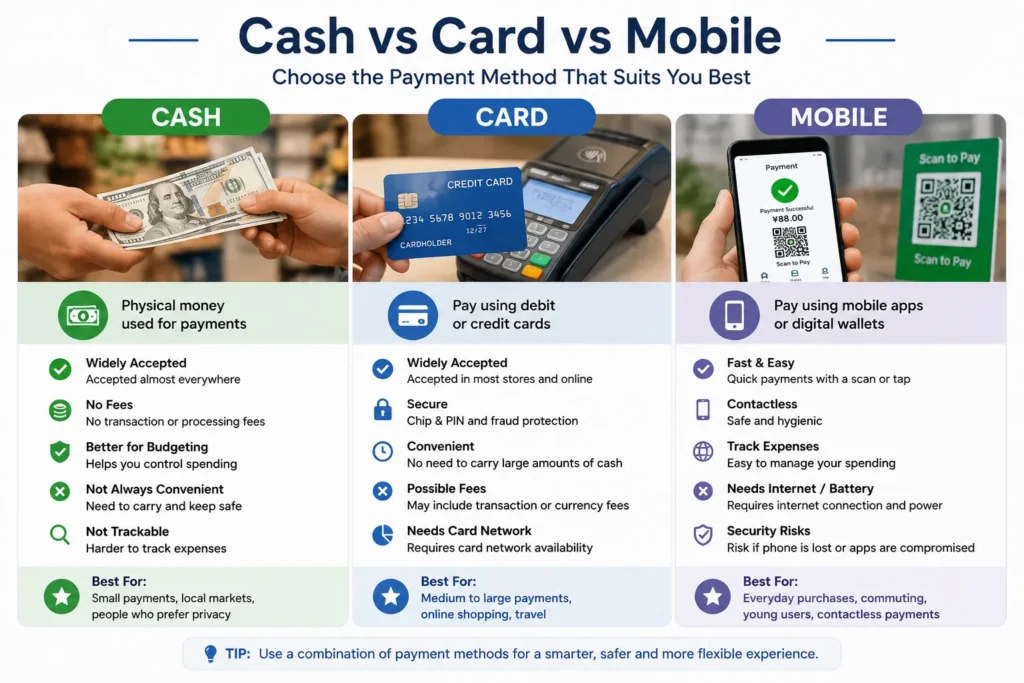
Paying in China is easy once you prepare the right options. Mobile payment apps handle most daily transactions, while RMB cash, international bank cards and ATM withdrawals provide useful backups. For most overseas travellers, the best setup is Alipay as the primary payment method, WeChat Pay as a second app, one or two physical cards, and a small amount of cash.
Both Alipay and WeChat Pay allow eligible foreign users to link international cards such as Visa and Mastercard. Visitors can also use bank cards, cash, UnionPay services and other approved payment options, although acceptance varies by merchant and location.


Quick Answer: What Is the Best Way to Pay in China?
The easiest way for foreigners to pay in China is to download Alipay before arrival, register with a foreign phone number, complete the required identity verification and link an eligible international credit or debit card. WeChat Pay is also widely accepted and works well as a second payment app.
Carry RMB cash for small vendors, rural areas or times when your phone or internet connection fails. Physical Visa and Mastercard cards are most useful at international hotels, airports, larger shopping centres and other businesses that display the relevant payment organization logos.
Best Payment Methods in China at a Glance
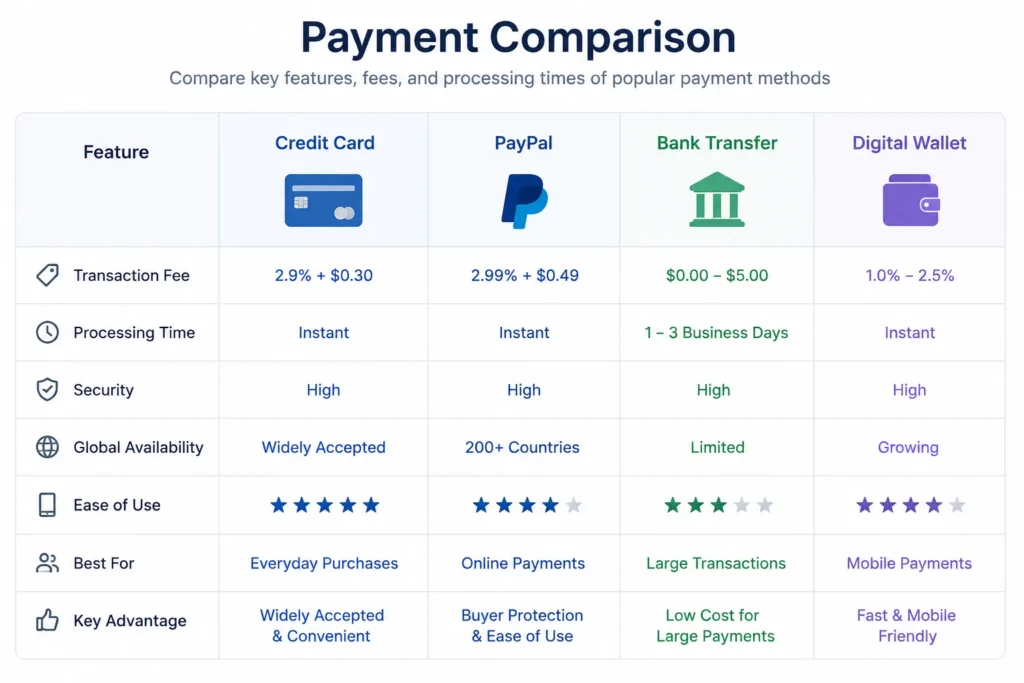
| Payment Method | Best For | Commonly Accepted At | Recommended Use |
|---|---|---|---|
| Alipay | Everyday purchases | Restaurants, supermarkets, taxis, attractions | Primary payment method |
| WeChat Pay | Local services and QR payments | Restaurants, hotels, local businesses | Secondary payment method |
| RMB Cash | Emergencies and small purchases | Markets, street food stalls, rural areas | Backup for offline or small vendors |
| Visa / Mastercard | Hotels and larger businesses | Airports, hotels, shopping malls | Best for larger businesses |
| UnionPay Cards | Domestic card payments | Many merchants and ATMs | Useful if your card supports UnionPay |
| ATM Withdrawals | Accessing local currency | Major bank ATMs | Withdr |
Mobile Payments in China
Mobile payment is the most common way to handle daily transactions in mainland China. Customers normally scan a merchant’s QR code or show a personal payment code at the checkout counter.
These cashless payments are used for:
Restaurants and cafés
Convenience stores and supermarkets
Shopping malls and local shops
Taxis and ride-hailing services
Public transportation
Tourist attractions
Street food
Train tickets and travel services
QR code payments are especially important because many small businesses may accept Alipay and WeChat Pay without operating a terminal for foreign credit cards.
There are two common ways to pay. At a small shop or market stall, you may scan the merchant’s QR code, enter the amount and confirm the transaction. At a supermarket or larger business, you may show your payment code for the cashier to scan.
Always check the merchant name and amount before confirming payment.
An active internet connection is usually required to open the app, confirm the amount and complete the transaction. Arrange international roaming, a travel eSIM or another reliable data service before depending on mobile payment apps.
Keep a physical card and cash available in case your phone battery dies, an app requires extra verification or a transaction is declined.
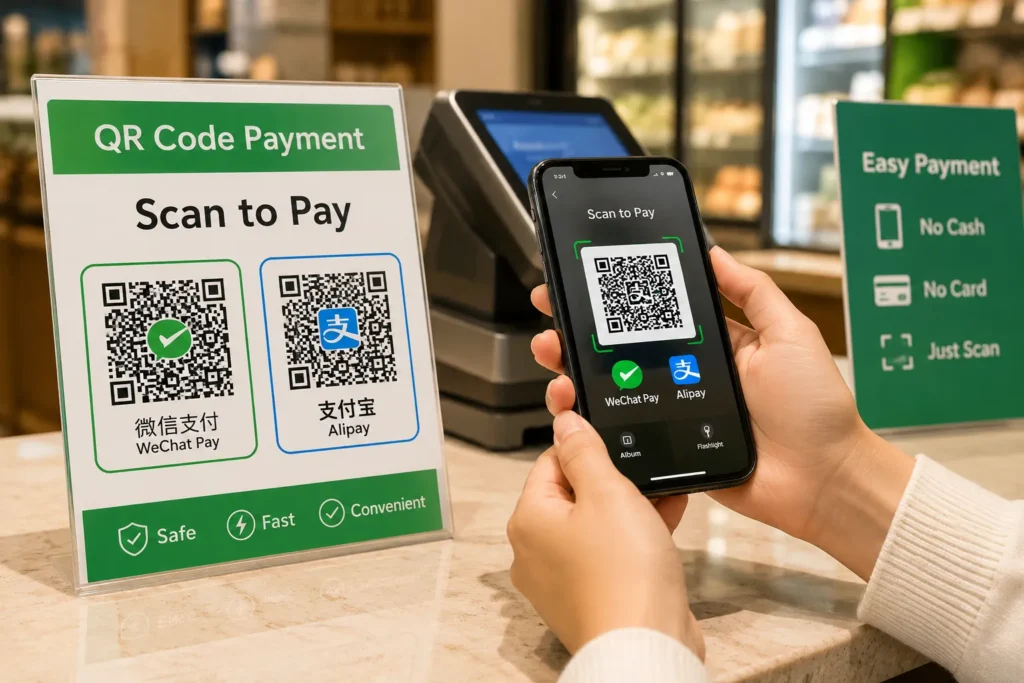
Alipay for Foreigners
Alipay is generally the most user-friendly payment app for tourists in China. It supports eligible foreign phone numbers and international bank cards, so most short-term visitors do not need to open a Chinese bank account.
After setup, Alipay can be used at a vast range of merchants in major cities and popular destinations. It is suitable for daily purchases, restaurants, supermarkets, taxis, attractions and selected travel services.
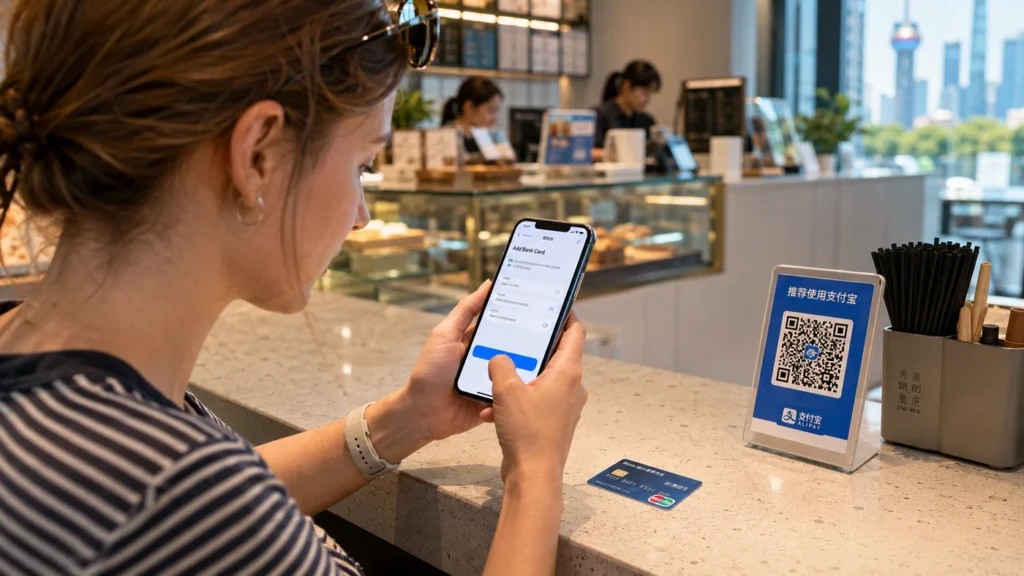
How to Set Up Alipay
Download the official Alipay app from your phone’s app store.
Register with an eligible foreign phone number.
Complete identity verification using your passport when requested.
Add a supported international credit or debit card.
Set a payment password and review the security settings.
Test the app with a small purchase after arriving in China.
Enter your name exactly as it appears on your passport and bank card. A mismatch in spelling, spacing or name order can cause verification problems.
Visa and Mastercard are among the international cards that foreign users can link to Alipay, although approval still depends on the card issuer, card type, payment organization and transaction.
A linked card may occasionally be declined because overseas payments are disabled, the bank detects unusual activity or additional authentication is required. Notify your bank before travelling and bring a second bank card whenever possible.
WeChat Pay for Foreigners
WeChat Pay, also called Weixin Pay, is another major mobile payment option. It is integrated into WeChat, which many hotels, restaurants, guides and local businesses use to communicate with customers.
Foreign visitors can register WeChat with an eligible overseas phone number and may add supported international cards after completing the required identity checks. Once activated, WeChat Pay can be used by scanning a merchant QR code or displaying a payment code.
How to Set Up WeChat Pay
Download the official WeChat app.
Register with your phone number.
Open the payment or wallet section.
Complete the requested identity verification.
Add an eligible international bank card.
Set your payment security details.
WeChat Pay is particularly useful when a booking, service or merchant operates through a WeChat account or Mini Program. However, first-time visitors may find Alipay simpler as a dedicated payment and travel app.
Alipay vs WeChat Pay: Which Is Better?
Alipay is usually the better first choice for tourists because its payment functions are easy to find and the app includes many travel-related services.
WeChat Pay is valuable for merchants, bookings and services connected to WeChat. It is also convenient when communicating directly with hotels, tour operators or local businesses.
Most travellers should install both payment apps. Having two mobile wallets gives you another option if one app is temporarily unavailable or a merchant prefers a particular payment code.
You should still carry cash and a physical card because neither app can guarantee that every transaction will succeed.
Can Foreigners Use Credit and Debit Cards in China?
Foreign credit cards and debit cards are accepted in China, but direct card acceptance is uneven.
Visa, Mastercard and other international cards are more likely to work at:
International hotels
Airports
Luxury stores
Major shopping centres
Larger restaurants
Businesses serving overseas travellers
Selected tourist attractions
Local restaurants, street vendors and smaller shops may not accept a physical foreign card even when they accept mobile payments. Linking the card to Alipay or WeChat Pay is often more practical than trying to pay with the physical card at every checkout counter.
Check for Visa, Mastercard, UnionPay or other payment organization logos before presenting your card. Official guidance states that bank cards can be accepted where the corresponding payment organization logos are displayed.
UnionPay cards generally have wider domestic acceptance because UnionPay is China’s national card network. Look for the UnionPay logo before using a payment terminal, ATM or self-service kiosk.
A Chinese bank account is not normally necessary for a short visit. Long-term residents may find one useful, but most tourists can manage with mobile payment apps, international cards and cash.
Is Cash Accepted in China?
Yes. The currency in China is Renminbi, abbreviated as RMB and commonly called yuan.
One yuan equals 10 jiao and 100 fen.
Cash remains an important backup despite the popularity of e-wallets. It is useful at:
Local markets
Small vendors
Street food stalls
Family-owned restaurants
Rural areas
Remote locations
Businesses with an unstable internet connection
China has continued expanding cash acceptance across transportation, shopping, dining, entertainment and other services.
A practical amount to carry is around ¥500–1,500, depending on your itinerary and spending habits. Smaller bills such as ¥10, ¥20 and ¥50 are easier for daily transactions than relying only on ¥100 notes.
Do not assume every seller will have enough change for a large bill. Pay with smaller denominations when buying inexpensive items, and keep the rest of your cash in a secure place.
ATM Withdrawals and Exchanging Money
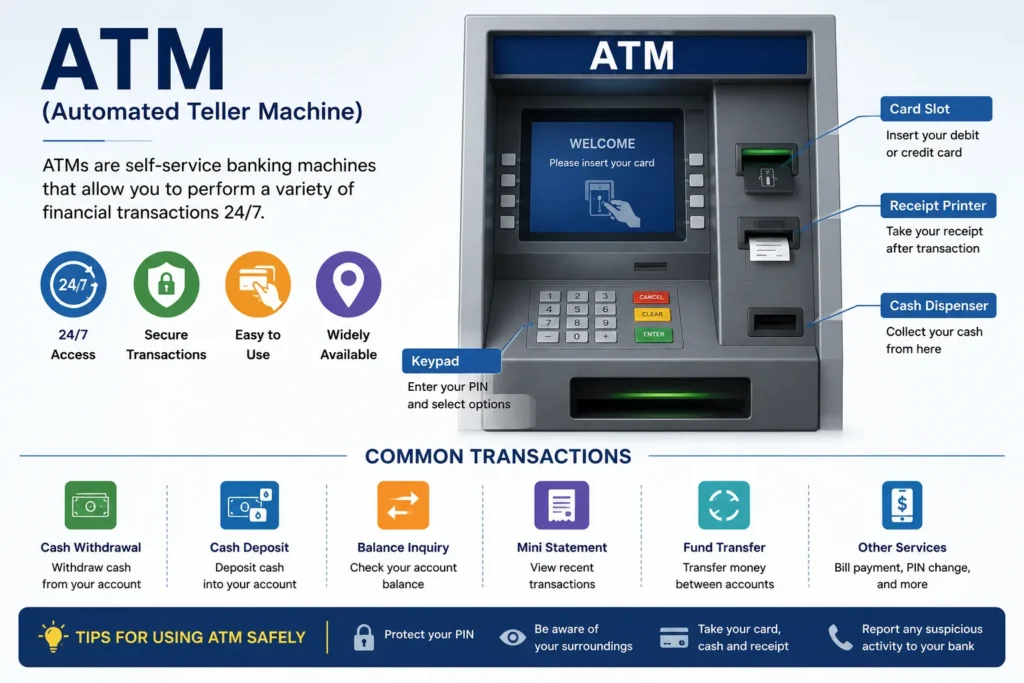
Major bank outlets in large cities often operate ATMs that accept overseas cards. Check for Visa, Mastercard, UnionPay, Plus or Cirrus signs before inserting your bank card.
RMB cash can be withdrawn from ATMs displaying the logo of the corresponding bank card organization.
If one machine rejects your card, try an ATM belonging to another major bank rather than repeating the transaction many times.
Your own bank may charge:
An international ATM fee
A foreign transaction fee
A currency conversion fee
An exchange-rate markup
The Chinese ATM may also display a local fee, daily withdrawal limit or exchange rate before you confirm the withdrawal.
Notify your bank before travelling to China so legitimate transactions are less likely to be blocked. Bringing cards issued by two qualified financial institutions provides a useful backup if one bank declines a payment.
Exchanging money before departure can be convenient, but it is not necessary to carry your full travel budget in cash.
Foreign visitors can exchange currency at bank outlets displaying currency exchange signs, approved outlets of qualified financial institutions and supported self-service kiosks.
Compare exchange rates and service fees, keep your receipt and avoid exchanging money through unlicensed individuals.
Can Foreigners Use e-CNY?
e-CNY is China’s official digital currency, issued by the People’s Bank of China. Overseas visitors may be able to access supported e-CNY services depending on current eligibility, app availability and merchant acceptance.
For a typical tourist, Alipay and WeChat Pay remain more familiar and practical for daily use. Treat e-CNY as an additional payment option rather than your only wallet.
Common Payment Problems and Solutions
Your Card Is Declined
Check whether overseas transactions are enabled and whether your bank requires app or SMS approval. Contact the card issuer if repeated payments fail.
Using another card or switching between Alipay and WeChat Pay may solve the problem.
Identity Verification Fails
Make sure your passport details, account name and bank card information match. Use a clear passport image and avoid abbreviations that do not appear on the document.
You Cannot Receive a Security Code
Keep your foreign phone number active and confirm that international roaming or SMS reception works. Some banks and payment apps require a one-time verification code.
The App Has No Internet Connection
Switch between mobile data and Wi-Fi. Carry cash for immediate purchases and keep an offline copy of your hotel address and other essential information.
A Merchant Does Not Accept Your Physical Card
Ask whether Alipay, WeChat Pay or RMB cash is accepted. Many vendors that cannot process international cards can still accept a QR code payment.
The Payment Amount Is Wrong
Before confirming, check the merchant name and payment amount shown on the screen. When scanning a printed QR code, you may need to enter the amount yourself.
Never share a screenshot of an active payment code or allow an unknown person to operate the payment app on your phone.
Payment Checklist Before Visiting China
Complete these steps before departure:
Download Alipay and WeChat.
Register with your foreign phone number.
Complete passport verification.
Link at least one international bank card.
Notify your bank about the trip.
Arrange reliable mobile internet.
Carry ¥500–1,500 in small RMB notes.
Bring a second physical card from another bank.
Save your banks’ emergency contact details.
Test both apps with a low-value transaction after arrival.
This combination covers most daily life in major cities while giving you practical backups for rural areas, technical problems and merchants with limited payment options.
Final Recommendation
The most reliable payment setup for foreigners in China is:
Alipay for everyday purchases, WeChat Pay as a second mobile wallet, a Visa or Mastercard from another bank, and ¥500–1,500 in RMB cash.
Set up the apps before departure, keep mobile internet available and test a small transaction after arrival. With these payment options ready, you can handle most shopping, dining, transportation and travel expenses across mainland China.
Frequently Asked Questions
Can foreigners use Alipay in China?
Yes. Eligible foreign visitors can register with a foreign phone number, complete identity verification and link supported international credit or debit cards. A Chinese bank account is not normally required for basic tourist payments.
Can tourists use WeChat Pay?
Yes. Overseas travellers may register a WeChat account and add an eligible international card after completing the required verification. Availability can depend on the card issuer and account status.
Can I use Visa or Mastercard in China?
Yes, but direct acceptance is strongest at international hotels, airports, major shopping centres and larger businesses. Linking the card to Alipay or WeChat Pay gives it broader practical use.
Does China Accept Cash?
Yes. RMB cash remains a valid and useful payment method. Carry small bills for markets, street food, taxis, emergencies and travel outside major cities.
How Much Cash Should I Bring to China?
Around ¥500–1,500 is practical for many visitors. The right amount depends on the length of your trip, your destinations and whether your mobile payment apps are working reliably.
Do I Need a Chinese Bank Account?
No. Most short-term visitors can pay with Alipay, WeChat Pay, international cards and cash without opening a Chinese bank account.
Can I Register With a Foreign Phone Number?
Alipay and WeChat support eligible overseas phone numbers. Keep the number active because registration, security checks or your bank may require an SMS verification code.
Are QR Code Payments Safe?
QR code payments are generally convenient and secure when used correctly. Confirm the merchant name and amount, protect your payment password and never share screenshots of a live payment code.
Get Inspired with Some Popular Itineraries