
How Many Days in Guizhou?
The province is too spread out for a rushed checklist. Short trips should focus on one or two regions, while a week or more gives you time to combine major landscapes with ethnic villages.
Travel in Guizhou works best as a route, not a single-city stay. This guide helps you combine Huangguoshu Waterfall, Fanjingshan, Libo’s karst landscapes, Xijiang, Zhaoxing and Zhenyuan, with practical advice on trip length, transport, weather, food and travel through Miao and Dong villages.
Guizhou is easier to plan by region than by a long checklist of attractions. Start with your trip length, then combine waterfalls and karst landscapes with Miao and Dong villages, ancient towns or mountain scenery. High-speed rail covers part of the journey, while rural areas often require buses, transfers or a private car.
For a first Guizhou trip, use Guiyang as the main gateway and choose a realistic combination of regions. Huangguoshu and Anshun work for waterfall scenery; Kaili and Xijiang introduce Miao culture; Zhaoxing and nearby Dong villages add drum towers, wind-and-rain bridges and rural landscapes. Add Libo, Zhenyuan, Jiabang or Fanjingshan when your schedule allows.
The province is too spread out for a rushed checklist. Short trips should focus on one or two regions, while a week or more gives you time to combine major landscapes with ethnic villages.
Spring and autumn offer the easiest balance for touring. Summer brings heavier rain and stronger waterfalls, while autumn is especially rewarding for rice terraces and harvest landscapes.
Guizhou combines dramatic natural scenery with living Miao and Dong traditions, historic towns and rural landscapes. Choose the experiences that matter most before building your route.
Trains are useful between major cities, but they do not solve every rural connection. A mixed route using rail plus local transfers or a car is usually more practical for village and mountain itineraries.
Start with the major places below, then compare Miao and Dong villages, waterfall and karst routes, ancient towns and mountain destinations before deciding how many regions fit comfortably into your trip.
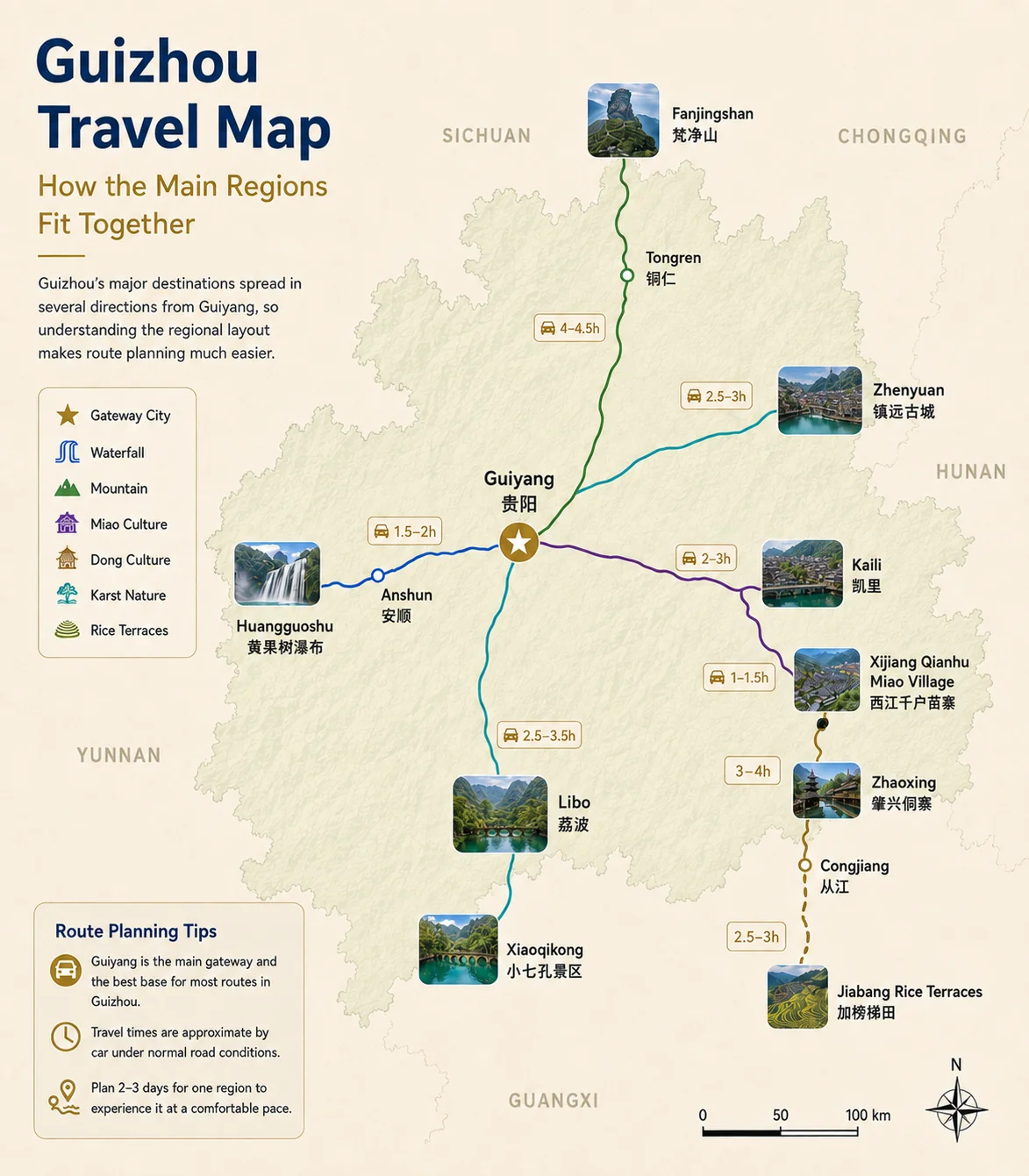
Guizhou’s major destinations spread in several directions from Guiyang, so understanding the regional layout makes route planning much easier. Huangguoshu lies to the west, the Miao and Dong regions extend southeast, Libo forms a southern nature branch, while Zhenyuan and Fanjingshan take the journey farther east and northeast.
The final map will show Guiyang, Huangguoshu, Kaili, Xijiang, Zhenyuan, Fanjingshan, Zhaoxing, Congjiang, Jiabang, Libo and Xiaoqikong, with simple route directions for first-time visitors.
Guiyang is the main gateway, but the most useful overnight bases change as the route moves through the province.
The main waterfall branch and an easy natural extension from Guiyang.
The main gateway into the Miao areas of southeast Guizhou and a natural cultural branch from Guiyang.
The Dong region, best approached as a continuation of a southeast Guizhou route rather than a quick detour.
A major nature branch for rivers, waterfalls, forest and karst landscapes.
Separate eastern extensions for an ancient-town stop or a dedicated mountain route through the Tongren area.
Add Jiabang when photography and rural landscapes justify a deeper southeast Guizhou detour.
Places that look relatively close can still involve rail changes, road transfers or another overnight stop. In Guizhou, route direction is often more useful than straight-line distance when deciding which destinations belong in the same itinerary.
Guizhou’s major destinations play very different roles in a trip, from high-impact natural sights to cultural bases and slower rural extensions. Huangguoshu is the clearest first natural stop, while Libo, Fanjingshan, Xijiang, Zhaoxing, Zhenyuan and Jiabang suit different routes, interests and transfer patterns.
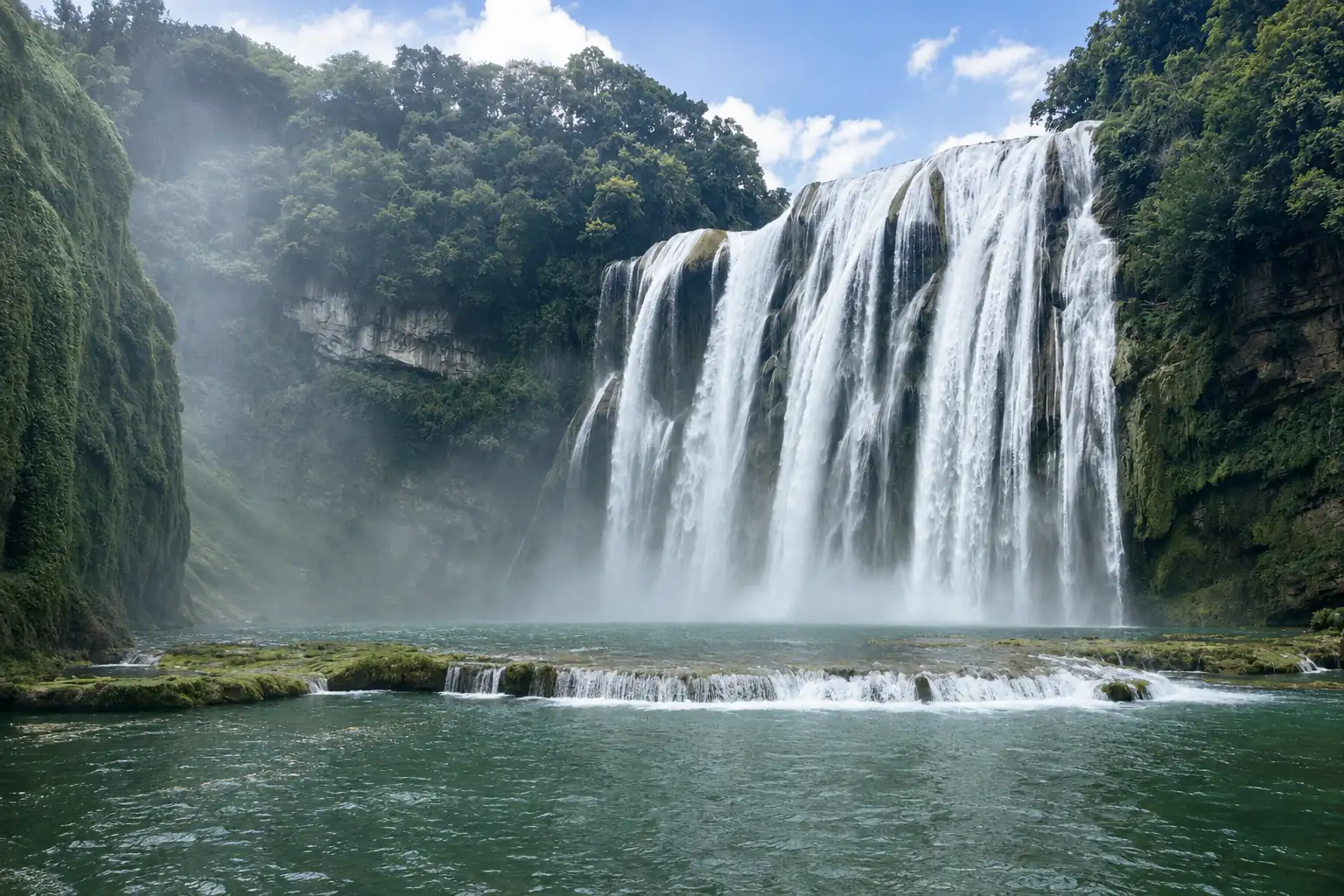
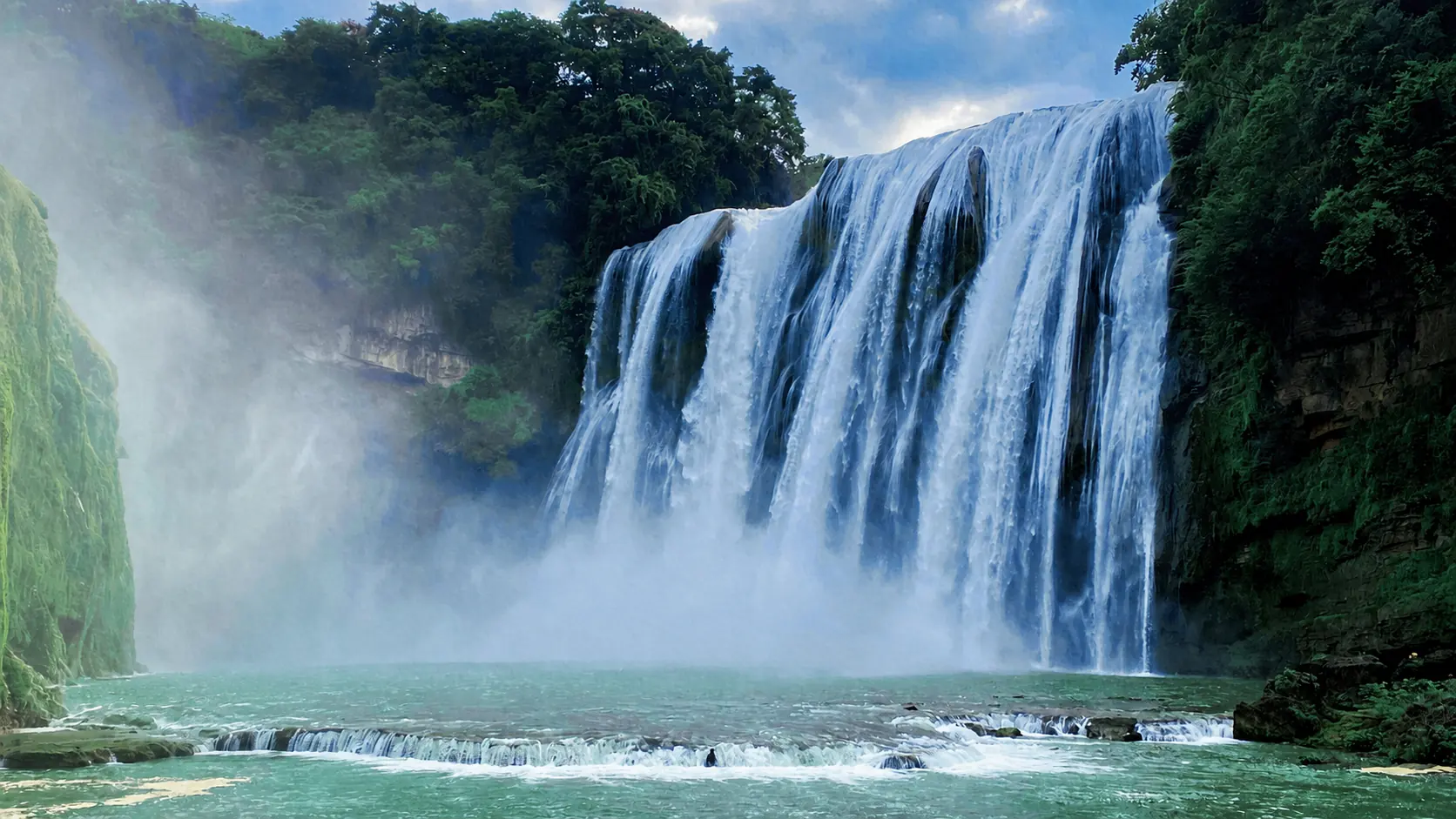
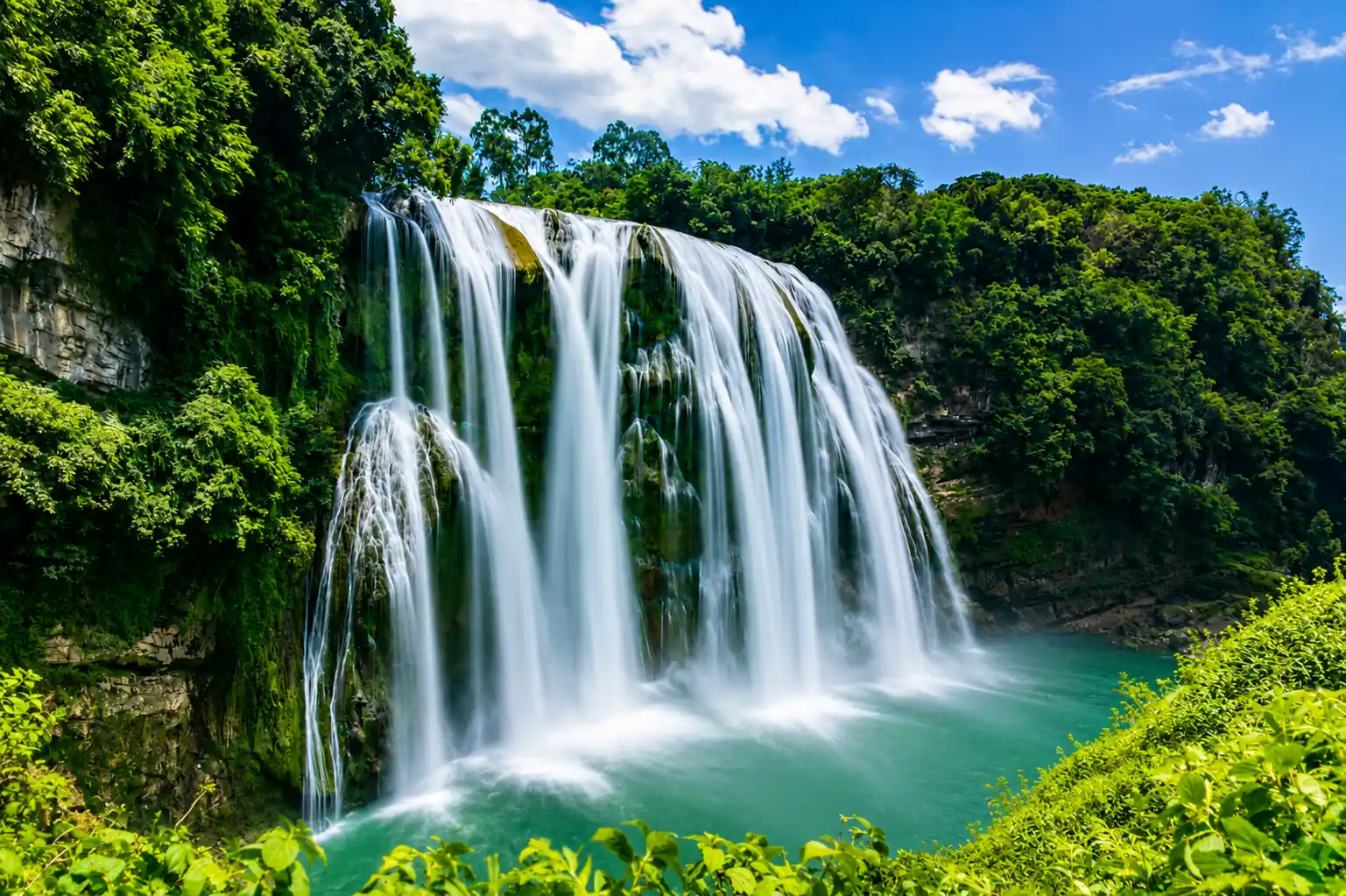
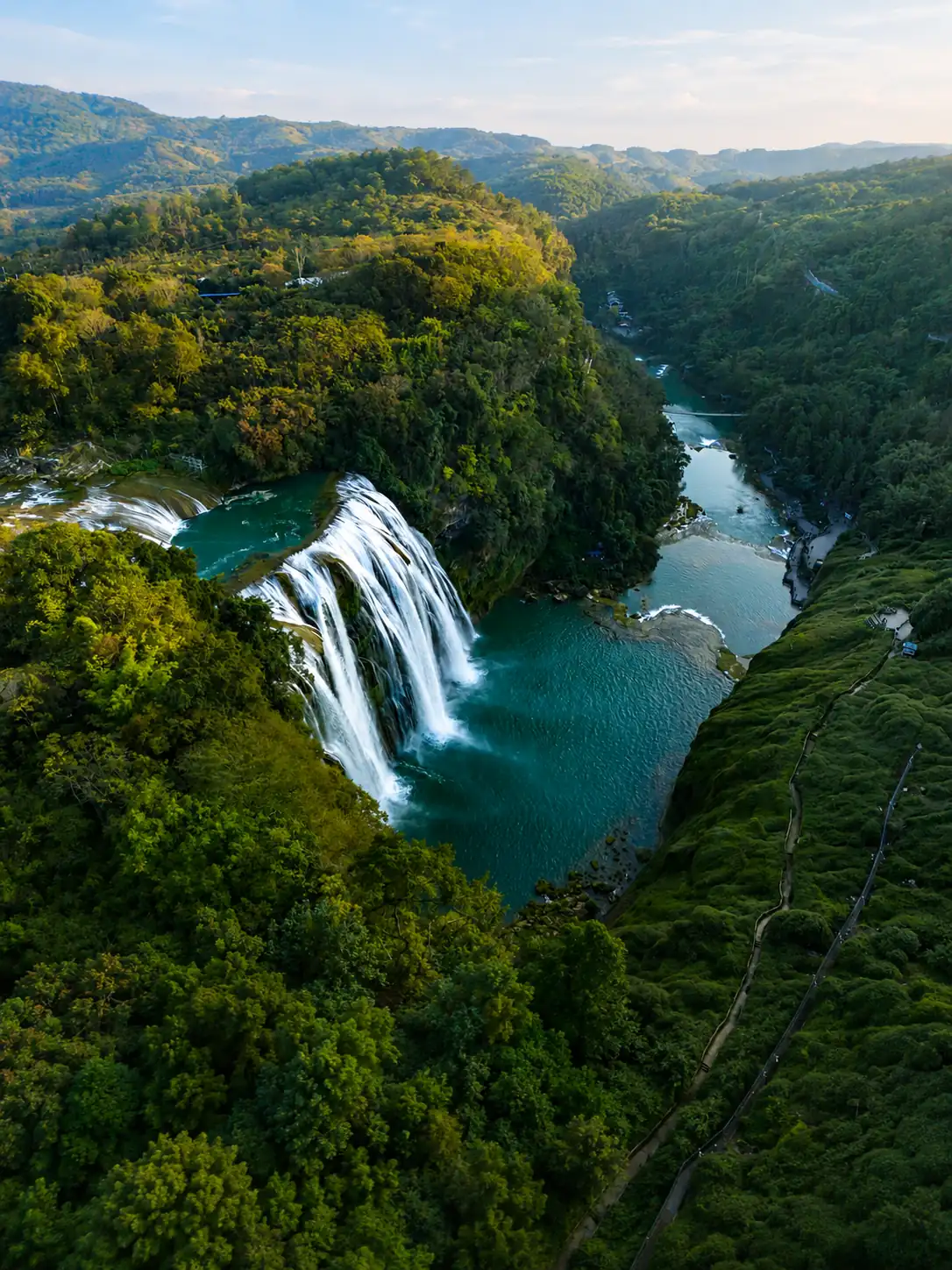
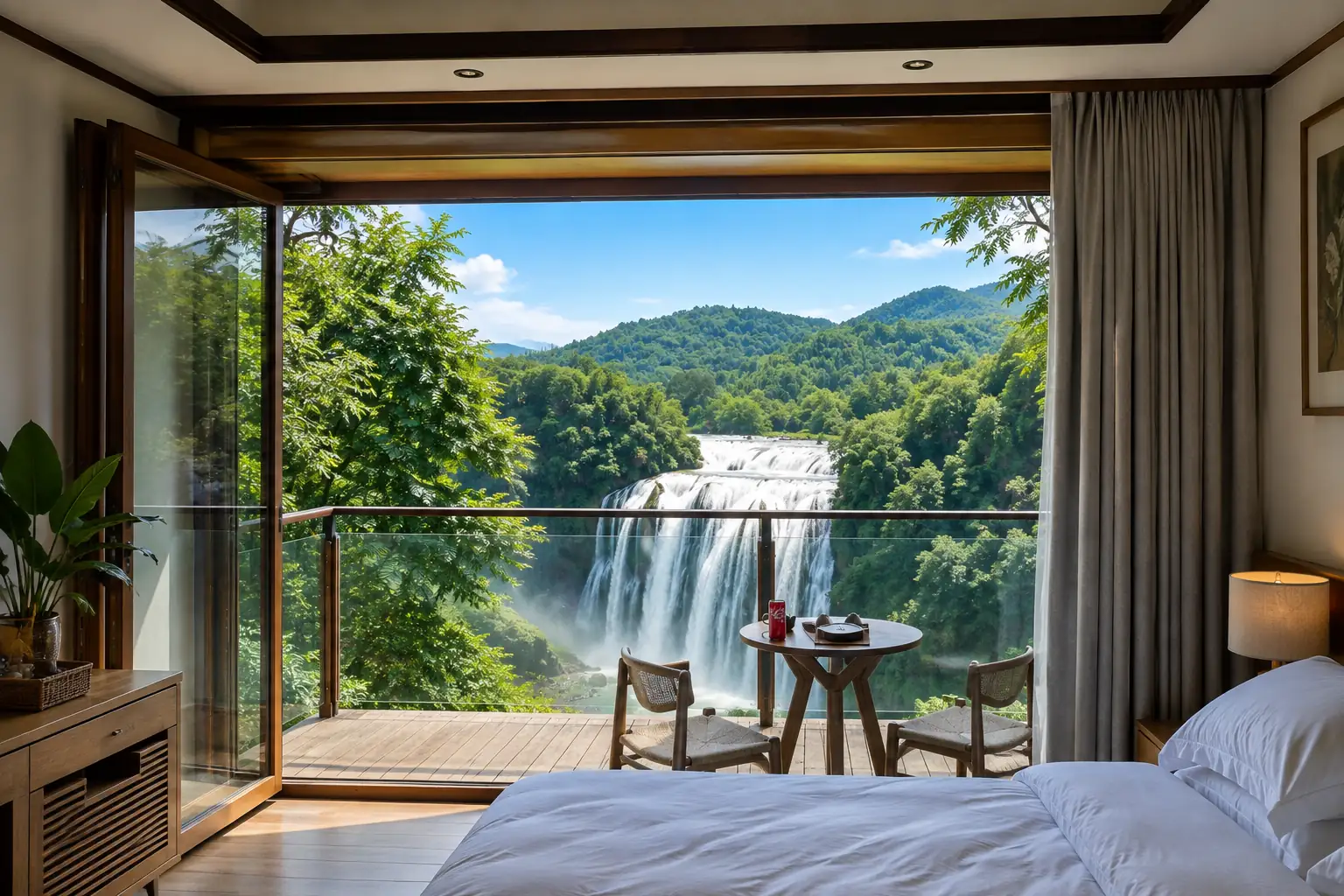
Near Anshun, Huangguoshu is the natural landmark most first-time visitors should prioritize. The wider scenic area combines the main waterfall with river, rock and karst scenery, so it deserves more than a quick photo stop. It fits especially well at the beginning of a route from Guiyang before continuing east or southeast through Guizhou.
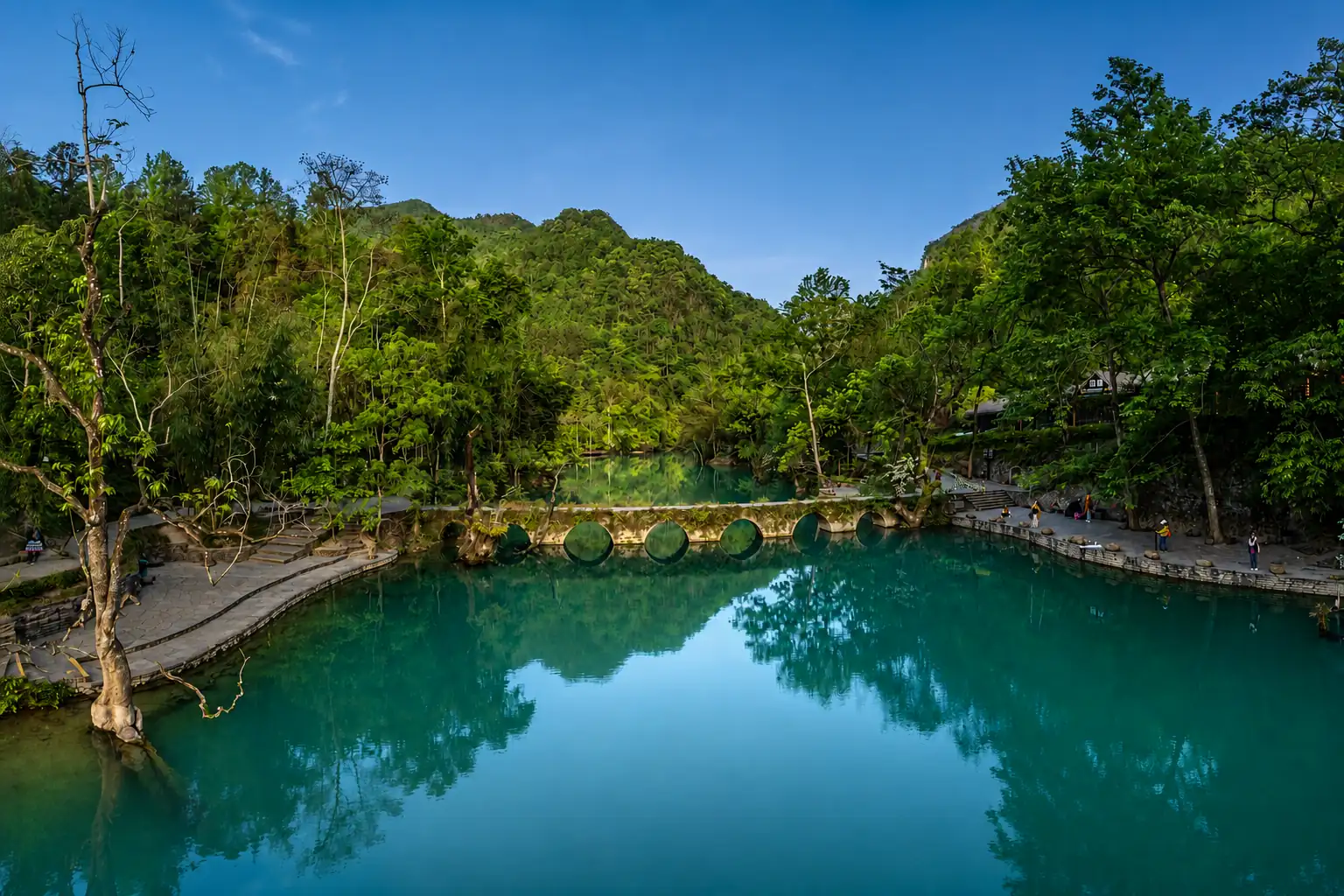
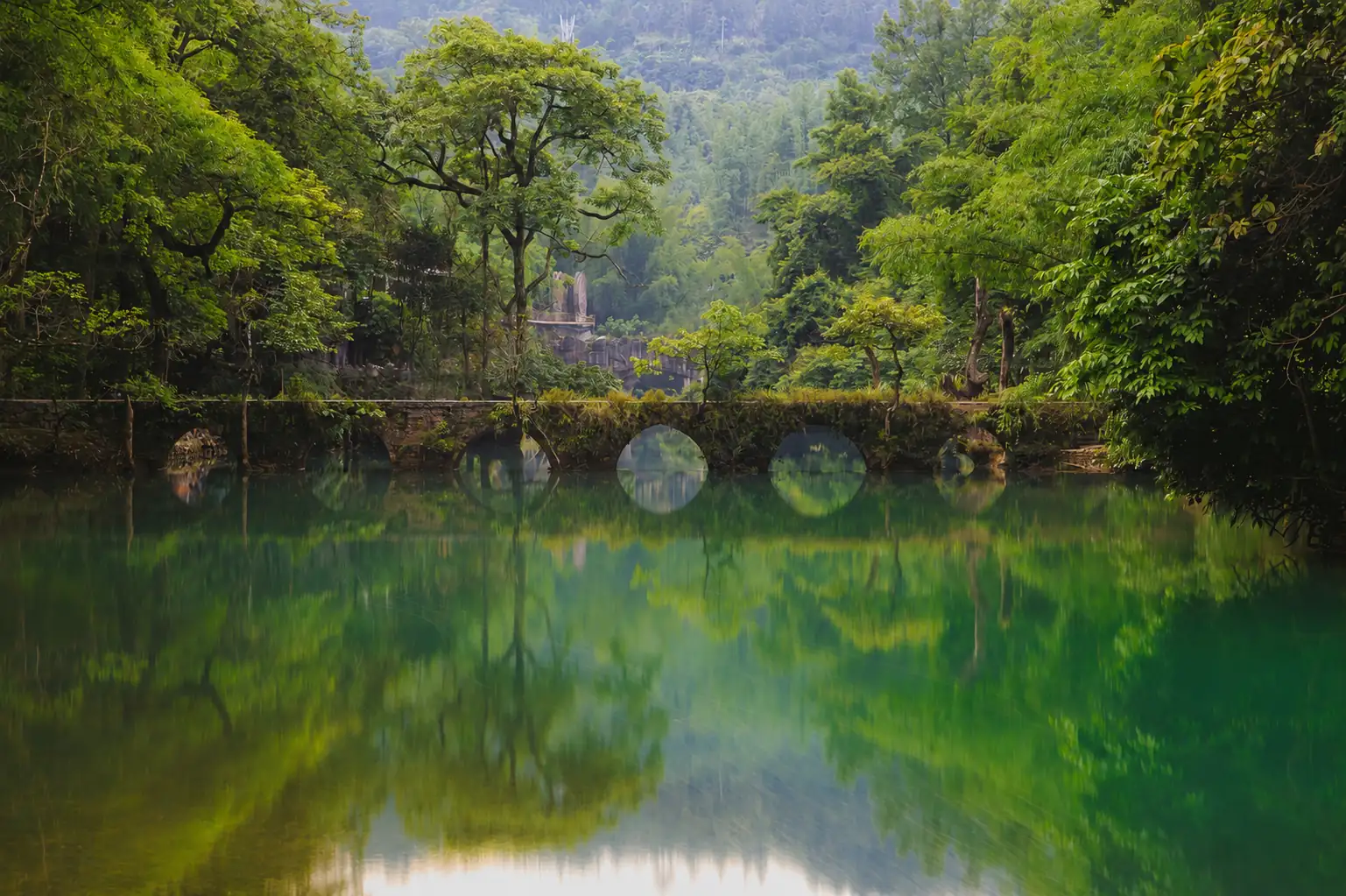
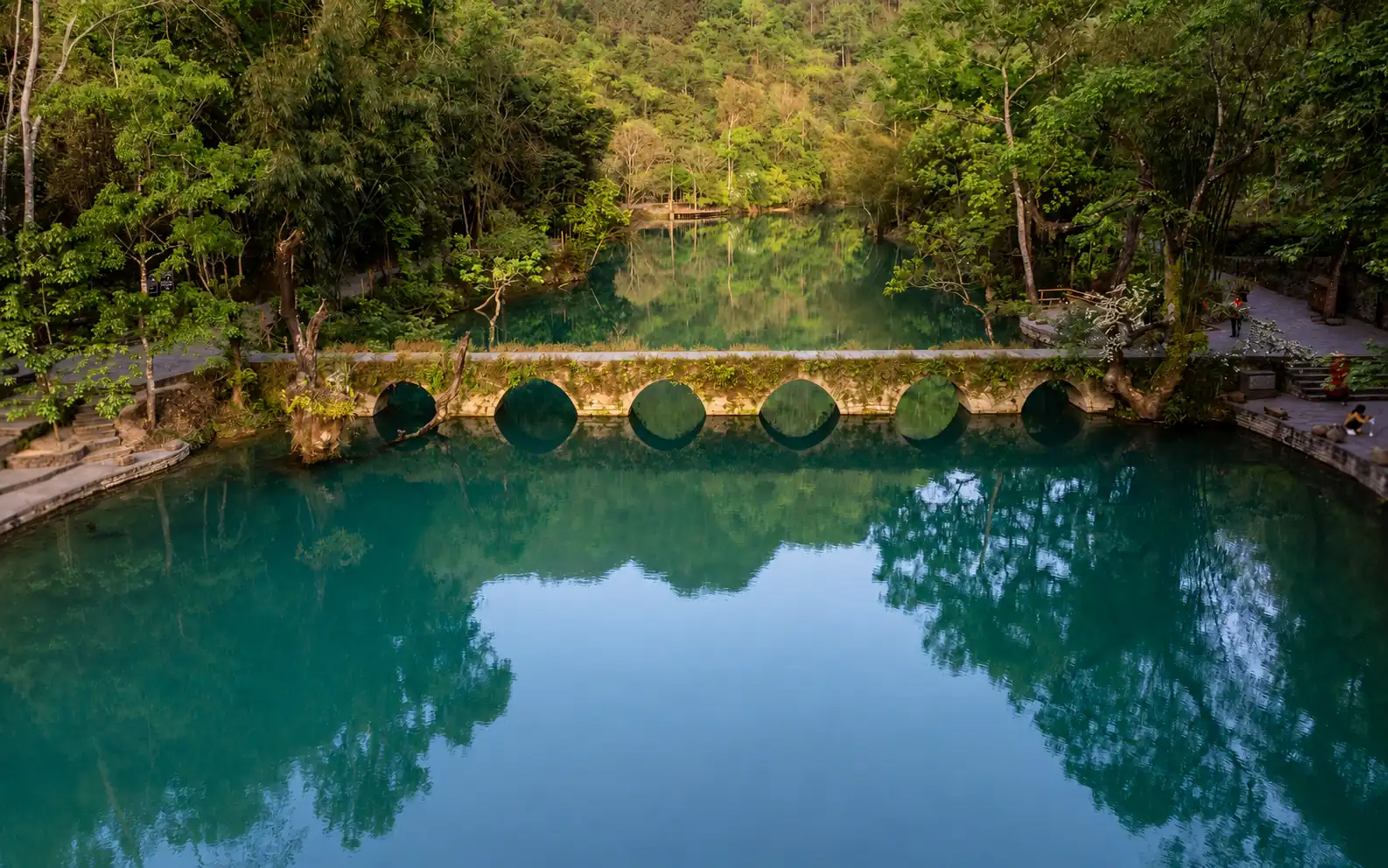
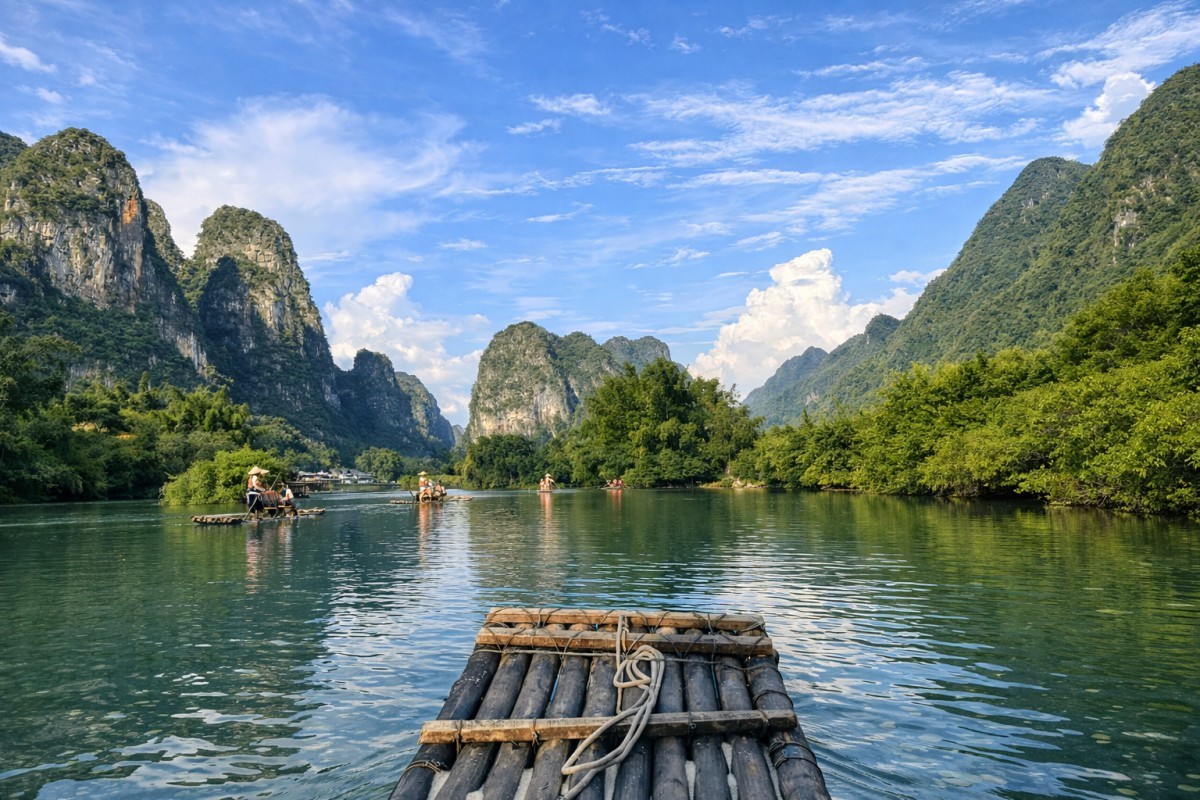
Choose Libo for some of Guizhou’s strongest karst-and-water scenery, with forested peaks, clear rivers and the Xiaoqikong area at the heart of most visits. Part of the wider UNESCO-listed South China Karst landscape, it is a worthwhile extension for travelers who want a more nature-heavy itinerary rather than adding more towns or villages.
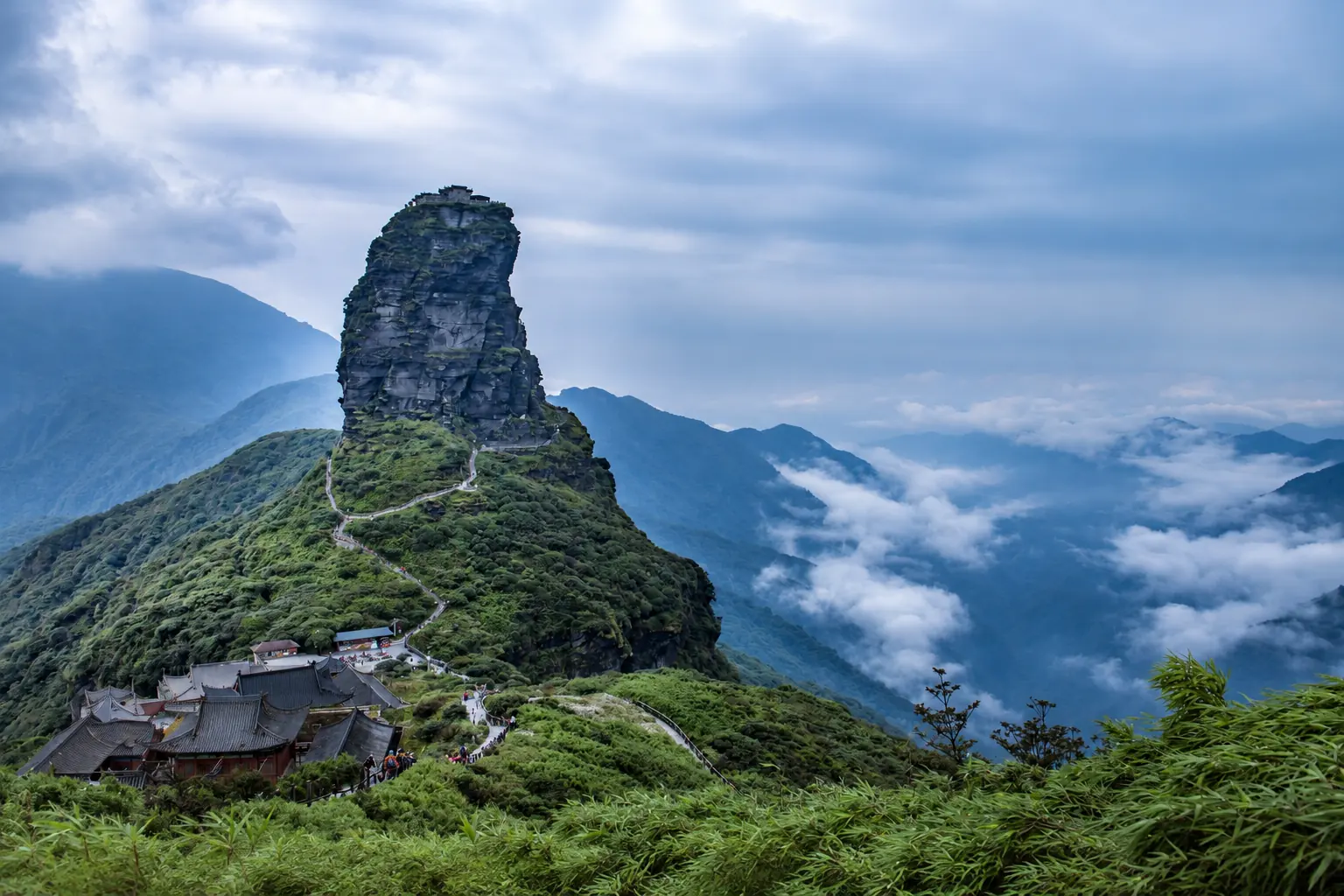
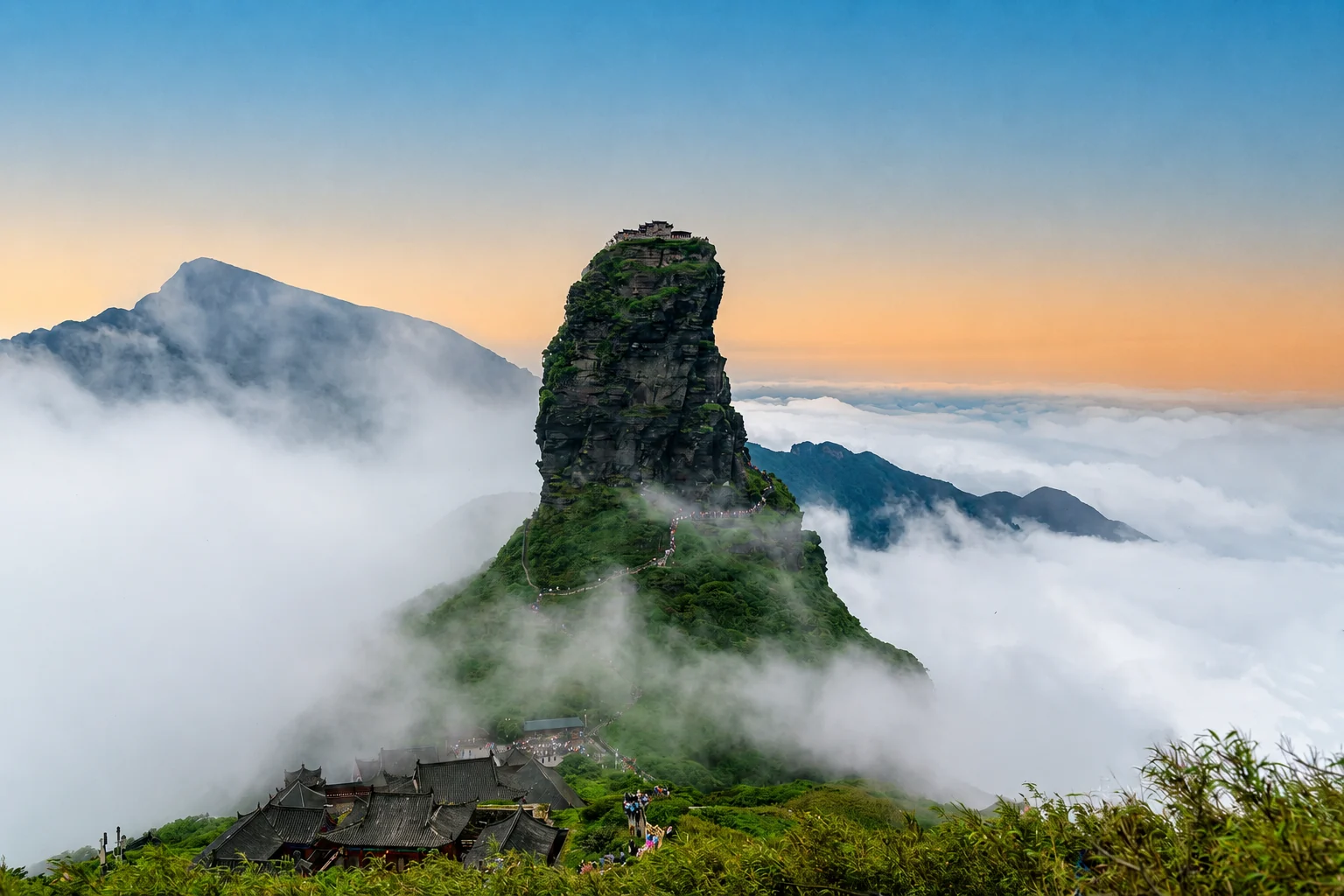
Fanjingshan is the mountain choice for travelers who want hiking, high-elevation scenery and a very different landscape from Guizhou’s waterfalls and villages. Located in the Wuling Mountains near Tongren, it works best as a deliberate extension rather than something squeezed into an already crowded itinerary.
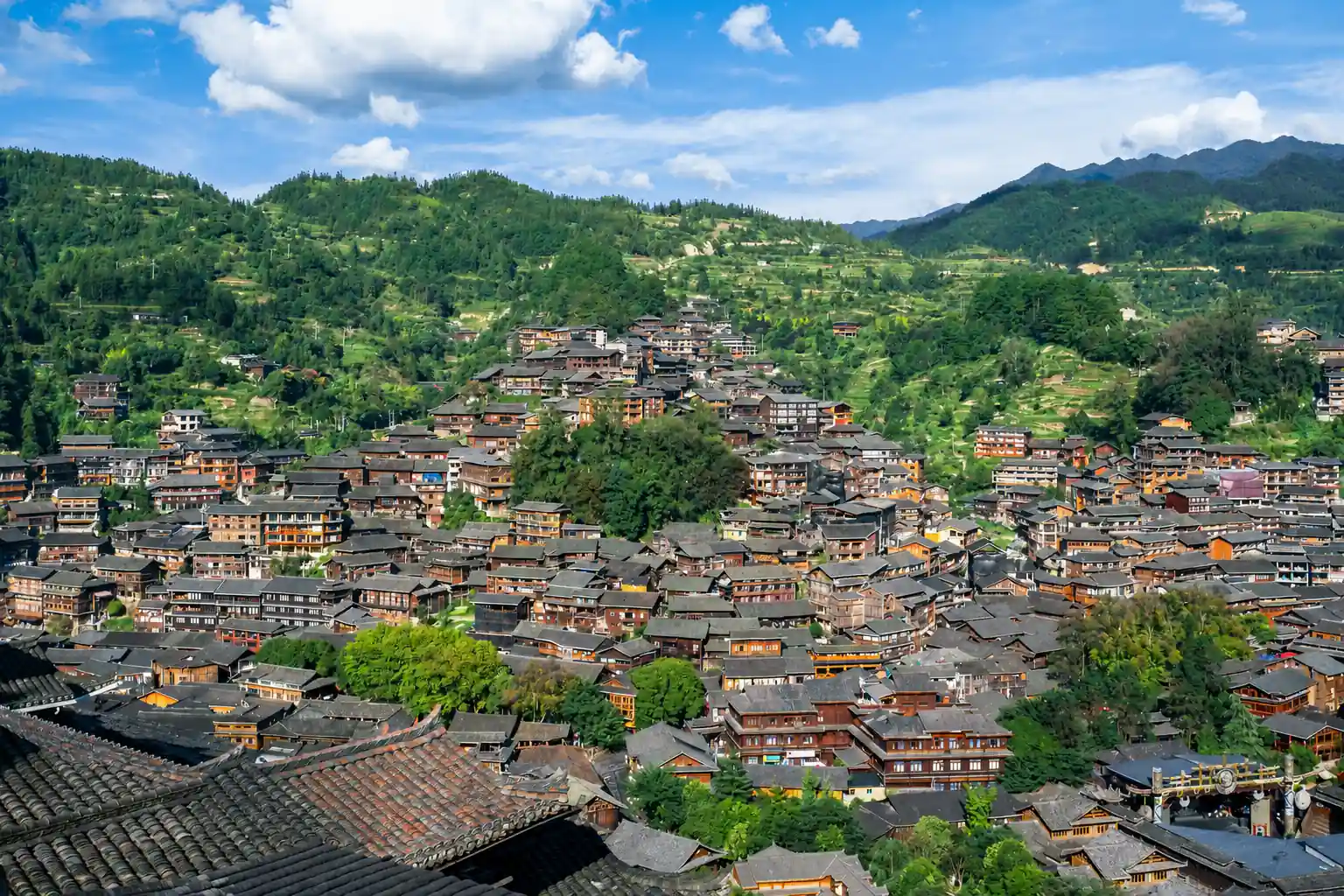
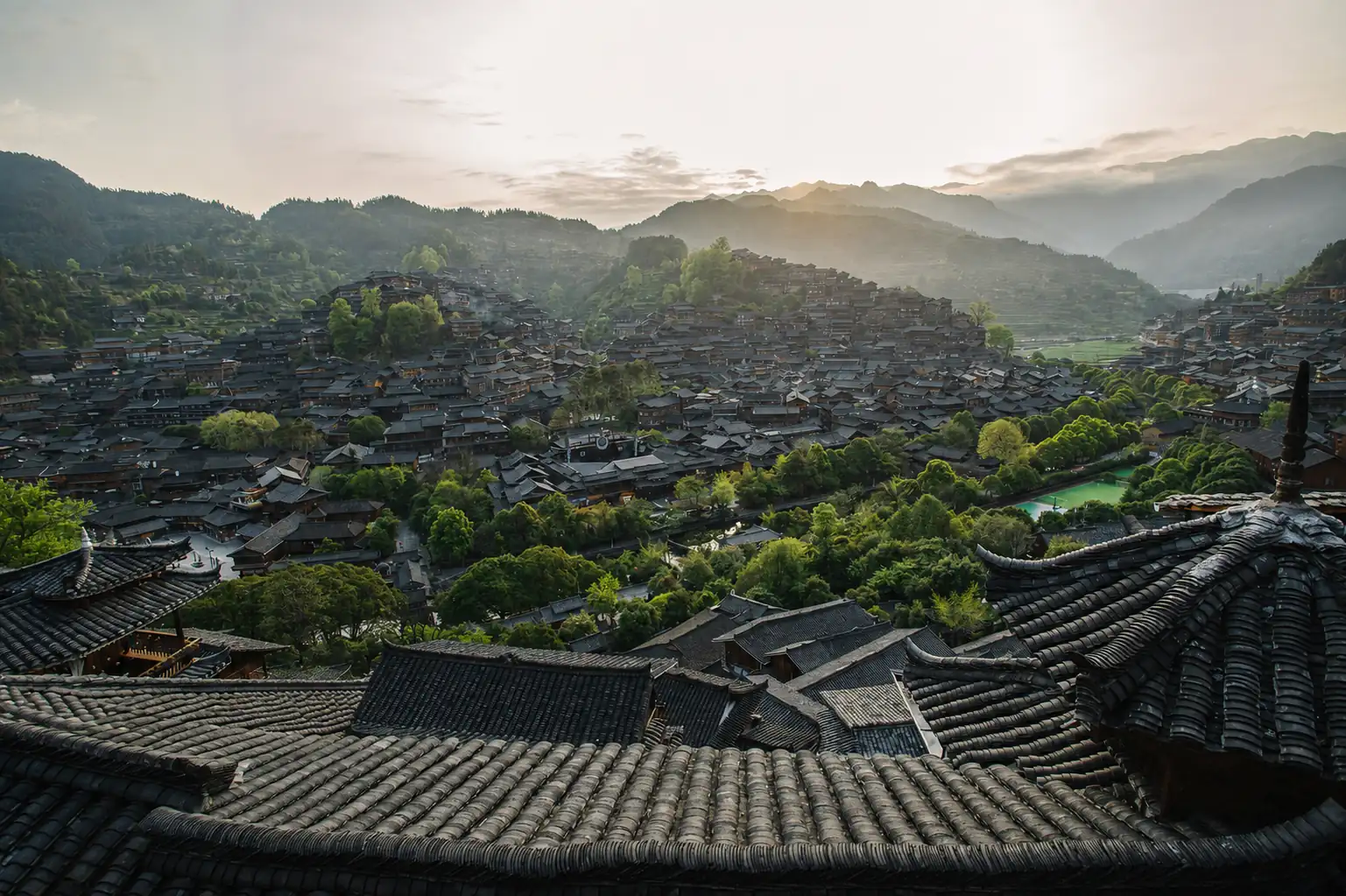
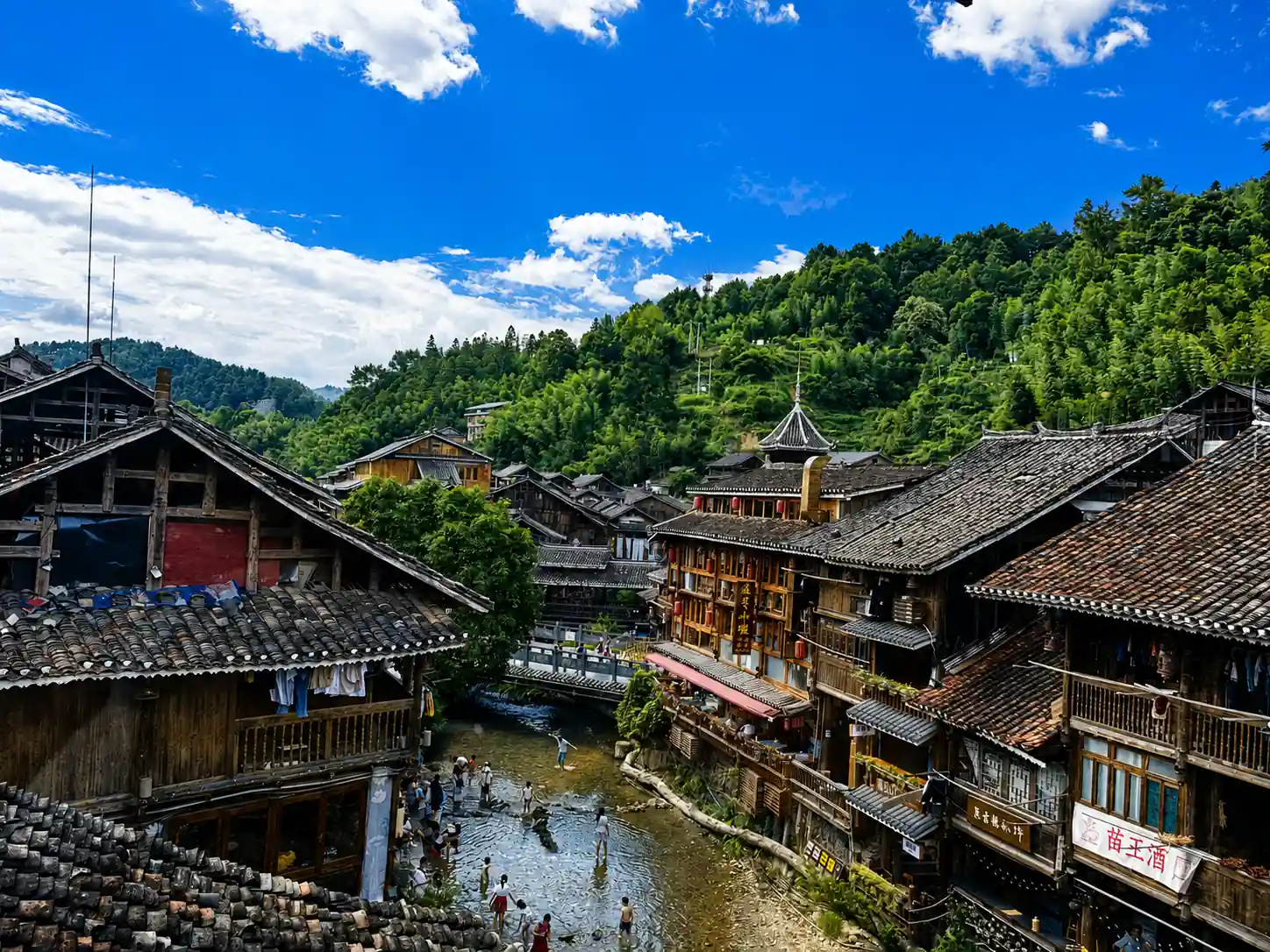
Kaili is the main gateway to the Miao areas of southeast Guizhou, while Xijiang offers one of the easiest introductions to Miao architecture, dress, crafts and village life. It is convenient for first-time visitors, but travelers seeking a quieter experience should also compare smaller Miao villages before deciding where to stay.
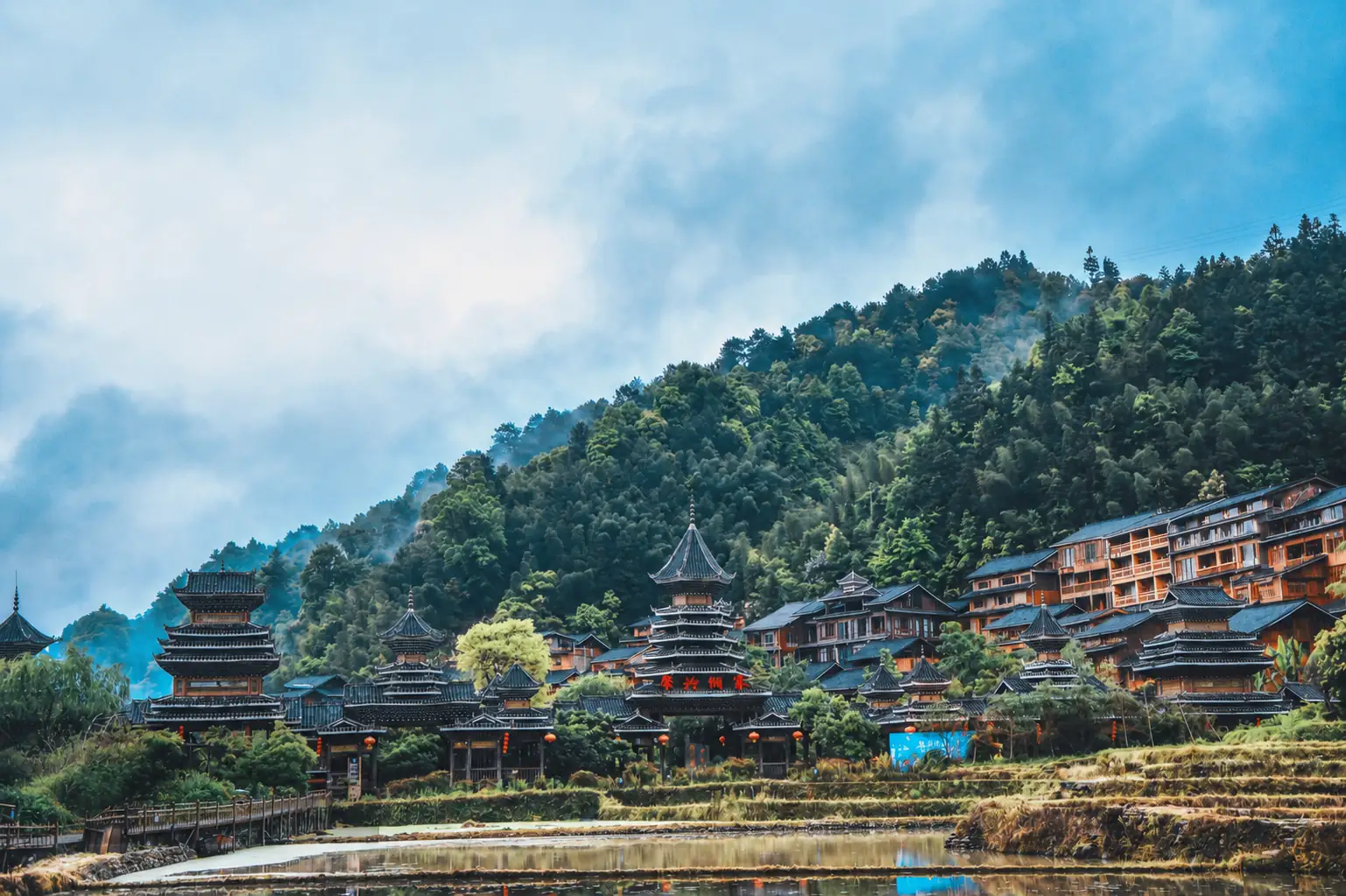
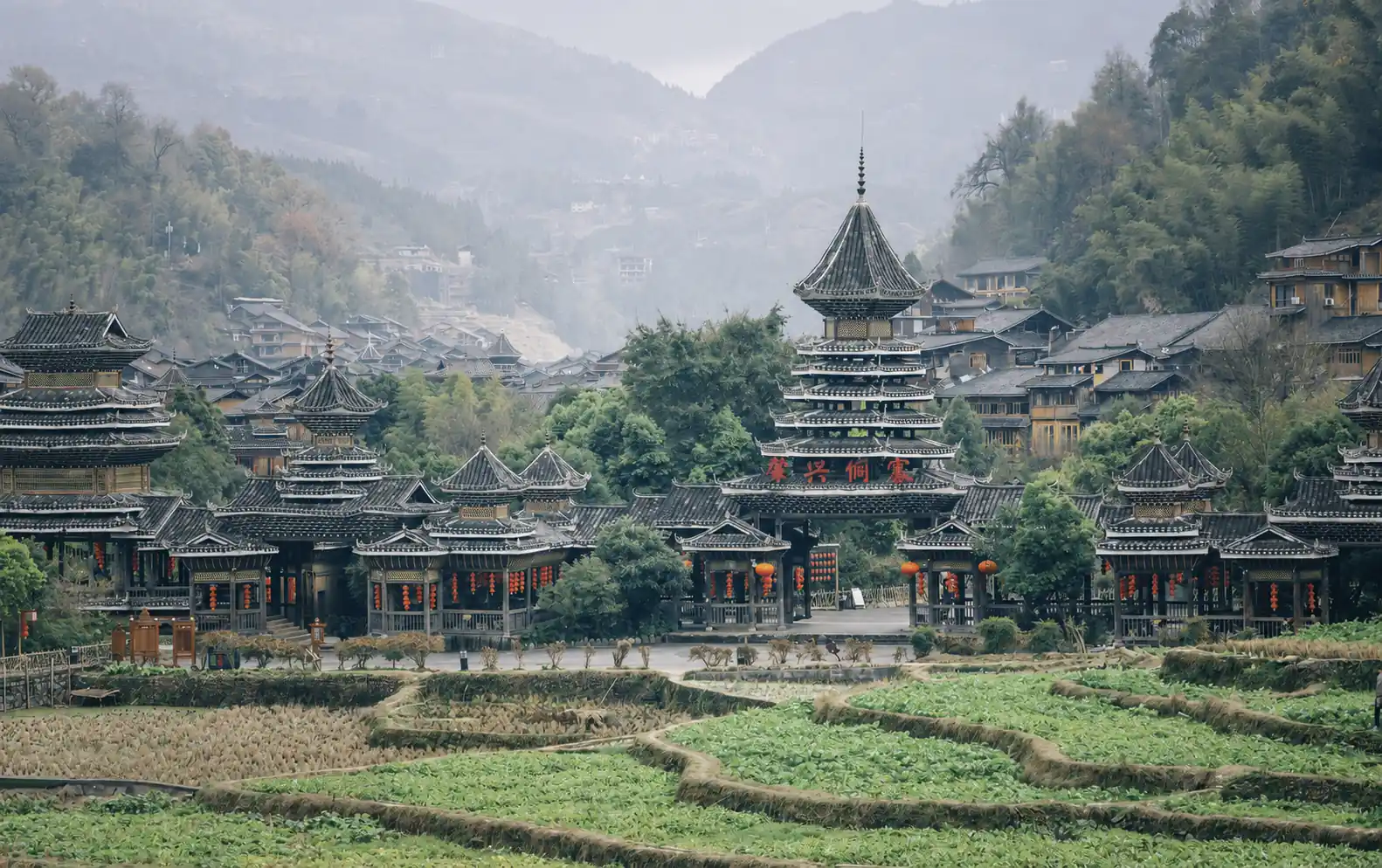
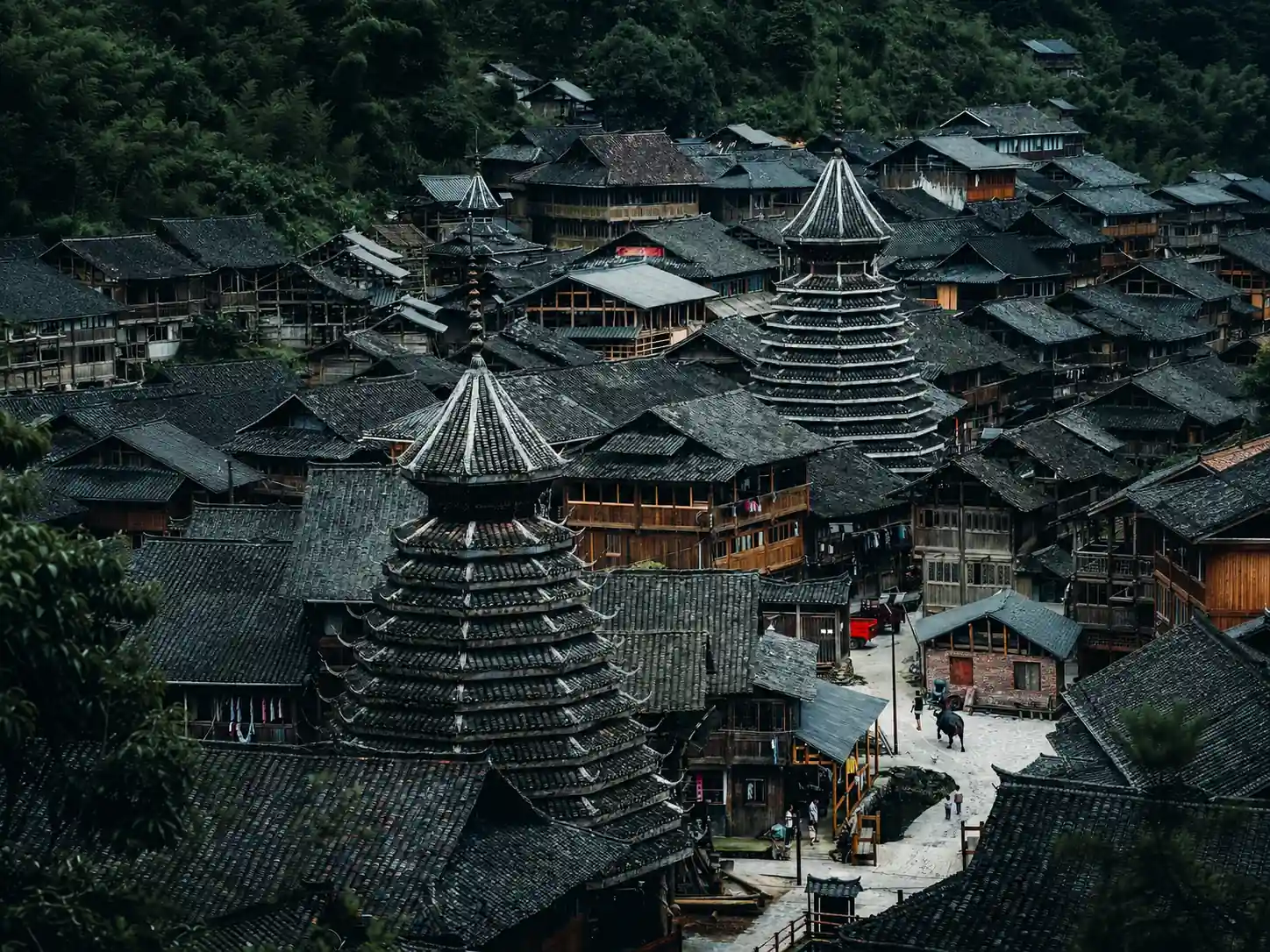
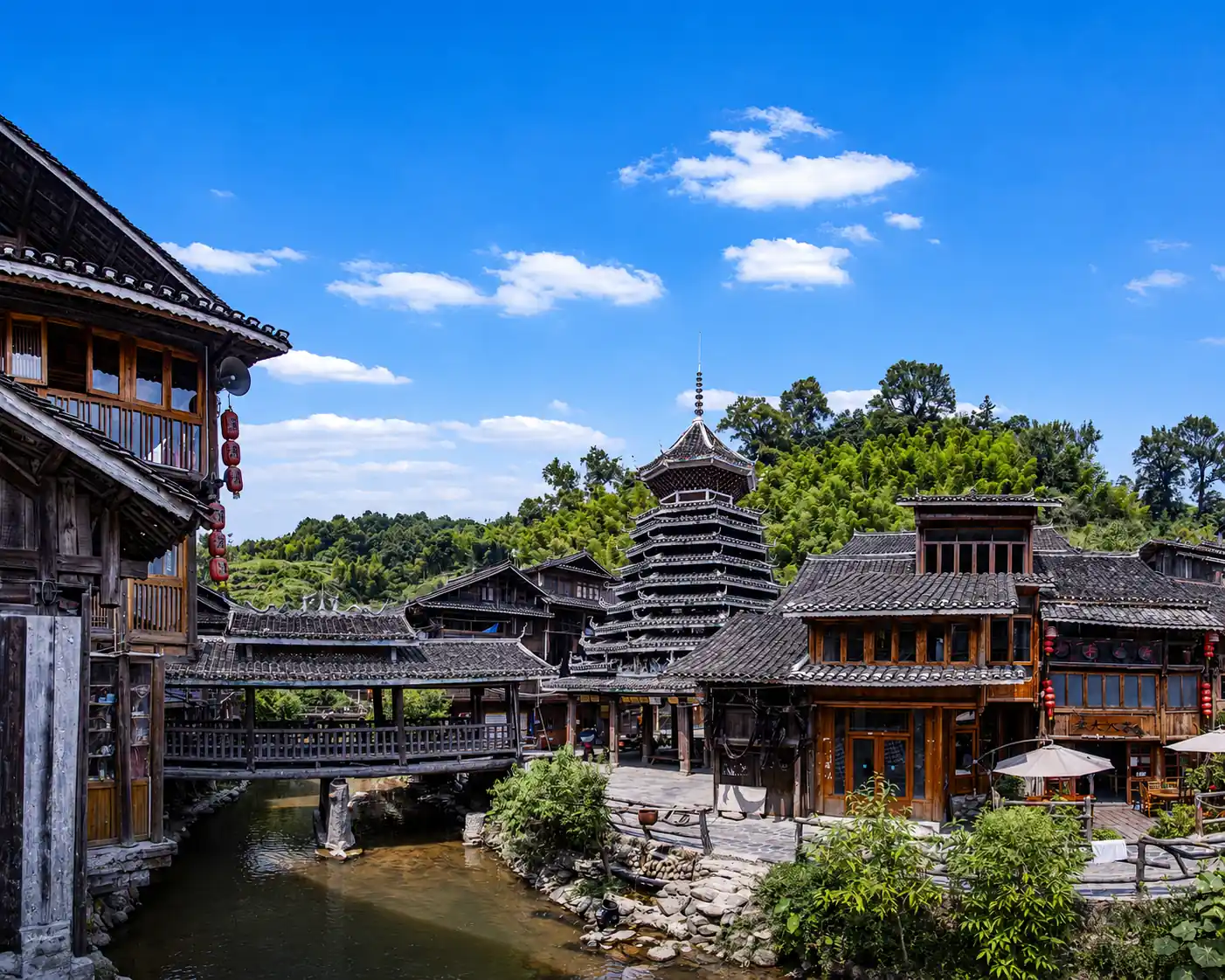
Zhaoxing is the most practical base for exploring Dong culture in southeastern Guizhou. Wooden houses, drum towers and wind-and-rain bridges create a very different village landscape from the Miao areas, while nearby villages such as Huanggang reward travelers willing to slow down and travel farther from the main sightseeing circuit.
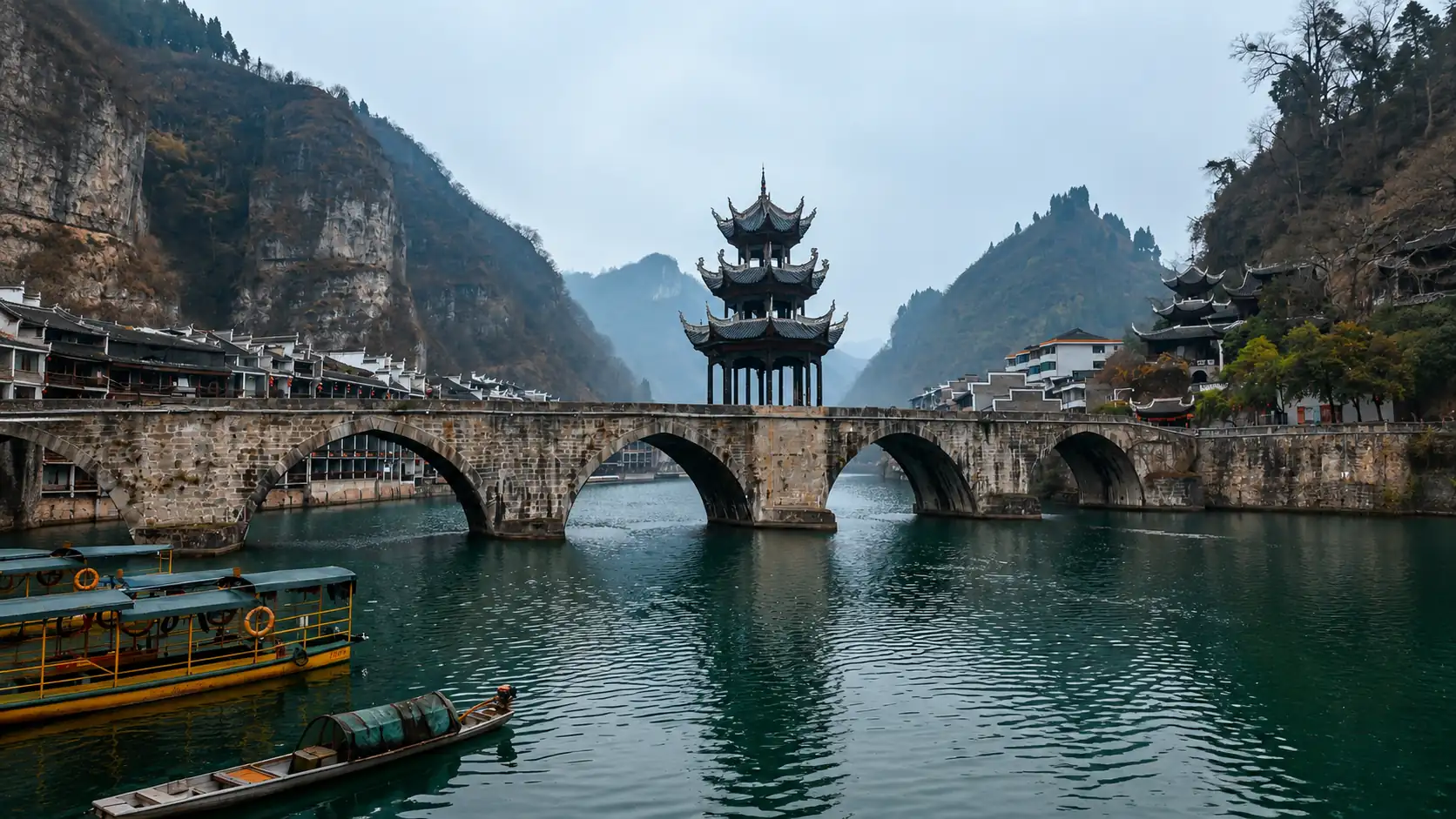
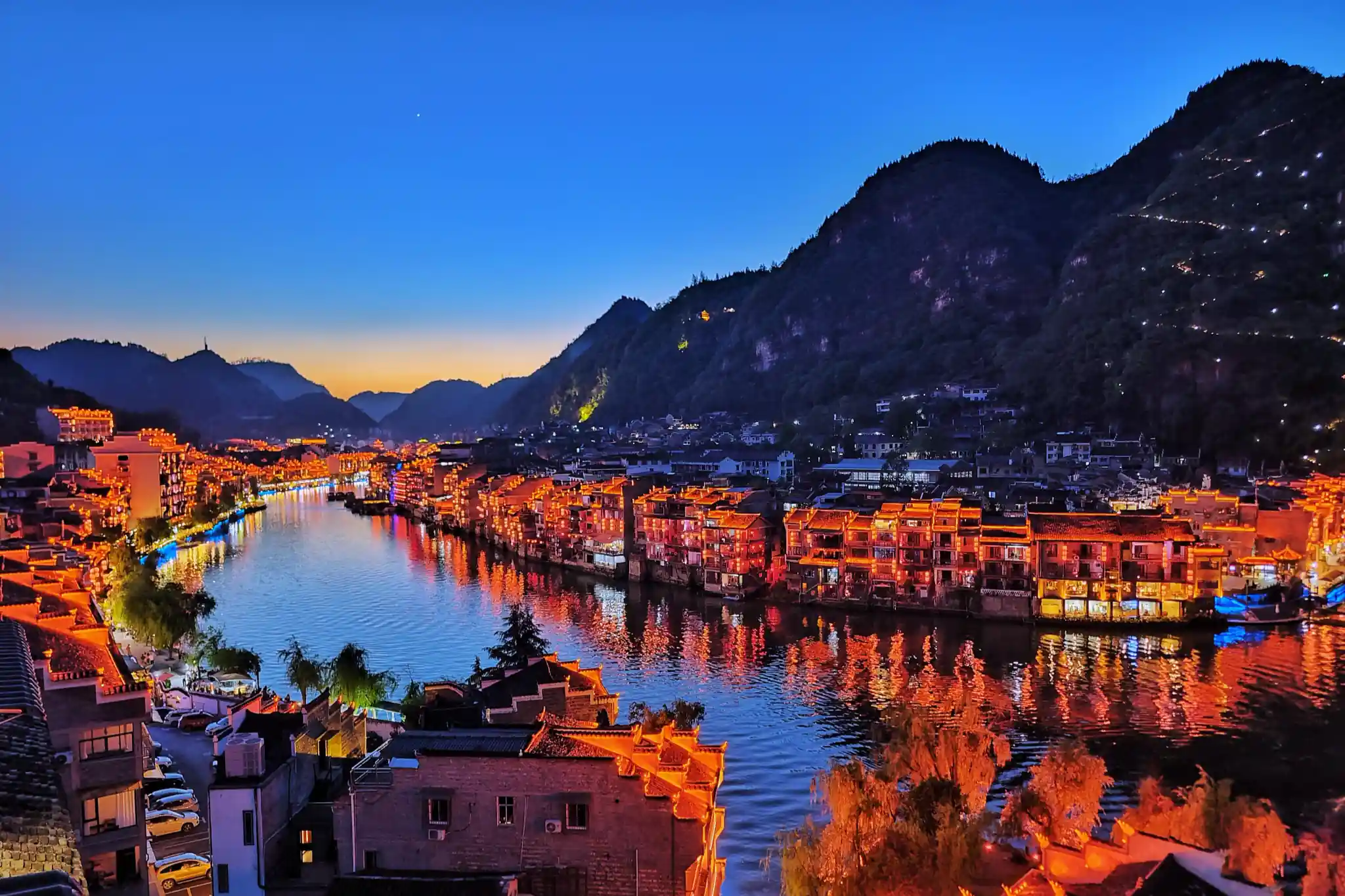
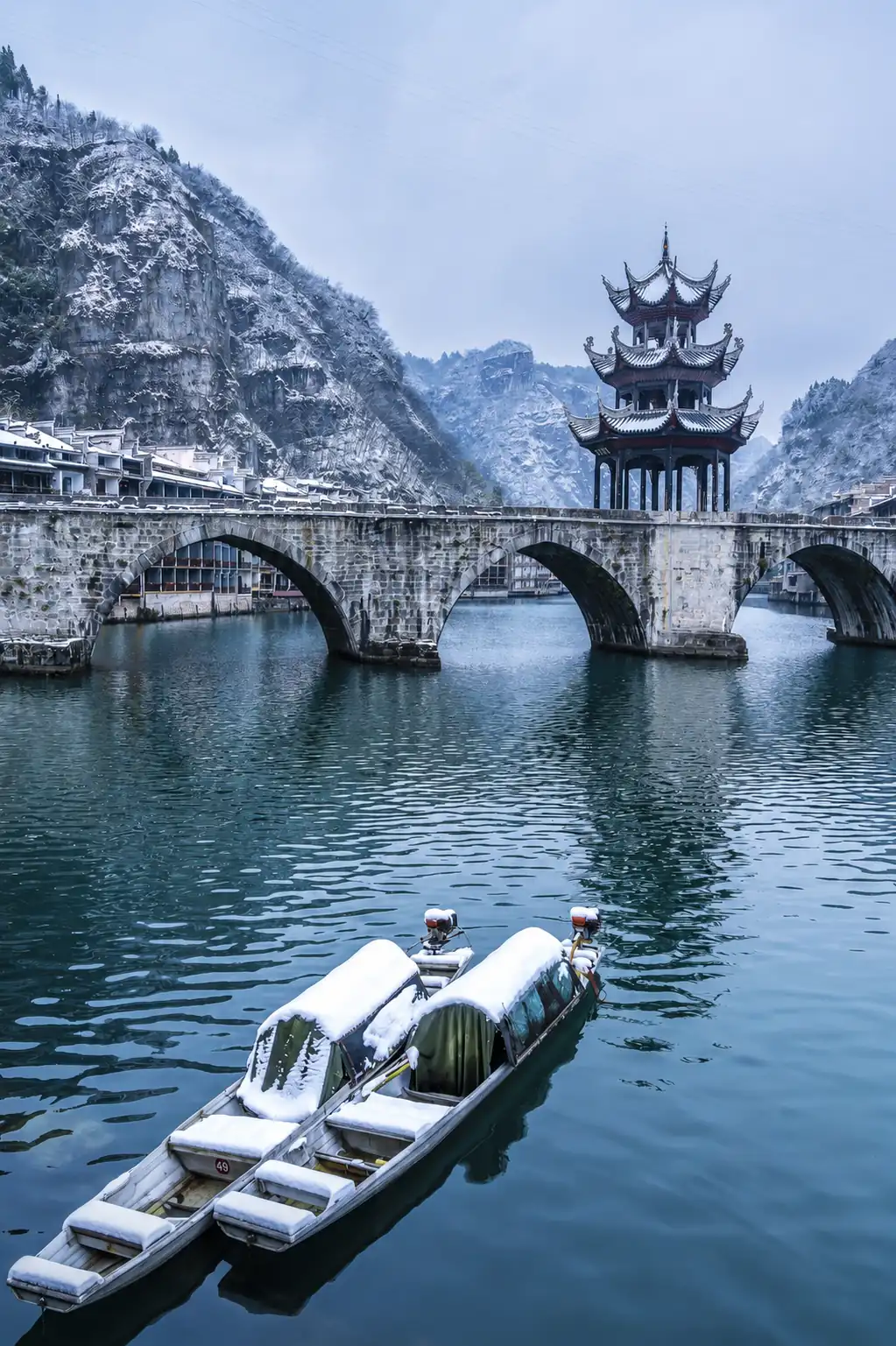
Zhenyuan adds a slower riverside stop between Guizhou’s mountain and ethnic-village experiences. The old town follows the Wuyang River, with historic lanes, traditional buildings and nearby Qinglong Cave, making it a useful contrast to a trip otherwise dominated by natural scenery and rural villages.
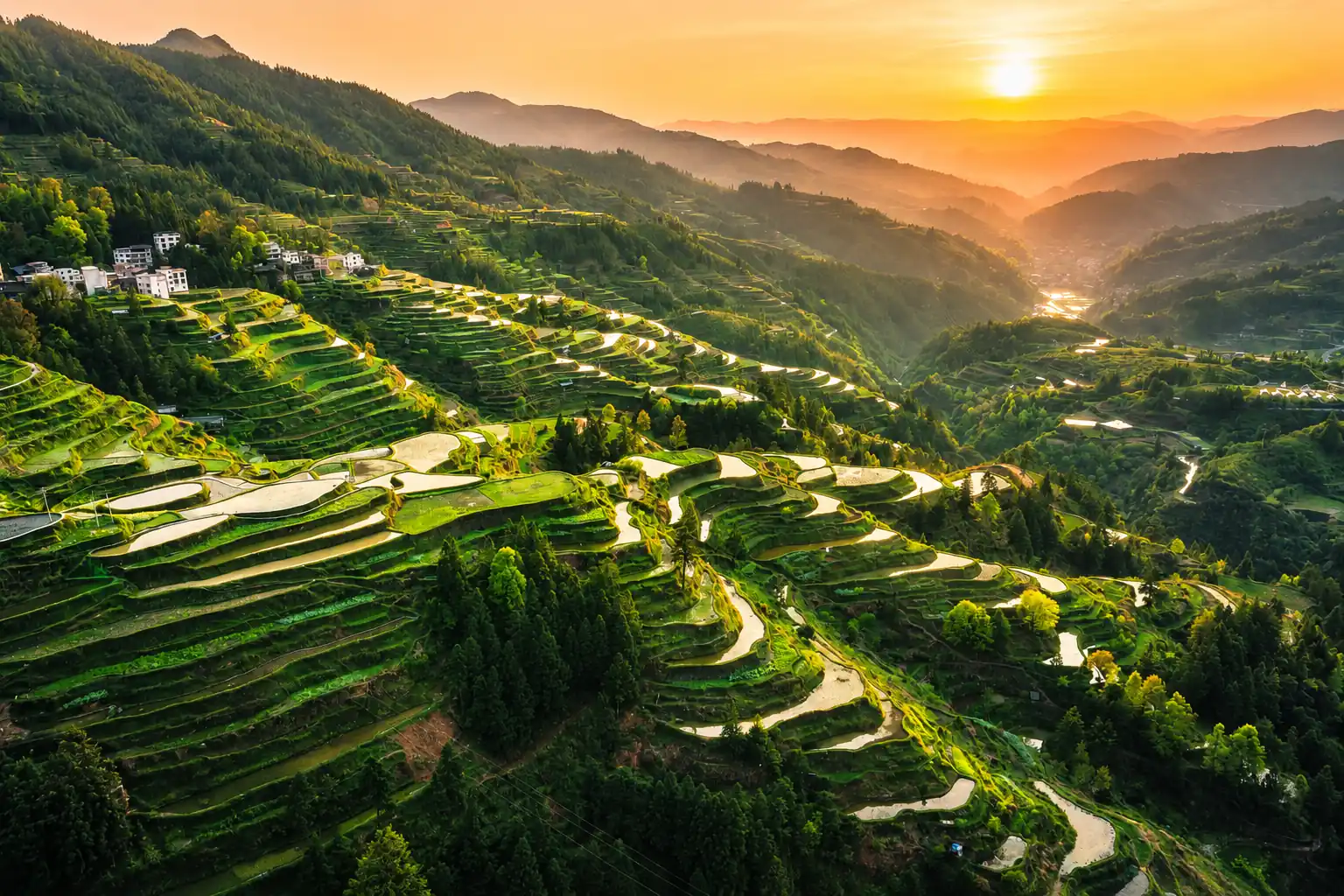
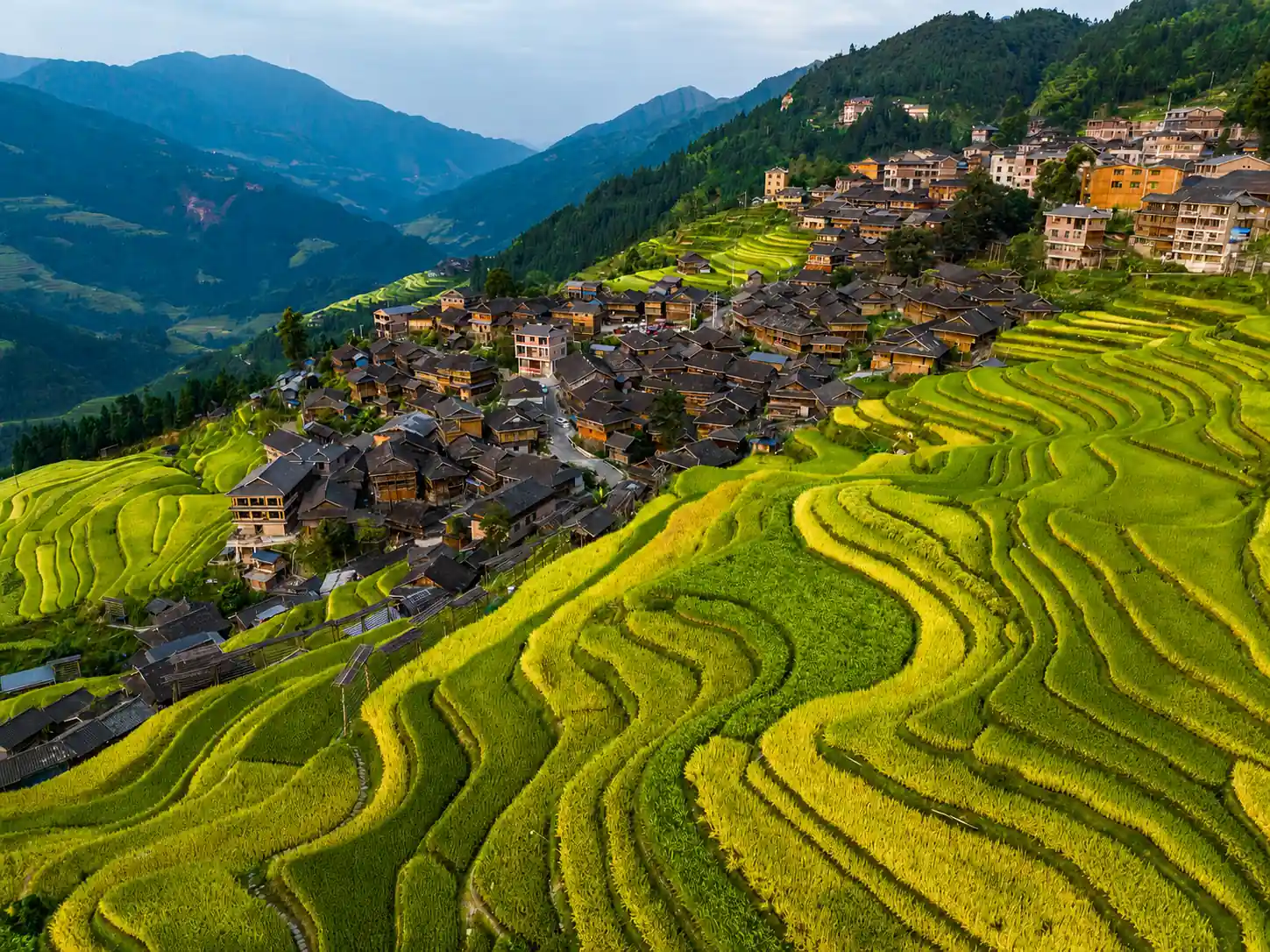
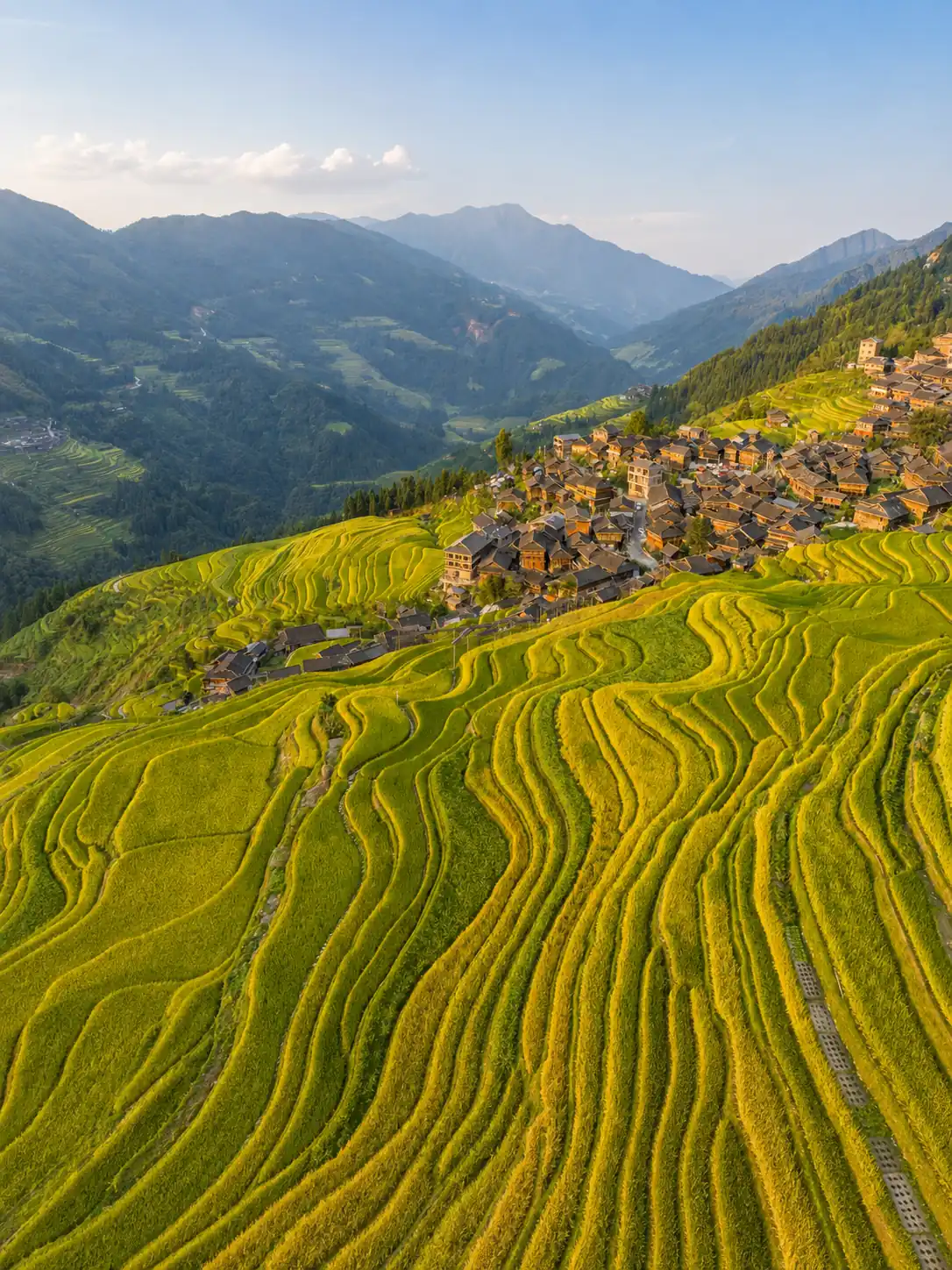
Jiabang is worth the detour for travelers interested in rural landscapes and photography rather than headline attractions. The terraces are especially rewarding when the fields are green or during the autumn harvest period, but reaching the area takes more planning than visiting Guizhou’s major rail-connected destinations.
The places above form the strongest combinations for many first-time trips, but they are not the whole province. With more time, southwest, northwest and northern Guizhou open up different karst landscapes, caves, historical sites and forest scenery that work better as dedicated extensions than additions to an already full southeast route.
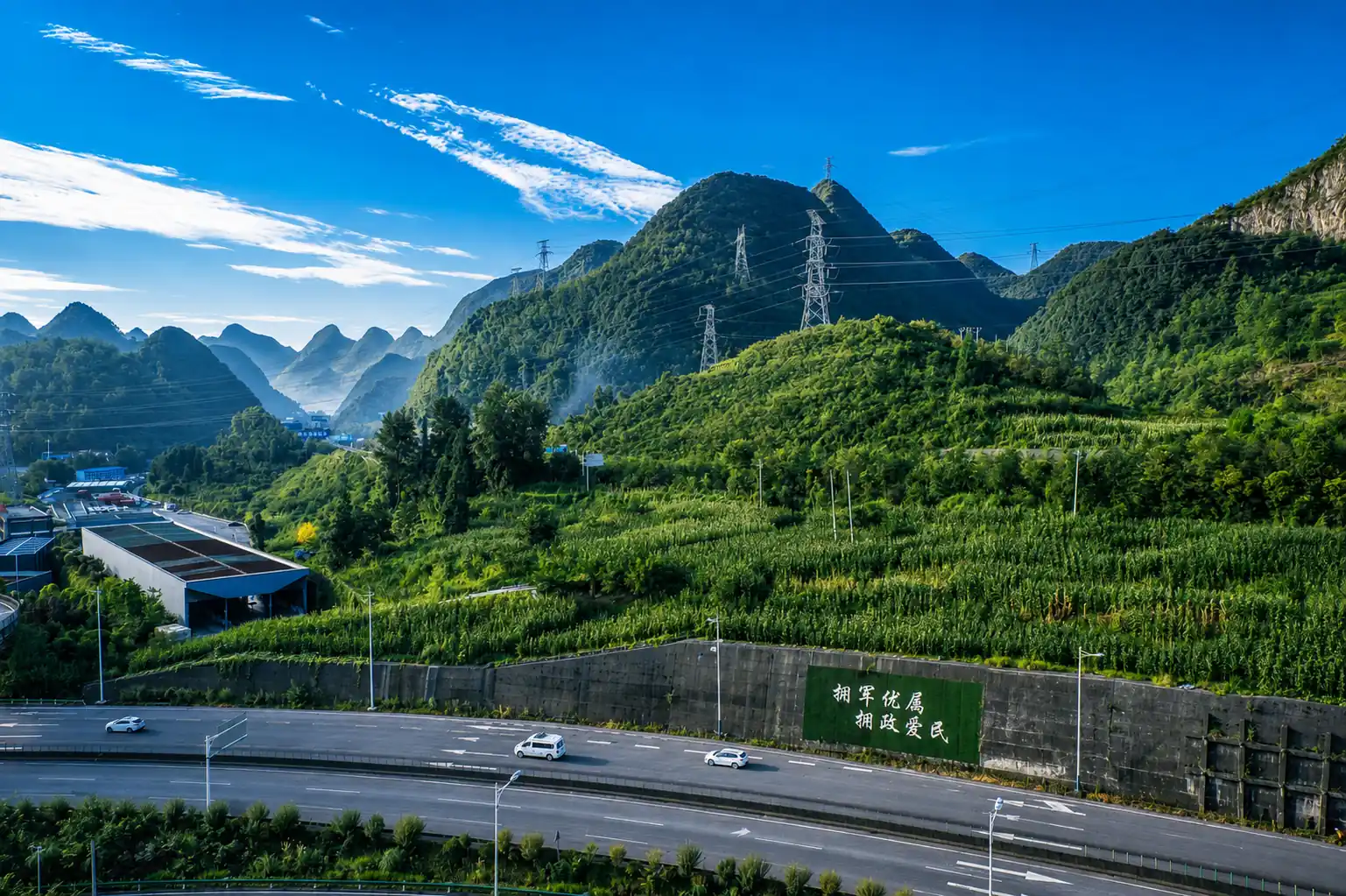
Consider Xingyi for a different side of Guizhou’s karst scenery. Wanfenglin combines cone-shaped peak forests with farmland and rural landscapes, making the southwest appealing for travelers who want another nature-focused region.
Karst Peak ForestZhijin Cave adds a major underground-karst experience in the Bijie area. It makes more sense for travelers specifically interested in caves and geology than as an automatic addition to the main Huangguoshu–southeast Guizhou route.
Underground KarstZunyi is most relevant when modern Chinese history is a major interest. Historical sites connected with the Long March give the city a very different travel role from Guizhou’s waterfall, village and karst-focused destinations.
Modern HistoryChishui combines red Danxia landforms with waterfalls, forest and bamboo scenery. Its location makes it better suited to a northern Guizhou extension than to a compact first trip focused on Guiyang and southeast Guizhou.
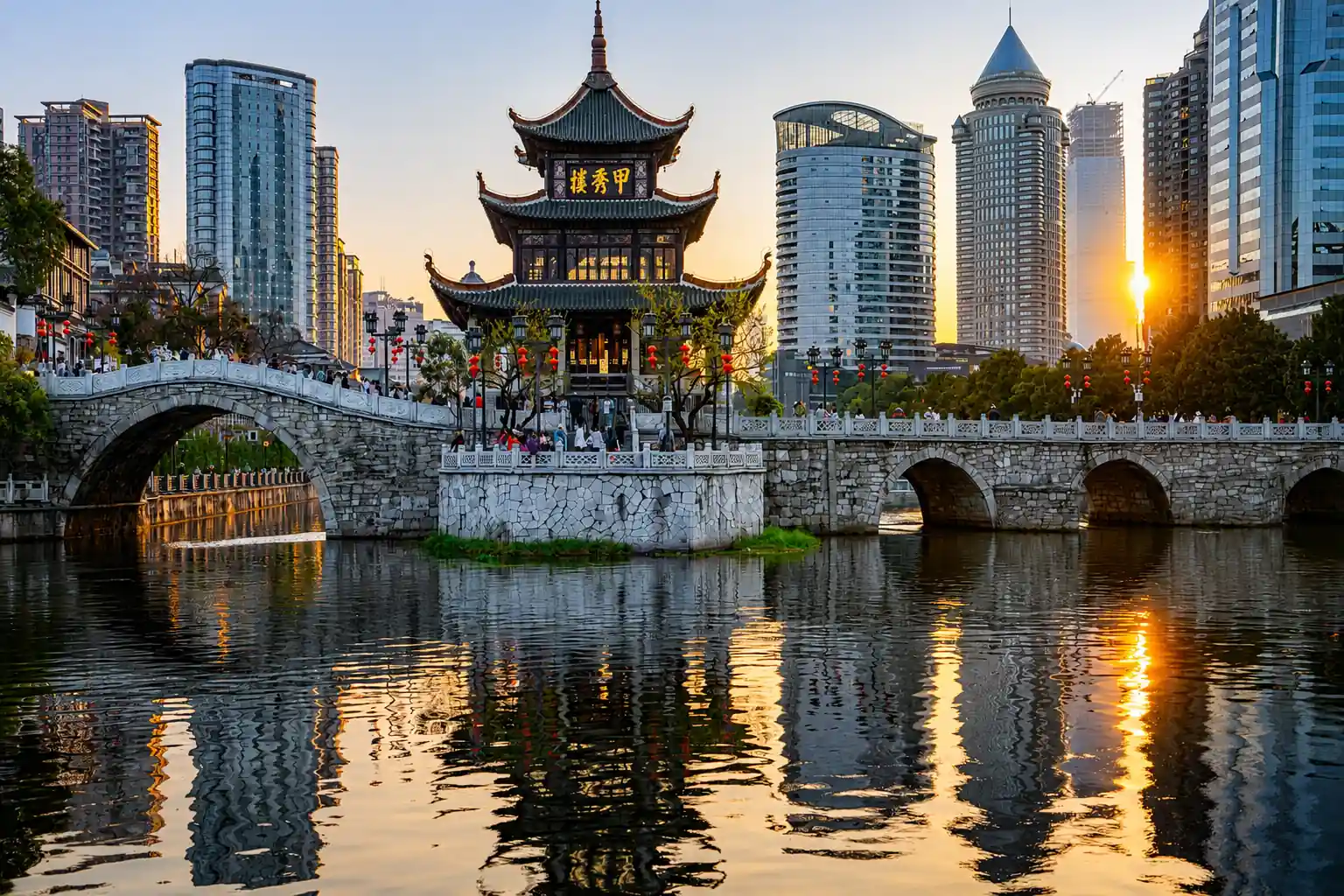
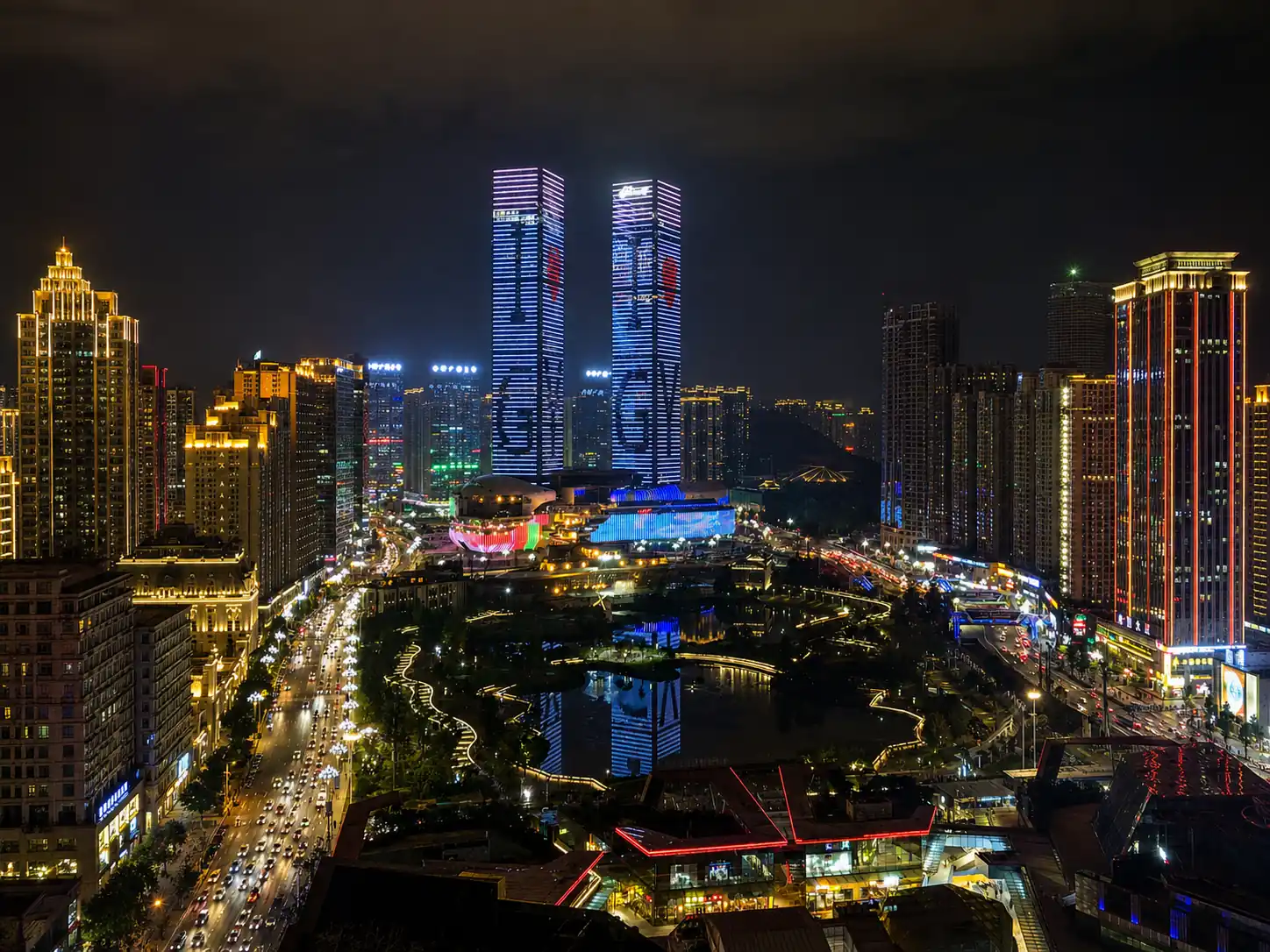
Danxia & ForestsUse Guiyang primarily as Guizhou’s transport and food hub. It works well for the first or last night of a trip, and Jiaxiu Tower or local food can fill spare time, but travelers with limited days usually gain more by prioritizing Guizhou’s waterfalls, karst landscapes, mountains and ethnic regions.
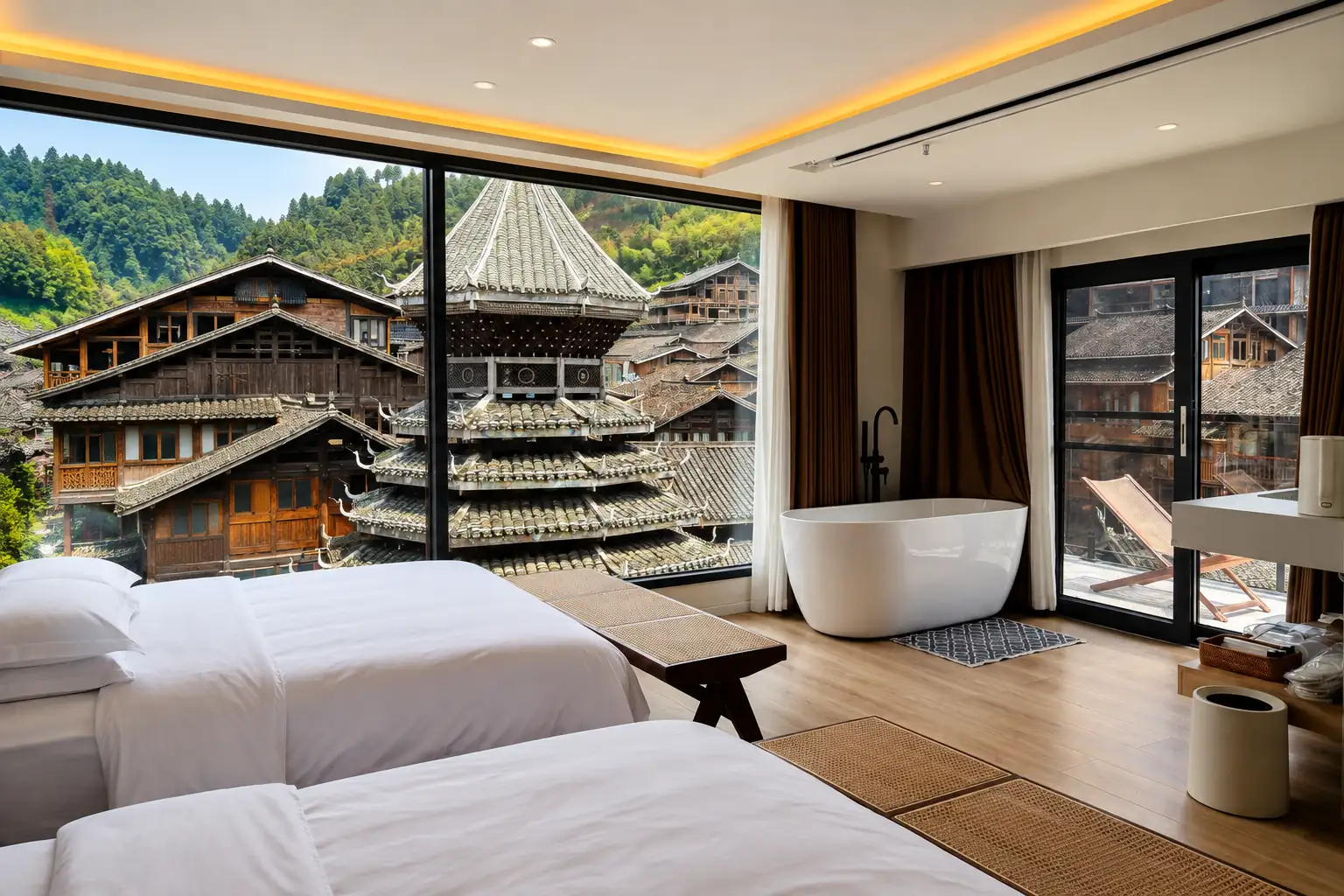
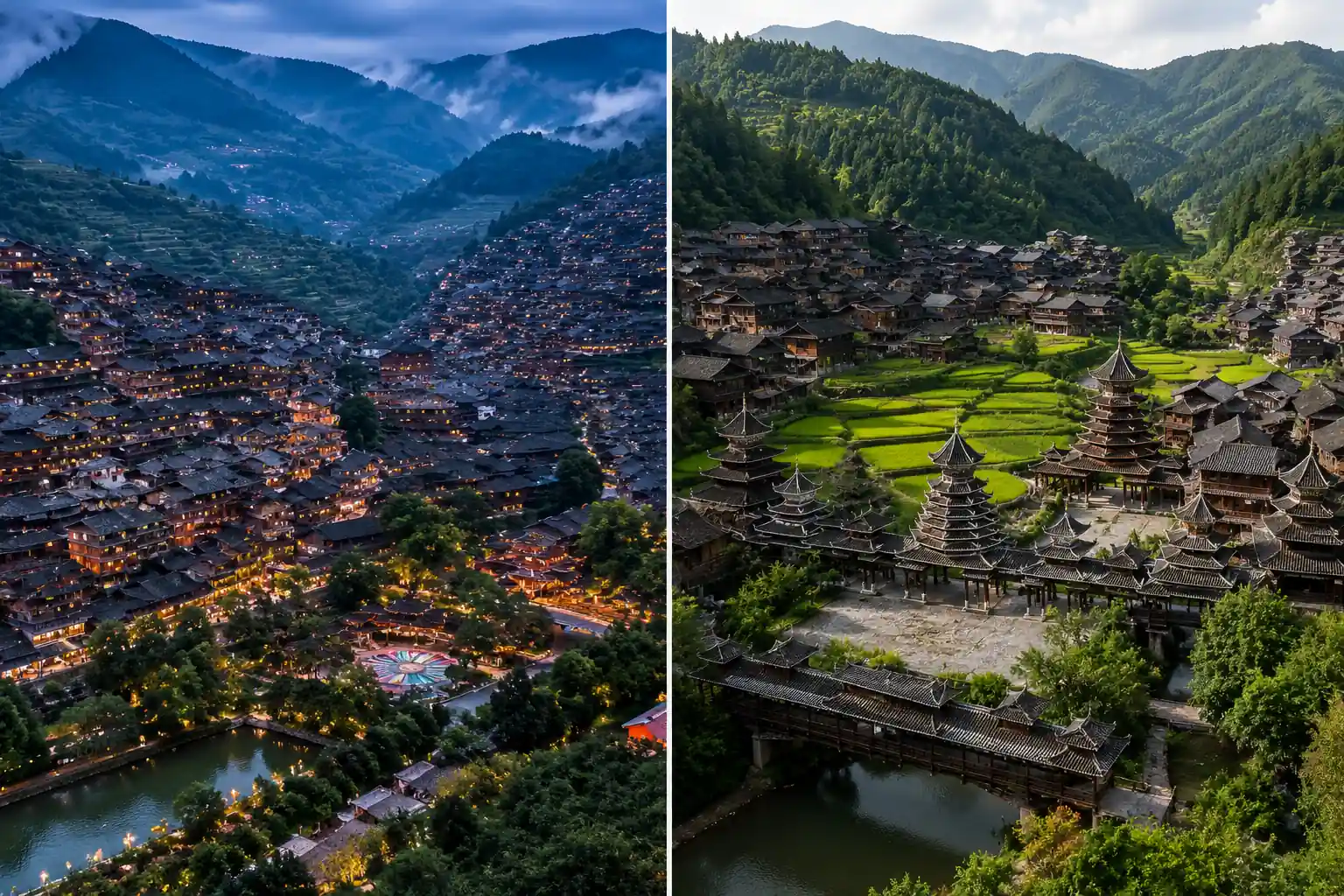
Miao and Dong villages are among the defining experiences of southeast Guizhou, but they are not interchangeable sightseeing stops. Xijiang is the easiest introduction to Miao culture, Langde offers a smaller-scale alternative, and Zhaoxing is the most practical base for exploring Dong architecture and traditions. Travelers with more time can continue to quieter villages around Liping and Congjiang.
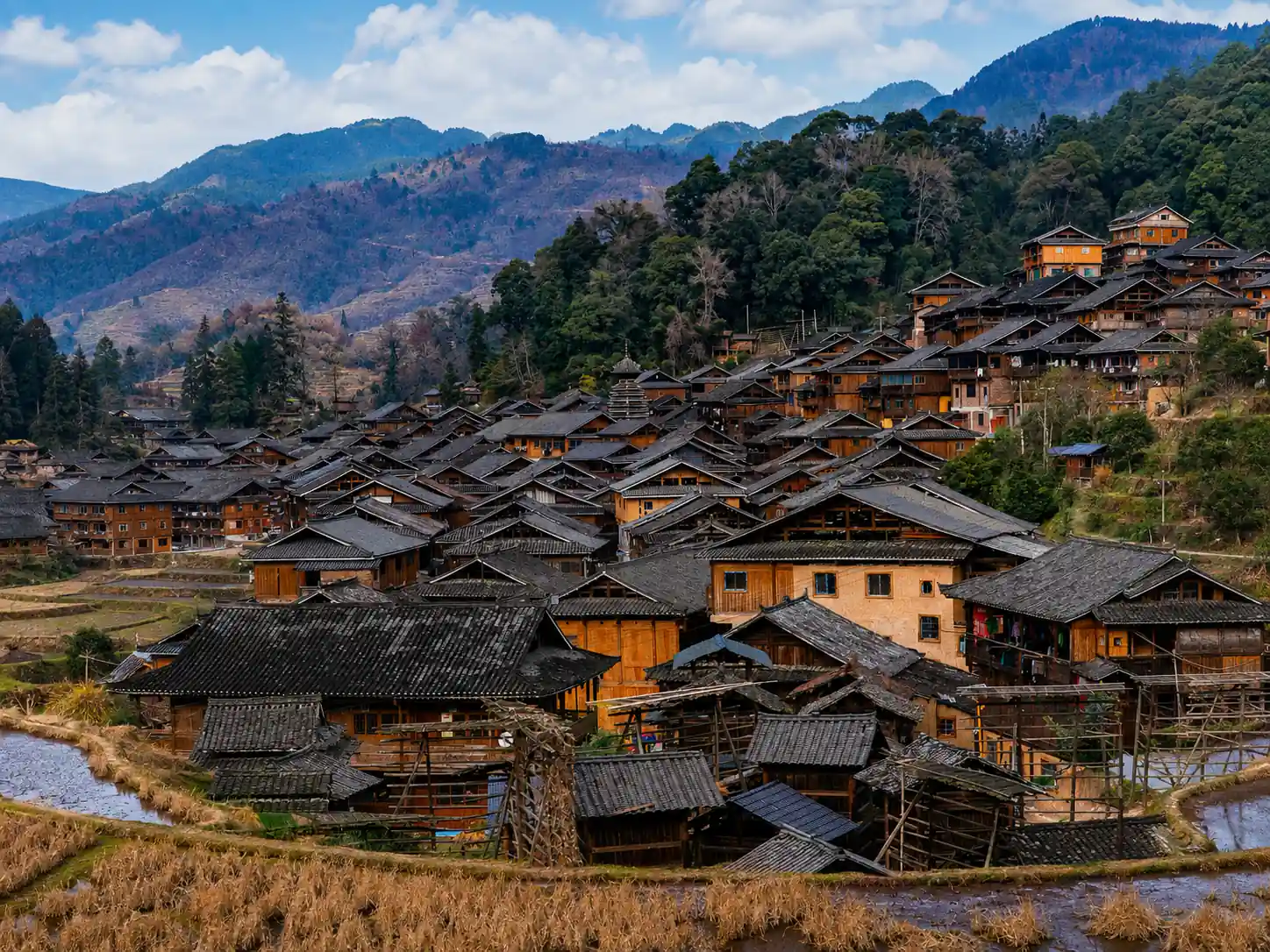
Miao areas around Kaili are especially rewarding for wooden hillside villages, embroidery, silverwork, traditional dress and festival culture. Farther south, Dong communities around Liping and Congjiang are strongly associated with drum towers, covered wind-and-rain bridges and communal singing. For most travelers, one accessible village plus one smaller rural stop creates a better route than trying to collect every famous village.
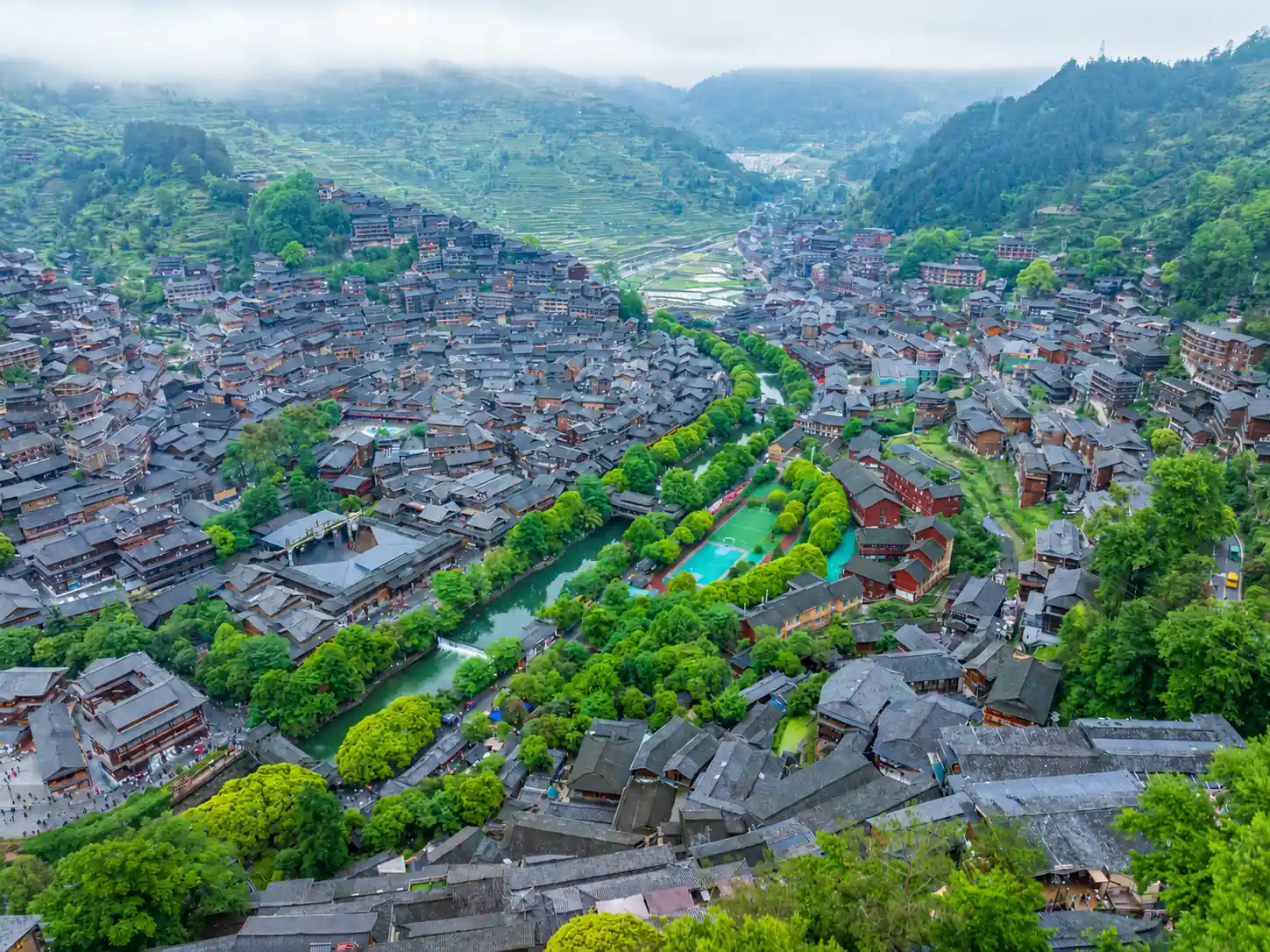
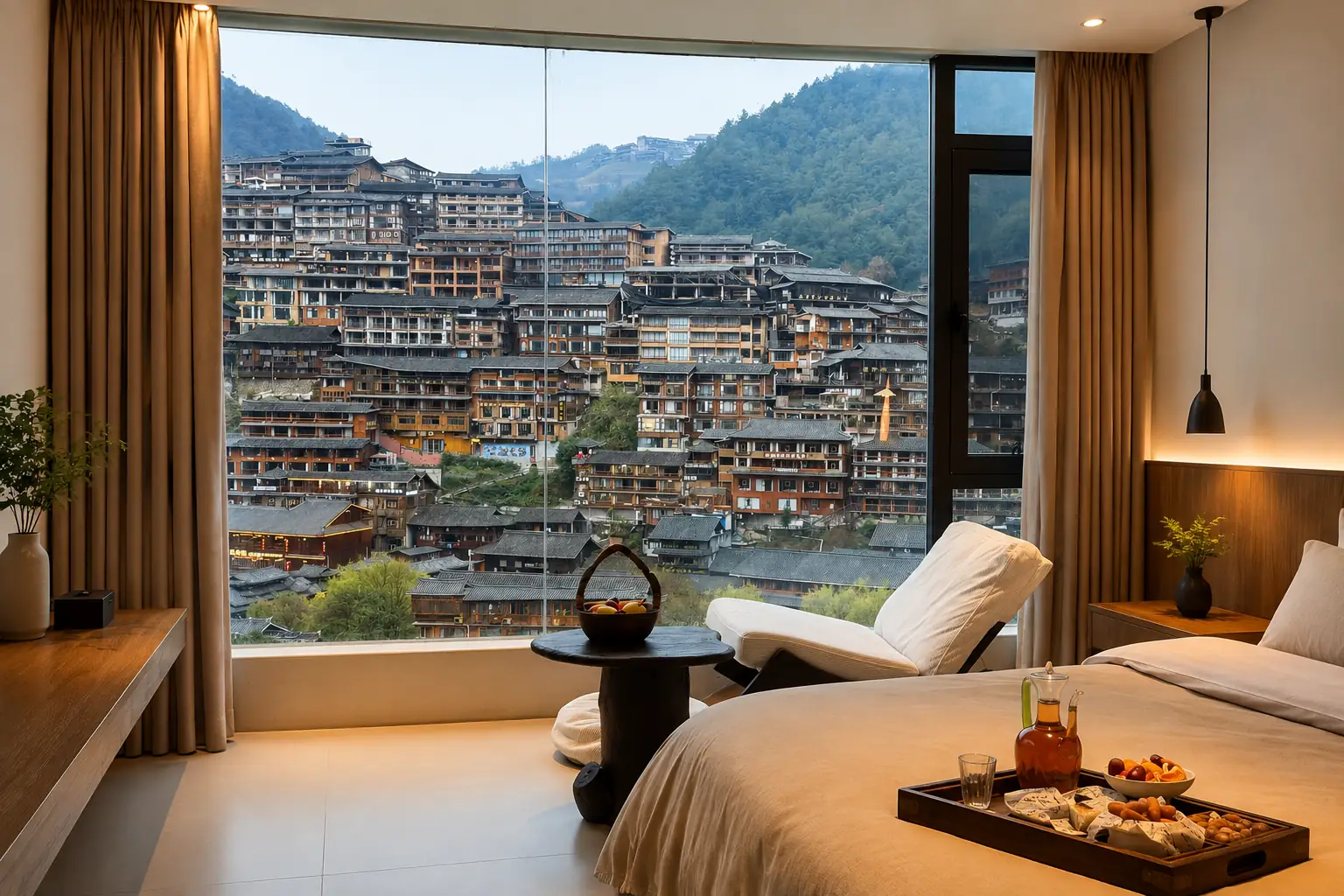
Xijiang is the easiest Miao village experience to add to a first Guizhou trip, with accommodation, restaurants, viewpoints and established visitor facilities. Its wooden stilt houses, traditional dress, performances, silverwork and crafts make Miao culture highly visible, but it is also one of the province’s most developed tourism villages. Travelers who prefer a smaller-scale setting should compare it with Langde.
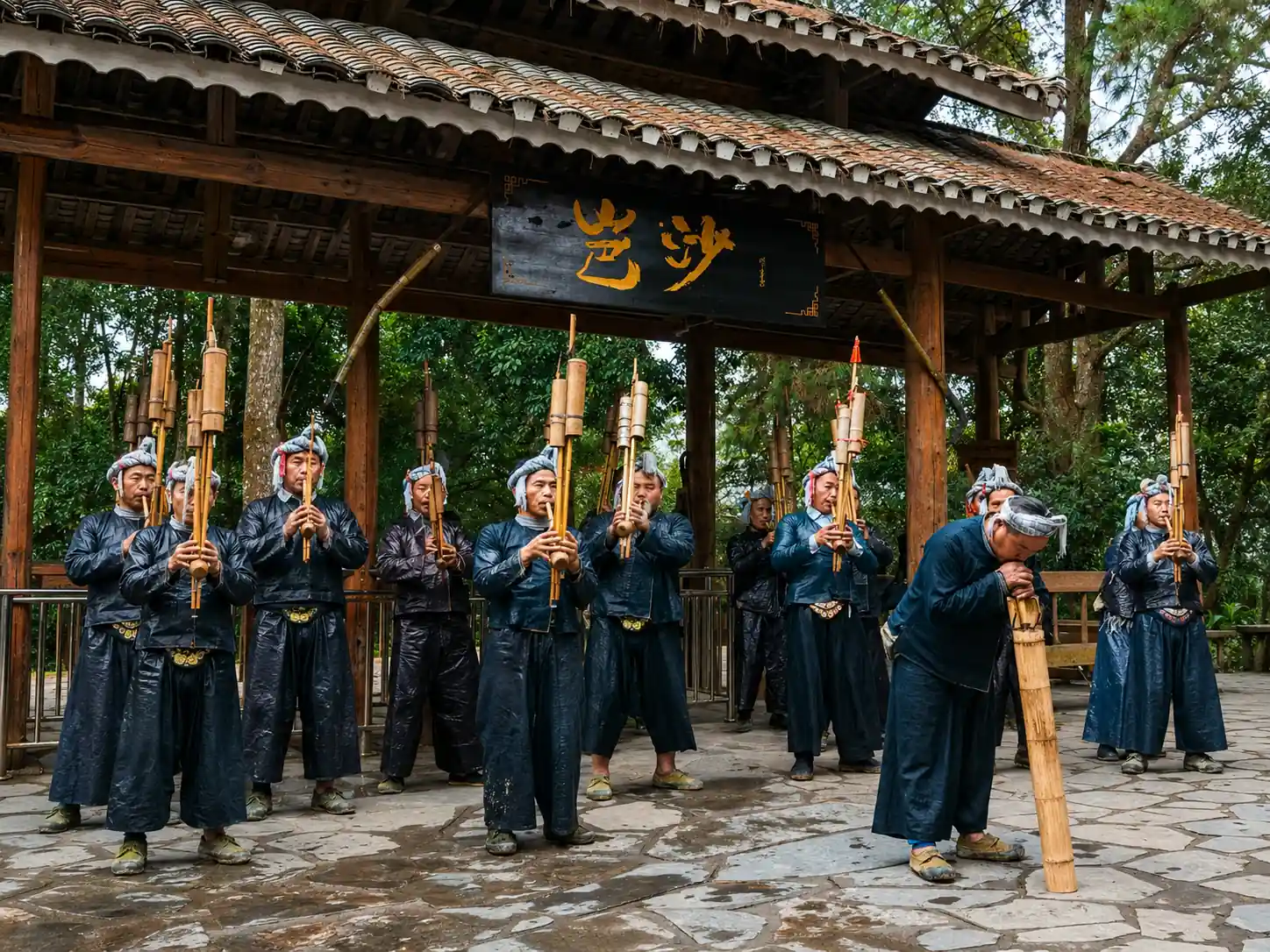
Langde is a smaller Miao village near Kaili and makes a useful alternative for travelers who do not need the scale or visitor infrastructure of Xijiang. Wooden stilt houses, local dress, Lusheng music and community performances form the core of the visit, while the village setting feels more compact and easier to explore at a slower pace.
Zhaoxing is the easiest place for most first-time visitors to understand Dong village architecture. Its five drum towers, wooden houses and covered bridges form a distinctive settlement landscape, while guesthouses and transport connections make it much easier to use as a base than many smaller Dong villages. Staying overnight also gives you more time to experience the village after day visitors leave.
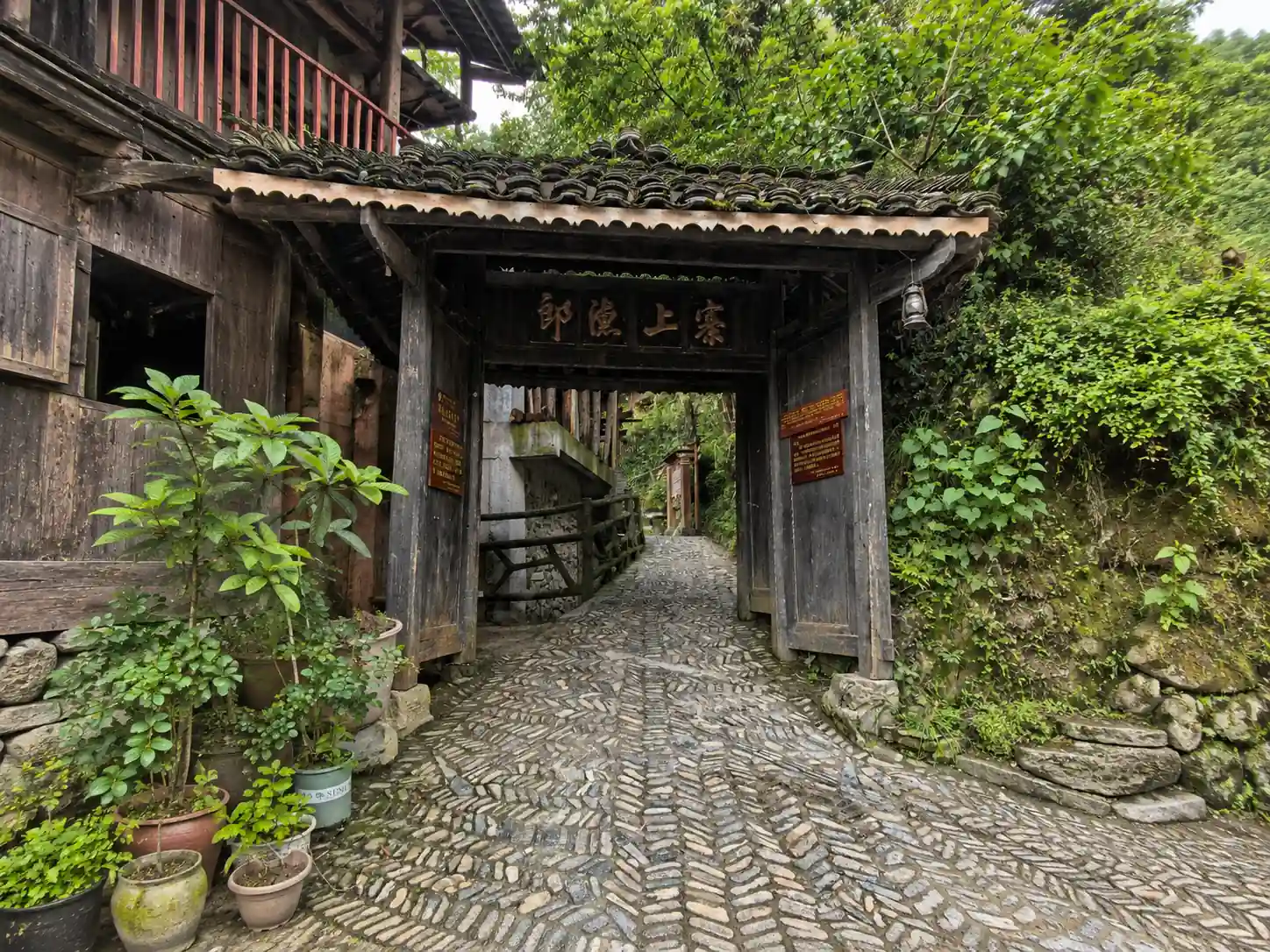
Huanggang suits travelers who want to go beyond the better-known Dong villages and spend more time in a rural setting. Drum towers, wind-and-rain bridges, wooden homes and everyday village spaces remain the main reasons to visit. It fits best into a longer Liping–Congjiang route rather than as a rushed standalone detour.
Near Congjiang, Basha is known for a set of local Miao traditions that differ noticeably from the villages around Kaili. Its forest setting, men’s traditional hairstyles, tree-related customs and ceremonial firearm tradition have made it one of the region’s most distinctive cultural stops. It works best as part of a Congjiang route rather than as a destination visited only for its famous tourism label.
Zhanli offers a quieter look at Dong village life in the Congjiang area, surrounded by forest, farmland and rice fields. Wooden houses, drum towers and an agricultural landscape make the stop more about rural context than major sightseeing. Include it when your route already runs through Congjiang rather than adding a long transfer solely to check another village off the list.
Architecture, music and craft traditions often reveal more than a village’s tourism ranking. These are the cultural elements worth understanding as you travel through southeast Guizhou.
Tourism development varies widely across Guizhou’s villages, and “most authentic” is rarely a useful way to rank them. Xijiang and Zhaoxing are easier for first-time visitors because logistics are simpler; smaller villages make more sense when you already have time for rural transfers. A balanced trip often combines one accessible base with one quieter stop.
The best things to do in Guizhou are defined by contrast: experience the scale of Huangguoshu, hike a mountain, explore karst rivers and forests, photograph rice terraces, spend a slower evening in an ancient town and make time for the province’s distinctive food. Which experiences fit together depends on the season, route direction and how much rural travel you want to include.
Give Huangguoshu enough time to explore more than the main waterfall viewpoint. The wider scenic area combines waterfalls, rivers, rock formations and karst scenery, making a full day far more rewarding than a rushed stop between Guiyang and Anshun. Water levels are generally more dramatic during the wetter part of the year, while drier periods can make walking conditions easier.
Choose Fanjingshan when you want an active mountain day rather than another scenic drive or village stop. The journey combines high-elevation forest and dramatic rock scenery, and weather can change quickly near the summit, so this is one place where keeping your schedule flexible matters more than fitting it into a tightly timed transfer day.
Libo is best experienced slowly on foot and by following its water landscapes rather than treating it as a single photo stop. Clear rivers, forested karst peaks, waterfalls and the Xiaoqikong area make it one of the strongest choices for travelers who want to devote a full day or more to nature.
Jiabang rewards travelers who are willing to trade easy transport for rural scenery. Early light, mist, green terraces and autumn harvest colors can completely change the landscape, so photography conditions depend heavily on season and weather. If Jiabang is a priority, build the route around it rather than squeezing it into a long transfer day.
Zhenyuan works best when you have time to slow down. Walk the old streets along the Wuyang River, explore the historic town during the day and stay into the evening when the riverfront atmosphere changes. Qinglong Cave can be added for travelers interested in the town’s historic religious architecture.
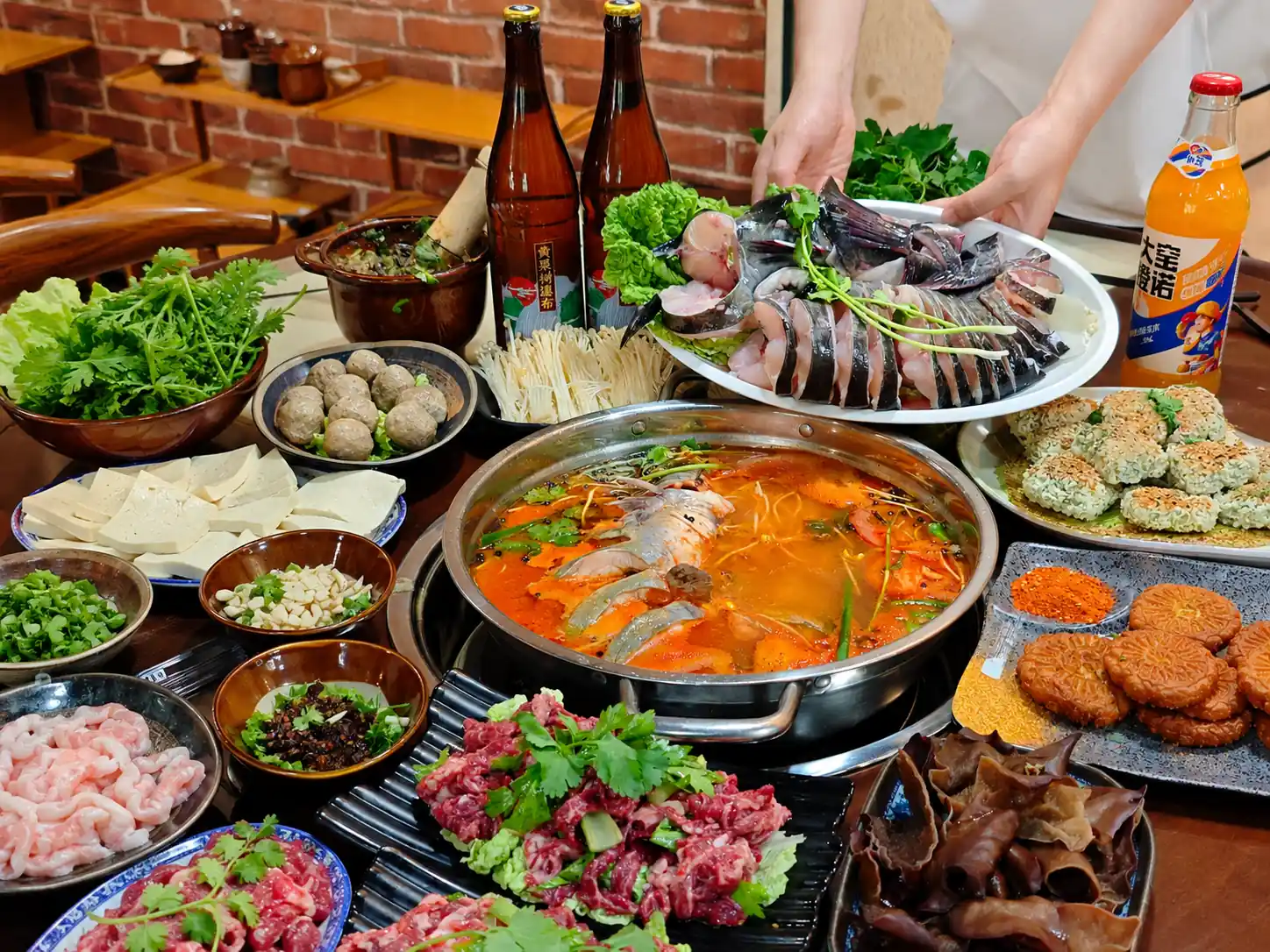
Food is one of the easiest ways to understand the province beyond its scenery. Try sour soup fish, local noodles and street snacks, and visit a market when your route allows. In Miao areas, community-style meals and rice wine may also appear as part of village dining experiences, although what is available varies by place and occasion.
Smaller experiences can add useful context to places already on the route. Look for geology around Anshun, craft traditions in Miao areas, or market visits during a city or village stay when they connect naturally with your interests.
If Huangguoshu is already your main waterfall day, use the rest of the trip for a different kind of experience rather than another similar scenic stop. Libo adds karst-and-water landscapes, Fanjingshan adds a mountain day, Jiabang rewards photography, and Zhenyuan adds a slower historic evening. Choose by contrast as well as fame.
The best Guizhou itineraries minimize backtracking between regions. For a first trip, 7–8 days gives enough time to combine Huangguoshu with a Miao region, a Dong region and one major karst landscape while keeping the longest transfers manageable. Shorter trips work better when you remove one geographic branch instead of shortening every stop.
This route combines Huangguoshu, a Miao stay, the Dong region and Libo without repeatedly returning to Guiyang. Rail handles the easiest intercity connections, while road transfers become more useful between the village regions. Overnight stops in Xijiang, Zhaoxing and Libo keep the route moving in one direction.
Use Guiyang as the arrival hub and keep the first day light. Check in, recover from the journey and explore local food; Jiaxiu Tower or the central riverfront works well if you still have time. Starting in Guiyang also makes the following Huangguoshu day straightforward.
See Guizhou Food Guide ↓
Travel toward Anshun for a full day in the Huangguoshu scenic area. Give the waterfalls and karst landscape enough time rather than treating the main cascade as a photo stop. Returning to Guiyang that evening keeps the next eastbound rail journey much easier.
Take a morning high-speed train from Guiyang to Kaili South, then continue by road to Xijiang Qianhu Miao Village. Spend the afternoon exploring the wooden hillside settlement, viewpoints, crafts and local food, then stay overnight to experience the village beyond the busiest daytime hours.
See Xijiang Miao Route →
Leave Xijiang after breakfast and continue toward the Dong region around Zhaoxing. This is one of the legs where a road transfer can be more practical than connecting every segment by rail. Keep the afternoon light and use the evening to walk through Zhaoxing after settling into the village.
See Zhaoxing Dong Route →
Use Zhaoxing as a base for a full day rather than changing hotels again. Explore its drum towers, wooden streets and wind-and-rain bridges, then add one nearby Dong village if you want a quieter rural contrast. Huanggang is worthwhile when suitable local transport is available.
Continue from southeast Guizhou toward Libo and treat this mainly as a relocation day. After checking in, use the remaining time for a relaxed walk or local dinner rather than a time-sensitive scenic visit. This leaves a full daylight window for Xiaoqikong the following day.
Give Libo a full day for its karst-and-water scenery, with Xiaoqikong as the natural focus for most first-time visitors. Walking, rivers, waterfalls and forested peaks make this a slower sightseeing day, so it works best without a long-distance transfer immediately afterward.
Return toward Guiyang and connect with your next destination. If you have an early flight the following morning, stay one final night in Guiyang rather than building a tight same-day connection from Libo.
See Guizhou Transportation Guide ↓With about 10 days, Zhenyuan is a useful eastern extension for travelers who want an ancient-town stop. Jiabang makes more sense when the journey continues deeper into southeast Guizhou for rice terraces and photography, while Fanjingshan requires a separate northeastern branch through the Tongren area. Choose the extension that best matches the experience you want from the additional days.
Guizhou can be traveled through much of the year, but the best month depends on what you want to see. April to May and September to October usually offer the easiest overall balance for a first trip. Summer brings greener landscapes and stronger waterfalls but more rain and humidity, while winter is quieter but can feel damp and cold, especially in mountain areas and rural guesthouses.
For most first-time travelers, these shoulder-season months give the best balance of walking comfort, scenery and route flexibility. Spring is greener and increasingly wet; autumn is generally better for harvest landscapes and photography. If you want one simple month to start with, September is one of the strongest all-round choices.
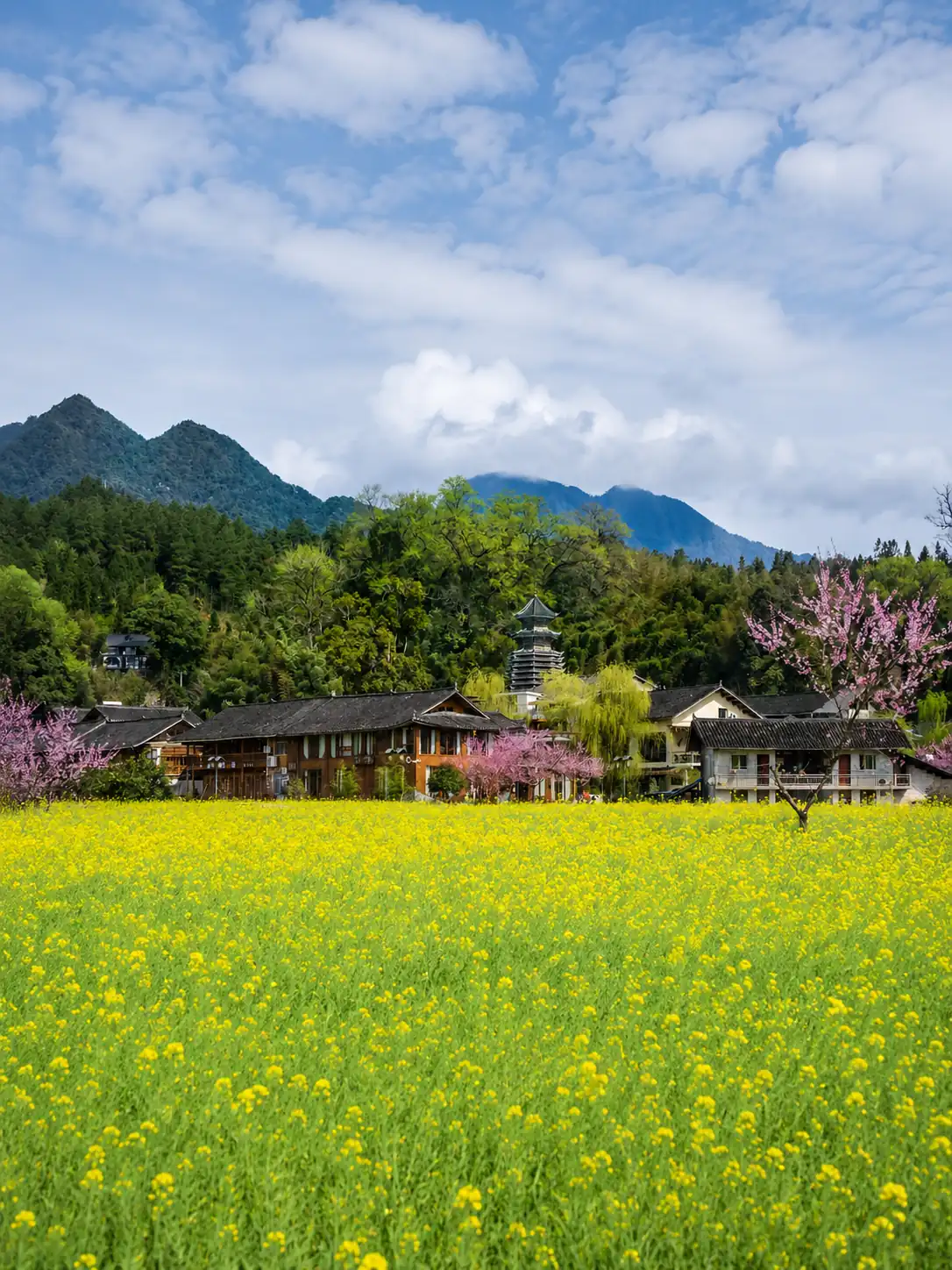
Spring brings fresh greenery, flowers and increasingly active water landscapes. March can still feel cool and changeable, while April and May are stronger all-round choices for village travel, Libo and general sightseeing. Rain becomes more frequent as the season progresses, so waterproof walking shoes and a light rain layer are useful.
Summer is lush, humid and rainy, but it is also when Guizhou’s water scenery becomes most dramatic. Huangguoshu and other waterfalls generally benefit from the wetter season, while Libo turns intensely green. The trade-off is heavier rain, slippery walking surfaces and larger domestic travel crowds, so leave more flexibility around mountain and road-transfer days.
Autumn is one of the strongest seasons for a first Guizhou trip. September is especially useful for photography and rice-terrace routes, while cooler conditions make village walks and longer sightseeing days more comfortable. Harvest timing varies by area and year, and early October can be exceptionally busy during China’s National Day holiday period.
Winter is the quietest period for many Guizhou routes, but the damp cold can feel more uncomfortable than the temperature alone suggests. Village and ancient-town trips remain possible, while high mountain conditions can be less predictable. Check current access and heating arrangements when planning Fanjingshan or remote rural stays.
Pack for rain and changing elevation rather than one fixed temperature. Comfortable shoes with reliable grip matter more than formal clothing, and even summer travelers should carry a light outer layer for mountain mornings, air-conditioned trains and sudden weather changes. Many local festival dates also follow lunar or community calendars, so confirm the exact year before building a trip around a specific celebration.
Guizhou is not a province where one hotel base works for the whole trip. The better strategy is to use Guiyang for arrival, departure and major connections, then stay closer to the places where early mornings, evenings or long rural transfers matter. In most itineraries, choosing the right overnight stops saves more time than choosing the “best hotel area.”
Guiyang is the most useful accommodation base for arriving in Guizhou, changing transport and spending a night before an early departure. It has the province’s widest choice of hotels, restaurants and onward connections, but it should not be treated as a base for every part of Guizhou. Once your route moves into southeast or southern Guizhou, staying closer to the destination usually makes more sense than repeatedly returning to the capital.
Stay near Anshun or Huangguoshu when the waterfall is a major priority, you want an earlier start, or your route continues onward rather than returning east immediately. For many first-time itineraries, Huangguoshu can still work as a long day trip from Guiyang, so an extra hotel change is not automatically necessary.
Choose Kaili when transport convenience, a wider hotel choice and easy rail connections matter most. Choose Xijiang when the village itself is a major part of the trip and you want to experience it in the evening or early morning. For most culture-focused itineraries, one night in Xijiang creates more value than commuting back to Kaili.
Zhaoxing is one of the places where staying overnight adds real value. The village becomes easier to experience after the main daytime flow, and a one- or two-night stay gives you time to explore its drum towers and covered bridges without immediately packing for another transfer. Congjiang is the rail gateway, but if Zhaoxing is the reason for the stop, staying in the village is usually more useful.
Stay in Libo town when you value restaurants, local services and easier onward transport. Stay closer to the Xiaoqikong entrance when an early start in the scenic area matters more. With high-speed rail now serving Libo, the region is much easier to reach, but the railway station, town and park entrance are still separate locations.
Zhenyuan is more rewarding with an evening and early-morning walk than as a rushed stop between transfers. For Fanjingshan, staying closer to the mountain or around Jiangkou can be more useful than sleeping in a distant transport hub when an early mountain start matters. Move hotels only when the overnight location saves a major transfer or gives you genuinely better time at the destination.
Getting around Guizhou is straightforward between major transport hubs but less predictable at the final stage of the journey. High-speed rail is excellent for many long-distance legs, while waterfalls, Miao and Dong villages, rice terraces and mountain areas usually require another bus, shuttle, taxi or car after the train. Plan the route by real transfer time, not by distance on the map.
The most efficient first-time Guizhou route is usually mixed rather than purely public transport or purely private car. Use high-speed rail where it saves time between major hubs, then switch to a local shuttle, taxi, bus or driver for the final connection. Private transport becomes most valuable when you start linking several rural stops in one direction.
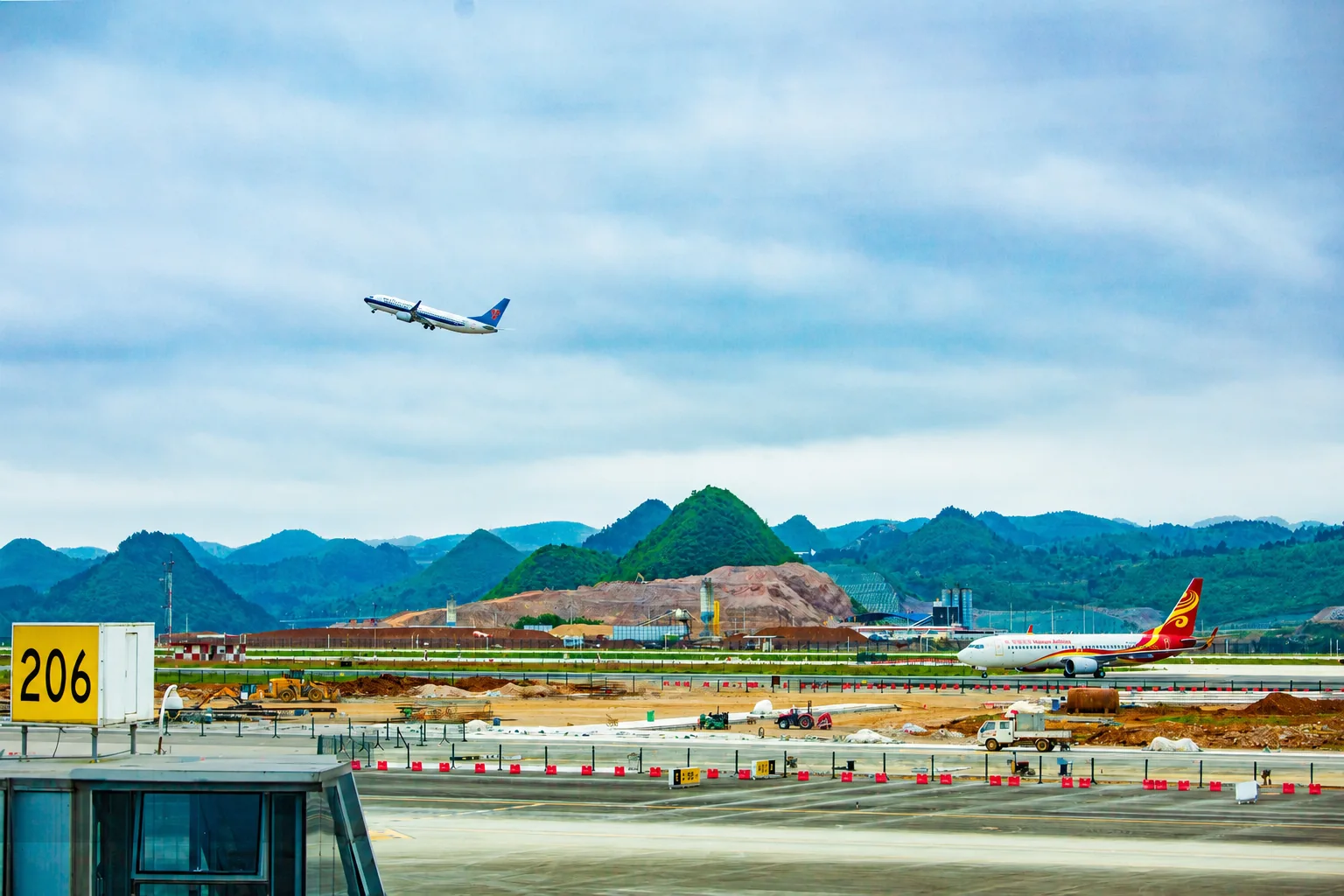
Rail is the backbone of an independent Guizhou trip. It works especially well from Guiyang toward Anshun, Kaili, Congjiang and Libo, allowing travelers to cover the long part of many routes quickly. The important detail is that the railway station is often only the first stage: Huangguoshu, Xijiang, Zhaoxing and Xiaoqikong still require a road connection after arrival.
Read China Train Guide →Public road transport can cover many last-mile connections, especially around major scenic areas and established tourism routes. Direct coaches or tourist shuttles are available on some routes, but departure points and frequency can change by season. Treat buses as part of the solution rather than assuming every village pair has a convenient direct service.
Best for selected last-mile routesA car becomes most useful when the itinerary moves beyond the railway network: linking Xijiang with Zhaoxing, combining several smaller Miao or Dong villages, reaching Jiabang Rice Terraces, or building photography stops into a rural route. It is less valuable for simple city-to-city legs that already have fast rail. Hire road transport where it removes difficult transfers, not automatically for the entire trip.
Best for rural multi-stop routesTaxis and app-based ride-hailing are useful for short urban transfers, railway stations and some final connections where public buses are inconvenient. They work best around cities and larger tourism hubs; availability becomes less predictable in remote villages, so do not rely on being able to summon a return car from every rural stop.
Best for short local transfersGuiyang Longdongbao International Airport is the main air gateway for Guizhou and the logical starting point for most fly-in itineraries. It connects into Guiyang’s metro and rail network, making onward transfers relatively straightforward, but flight routes change seasonally, so check the current schedule rather than relying on an old list of destinations.
Main air gateway
You usually do not need a driver for every day in Guizhou. Rail plus local transfers works well for routes focused on Guiyang, Huangguoshu, Kaili and Libo. A driver becomes much more valuable for Xijiang–Zhaoxing connections, smaller village loops, Jiabang, photography stops, families carrying luggage or itineraries where several rural transfers would otherwise consume most of the day.
Guizhou food is one of the strongest reasons to slow down between sightseeing days. Sour, spicy and fermented flavors appear throughout the province, but the food experience changes with the route: Guiyang is best for noodles and street snacks, Kaili and Miao areas are closely associated with sour soup dishes, while village meals may introduce cured foods, sticky rice and rice wine.
Guizhou cuisine is known for bright sourness, chili heat and fermented flavors rather than one single signature dish. If you are new to the cuisine, start with sour soup fish, then use breakfasts and snack stops to try noodles, rice dishes and local market food. Village meals can be rewarding too, but communal banquets and ceremonial drinking depend on the place and occasion rather than appearing on every itinerary.
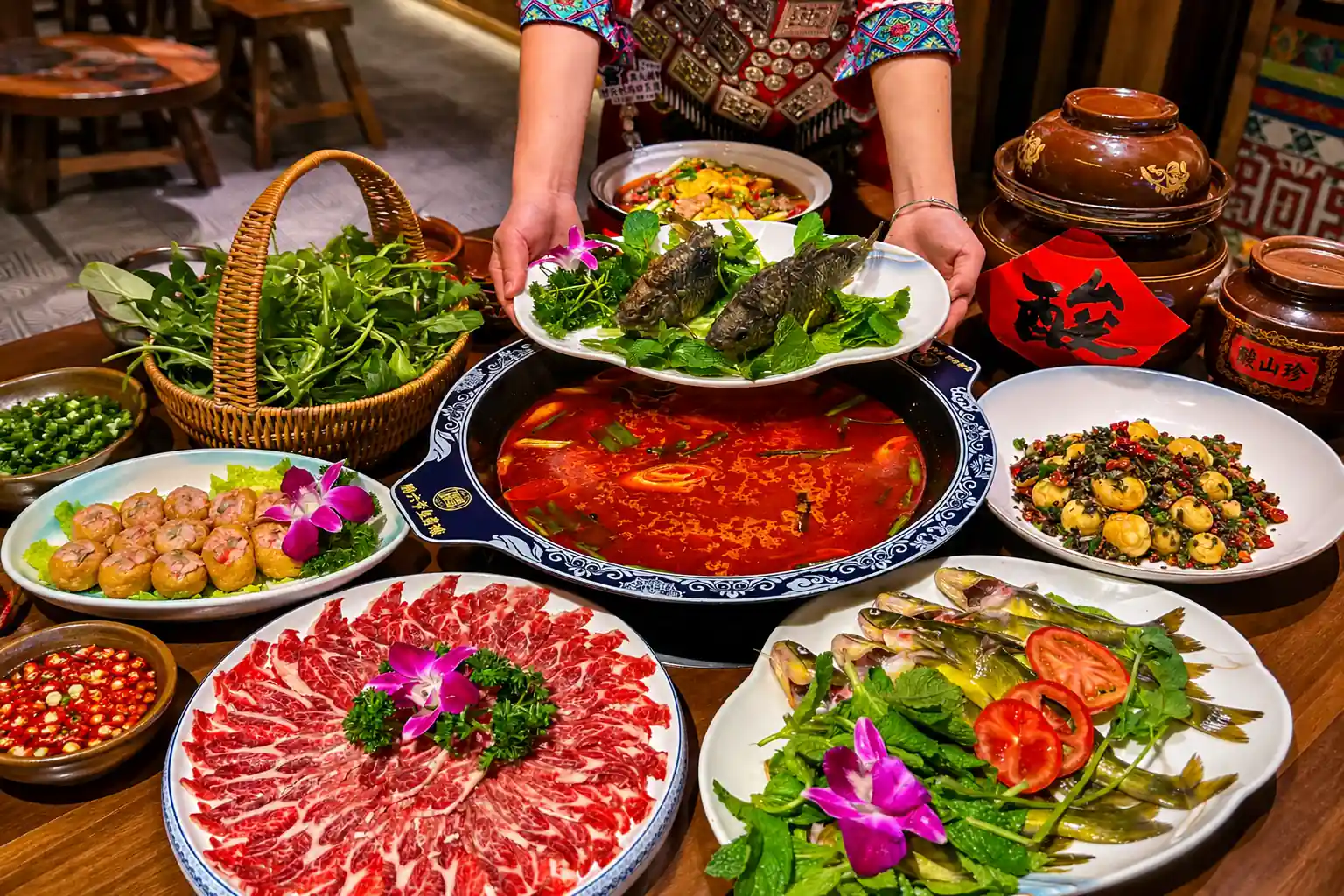
Sour soup fish, or Suan Tang Yu, is the dish most first-time travelers should prioritize. The broth combines sour and spicy flavors and is especially associated with Miao food traditions in Guizhou. It works best as a shared meal rather than a quick snack.
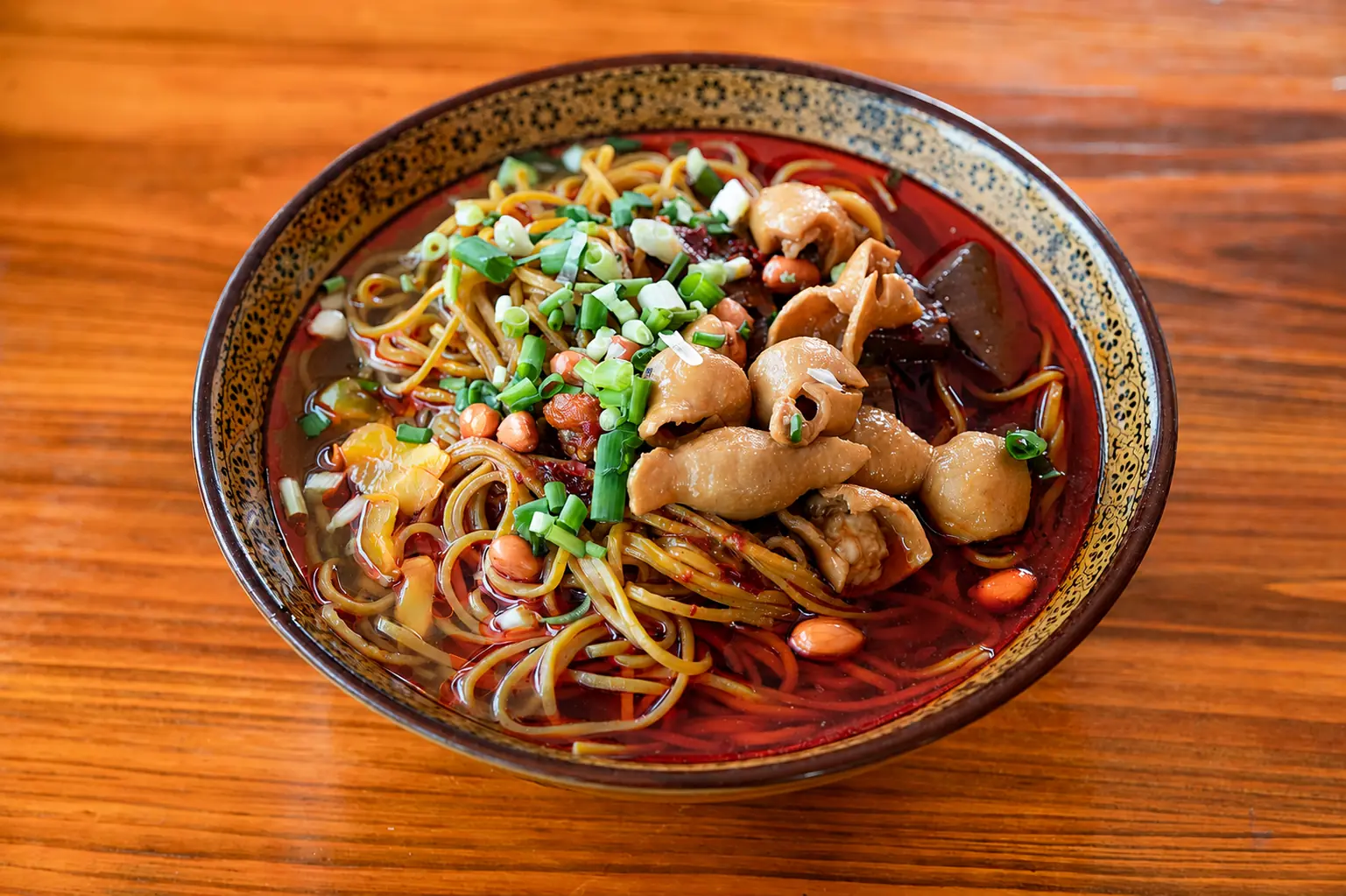
Changwangmian is one of Guiyang’s classic breakfast dishes, combining noodles with pork intestine, blood curd, broth, chili oil and crisp pork elements. The flavors are rich and savory, but the ingredients are not for everyone, so know what is in the bowl before ordering.
Siwawa, often translated as silk doll rolls, is a lighter contrast to Guizhou’s richer noodle and hotpot dishes. Thin wrappers hold shredded vegetables and are served with a sour-spicy dipping liquid, making this an easy snack or light meal during a Guiyang food stop.
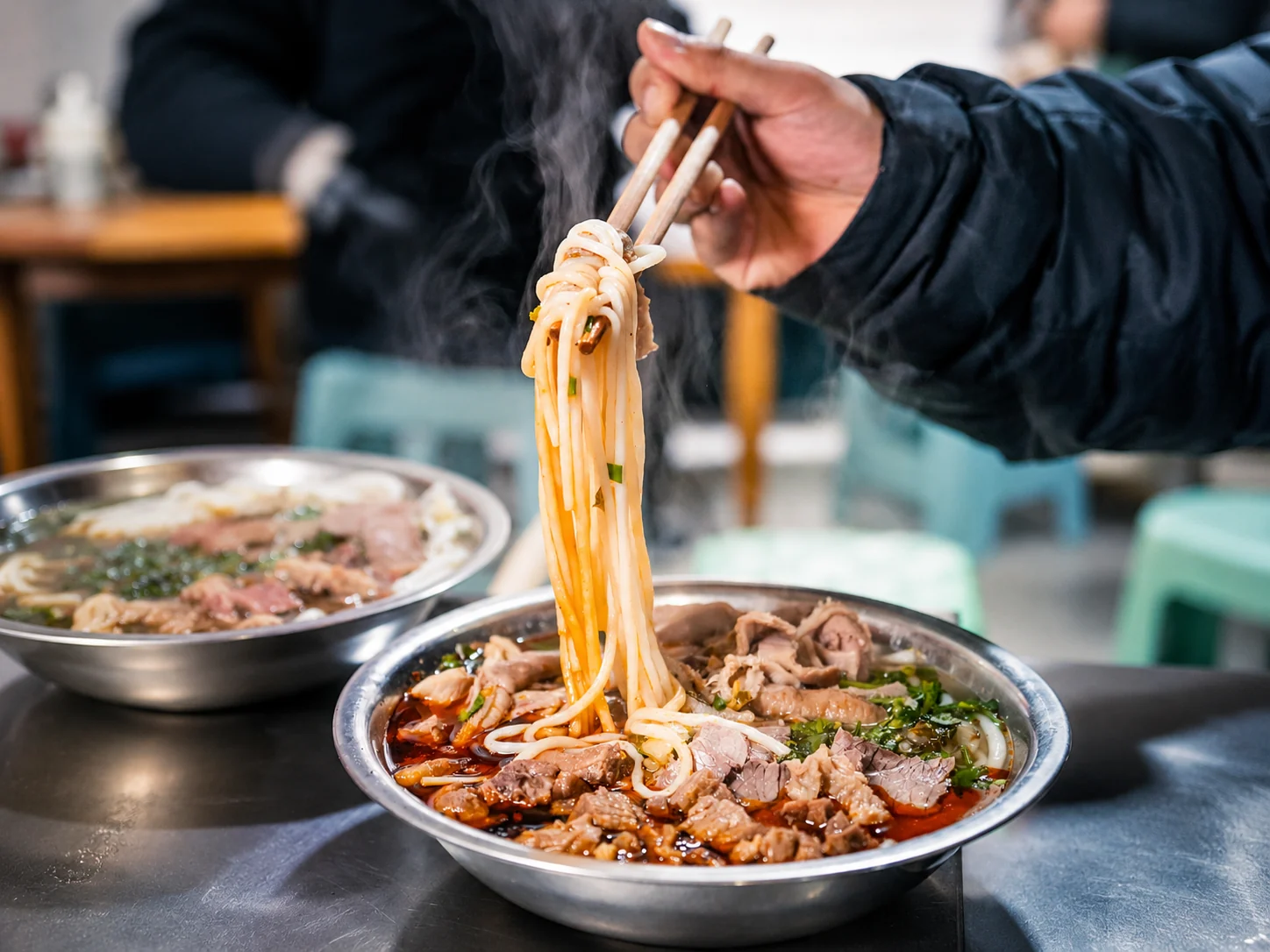
Some of the most useful food stops are breakfast noodle shops, markets and casual eateries rather than destination restaurants. Look for rice noodles, sticky-rice snacks, tofu, grilled foods and regional side dishes, especially when spending time in Guiyang.
Rice wine can appear in Miao and Dong dining or festival settings, and long-table banquets are often communal or arranged experiences rather than an everyday restaurant format. Guizhou is also closely associated with Maotai, but liquor tourism does not need to shape a first trip unless it is a specific interest. Participate in toasts at your own comfort level.
Guizhou is very manageable with good planning, but it rewards a different style from China’s large-city routes. Expect more hotel changes, more last-mile road transfers, wetter walking conditions and a larger gap between urban transport hubs and rural destinations. Preparing for those details makes a bigger difference than trying to schedule every hour in advance.
A Guizhou route often includes trains, station transfers, village streets, guesthouses and several hotel changes. A manageable suitcase or backpack is much easier than oversized luggage, especially where accommodation requires walking from a vehicle drop-off point or navigating steps and uneven lanes.
Keep your hotel name, railway station, scenic-area entrance and next destination saved in Chinese on your phone so drivers and local staff can confirm exactly where you are going, especially after the route leaves major transport hubs.
Set up the payment methods you plan to use before leaving the main transport hubs, and keep a backup option for small purchases or situations where mobile service is unreliable. Do not wait until a remote village to solve an account, card or app problem.
Accommodation standards vary more in villages than in Guiyang or larger tourism towns. Before booking, check whether the room has the bathroom, heating or air conditioning, luggage access and comfort level you need. This matters especially during Guizhou’s damp winter weather.
Heavy rain, mountain weather, traffic and rural road conditions can affect travel time. Avoid placing a long rural transfer immediately before an important flight or train, and keep Fanjingshan, Jiabang and remote village days more flexible than city sightseeing days.
Performances, festivals, long-table meals and craft demonstrations do not operate like fixed urban attractions in every village. Some are scheduled tourism programs and others depend on festivals, groups or community arrangements. Confirm anything that is essential to your trip.
Guizhou’s headline attractions and better-known villages can become much busier during national holiday periods. If your dates overlap with a major travel holiday, reserve transport and accommodation earlier and avoid depending on perfectly timed same-day transfers.
Good grip matters in Guizhou. Waterfall paths, karst scenic areas, old-town paving, rice terraces and village lanes can all become wet or uneven. Comfortable walking shoes usually matter more than packing different outfits for every stop.
Before the route becomes more rural, confirm the next hotel, station or pickup point, save the destination in Chinese, check the weather, charge your phone and make sure your payment and mobile-data setup already works. Guizhou becomes much easier when small logistical problems are solved before the last-mile transfer begins.
Guizhou sits at a useful crossroads in southwest China, with fast rail connections toward Guangxi, Chongqing, Sichuan and Yunnan. The best next destination depends on where your Guizhou route finishes: travelers ending in the Dong region can continue naturally toward Guilin, while routes returning to Guiyang connect easily north to Chongqing or Chengdu and southwest toward Kunming.
Do not automatically return to Guiyang just because you entered Guizhou there. If your trip finishes around Zhaoxing or Congjiang, continuing south toward Guilin can avoid unnecessary backtracking. If your last stop returns you to Guiyang, Chongqing, Chengdu and Kunming all make straightforward rail extensions.
Guilin and Yangshuo are the most natural continuation when your Guizhou route finishes in the Dong region around Zhaoxing and Congjiang. The journey keeps the trip focused on southern China’s karst landscapes while changing the experience from ethnic villages and mountain roads to the Li River, limestone peaks and countryside around Yangshuo.
Choose Chongqing when you want a dramatic city contrast after Guizhou’s villages and landscapes. Dense hillside neighborhoods, Yangtze River scenery and a strong food culture create a very different pace, while frequent high-speed trains make it a practical extension from Guiyang.
Chengdu works well for travelers who want to move from Guizhou’s rural and ethnic regions into a major Sichuan city known for food, teahouse culture and giant pandas. It makes most sense as another multi-day destination rather than a quick add-on.
Continue to Kunming when Guizhou is part of a longer southwest China journey. Kunming works as the gateway for a broader Yunnan route, including places such as Dali or Lijiang, and creates a useful contrast with Guizhou’s Miao and Dong regions.
A short rail journey does not mean another destination fits the trip. After a 7–8 day Guizhou route, add Guilin, Chongqing, Chengdu or Yunnan only if you have enough time to give the next region at least a few meaningful days. Otherwise, finish Guizhou well instead of turning the final part of the trip into another transport checklist.
Quick answers to the questions that matter most when planning a Guizhou trip, from how many days to stay and when to visit to transport, rural travel and choosing the right route.
Yes, especially if you are interested in waterfalls, karst landscapes, mountain scenery and Miao or Dong cultures rather than China’s biggest cities. Guizhou is most rewarding when you have enough time for a multi-stop route; it is less suited to travelers who want one city base with very little ground travel.
Plan about 5–8 days for a first Guizhou trip, with 7–8 days giving the best balance of nature, villages and realistic transfer times. Four days works for a focused route, while 10 days or more makes it easier to add Zhenyuan, Jiabang or Fanjingshan without rushing.
April, May, September and October are strong overall choices for most travelers. September is particularly useful for photography and rice-terrace routes, while the wetter summer months generally bring stronger waterfall scenery. The best month ultimately depends on whether your priority is Huangguoshu, Jiabang, Fanjingshan or general touring.
Yes, if you are comfortable combining high-speed trains with local road transfers. Major hubs such as Guiyang, Anshun, Kaili, Congjiang and Libo are relatively easy to connect, but many waterfalls, villages and mountain areas still require a bus, shuttle, taxi or car for the final stage.
Not for the entire trip. High-speed rail plus local transfers works well for many major routes. A private car or driver becomes more useful for Xijiang–Zhaoxing connections, smaller Miao and Dong villages, Jiabang Rice Terraces, photography stops or itineraries with several rural destinations.
Bring comfortable walking shoes with good grip, light layers and rain protection. Guizhou can be humid and wet, while mountain areas may feel noticeably cooler than Guiyang or Libo. In winter, add a warmer layer because damp conditions can feel colder than the temperature alone suggests.
Guizhou is best known for Huangguoshu Waterfall, the karst landscapes of Libo, Fanjingshan, rice terraces and the cultural traditions of Miao and Dong communities. Xijiang, Zhaoxing and Zhenyuan are among the best-known cultural stops, while the province is also recognized for sour-and-spicy food, embroidery, silverwork, drum towers and Dong music.
A strong first route combines Guiyang, Huangguoshu Waterfall, one Miao area such as Xijiang, the Dong region around Zhaoxing and Libo. This gives a good balance of waterfalls, karst scenery and local culture without excessive backtracking. Add Zhenyuan, Jiabang or Fanjingshan only when you have additional days.
Tell us your travel dates, trip length and whether you care most about waterfalls, karst landscapes, Miao and Dong villages, photography or mountain hiking. We can help build a practical Guizhou itinerary with the right mix of high-speed rail, local transfers and private transport where it actually saves time.
Plan My China Trip