Shanghai Attraction Guide

Yu Garden Shanghai Tickets, Hours & Visitor Guide

Yu Garden, also known as Yuyuan Garden, is a historic classical Chinese garden in Shanghai's Old City, known for its rockeries, ponds, pavilions, covered corridors and layered Jiangnan-style design. The ticketed historic garden is separate from the much larger Yuyuan shopping and dining district surrounding it.

Location
Huangpu District, Shanghai
Admission
RMB 40 peak / RMB 30 off-season
Opening Hours
9:00–16:30 · Last entry 16:00
Suggested Time
About 1.5–2 hours
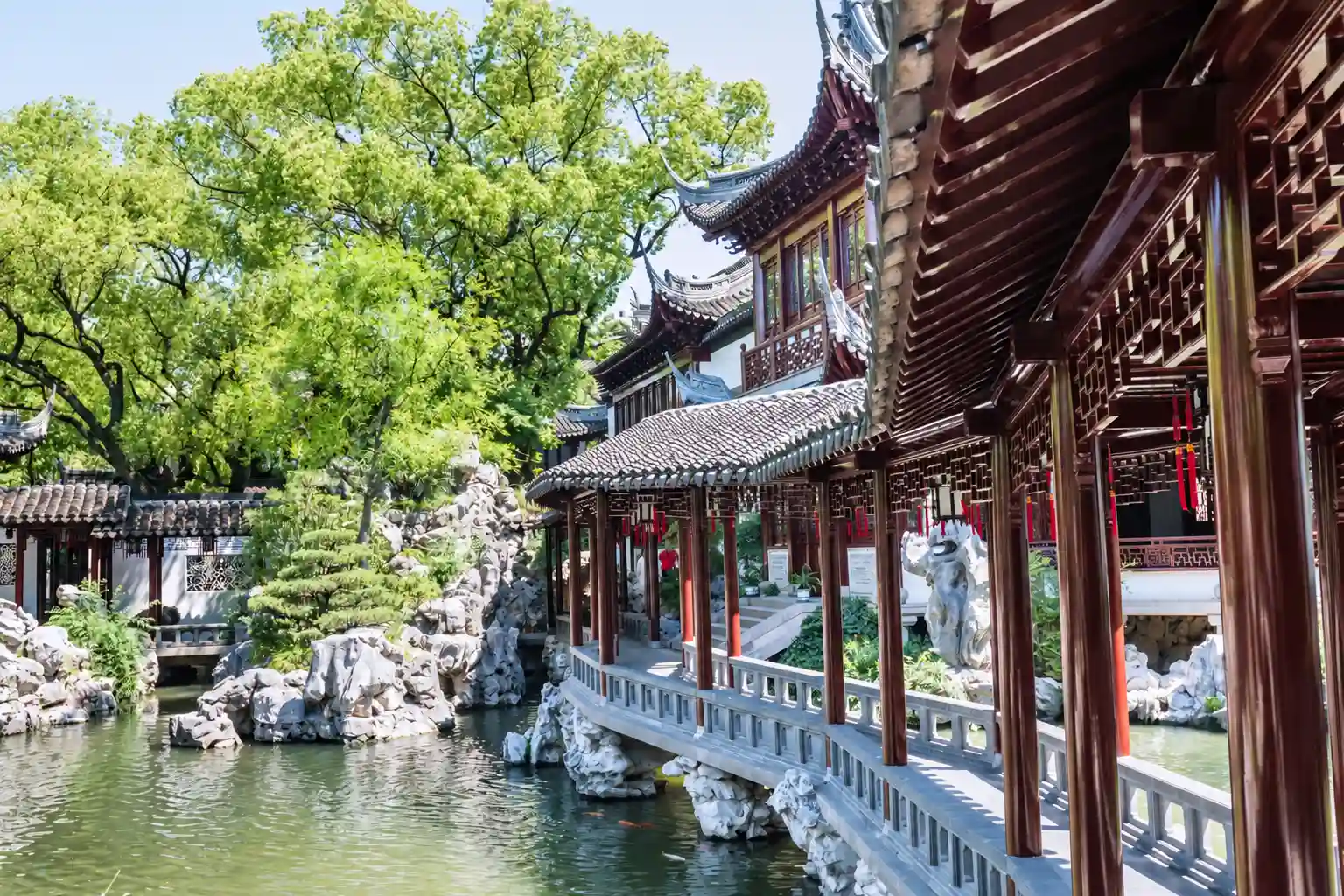
Traditional pavilions, rockeries and pond scenery inside Yu Garden in Shanghai
Why Visit

Why Visit Yu Garden?

Yu Garden offers one of the clearest introductions to classical Jiangnan garden design in central Shanghai. Behind the busy streets of the Old City, pavilions, rockeries, ponds, bridges and winding corridors create a compact landscape that reveals new views as you move through it.

Is Yu Garden Worth Visiting?

Yes — especially if you want to see a more traditional side of Shanghai

Shanghai is often associated with its modern skyline, waterfront architecture and fast-paced urban character. Yu Garden offers a very different experience: an enclosed classical Chinese garden with Ming Dynasty origins and a layout shaped by the landscape traditions of the Jiangnan region.

Its relatively compact scale is part of the appeal. Most travelers can see the major garden areas without giving up an entire day, making Yu Garden easy to combine with the surrounding Old City, City God Temple area and other central Shanghai attractions.

Jiangnan Garden Design

A layered landscape of changing views

Yu Garden brings together pavilions, ponds, rock formations, decorative walls and covered walkways within a relatively small area. Rather than relying on one grand viewpoint, the garden creates a sequence of carefully framed scenes as you walk through it.

Ming Dynasty Origins

More than four centuries of history

Construction began in 1559 under Pan Yunduan, a Ming Dynasty official who created the garden for his family. Its survival in the center of modern Shanghai makes the contrast between the city's historic and contemporary identities especially striking.

Easy to Combine

A practical heritage stop in central Shanghai

Yu Garden sits beside the City God Temple and the lively Yuyuan commercial district in Huangpu. You can easily combine the garden with food, Old City streets and other central Shanghai sights instead of treating it as a standalone day trip.

Best For

Who will enjoy Yu Garden most?

First-Time Visitors An easy introduction to traditional Chinese architecture and classical garden design without leaving central Shanghai.
Culture & Architecture Especially rewarding if you enjoy historic pavilions, decorative details, rockeries and carefully composed landscapes.
Photography A compact mix of layered roofs, stone formations, ponds, corridors and framed garden views.
What to See

Top Highlights of Yu Garden

Across roughly 20,000 square metres, Yu Garden contains more than 40 scenic spots arranged through rockeries, courtyards, halls, ponds and narrow corridors. The garden is designed to unfold gradually, so slow down and notice how each doorway or turn frames a different scene.

First-Time Visitor Tip Do not rush from building to building. The changing views between the major sights are an important part of the garden itself.
Landscape Design

Great Rockery

Near the Sansui Hall area, the Great Rockery rises about 14 metres and was created under the direction of Ming Dynasty rockery master Zhang Nanyang. Its peaks, paths, cliffs and planted spaces compress the feeling of a mountain landscape into the middle of the city.

Why It Matters One of the clearest places to understand the classical garden idea of recreating mountains and nature on a miniature scale.
History & Detail

Dianchun Hall & Dragon Wall

Dianchun Hall adds a very different historical layer to Yu Garden. It served as the northern command headquarters of Shanghai's Small Swords Society during the 1853–1855 uprising, and related historical material is displayed inside.

Just west of the hall, the Cloud-Piercing Dragon Wall uses roof tiles to form the dragon's winding body. Similar dragon walls appear elsewhere in the garden and are easy to miss if you only concentrate on the larger buildings.

Look Up Notice the dragon's head, tiled body and decorative roof details around the surrounding halls.
Water & Corridors

Huijing Hall & Jiyu Water Corridor

Huijing Hall occupies a central position in the garden and is surrounded on three sides by water. Nearby, the long Jiyu Water Corridor follows the pond through a sequence of trees, bridges, pavilions and reflected views.

This part of Yu Garden is less about one famous object and more about movement. As the corridor bends, the composition changes repeatedly, showing how a compact garden can feel much larger than its actual footprint.

Best For Slow walking, layered water views and understanding classical garden composition.
Garden Within a Garden

Inner Garden & Ancient Theatre Stage

The Inner Garden was first created in 1709 and later incorporated into the restored Yu Garden. It feels noticeably more intimate, with smaller courtyards, rockwork, halls, planting and framed views gathered into a compact space.

One of its most striking structures is the ornate ancient theatre stage. Its carved decoration and elaborate coffered ceiling make it worth examining from close range rather than simply passing through the courtyard.

Don't Rush The Inner Garden rewards close inspection more than a quick photograph from the entrance.
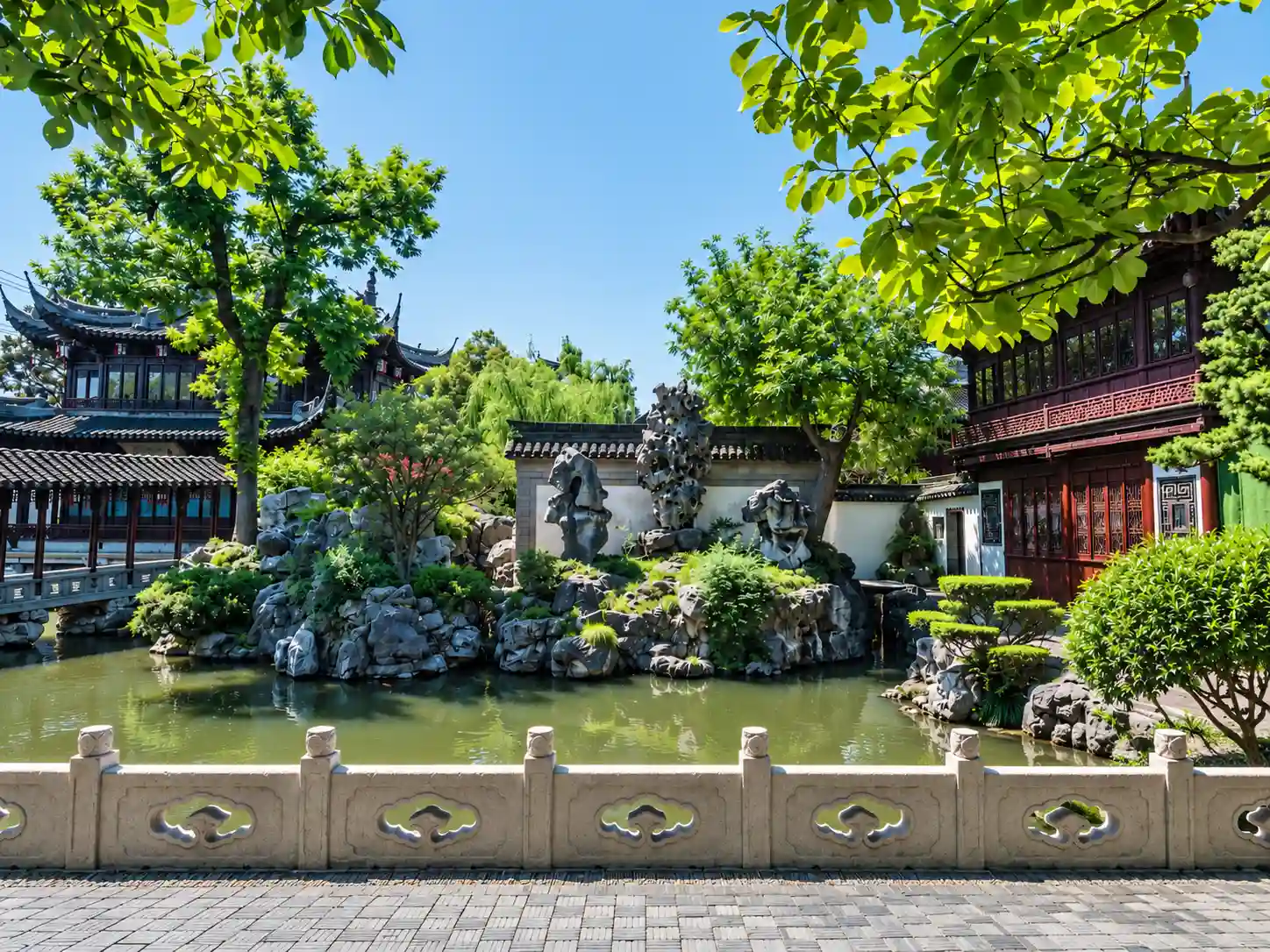
Pavilions, rockeries, water and covered corridors inside Yu Garden in Shanghai
How to Experience the Garden

The spaces between the landmarks matter too

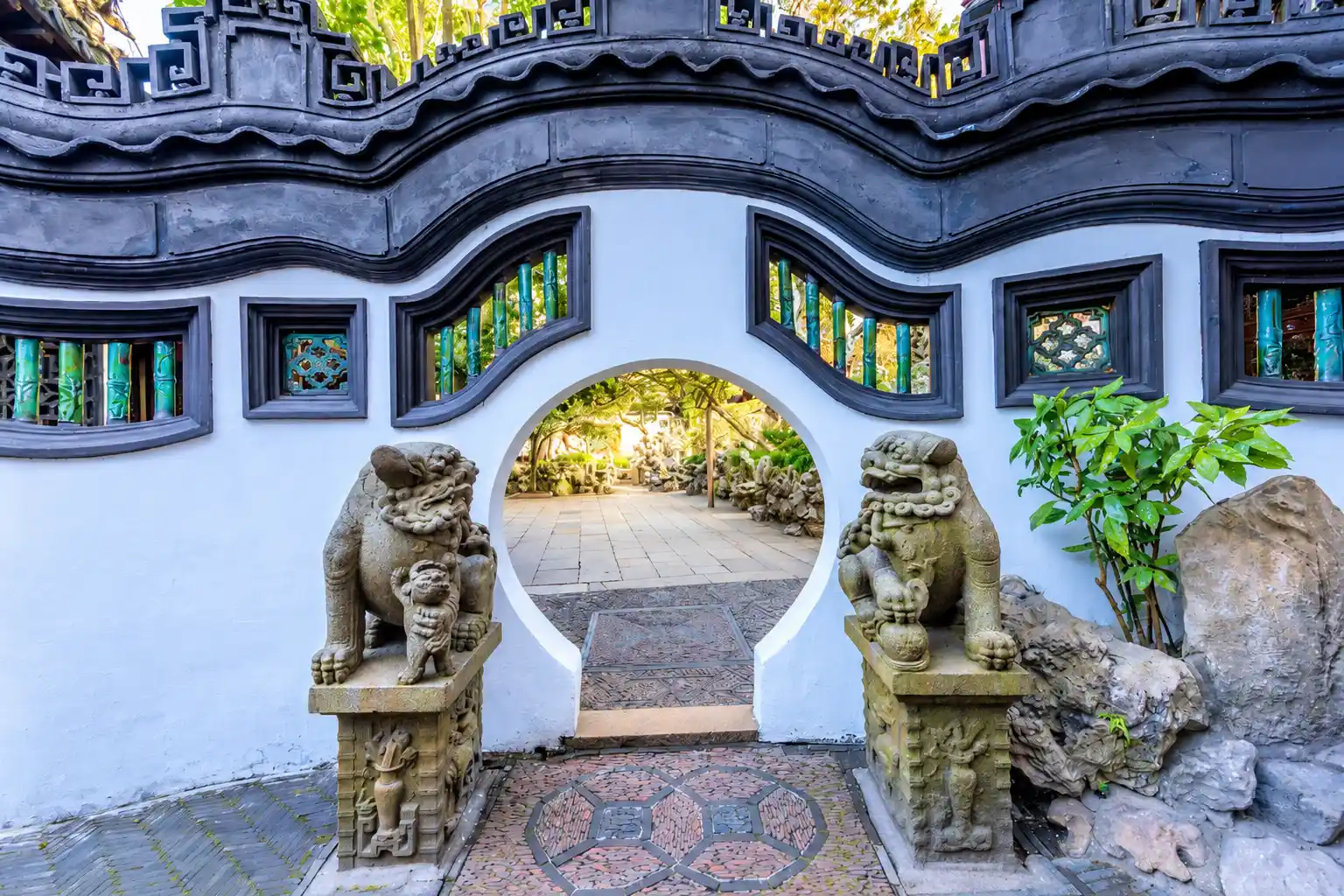
Yu Garden is not a checklist attraction. Its walls, moon gates, corridors, ponds, plants and rock formations are arranged to reveal and conceal views as you move. Some of the most memorable moments come between the named halls rather than directly in front of them.

Allow roughly 1.5 to 2 hours for a first visit if you want enough time to pause at the major sights without turning the garden into a fast walk-through.

Plan Your Visit

Yu Garden Tickets, Opening Hours & Entry

Yu Garden is a ticketed attraction, but entry is relatively straightforward. Tickets are sold both online and at the garden, and independent visitors can use either the North Gate or the South Gate.

Important Yu Garden normally closes every Monday, except on national public holidays. Spring Festival opening arrangements may follow separate official announcements.
Visitor Essentials

What to know before you visit

Tickets can be purchased at the garden's ticket windows or online through the official “上海豫园” mini program. Advance booking is not currently listed as mandatory for an ordinary daytime visit.

GoChinaQuest Recommendation

If possible, visit close to opening time. Yu Garden is compact, and its narrow corridors, courtyards and framed viewpoints are more enjoyable before the surrounding district reaches its busiest part of the day.

Adult Ticket
RMB 40 peak season
RMB 30 off-season
Opening Hours
9:00–16:30
Last entry at 16:00
Weekly Closure
Monday
Except national public holidays
Ticket Purchase
Online or at the gate
Official mini program available
Admission

Seasonal ticket prices

Adult admission changes between two pricing periods during the year.

Peak Season RMB 40

April 1–June 30
September 1–November 30

Off-Season RMB 30

July 1–August 31
December 1–March 31

Reduced Admission

Discounted and free entry

Students

Visitors over age 6 and up to age 18, plus eligible full-time undergraduate students and below, can receive half-price admission with valid supporting documents.

Seniors

Visitors aged 60 and above can receive half-price admission with valid identification.

Young Children

Children aged 6 and under, or 1.3 metres tall or below, can enter free with an accompanying adult. One adult may accompany up to three eligible children under the current rules.

Where to Enter

Yu Garden has two visitor entrances

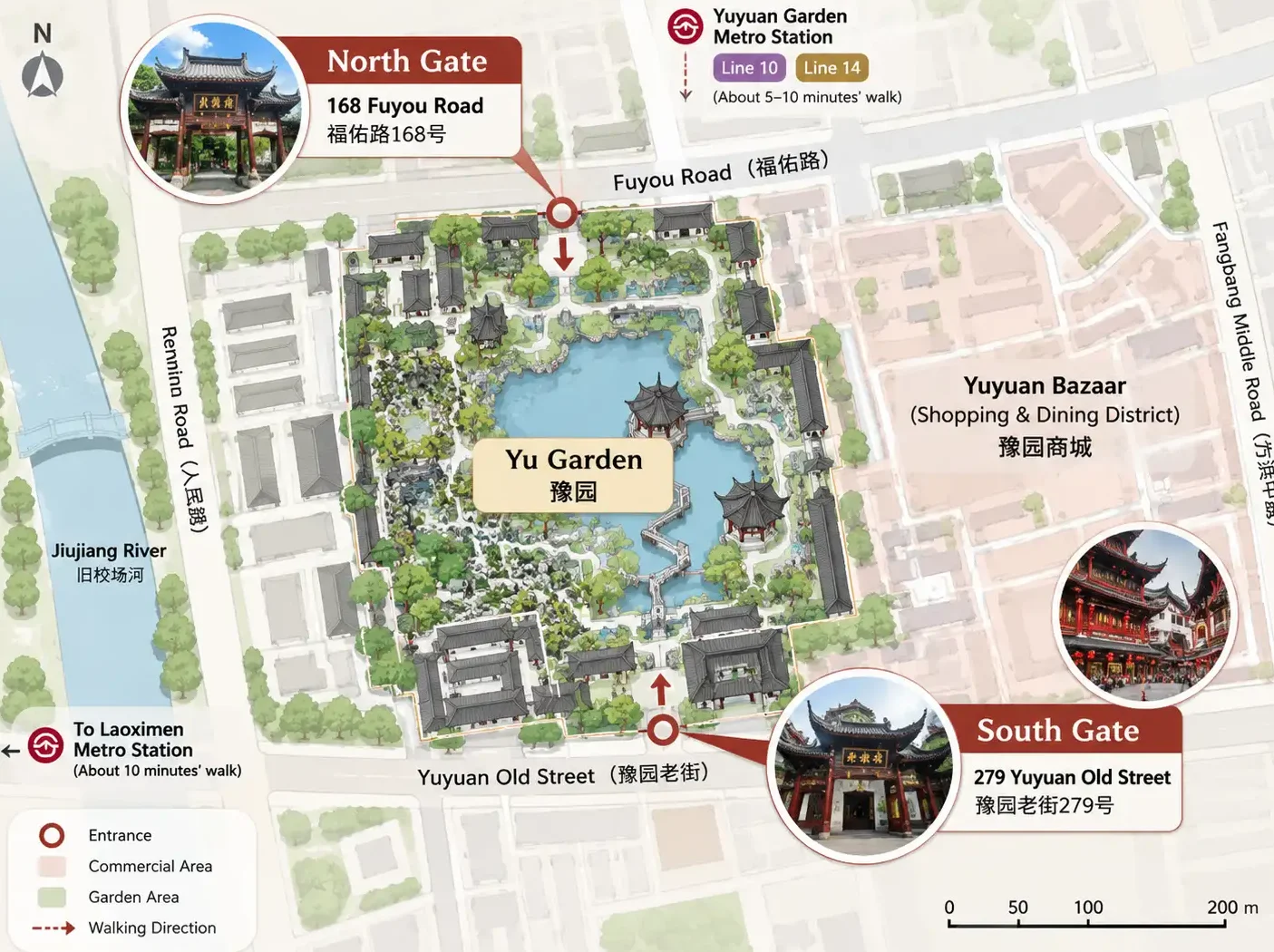
Independent travelers can use either entrance. Choose the one that best fits the direction you approach from in the surrounding Yuyuan Old City area.

North Gate

168 Fuyou Road

Used by both independent visitors and organized tour groups.

South Gate

279 Yuyuan Old Street

Located by the exit of the Nine-Turn Bridge area and used by independent visitors rather than organized groups.

Before You Go

Recheck time-sensitive details before your visit

Ticket prices, holiday opening arrangements and temporary visitor measures can change. Check Yu Garden's official visitor information again if your trip falls around a public holiday or Spring Festival.

Official Visitor Information
Getting There

How to Get to Yu Garden

Yu Garden is in Shanghai's central Huangpu District and is easy to reach by public transport. For most independent travelers, the metro is the simplest option: Yuyuan Garden Station is served by both Metro Line 10 and Line 14.

Best Option Take the metro to Yuyuan Garden Station, then walk through the surrounding Old City and Yuyuan area to the garden entrance.
Recommended Approach

Metro is the easiest choice for most visitors

Yuyuan Garden Station connects Metro Lines 10 and 14, making the attraction straightforward to reach from many parts of central Shanghai. After leaving the station, expect a short walk through the busy Yuyuan commercial and Old City area before reaching the ticketed historic garden.

Traveler Tip

Do not assume the first traditional-looking shopping street you reach is the garden entrance. The surrounding Yuyuan commercial district is much larger than the ticketed Yu Garden itself.

Nearest Station
Yuyuan Garden
豫园站
Metro Lines
Line 10 & Line 14
Both stop at Yuyuan Garden Station
Best Transport
Metro
Simple and reliable for central Shanghai
Parking
No dedicated parking
Public transport is usually easier
Door to Door

Taxi or Ride-Hailing

A taxi or app-based ride can be convenient if you are traveling with children, older family members or several people. Because some streets around Yuyuan are busy and pedestrian-oriented, your driver may stop nearby rather than directly beside the garden gate.

Show the Driver 豫园 · Yu Garden
Alternative

By Bus

Yu Garden's official transport information lists several nearby bus services, including routes 11, 26, 64, 736, 926, 929, 932, 969 and 980, as well as the Fangchuan Line.

Buses can be useful if one already fits your route, but the metro is generally simpler for first-time international visitors.

Best For Travelers already comfortable using Shanghai's local bus network
City Walk

Combine It with the Old City

Yu Garden works especially well as part of a walking itinerary through the surrounding Old City. The City God Temple, Yuyuan shopping streets, food areas and traditional-style storefronts are concentrated around the garden.

If you plan to continue to the Bund afterward, check your map on the day and choose between walking, metro or a short taxi ride based on your pace, weather and pedestrian traffic.

Best Combination Yu Garden + City God Temple + surrounding Old City
Entrance area of Yu Garden in Shanghai Old City
Arriving at Yu Garden

Which entrance should you use?

Independent visitors can enter through either the North Gate or South Gate. The better choice usually depends on which side of the Yuyuan area you approach from, so there is little reason to cross the whole district just to use one particular gate.

North Gate 168 Fuyou Road 福佑路168号

Used by both independent visitors and organized groups.

South Gate 279 Yuyuan Old Street 豫园老街279号

Used by independent visitors and convenient when approaching through the main Yuyuan pedestrian area.

Simple Rule

Use whichever gate fits your natural walking route. For an independent visit, neither entrance is important enough to justify a long detour through the crowded commercial area.

Quick Decision

Which transport should you choose?

Most Travelers Metro
Families / Groups Taxi or Ride-Hailing
Avoid If Possible Driving Yourself
When to Go

Best Time to Visit Yu Garden

Yu Garden can be visited year-round, but the experience changes noticeably with Shanghai's weather and the crowds in the surrounding Old City. Spring and autumn are generally the most comfortable seasons for walking slowly through the garden.

Best Overall Choose spring or autumn for the best balance of comfortable weather, outdoor walking and garden scenery.
GoChinaQuest Recommendation

Visit in mild weather and arrive near opening time

Yu Garden is most enjoyable when the weather is comfortable enough to move slowly through its courtyards, corridors and open-air spaces. Spring brings fresh greenery and milder temperatures, while autumn is often pleasant for combining the garden with a longer walk through Shanghai's Old City.

Regardless of season, arriving shortly after opening can make an even bigger difference. The narrow passages and compact courtyards feel more atmospheric before the surrounding Yuyuan area becomes busier later in the day.

Best Seasons
Spring & Autumn
Mild weather for walking
Best Arrival
Around 9:00
Soon after opening
Hottest Period
July & August
Hot and humid
Crowd Watch
Major Holidays
Especially around Chinese New Year
Summer Plan Carefully

June to August

Shanghai summers are hot and humid, and July and August can be particularly uncomfortable around midday. Mid-June to early July also overlaps with the city's plum-rain season, when prolonged rainy or cloudy conditions are more common.

Weather Hot, humid & rainy
Best Approach Visit early in the day
Winter Cooler Season

December to February

Winter in Shanghai is generally cold and damp rather than severely snowy. Yu Garden remains easy to visit, but more of the experience is outdoors than the compact map may suggest, so warm layers make a noticeable difference.

Weather Cold & damp
Best For Travelers comfortable with cool weather
Time of Day

When should you arrive?

At Yu Garden, arrival time can matter almost as much as the season.

Best Choice Around Opening Time

Arriving near 9:00 gives you the best chance to experience the narrow corridors and courtyards before the wider Yuyuan district becomes busier.

Still Good Late Morning

A practical choice if Yu Garden is the first major stop in a wider Old City itinerary, although visitor numbers generally increase as the morning progresses.

Less Ideal Mid-Afternoon

This period can feel busier and leaves less flexibility because the garden stops admitting visitors at 16:00.

The Simple Answer

When should most travelers visit?

If you have flexibility, choose a mild spring or autumn day and arrive close to 9:00. If your Shanghai dates are already fixed, there is no need to reorganize your trip just for Yu Garden — adjust your arrival time and clothing to the season instead.

Suggested Route

How to Visit Yu Garden

Yu Garden is compact enough to explore in one visit, so most travelers do not need several different itineraries. A simple route through the main garden areas works best, leaving enough time to pause at the rockeries, halls, corridors and water views instead of rushing from one landmark to the next.

Recommended Time Allow around 1.5–2 hours for a comfortable first visit.
First-Time Visitor Route

A practical flow through Yu Garden's main highlights

If you enter from the North Gate, a natural first-visit approach is to move gradually through the main historic garden areas toward the southern side, finishing around the Inner Garden before continuing into the surrounding Yuyuan Old City.

You do not need to stop at every named pavilion. Use the major landmarks as anchors, but pay attention to the corridors, moon gates, ponds, stonework and changing views between them.

Route Principle

Prioritize the Great Rockery, Dianchun Hall area, Huijing Hall and water corridors, Exquisite Jade Rock and the Inner Garden.

Suggested Duration
1.5–2 Hours
Comfortable first visit
Walking Style
Slow & Exploratory
Short corridors and courtyards
Walking Conditions
Easy to Moderate
Uneven paths and occasional steps
Suggested Start
North Gate
Convenient for this route
Recommended Flow

Yu Garden first-visit route

This is a GoChinaQuest suggested flow for first-time visitors, not an official mandatory one-way route. Temporary closures, events or crowd-control measures may require small adjustments on the day.

1
Start

North Gate & Sansui Hall Area

Enter from Fuyou Road and use the first part of the garden to adjust to its scale and layout. The Sansui Hall area introduces the architecture and rockwork that define much of Yu Garden.

Don't Miss
Great Rockery One of the garden's most important landscape features.
2
Garden Architecture

Wanhua Tower Area

Continue deeper into the garden rather than rushing directly toward the famous landmarks. This area shows how halls, courtyards, planting and enclosed spaces are layered together to make a compact garden feel much larger.

Look For
Framed Garden Views Look through doors, windows and openings rather than only at the buildings themselves.
3
History

Dianchun Hall & Dragon Wall

Pause here for one of Yu Garden's strongest historical layers. Dianchun Hall served as the northern command headquarters of Shanghai's Small Swords Society during the 1853–1855 uprising.

Look Up
Cloud-Piercing Dragon Wall Notice the sculpted dragon head and tiled body running across the wall.
4
Water & Movement

Huijing Hall & Jiyu Water Corridor

Slow down in the central part of the garden. Huijing Hall sits beside water, while the nearby corridor moves through a changing sequence of ponds, planting, bridges and pavilion views.

Best For
Slow Walking & Photography The composition changes constantly as the corridor bends.
5
Signature Highlight

Exquisite Jade Rock & Yuhua Hall

Give this area more time than an ordinary photo stop. The Exquisite Jade Rock is one of Yu Garden's defining treasures, while Yuhua Hall was positioned so the stone could be admired from close range.

Priority
Essential Stop One of the clearest examples of architecture, stone and framed views working together.
6
Final Garden Area

Inner Garden & Ancient Theatre Stage

Finish with the more intimate Inner Garden. Explore its smaller courtyards, rockwork and halls, then take time to examine the richly decorated ancient theatre stage.

Finish With
Ancient Theatre Stage Look up at the carved and painted ceiling details before leaving this part of the garden.
Adjust the Route

What if you have more or less time?

Keep the same basic route and change how deeply you explore it.

About 1 Hour

Focus on the essentials

Prioritize the Great Rockery, Dianchun Hall, water corridor, Exquisite Jade Rock and Inner Garden.

Half Day

Add the surrounding Old City

Explore Yu Garden normally, then use the extra time for the City God Temple area and Yuyuan streets rather than spending several hours only inside the garden.

If You Are Rushed

What should you prioritize?

Don't Miss Great Rockery, Exquisite Jade Rock and Inner Garden
Make Time For Dianchun Hall, dragon walls and water corridors
Don't Stress About Entering every minor hall or memorizing every pavilion name
After Yu Garden

Continue into Shanghai's Old City

Once you leave the garden, continue through the surrounding Yuyuan streets and City God Temple area rather than immediately taking transport elsewhere.

Easy Half-Day Combination Yu Garden → City God Temple Area → Yuyuan Old City

Add the Bund afterward if it fits naturally with the rest of your Shanghai itinerary.

Practical Advice

Travel Tips for Yu Garden

Yu Garden is not physically demanding, but its historic layout includes uneven stone paths, steps, bridges, narrow passages and surfaces that can become slippery in wet weather. A few practical choices can make the visit noticeably easier.

Most Important Travel light and wear comfortable shoes with reliable grip.
Before You Go

Three things worth knowing before you enter

Yu Garden is compact, but it was not designed like a modern, barrier-free city park. Historic stonework, small level changes and tight spaces are part of the experience, so prepare for the garden rather than treating it as a simple paved attraction.

Wear Comfortable walking shoes

Uneven paving, stone bridges, steps and sloped surfaces make supportive footwear with good grip more useful than smooth-soled shoes.

Bring A compact day bag

Keep what you carry manageable. Yu Garden currently does not provide luggage storage, and large bags are inconvenient in its narrower corridors and courtyards.

Check The weather forecast

Rain can make traditional stone paths noticeably slippery. Shanghai's hot and humid summer weather also makes an early, slower-paced visit more comfortable.

Walking & Accessibility

Easy in distance, less simple underfoot

The overall walking distance is manageable for most visitors, but historic surfaces and small level changes matter more here than the total distance.

Expect uneven paths, steps and narrow spaces

Yu Garden's official visitor guidance warns about uneven paths, steps, stone bridges, slopes, ponds, rockeries, caves, low tree branches and moss-covered areas. Watch where you are walking, especially when concentrating on photography or architectural details.

Wet Weather

Stone paths can become very slippery in rain or snow. During thunderstorms or strong winds, follow staff instructions and avoid lingering beneath trees or roof edges.

Families Strollers are possible, but not always convenient

Children's strollers may be used when needed, but steps, bridges and narrow historic passages can make some sections less straightforward.

Older Visitors Slow the pace on stone surfaces

There is no need to rush. Take extra care around bridges, slopes, steps and wet stone, particularly after rain.

Wheelchair Users Possible, but expect historic-surface challenges

Wheelchairs may be used when needed. Uneven paving, level changes and traditional garden features can make some parts less convenient than a modern step-free attraction.

Luggage

Avoid arriving with large suitcases

Yu Garden currently does not provide luggage storage.

If you are visiting between hotel check-out and a train or flight, arrange luggage storage elsewhere before coming to the garden. A small day bag also makes the narrow passages and crowded surrounding streets easier to navigate.

Photography

Photograph the layers, not only the landmarks

Yu Garden is especially photogenic when you use doorways, windows, corridors and walls to frame pavilions, rockeries and water rather than photographing every feature straight on.

Ordinary visitor photography should follow on-site signs and staff instructions. Wedding, commercial and other large-scale shoots face additional restrictions, while drones are not permitted inside the garden.

Better Photos Step back and include surrounding architecture
Best Approach Visit earlier for cleaner, less crowded compositions
Organized Shoots Check permission requirements before commercial or large-scale filming
Visitor Rules

A few rules that genuinely affect travelers

Most visitors do not need to memorize a long list of regulations. These are the rules most likely to affect an ordinary visit.

Pets

No pets inside the garden

Pets are not permitted. Guide dogs are the stated exception.

Wildlife

Give small wild animals space

If you encounter wildlife, do not chase or touch it. Give the animal space, move around it where possible and leave it undisturbed.

Heritage

Do not climb or damage historic features

Respect barriers and protection signs around historic buildings, rockeries, plants and other protected garden features.

Temporary Closures

Some areas may occasionally be unavailable

Restoration, gardening work or safety management can temporarily close individual areas. Follow staff directions and signed alternative routes when this happens.

Garden Etiquette

Give other visitors room to enjoy the view

Some of Yu Garden's best viewpoints are narrow doorways, bridges and corridor openings. Take your photograph, then move aside rather than blocking the passage for an extended period.

Keep voices moderate Queue at narrow viewpoints Protect plants and historic structures Follow on-site photography signs
Quick Checklist

Before heading to Yu Garden

Comfortable shoes For stone paths, bridges and steps
Small day bag No luggage storage inside
Weather protection Especially for rain or summer heat
Current visitor information Check closures and holiday arrangements
CREDENTIALS & COMPANY VERIFICATION

A logistics partner you can verify before you ship.

Trust in freight forwarding starts with knowing who is handling your cargo.

Tonlexing operates under Shenzhen Tonlexing International Logistics Co., Ltd. and maintains company and industry documentation relevant to our international freight forwarding operations.

Supporting documents can be provided when customers require additional verification during supplier or logistics due diligence.

LEGAL COMPANY IDENTITY

Shenzhen Tonlexing International Logistics Co., Ltd.

International freight forwarding and logistics coordination based in Shenzhen, China.

Company
Shenzhen Tonlexing International Logistics Co., Ltd.
Location
Luohu District, Shenzhen, Guangdong, China
Contact Our Shenzhen Team

Business Registration

COMPANY DOCUMENTATION

Legal company documentation supporting Tonlexing's registered business identity in Shenzhen, China.

NVOCC Qualification

OCEAN FREIGHT

Industry qualification associated with international ocean freight forwarding operations.

FMC Registration

U.S. TRADE SUPPORT

Documentation relevant to ocean freight services involving the United States market.

JCtrans Network Member

LOGISTICS NETWORK

Professional freight network membership supporting international agent and logistics connections.

Need company documents before placing a shipment?

Contact our team if your procurement, compliance or finance department requires additional company verification documents.

Request Verification
Nearby Attractions

What to Visit After Yu Garden

Yu Garden fits naturally into a wider walk through central Shanghai. The City God Temple and Yuyuan streets are immediately outside the garden, while the Bund makes the strongest major sightseeing stop to continue to afterward.

Best Combination Yu Garden → City God Temple Area → Old City Streets → The Bund
Traditional architecture around the City God Temple and Yuyuan area in Shanghai
Immediately Outside the Garden

City God Temple & Yuyuan Area

Do not leave the district as soon as you exit Yu Garden. The historic garden sits beside the City God Temple and the much larger Yuyuan commercial area, where food shops, pedestrian lanes and traditional-style buildings create a very different atmosphere from the quieter ticketed garden.

This distinction is useful for first-time visitors: Yu Garden is the enclosed historic attraction, while “Yuyuan” is also commonly used for the much broader shopping, dining and sightseeing district around it.

Travel Time Immediately adjacent
Suggested Time 45–90 minutes
Best For Food, atmosphere & exploring on foot
GoChinaQuest Tip

Visit the ticketed garden first if you arrive in the morning. You can explore the surrounding commercial streets afterward without worrying about Yu Garden's earlier closing time.

Continue Your Walk

The most logical places to go next

These stops are chosen for how naturally they fit the same route, rather than simply because they appear nearby on a map.

Best for Exploring on Foot Shanghai Old City

Continue through the streets around Yuyuan instead of immediately taking the metro. Walking gives more context to the historic urban setting around Yu Garden and the City God Temple.

Walking Directly around Yu Garden
Useful Walking Link Gucheng Park

Gucheng Park provides a quieter green transition between the Yuyuan area and the eastern side of the Old City. It can fit naturally into a walking route if you are continuing toward the Bund rather than returning to the metro.

Good For Continuing toward the Bund
Best Major Attraction Next The Bund

The Bund is the strongest major sightseeing stop to combine with Yu Garden. Moving from a classical Chinese garden and historic neighborhood to Shanghai's monumental waterfront creates one of the clearest contrasts in the city.

Best For Architecture, skyline views & sunset
Classic Shanghai Contrast

From Yu Garden to the Bund

Pairing these two attractions works especially well because they present very different versions of Shanghai within the same central part of the city.

Yu Garden represents classical garden traditions and the historic Old City, while the Bund is defined by monumental waterfront architecture and views across the Huangpu River toward Pudong.

Good Timing

Visit Yu Garden earlier in the day, explore the surrounding Yuyuan and Old City streets afterward, then continue toward the Bund later in the afternoon or around sunset.

The Bund waterfront and Pudong skyline in Shanghai
Easy Combinations

Build the rest of your day

Choose the combination that matches the time you actually have instead of trying to fit every nearby attraction into one route.

Around 2–3 Hours

Yu Garden + Yuyuan Area

Visit the garden first, then explore the City God Temple area and surrounding pedestrian and food streets.

Full Day

Add More of Central Shanghai

Continue beyond the Bund toward Nanjing Road or another central Shanghai stop rather than spending the entire day around Yuyuan.

If You Choose Only One

Go to the Bund next

For most first-time visitors, Yu Garden and the Bund make the strongest pairing. They are easy to combine while showing two dramatically different sides of Shanghai.

Frequently Asked Questions

Yu Garden FAQ

These are the questions that most often cause confusion when planning a visit to Yu Garden, especially around tickets, opening days, the surrounding Yuyuan district and practical access inside the historic garden.

Quick Advice Visit the ticketed garden first, then explore the surrounding Yuyuan shopping and Old City area afterward.
Is Yu Garden free to enter?

No. The historic Yu Garden itself is a ticketed attraction. Standard adult admission is RMB 40 during peak season and RMB 30 during the off-season.

The surrounding Yuyuan commercial streets and much of the wider shopping district are separate from the ticketed garden, so you can explore those areas without purchasing a Yu Garden admission ticket.

See ticket details
Do I need to book Yu Garden tickets in advance?

Current visitor information allows both online and on-site ticket purchases. Tickets can be bought through the official “上海豫园” mini program or from ticket counters at the garden.

Advance purchase is not currently listed as mandatory for an ordinary daytime visit. Buying ahead can still be useful if you are visiting during a major public holiday or another particularly busy period.

See current ticket information
Is Yu Garden closed on Mondays?

Yes. Yu Garden normally closes every Monday, except when the Monday falls within a national public holiday. Spring Festival opening arrangements may follow a separate temporary schedule.

If your Shanghai itinerary falls during a holiday period, check the garden's latest visitor information rather than relying only on the normal weekly schedule.

How long should I spend at Yu Garden?

Around 1.5–2 hours is comfortable for most first-time visitors. That gives you enough time to see the Great Rockery, Dianchun Hall area, water corridors, Exquisite Jade Rock and Inner Garden without rushing through every courtyard.

If you only have about one hour, focus on the major highlights. If you have half a day, use the extra time for the surrounding Old City and City God Temple area rather than spending the entire half day inside the garden.

See the suggested route
Is Yu Garden the same as Yuyuan Bazaar?

No. The names are often used loosely in travel conversations, but the historic Yu Garden and the surrounding Yuyuan shopping district are not the same attraction.

Yu Garden is the enclosed classical garden with its own admission ticket and opening hours. Yuyuan Bazaar and the wider Yuyuan commercial area contain shops, restaurants and traditional-style pedestrian streets around the garden.

Which entrance should I use at Yu Garden?

Independent visitors can use either the North Gate at 168 Fuyou Road or the South Gate at 279 Yuyuan Old Street.

The North Gate is used by both groups and independent visitors, while the South Gate is for independent visitors. For most travelers, the easiest choice is whichever entrance naturally fits the direction you approach from.

See entrances and transport
Is Yu Garden wheelchair and stroller accessible?

Wheelchairs and children's strollers may be used when needed, but Yu Garden should not be described as uniformly barrier-free.

The historic layout includes uneven paths, steps, stone bridges, slopes, rockeries and narrow areas. Visitors using a wheelchair or stroller may therefore find some sections less convenient and should follow staff guidance where necessary.

See accessibility advice
Can I visit Yu Garden at night?

Do not assume that standard daytime admission includes evening access. Yu Garden's normal visitor schedule is separate from any specially announced night-tour or evening program.

Evening openings have been offered as separate programs at certain times, with their own dates, hours, entrance arrangements and ticket rules. If you specifically want a night visit, check the latest official announcement before planning around it.

Also note: The surrounding Yuyuan shopping and dining district can remain active well after the historic garden's normal daytime closing time.
Can I store luggage at Yu Garden?

No. Yu Garden's current visitor guidance states that luggage storage is not available because of site limitations.

If you are visiting after hotel checkout or before a train or flight, arrange storage elsewhere before arriving and visit with a smaller day bag if possible.

See practical visitor tips
Ready to Visit?

Check the practical details before you go

Ticket prices, holiday opening arrangements and separately announced evening programs can change, so verify time-sensitive information before your travel date.

Editorial Information

About This Yu Garden Guide

This guide was prepared using official Yu Garden visitor information, attraction history and Shanghai municipal tourism resources. Time-sensitive details such as opening hours, admission prices, entrances and visitor rules were checked against official sources.

Information Checked
Primary Sources
Yu Garden & Shanghai Government
Guide Type
Independent Travel Guide
Details That Can Change

Ticket prices, opening arrangements, temporary closures, holiday schedules and specially announced evening programs can change. Recheck official visitor information if your trip is approaching or falls during a major public holiday.

Planning Note Use this guide for trip planning, but verify time-sensitive details with Yu Garden before visiting.
Visit Official Yu Garden Website