How Many Days in Huangshan?
One day can cover a shortened Mount Huangshan visit, but 3–4 days gives first-time travelers a much better balance between mountain scenery, ancient villages and transfers.

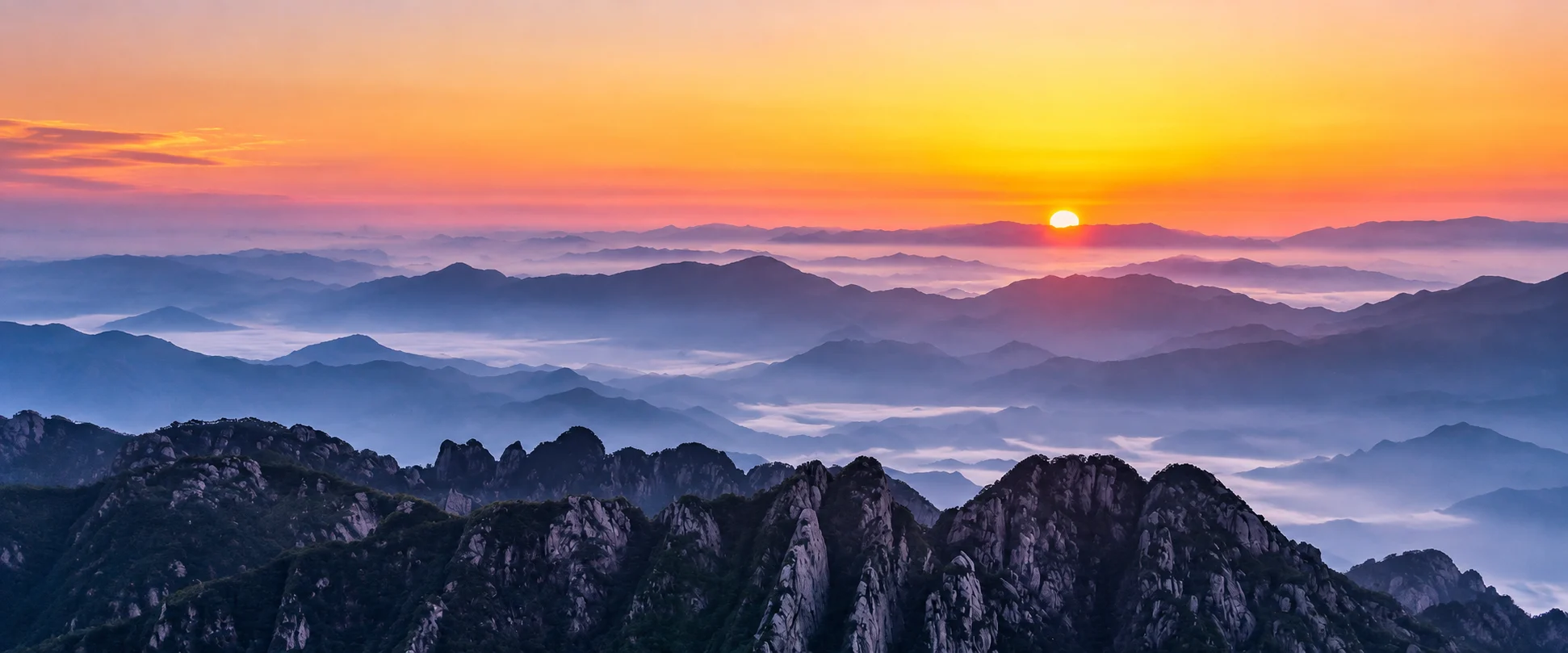
Plan your Huangshan trip with a practical guide to Mount Huangshan (Yellow Mountain), mountain routes and cable cars, sunrise and sea-of-clouds viewpoints, Hongcun and Xidi ancient villages, transportation, hotels, weather and suggested itineraries. Understand how Huangshan City, Tangkou and the Huangshan Scenic Area fit together so you can choose the right route, place to stay and travel plan for your first visit.
Mount Huangshan is a large mountain scenic area rather than a single viewpoint. Your route depends on which gate you enter, which cable car you use, how much hiking you want and whether you stay overnight on the mountain. For most first-time trips, planning the South Gate, Yungu and Yuping route first makes the rest of the Huangshan itinerary much easier.
A practical first visit starts from Tangkou and the Huangshan Scenic Area South Gate. Take the scenic-area shuttle toward Yungu Temple, ascend by Yungu Cableway and begin on the Back Mountain side. From there, walk through the main mountaintop sightseeing areas before continuing toward the Front Mountain and descending by Yuping Cableway.
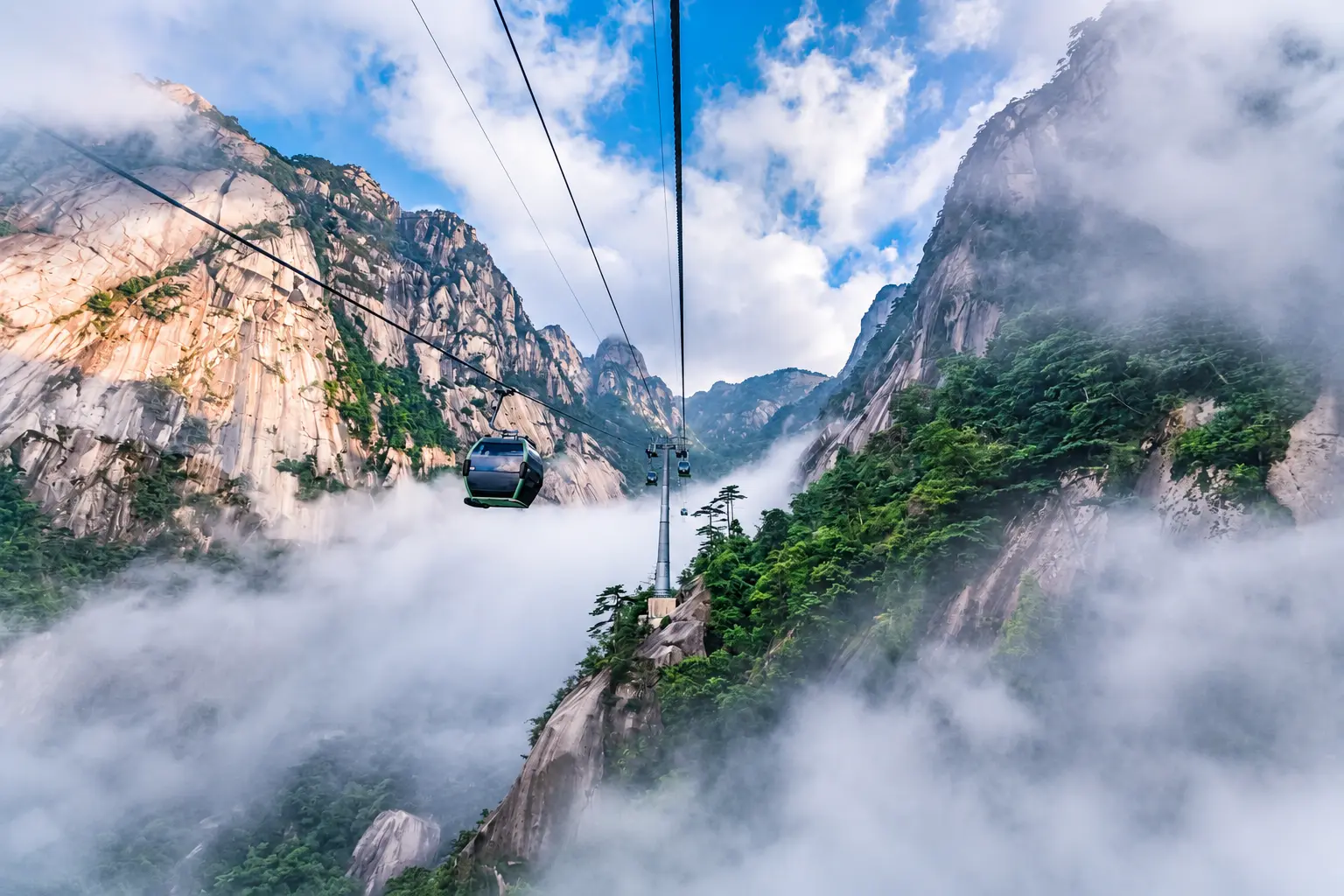
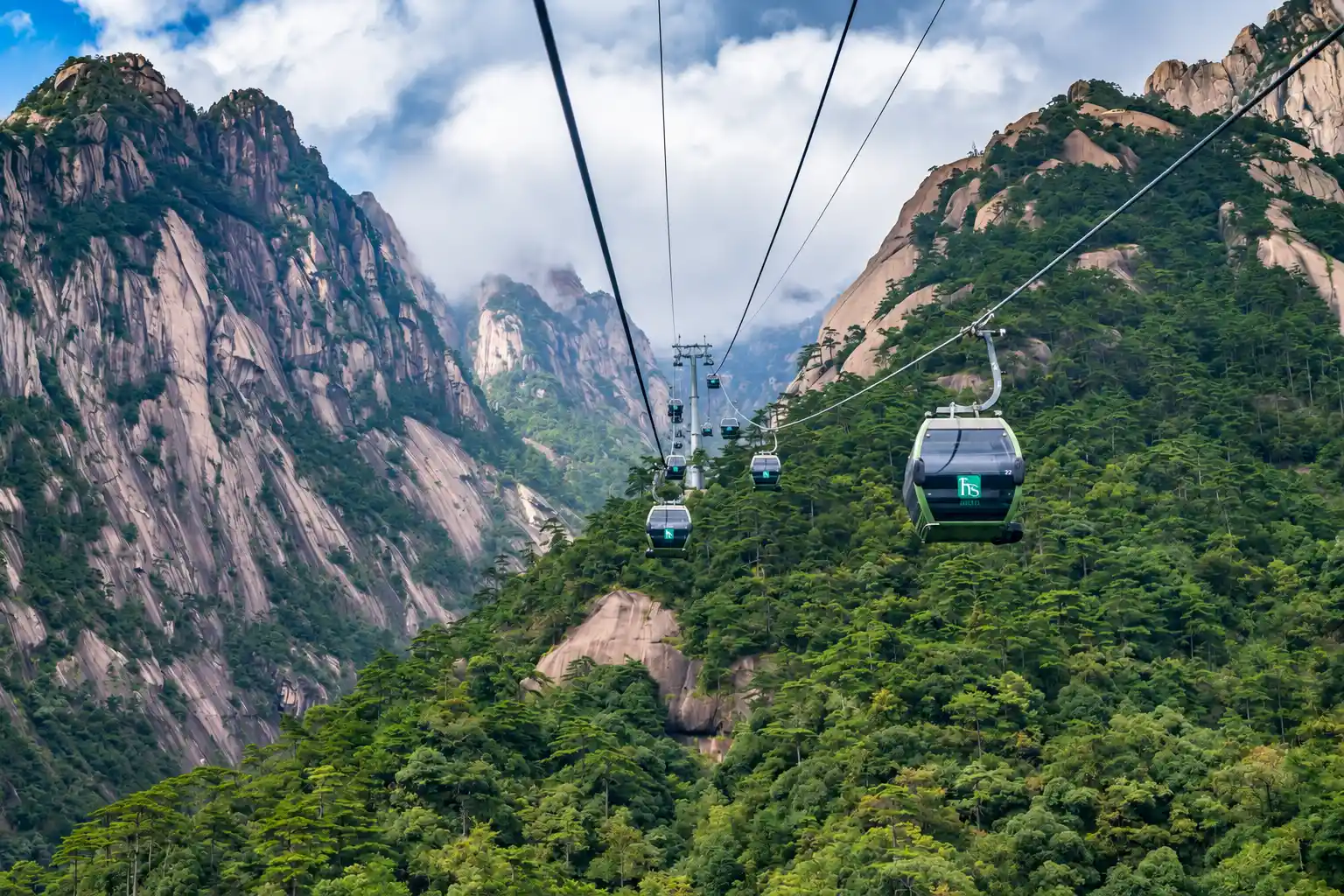
Yungu Cableway is one of the most useful starting points for a first Mount Huangshan trip. It brings you toward the Back Mountain and White Goose Ridge area, with convenient access to classic pine-covered viewpoints around Begin-to-Believe Peak and Beihai.
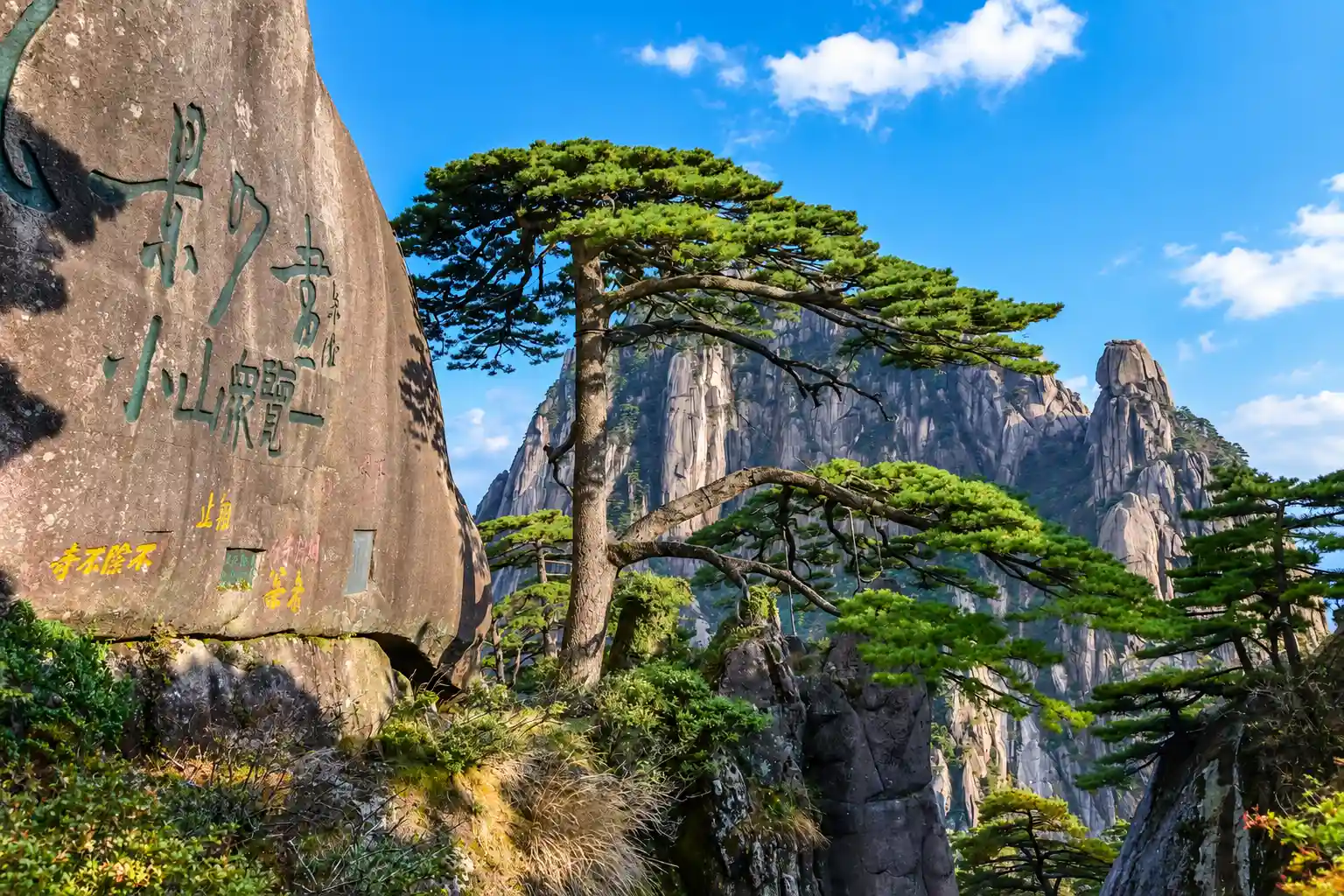
The Front Mountain side connects the Mercy Light Pavilion approach with Yuping Cableway and the famous Guest-Greeting Pine. Its steep stone stairways and dramatic granite scenery make it especially important to consider your walking time and fitness when planning this side of the mountain.
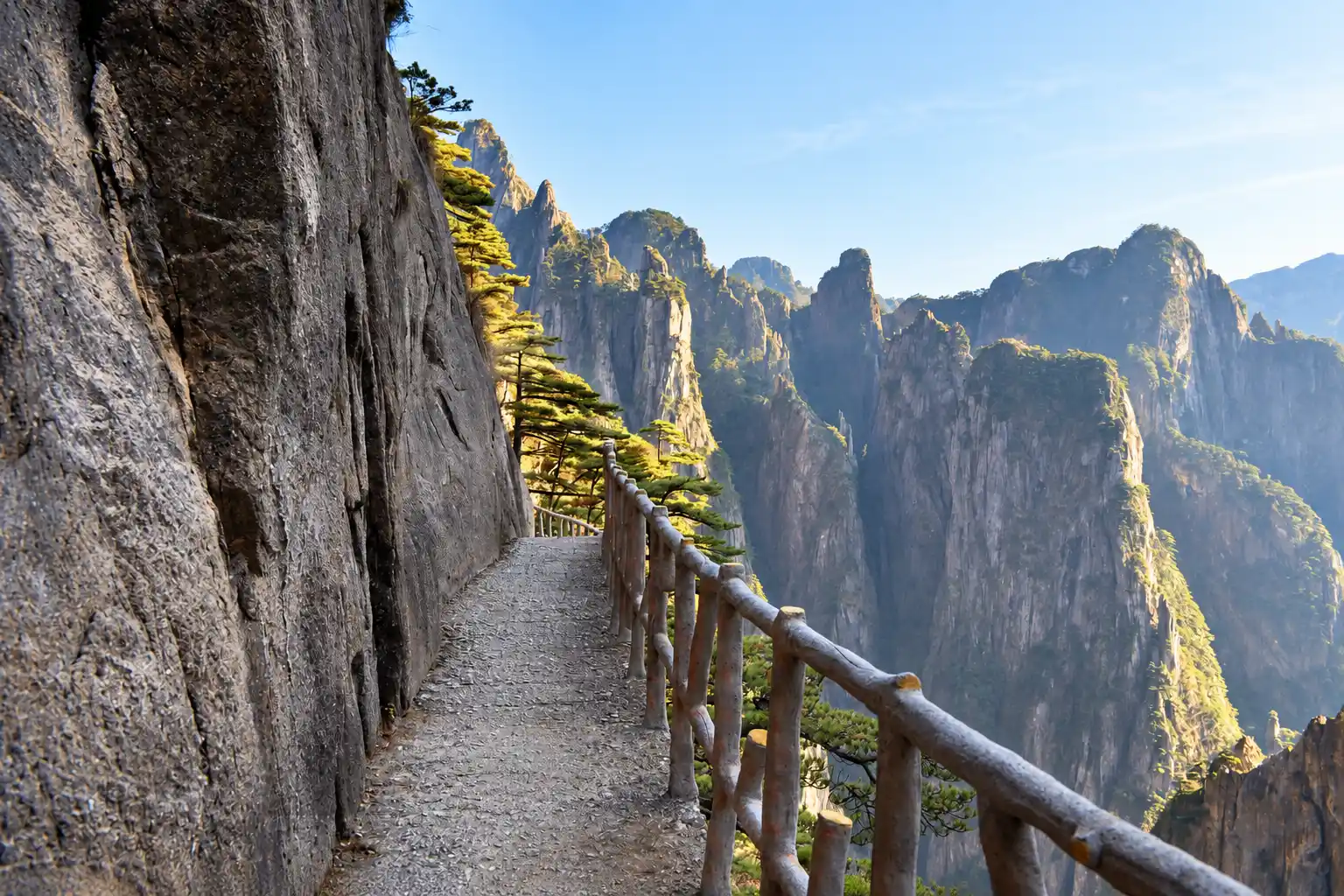
West Sea Grand Canyon adds one of the most dramatic hiking sections to a Huangshan itinerary, but it also requires more time and energy than a basic summit route. When the canyon and Xihai sightseeing cable car are operating, travelers can combine canyon scenery with the central mountaintop area more efficiently.
Mount Huangshan's access network changed in 2026. Tiandu Peak reopened on April 7 after its winter maintenance period and requires advance online reservation, while Lotus Peak remains in its closed rotation period under Huangshan's rotating conservation system for the two major peaks. On June 11, 2026, the East Gate and Donghai Cableway officially opened, adding another practical entrance to the Huangshan Scenic Area. For most first-time visitors, the South Gate with Yungu and Yuping cableways remains the simplest classic route, while the North Gate connects with Taiping Cableway. Peak, canyon and cableway access can still change because of weather, maintenance and visitor-flow controls, so verify current operations and reservations on the official Huangshan tourism platform before your visit.
A cable-car-assisted day trip can cover selected highlights, but an overnight stay gives you more time to cross the mountain, add longer walking sections and experience sunrise or sunset without rushing back to the lower cable car station. Choose the route around your available time, fitness and hotel location rather than trying to include every peak in one day.
Mount Huangshan is the region's headline attraction, but a complete trip should also make room for the traditional villages, historic streets and Huizhou cultural landscapes surrounding the mountain. Hongcun and Xidi are the best-known ancient villages, while Tunxi, Chengkan, Shexian and Qiyun Mountain reveal very different sides of the wider Huangshan region.
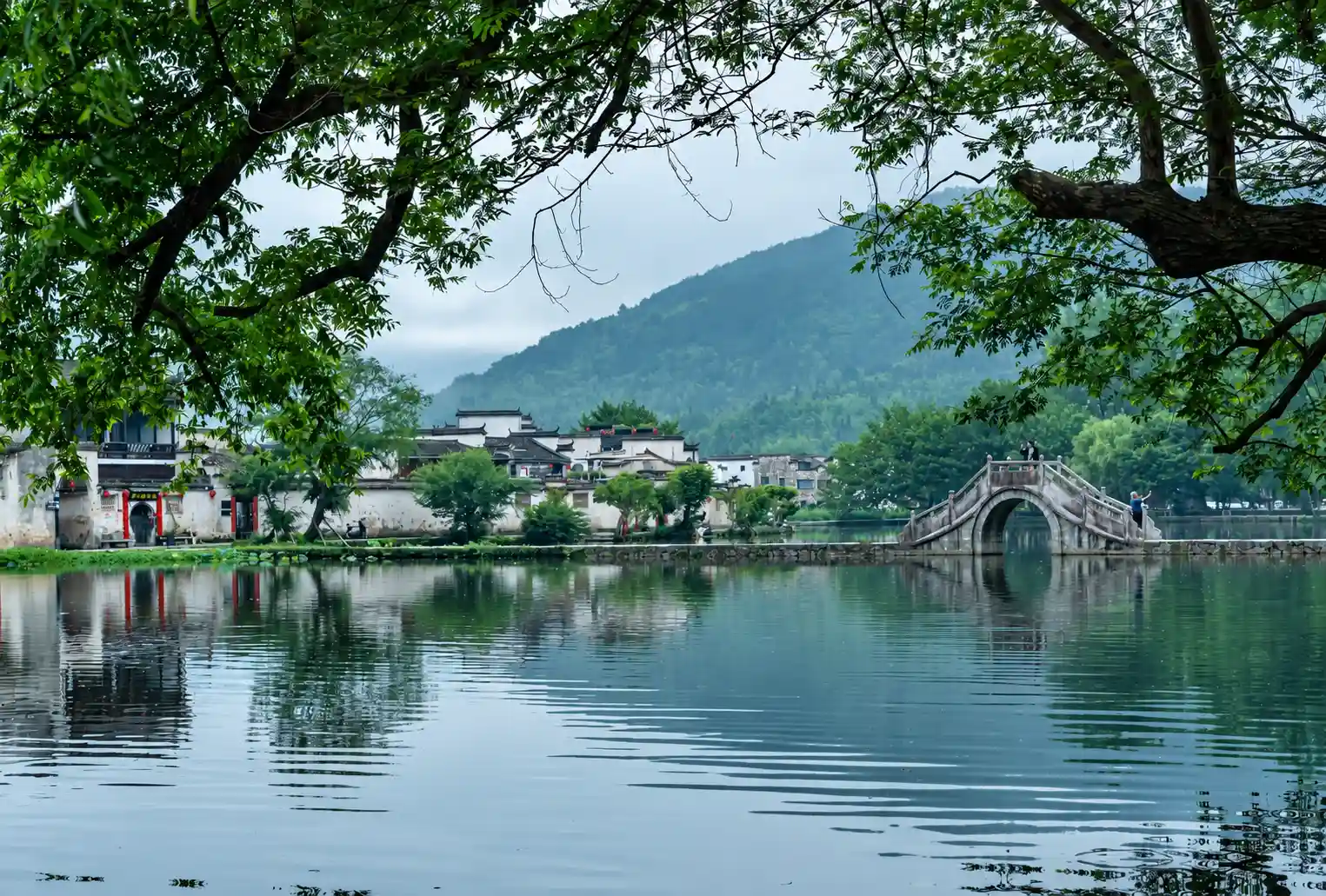
Hongcun is one of the most recognizable Huizhou villages in southern Anhui, known for whitewashed houses, dark-tiled roofs, narrow lanes and an ingenious village water system. Moon Pond sits at the heart of the settlement, while South Lake creates one of Huangshan's most familiar village landscapes.
See Itineraries with Hongcun →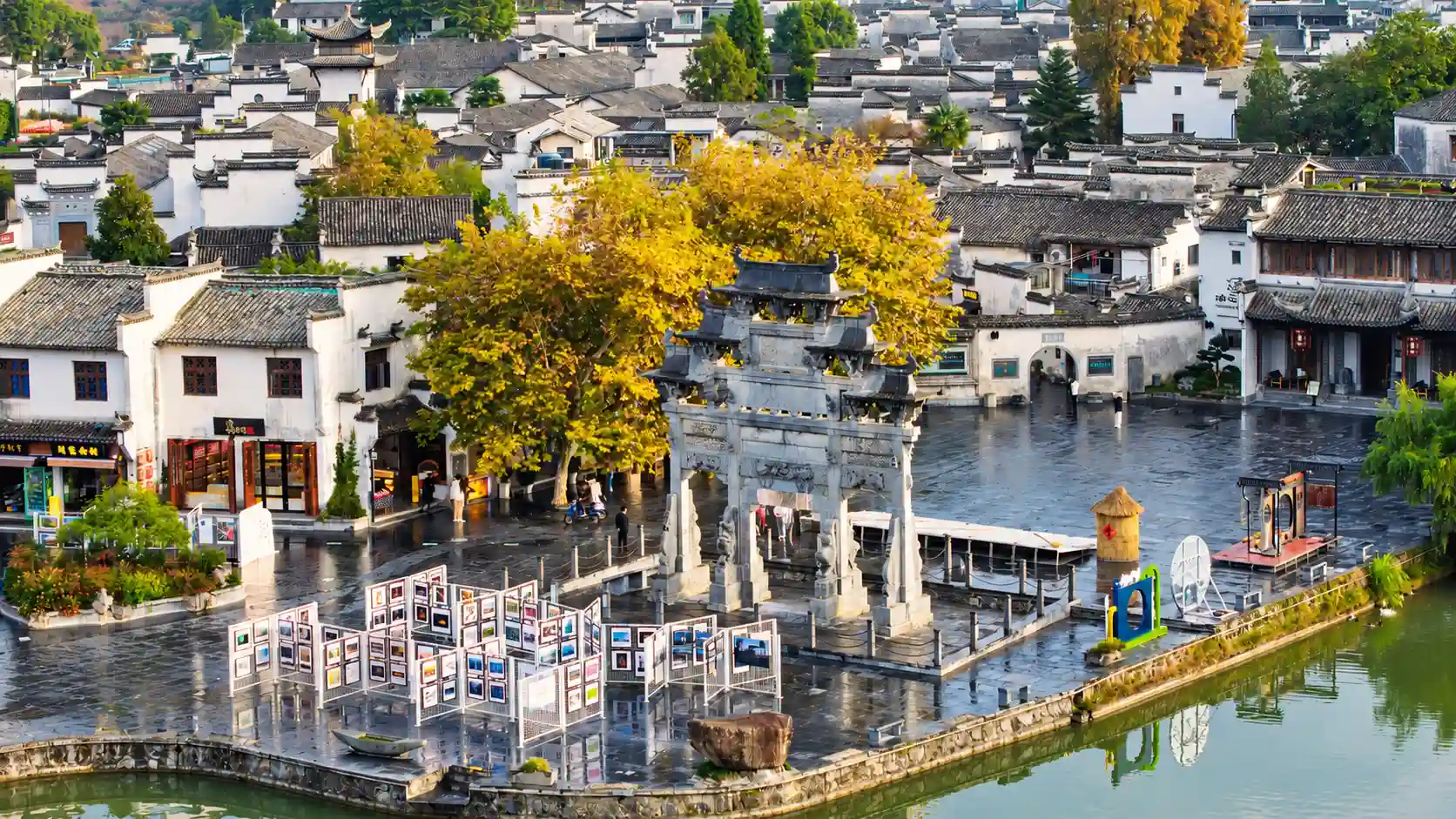
Xidi shares UNESCO World Heritage status with Hongcun but offers a different village character, with stone-paved lanes, traditional residences, decorated gateways and well-preserved examples of historic Huizhou architecture.
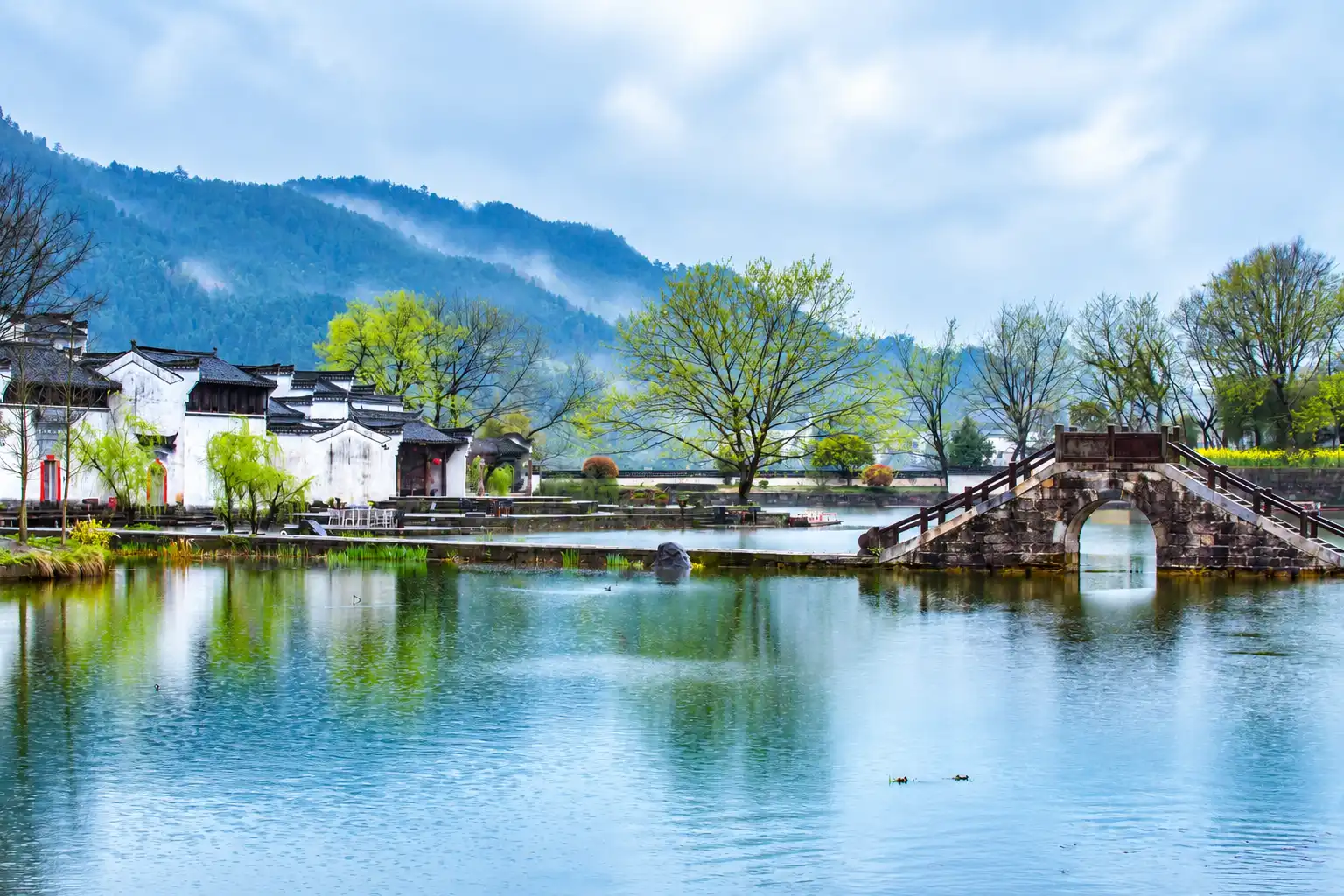
Chengkan is known for its traditional Huizhou village layout, old bridges, ancestral halls, narrow lanes and historic residences. Its settlement pattern is traditionally associated with Bagua principles, giving the village a distinctive maze-like character.
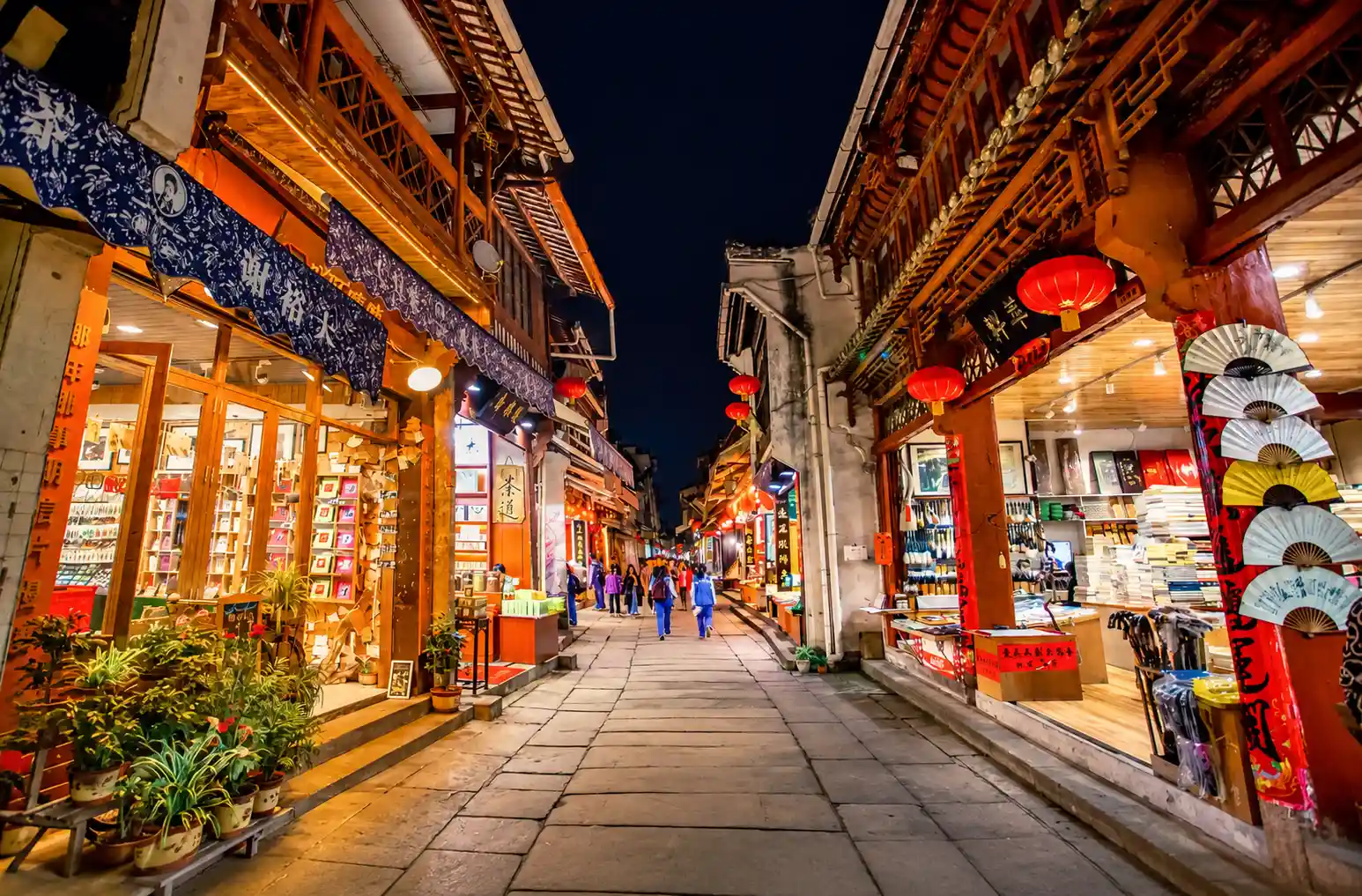
In downtown Huangshan City, Tunxi Old Street offers an easy introduction to Huizhou-style streetscapes, traditional shops, tea, local snacks and regional specialties. It fits especially well on an arrival evening or before leaving Huangshan.
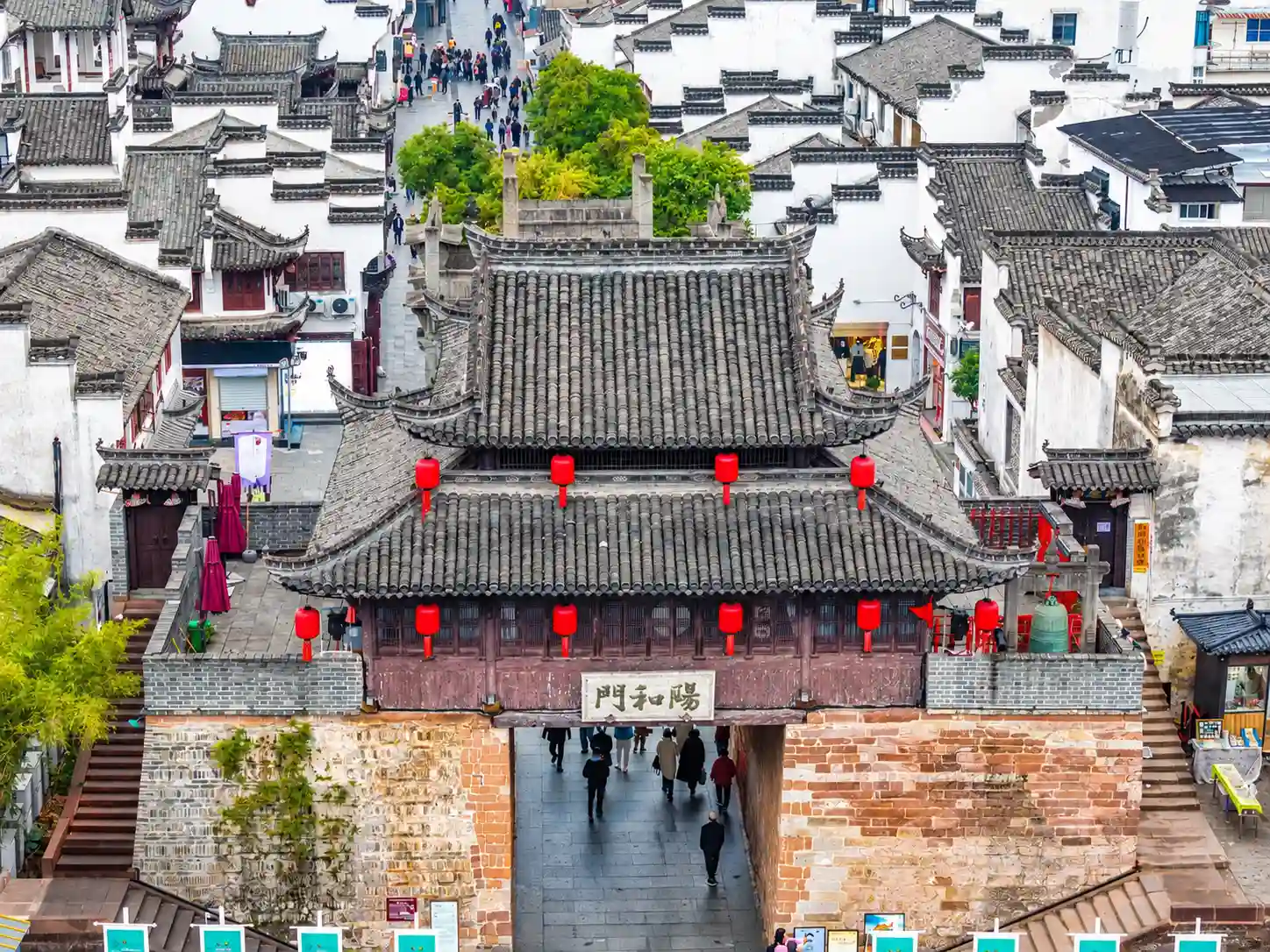
Located in Shexian County, Huizhou Ancient City preserves historic streets, traditional residences, ancestral halls, bridges and memorial archways associated with the former center of Huizhou Prefecture and its merchant culture.
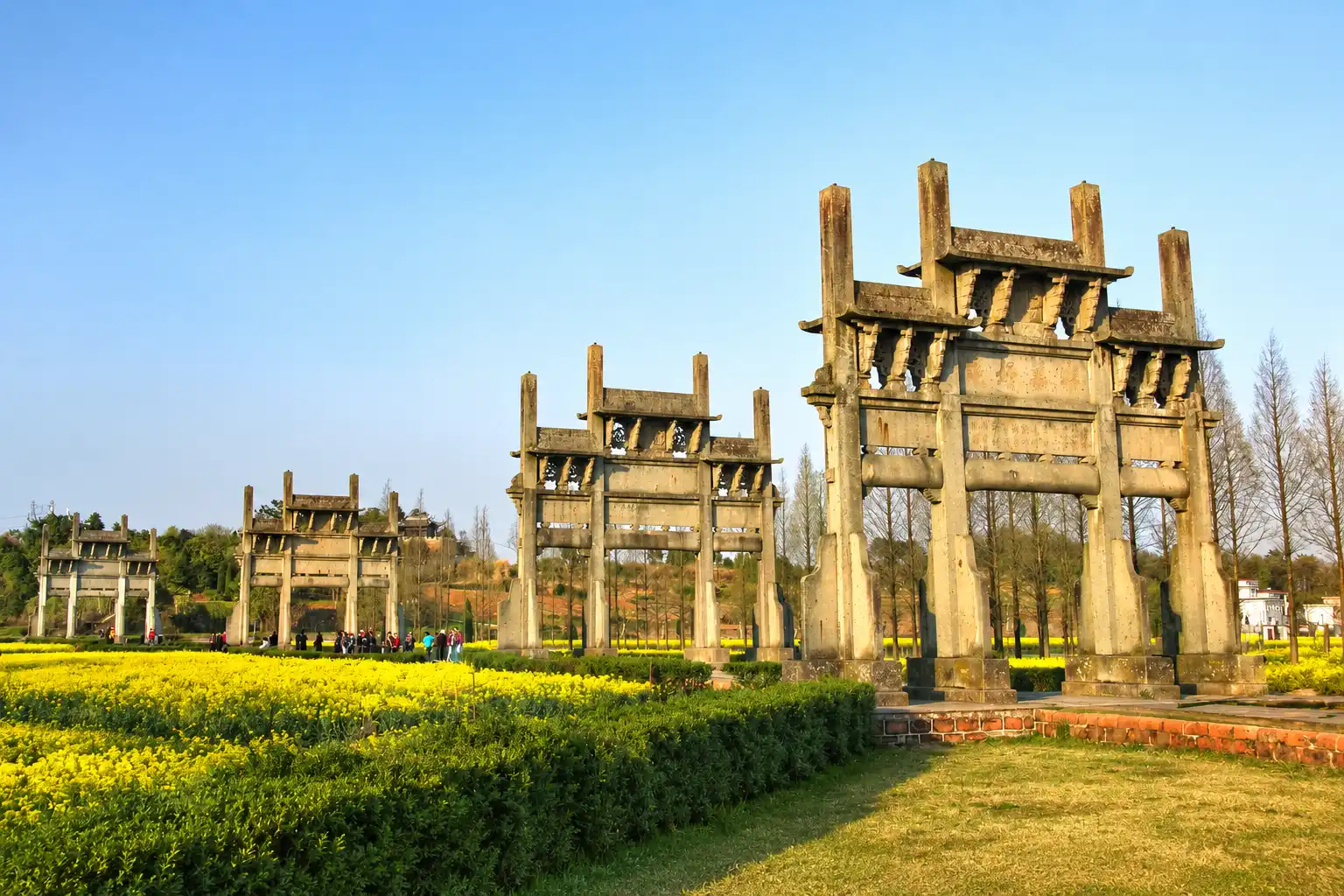
The Tangyue Archway Cluster near Shexian is a striking group of historic stone memorial arches. Together with nearby traditional architecture, it offers another perspective on Huizhou clans, social history and regional craftsmanship.
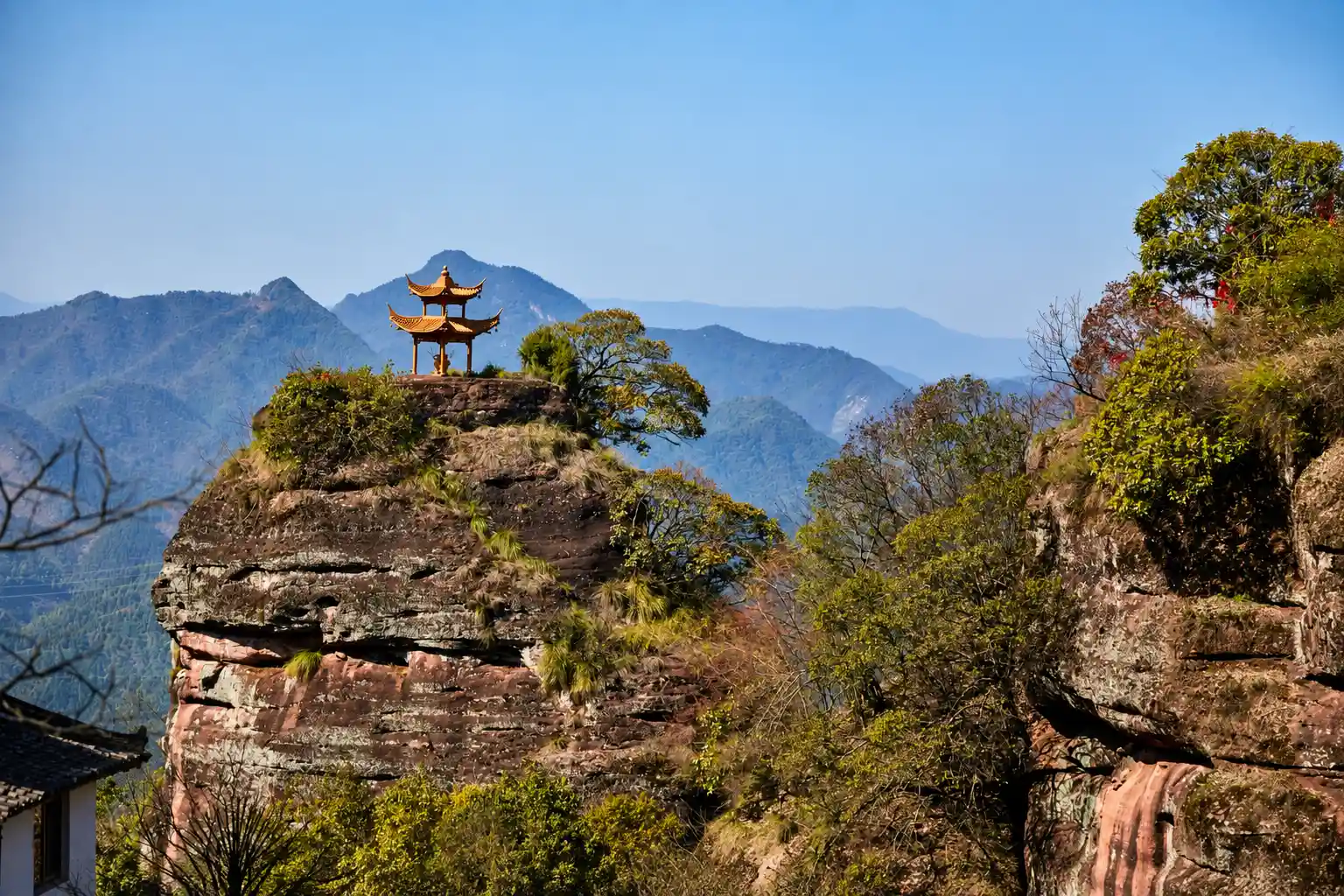
Qiyun Mountain in Xiuning County offers a quieter contrast to Mount Huangshan, combining Danxia landscapes with Taoist heritage, cliff inscriptions, mountain paths and historic settlements built into the surrounding scenery.
For a first trip, prioritize Mount Huangshan and one or two Huizhou cultural stops rather than trying to visit every village. Hongcun and Xidi work naturally together, while Tunxi is convenient around train or flight times. Chengkan and Shexian are better suited to travelers with an additional day for regional culture.
The best Huangshan experiences go beyond simply checking off attractions. Hike between granite peaks and ancient pines, watch the mountain change with clouds and light, explore a deeper section of the trail system, slow down in a Huizhou village, taste locally produced tea and leave time for the cultural traditions that make the wider Huangshan region different from a typical mountain trip.
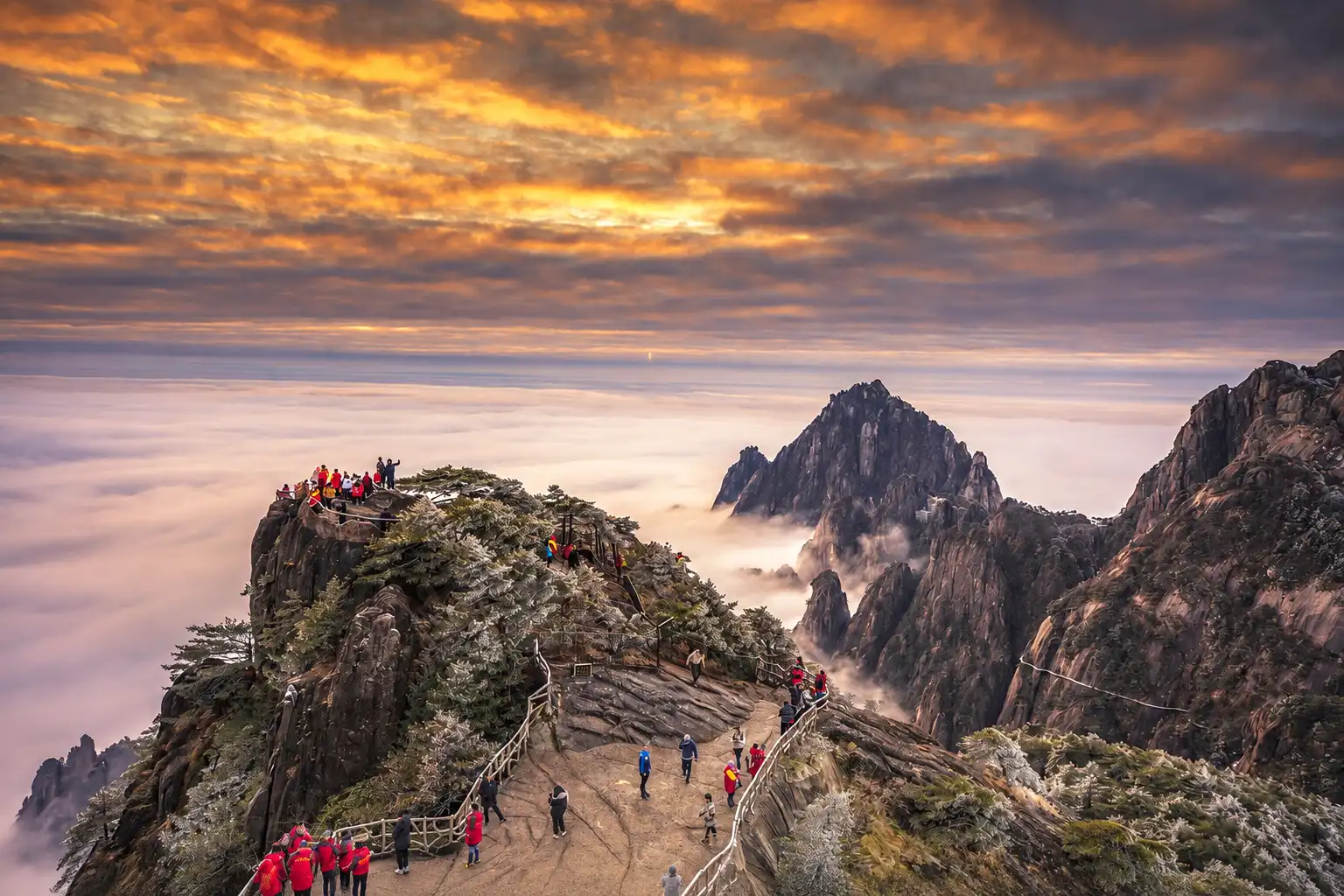
Clouds, mist and changing light are part of what gives Mount Huangshan its distinctive landscape. An overnight stay on the mountain gives you more flexibility to be outside around sunrise and sunset, but the famous sea of clouds is a natural phenomenon and can never be guaranteed on a specific day.
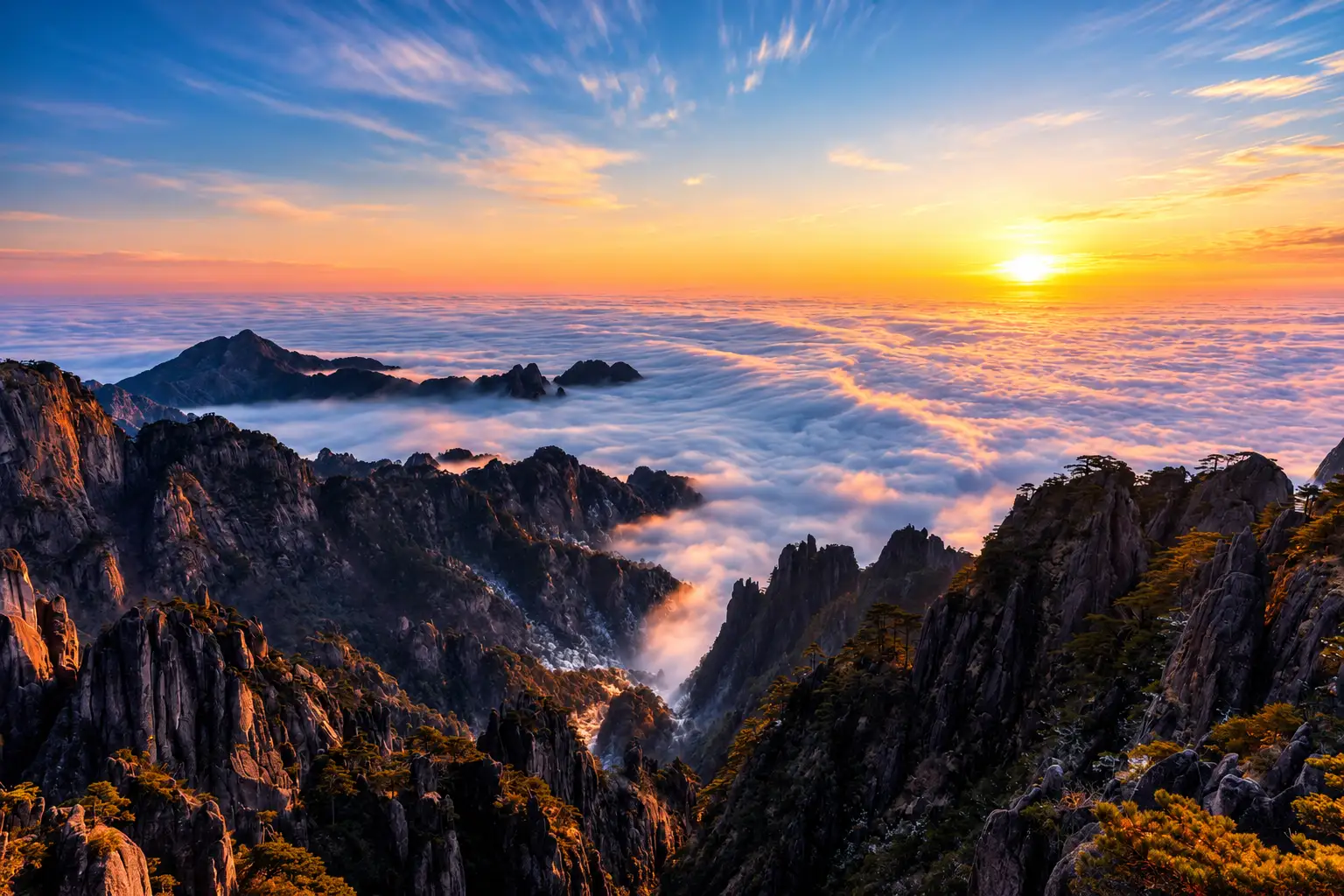
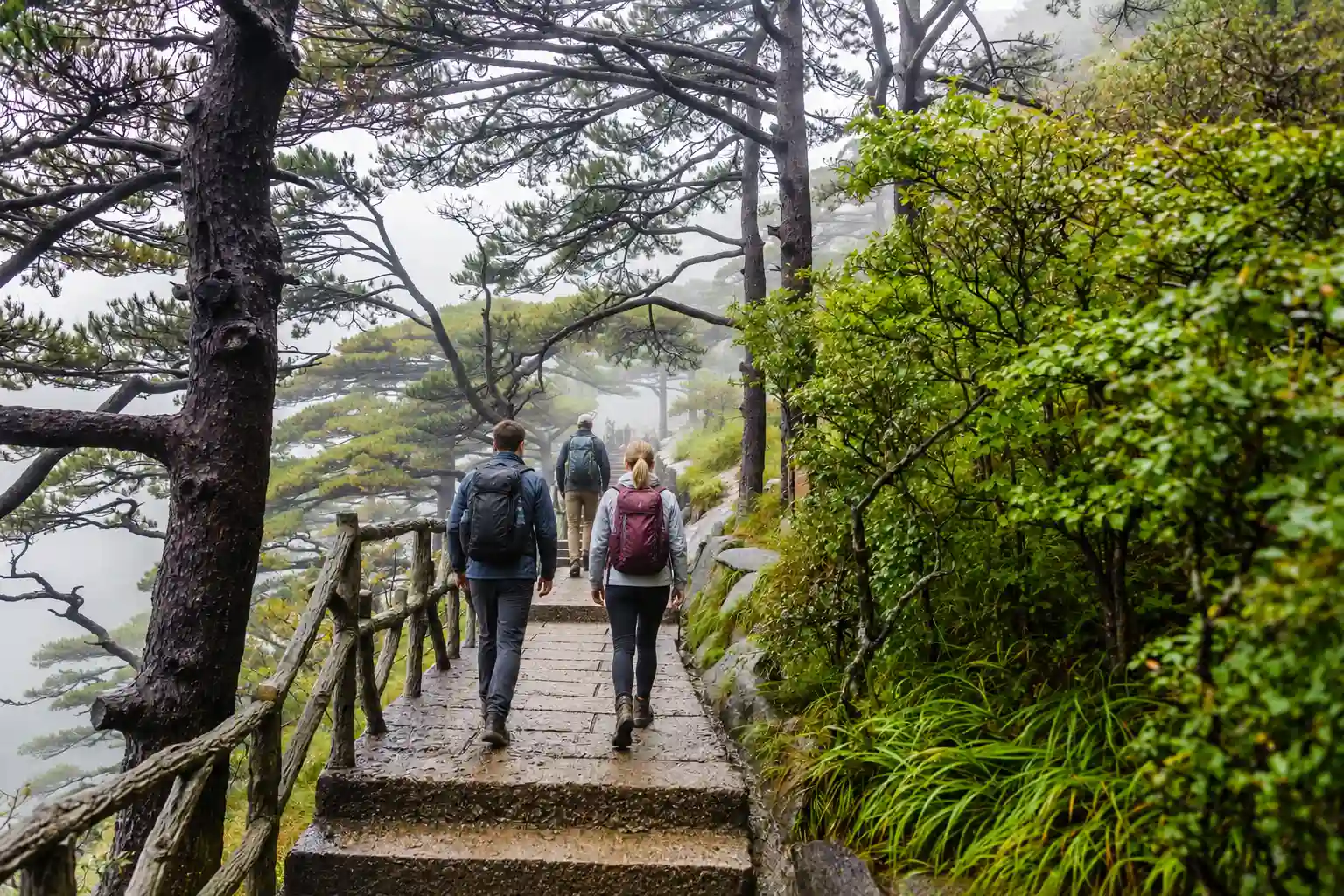
Walking is the best way to experience the relationship between Huangshan's granite formations, old pine trees, steep valleys and cloud-filled views. Even travelers using cable cars should expect substantial walking and repeated stone stairways once they reach the upper mountain.
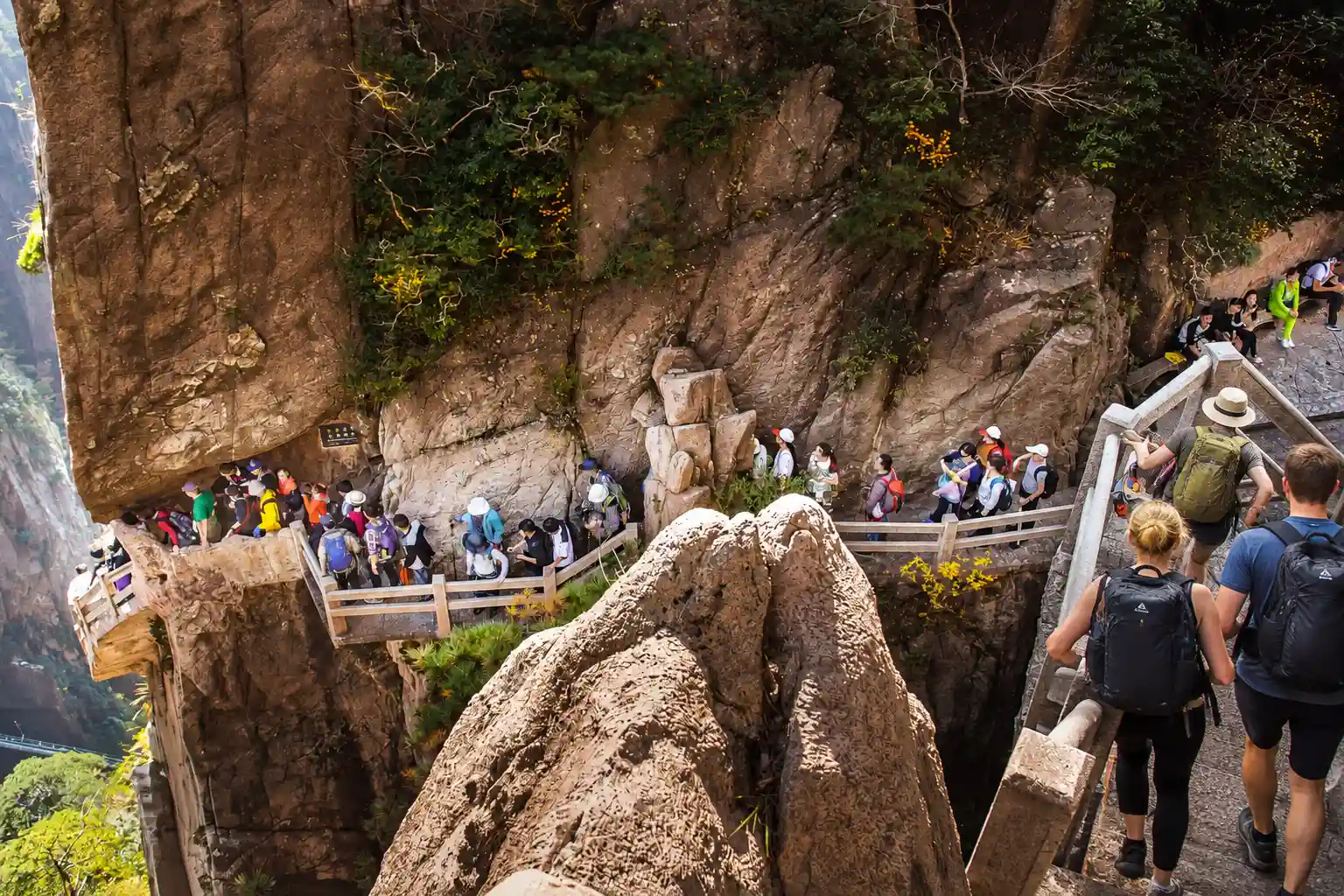
Travelers who want a more demanding mountain experience can add West Sea Grand Canyon when the relevant trails are open. The descending paths, dramatic rock walls and deeper valley scenery make it very different from simply moving between the main summit viewpoints.
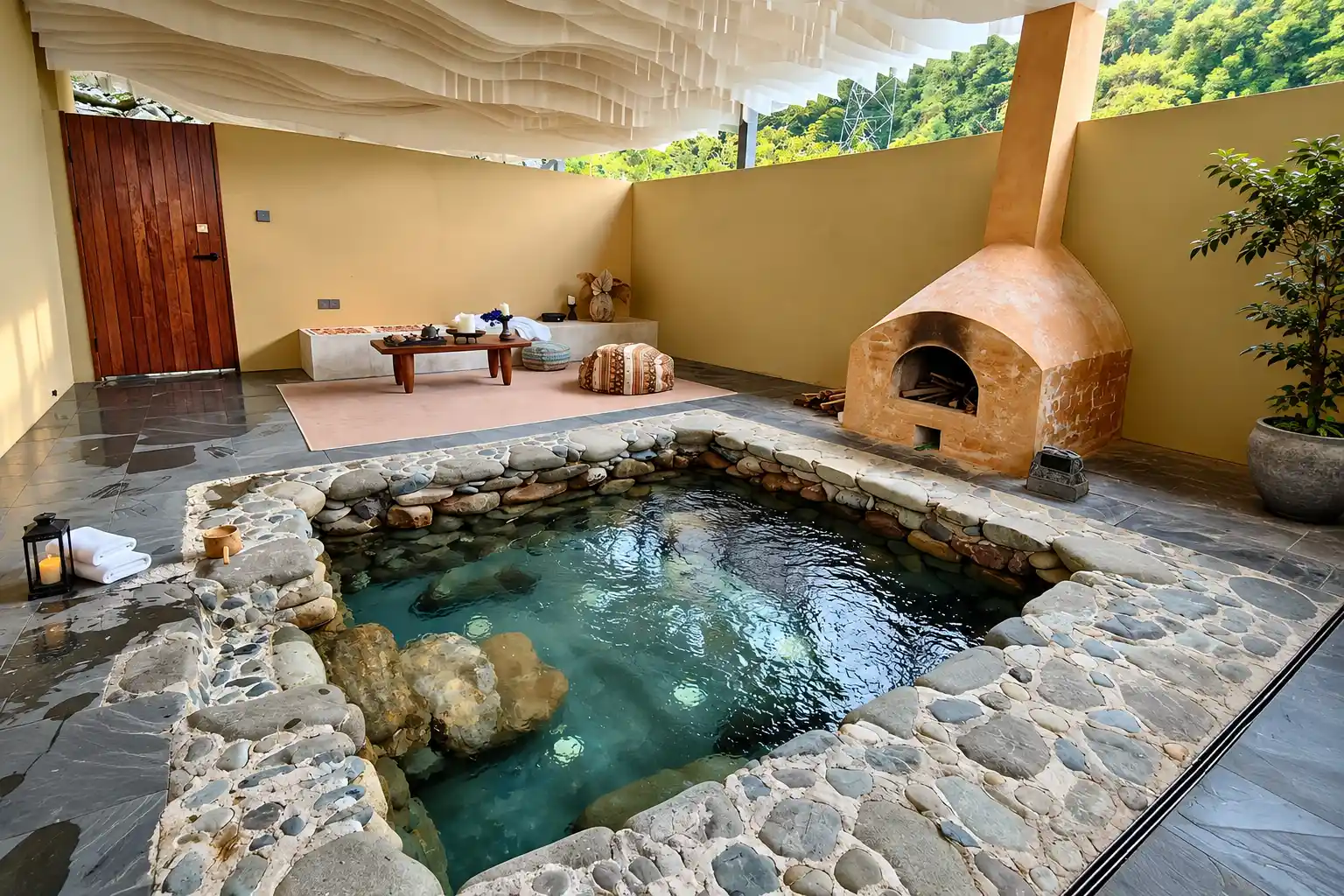
Hot springs are traditionally counted among Mount Huangshan's signature natural features. A hot-spring stop can work well after a demanding mountain day, especially for travelers who want to balance hiking with a slower experience near the lower scenic area.
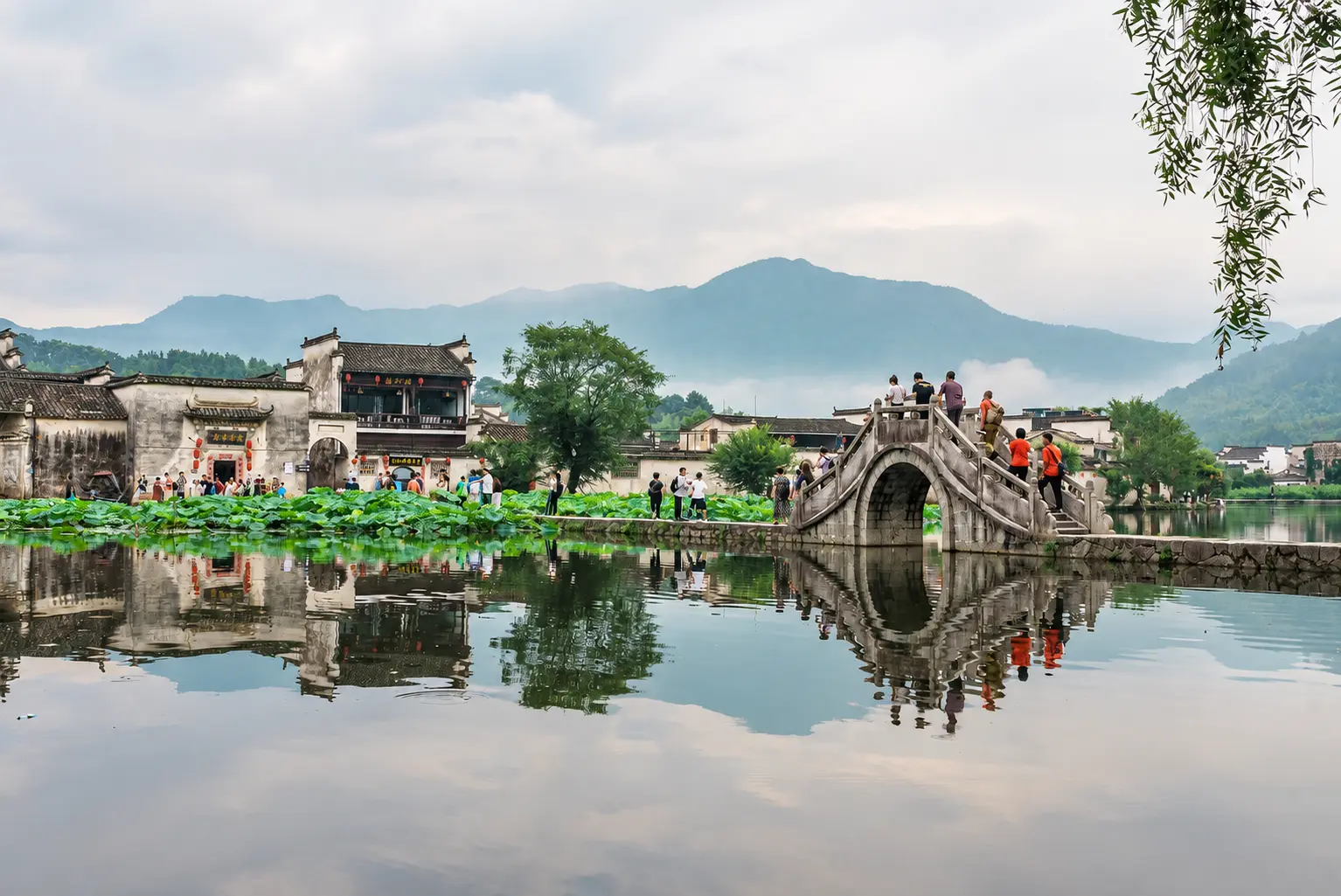
White walls, dark tiled roofs, ponds, narrow lanes and mountain backdrops give southern Anhui's villages a visual identity very different from Mount Huangshan itself. Early morning and quieter periods are especially useful for travelers who want to focus on architecture, reflections and everyday village scenes.
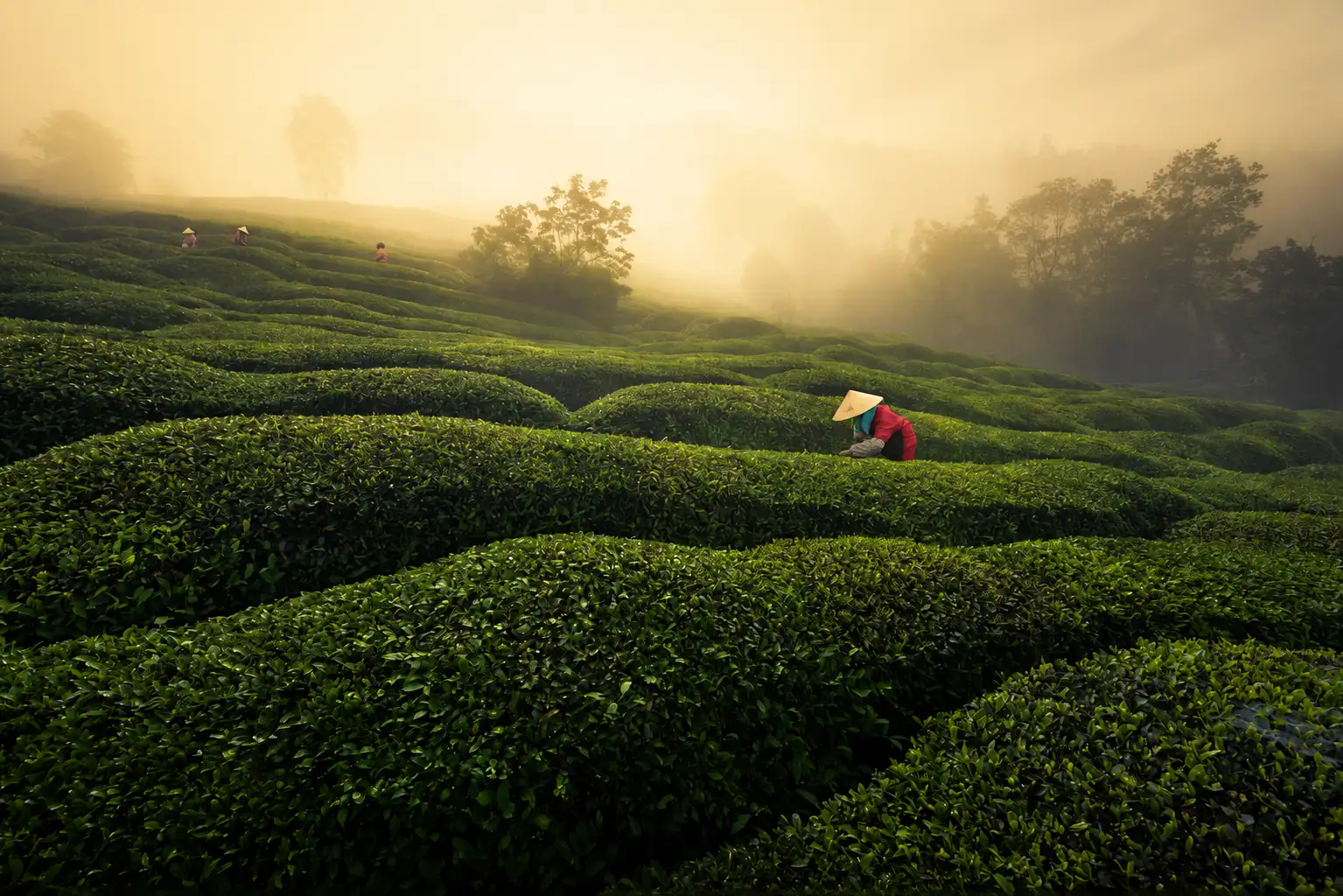
Tea is an important part of the wider Huangshan region. Huangshan Maofeng is one of the area's best-known green teas, while Taiping Houkui and Qimen black tea add very different styles. Tea shops, villages and specialist cultural stops can turn a simple tasting into a deeper regional experience.
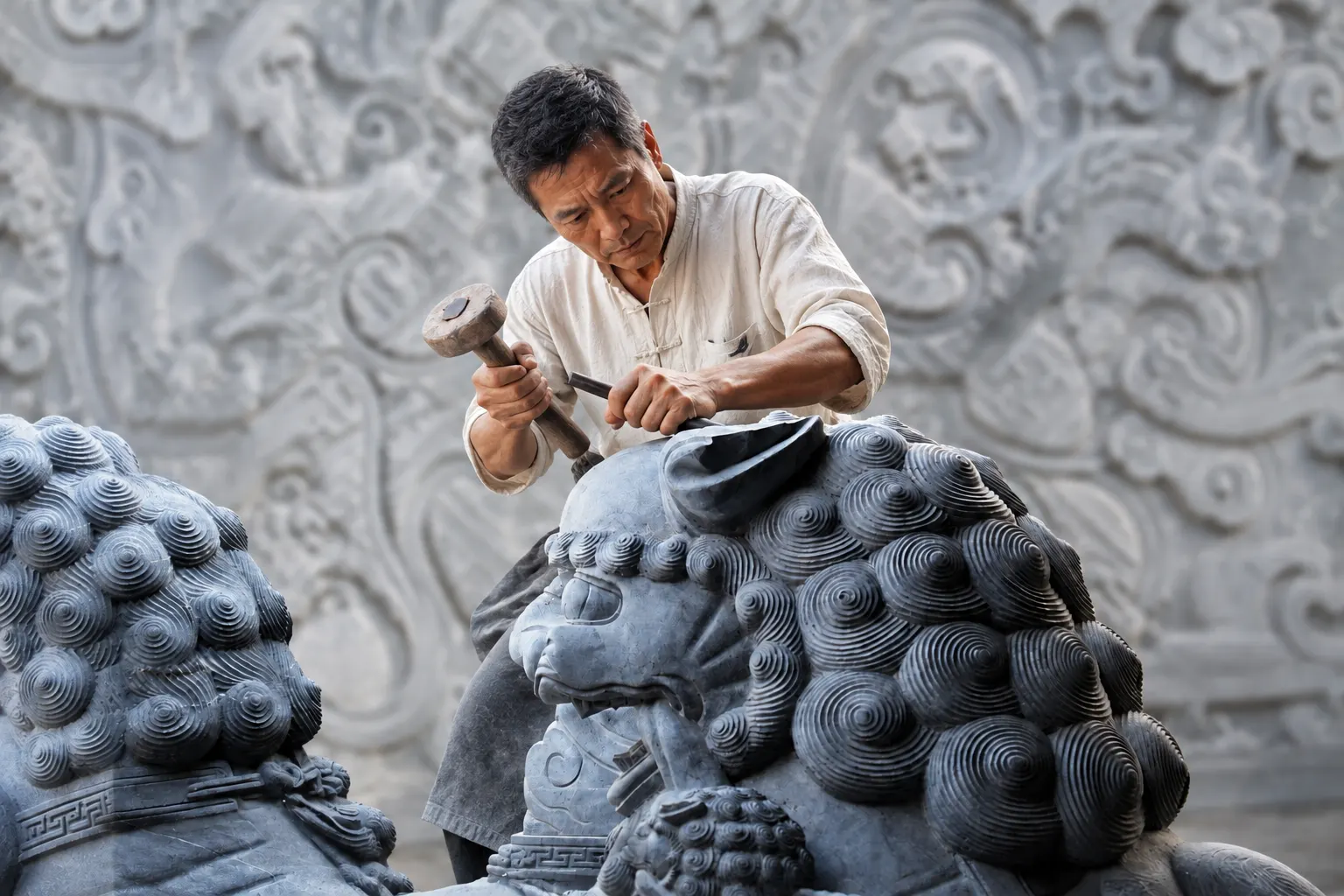
Leave some time away from the mountain for the cultural side of Huangshan. Huizhou architecture, traditional carving, ink-making, local cuisine and historic commercial streets help explain the region behind the scenery and work especially well around Tunxi or a village-based itinerary.
A strong first trip usually combines one major mountain experience with one cultural experience rather than trying to fit every peak, village and museum into the same itinerary. Add extra hiking, photography, tea or hot springs according to your interests, weather conditions and available time.
Start with the number of days you have, decide whether you want to stay overnight on Mount Huangshan, then add one or two regional experiences. The suggested itineraries below show how to combine the mountain, ancient villages and Huangshan City without excessive backtracking.
Choose your Huangshan itinerary around the time you want to spend on Mount Huangshan and whether you plan to stay overnight on the mountain. One day can cover selected mountain highlights, two days works better for an overnight summit route, while 3–5 days gives you more time to combine Yellow Mountain with Hongcun, Xidi, Tunxi and the wider Huizhou region.
This 4-day Huangshan itinerary gives Mount Huangshan enough time for an overnight mountain experience, then adds Hongcun, Xidi and Tunxi without forcing every transfer into the same day. It is a balanced choice for first-time visitors who want both Yellow Mountain scenery and Huizhou culture.
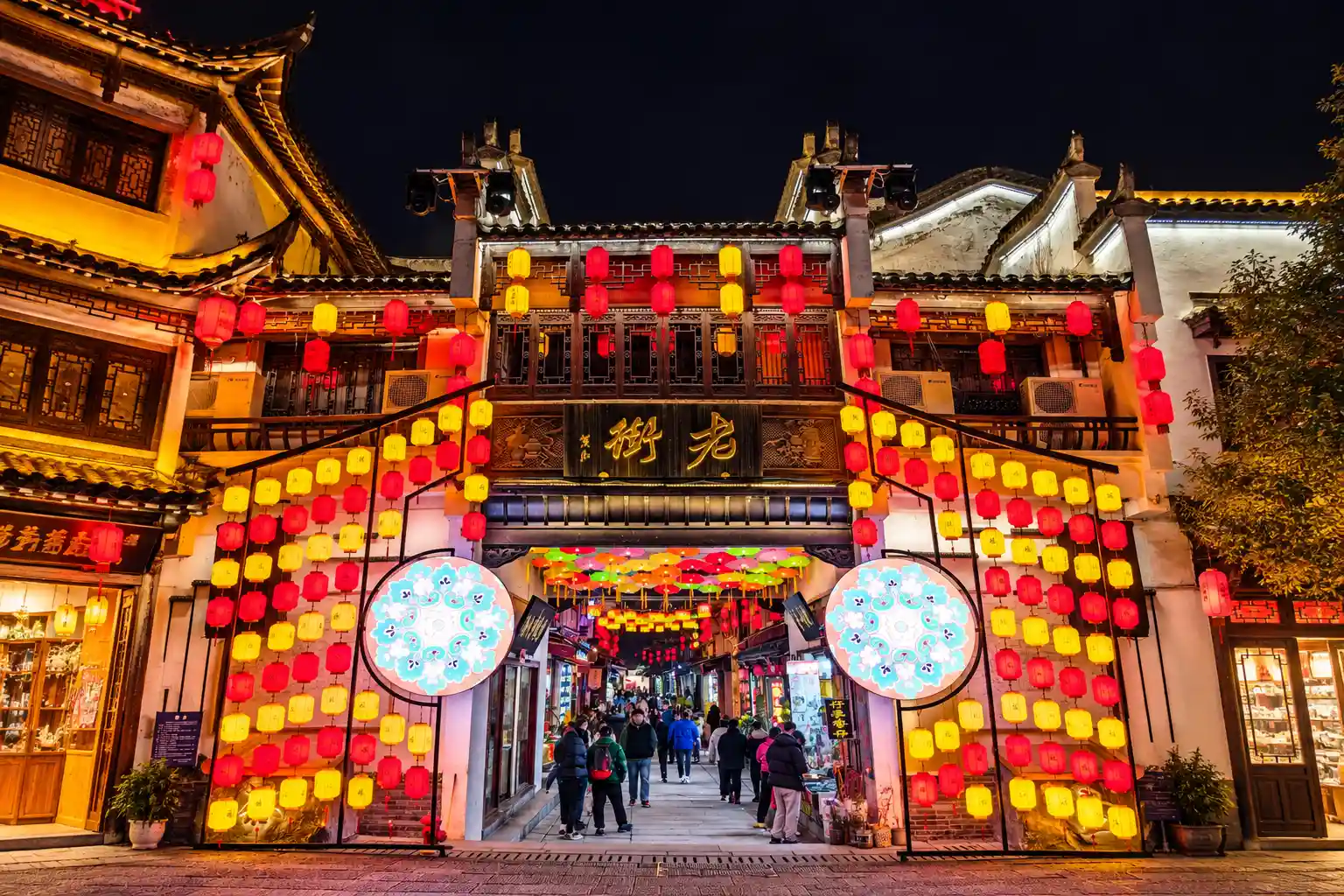
Arrive via Huangshan North Railway Station or Huangshan Tunxi International Airport and settle into the Tunxi area. Use the rest of the day for Tunxi Old Street, local Huizhou food and a relaxed evening before heading toward the mountain.
Explore Tunxi & Regional Attractions →
Travel to Tangkou and enter through the Huangshan Scenic Area South Gate. Take the scenic-area shuttle toward Yungu, then use the Yungu Cableway if operating. Spend the day exploring the Back Mountain, Beihai and central summit areas before checking into your mountain hotel.
Plan Your Mount Huangshan Route →
If weather conditions cooperate, start early for sunrise, then continue across the mountaintop toward Bright Summit, Yuping and Guest-Greeting Pine. Descend by the Yuping Cableway if it is operating, or adjust the route according to current trail and cableway conditions.
Explore Huangshan Experiences →
After leaving Mount Huangshan, continue toward Hongcun. Explore Moon Pond, South Lake and the village lanes at a slower pace, then stay nearby if you want to experience the village after day-trip crowds begin to leave.
Explore Hongcun & Ancient Villages →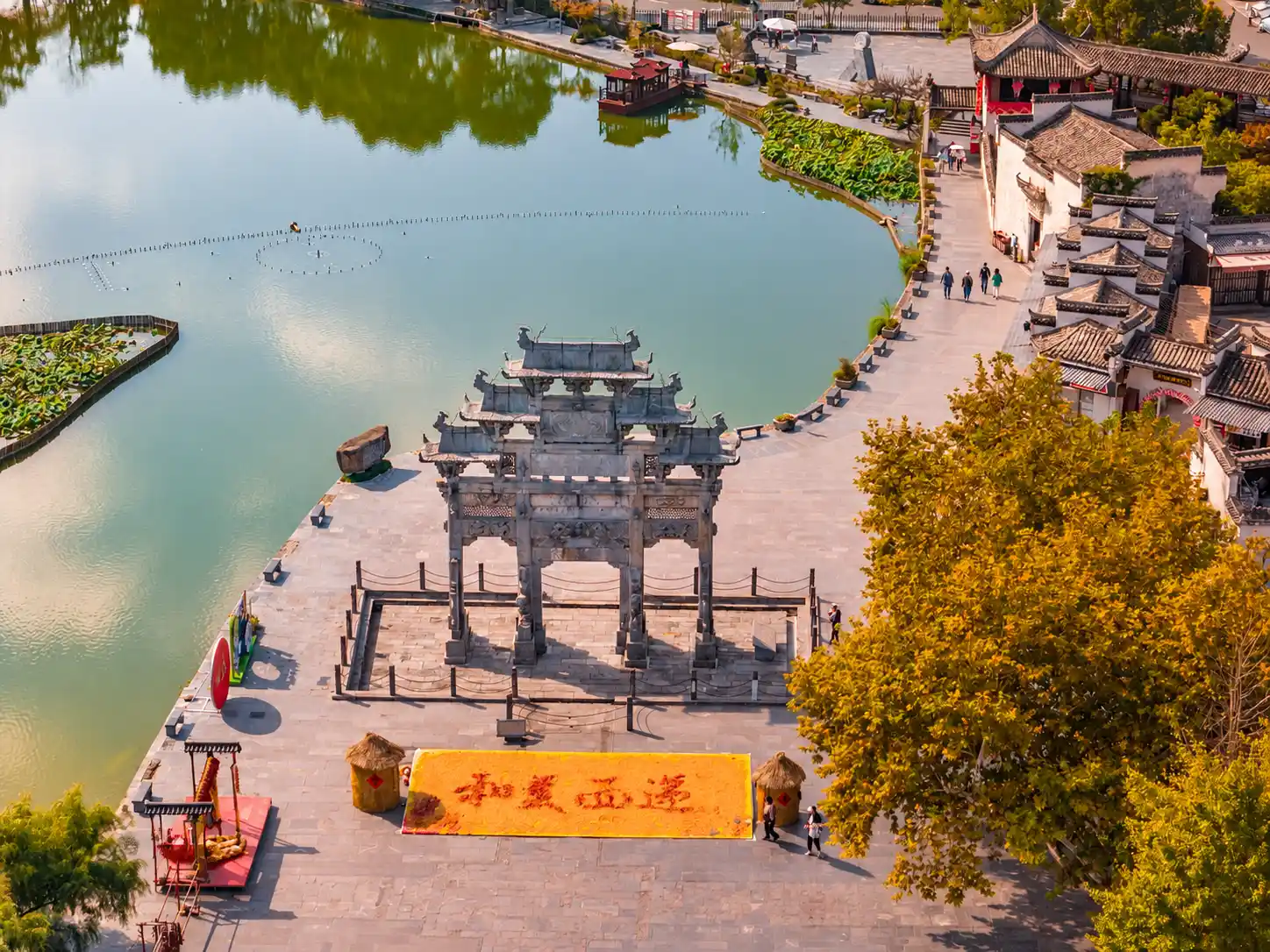
Visit Xidi for another perspective on traditional Huizhou architecture and village life. For an onward high-speed train, Yixian East Railway Station is convenient for the Hongcun and Xidi area, while Huangshan North Railway Station works well if your train route or remaining itinerary takes you back toward Tunxi and the wider Huangshan region.
Check Huangshan Transportation ↓Mountain weather, hotel location, train times and the choice between a day trip or overnight stay can change the ideal route. Browse the recommended Huangshan tour ideas below or customize the journey around your pace, interests and arrival and departure schedule.
The best time to visit Huangshan for most first-time travelers is spring and autumn, especially April to May and September to November. These seasons usually offer a good balance of hiking conditions, mountain scenery and comfortable sightseeing. Summer is greener but wetter, while winter transforms Mount Huangshan with snow, rime and a very different high-mountain atmosphere.
April, May, September, October and November are strong choices for combining Mount Huangshan with Hongcun, Xidi and the wider Huizhou region. Mountain weather can change quickly at any time of year, so build some flexibility into your route and prepare for cooler, wetter and windier conditions at higher elevations than in Huangshan City or the surrounding villages.
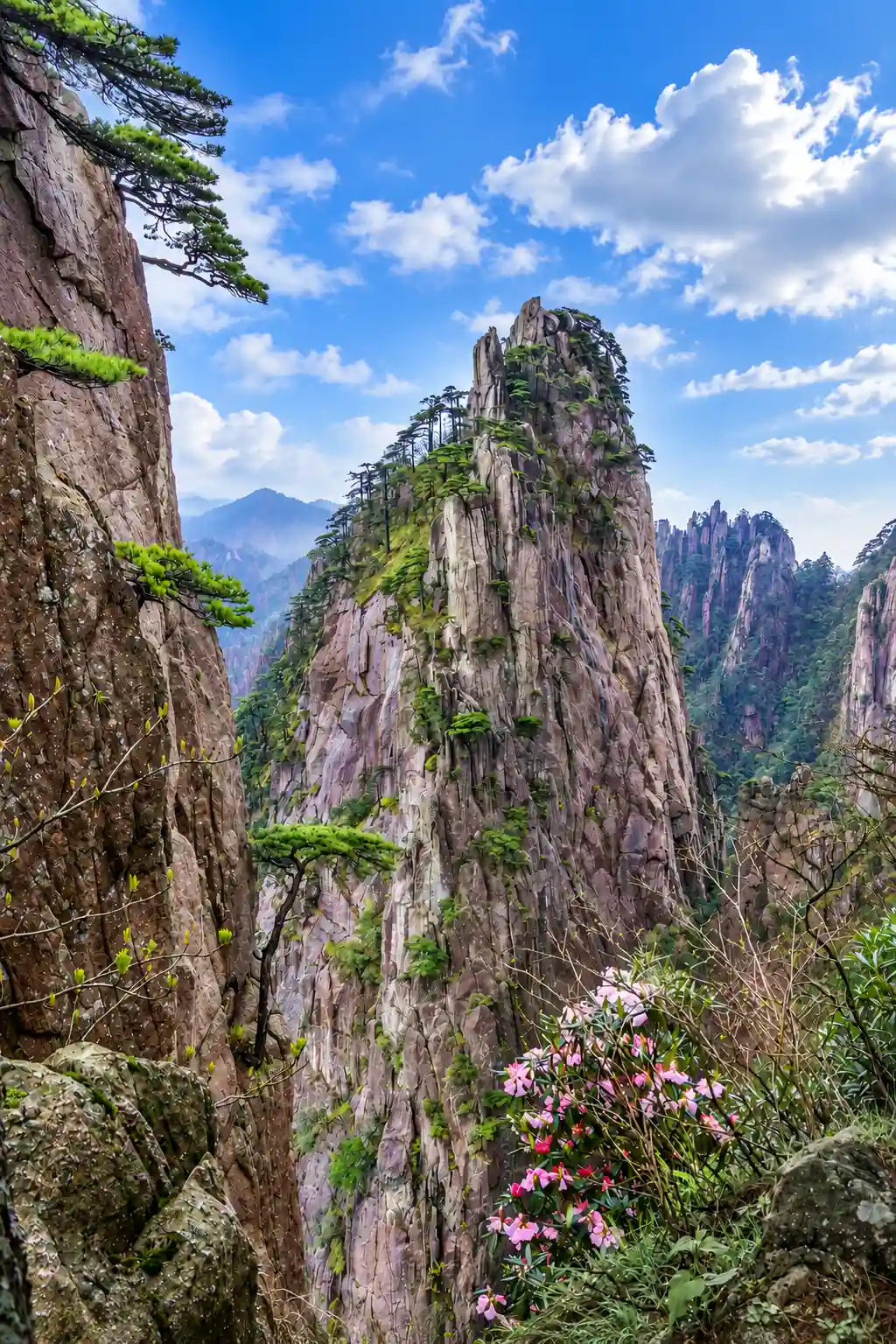
Spring gradually brings greener slopes, mountain flowers and milder hiking conditions. March can still feel cool and changeable at higher elevations, while April and May are stronger all-around choices for combining the mountain with ancient villages and outdoor sightseeing.
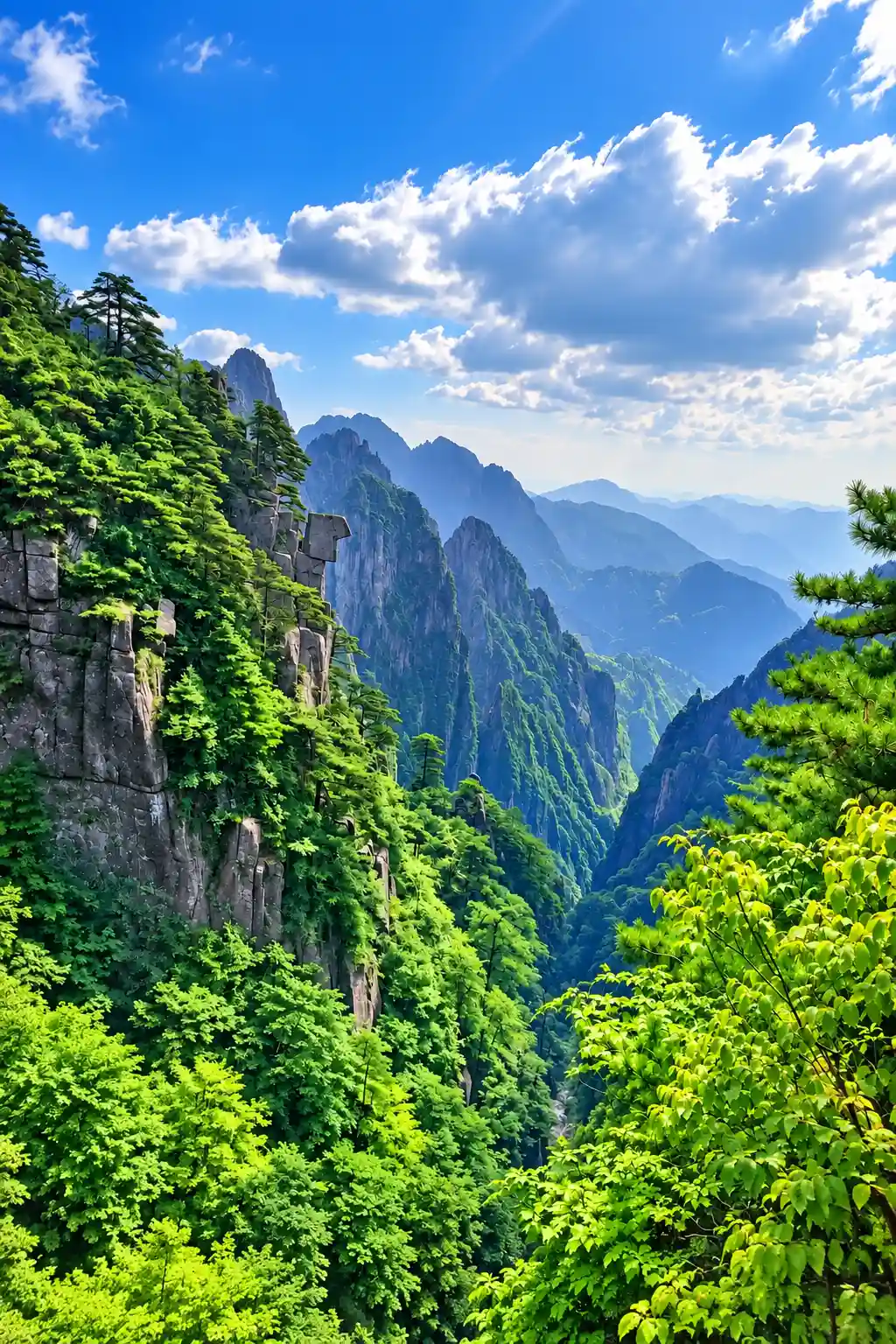
Summer brings dense greenery, waterfalls, mist and dramatic cloud scenery, but it is also wetter and more humid. Rain can make stone steps slippery and reduce visibility, so flexible routing, rain protection and suitable walking shoes become especially important.
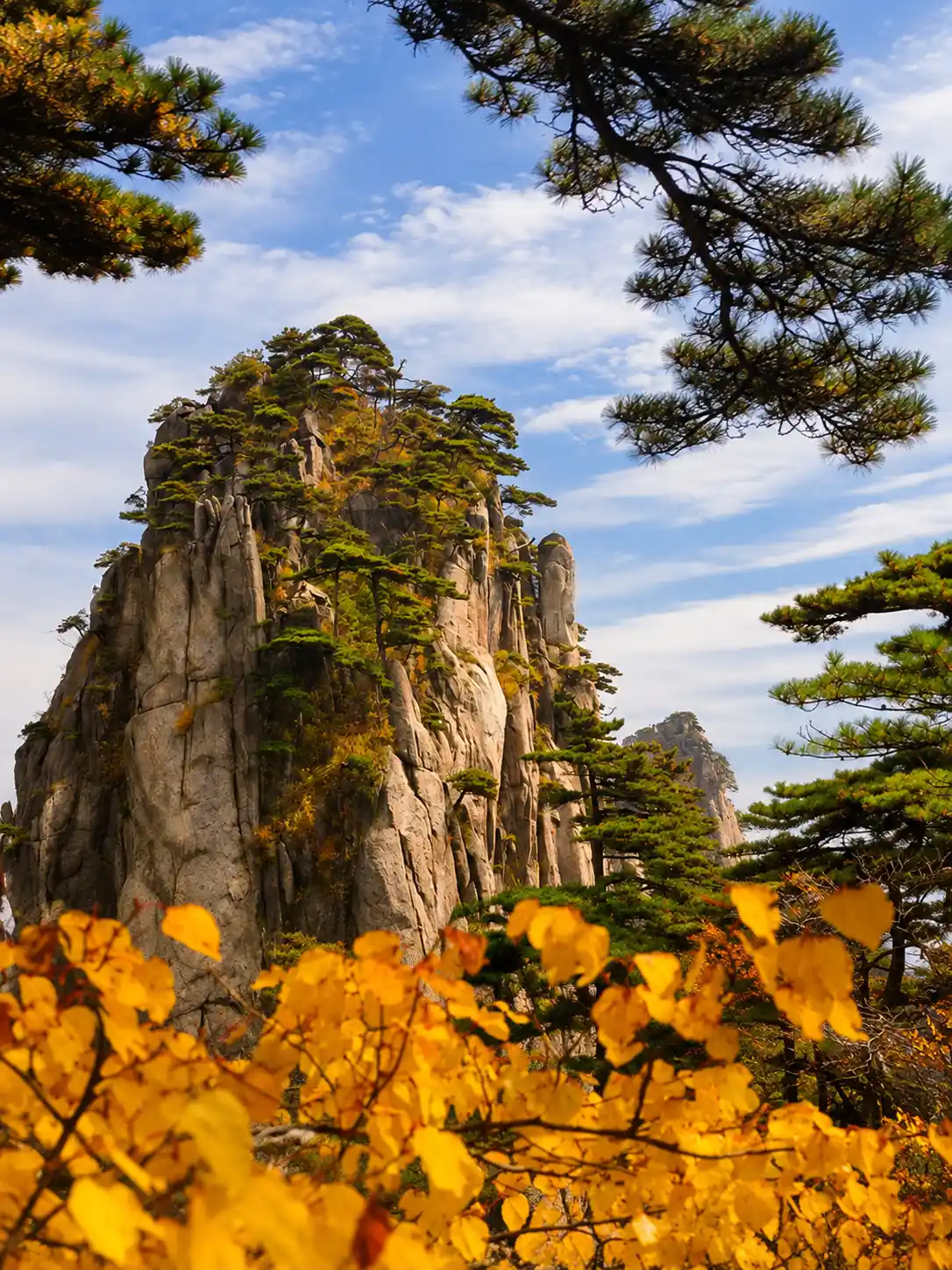
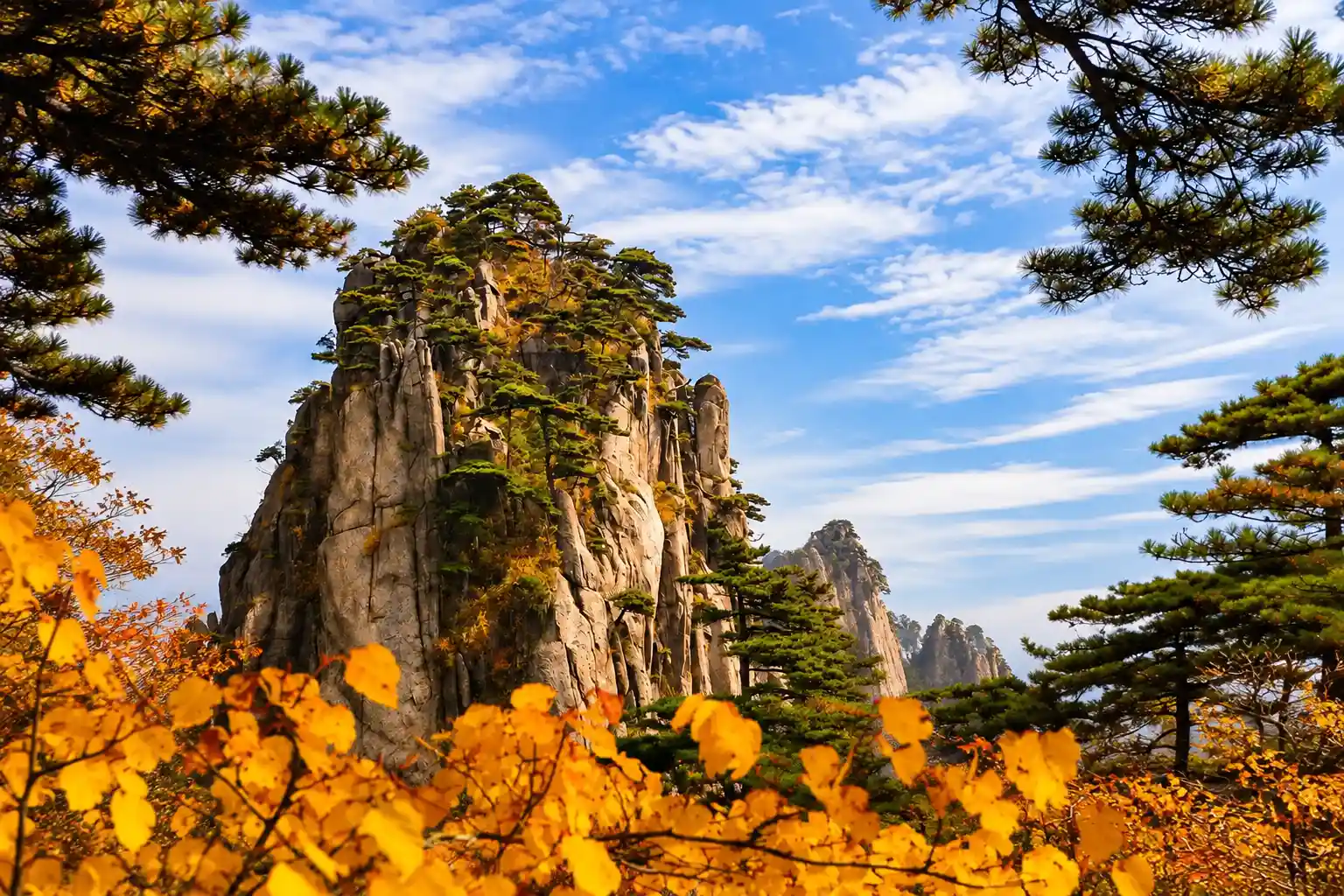
Autumn is one of Huangshan's strongest travel seasons, combining cooler hiking weather, clearer mountain views and changing foliage. September is generally milder, while October and November become progressively cooler, especially around sunrise, sunset and exposed mountaintop viewpoints.
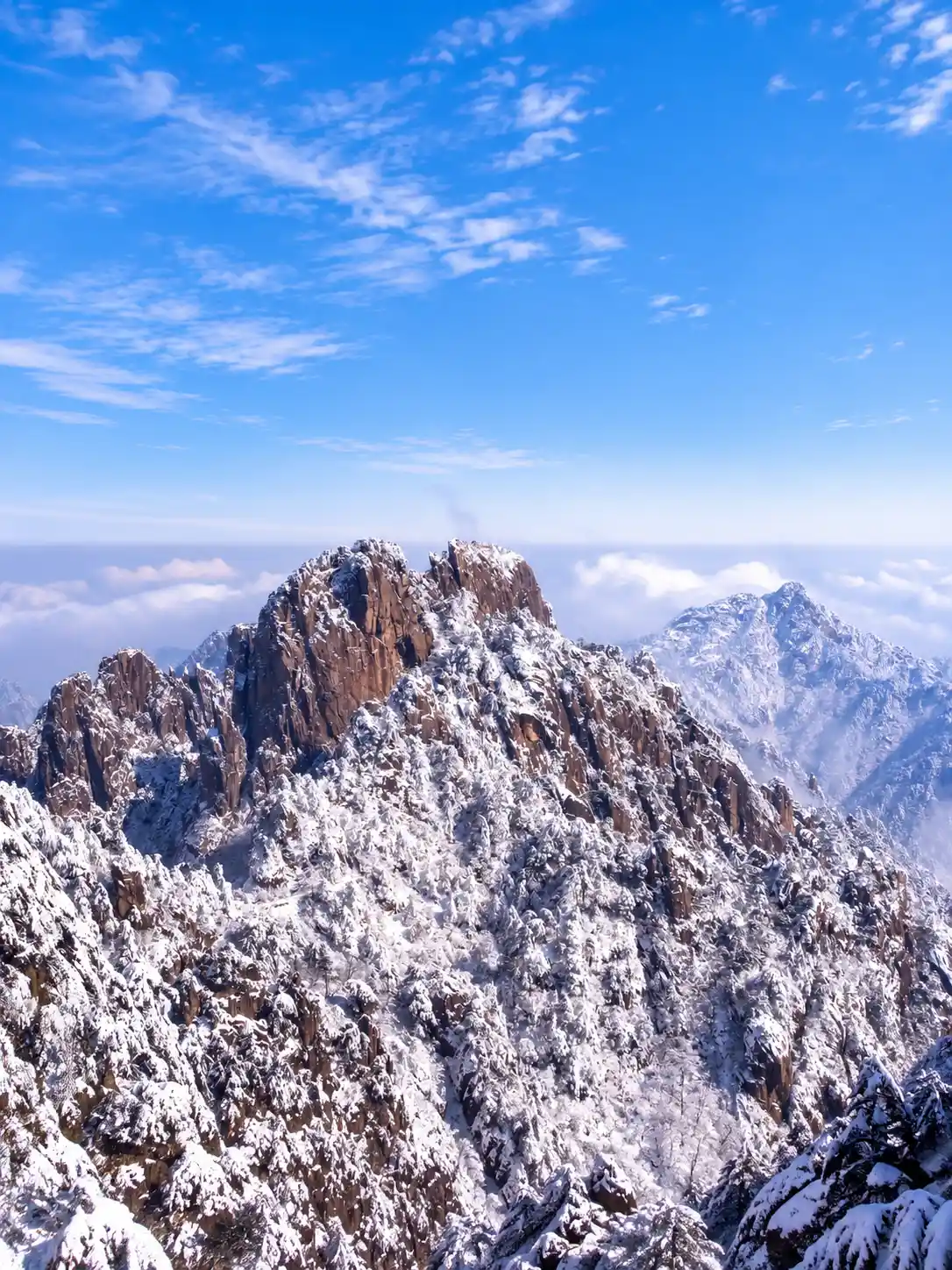
Winter gives Mount Huangshan a completely different character, with opportunities for snow, rime, cloud seas and crisp mountain light. It can also mean icy paths, stronger winds and operational adjustments, so winter travelers should check current trail, cableway and weather conditions before going up the mountain.
Conditions on Mount Huangshan can be colder, wetter, windier and more changeable than in Tunxi, Tangkou or the ancient villages. Check the latest mountain forecast shortly before your visit, pack layers and rain protection, and keep enough flexibility to adjust hiking routes when visibility or trail conditions change.
Where you stay in Huangshan should follow your itinerary rather than one central hotel base. Tangkou is convenient before entering Mount Huangshan, a hotel on the mountain gives you more time for sunrise, sunset and summit scenery, while Tunxi and the ancient village area work better for different stages of a longer trip.
For most first-time visitors, Huangshan works better with more than one base. Spend the night in Tangkou before an early mountain start, stay on Mount Huangshan if sunrise or sunset matters to you, then use Tunxi or the ancient village area for the cultural part of your trip.
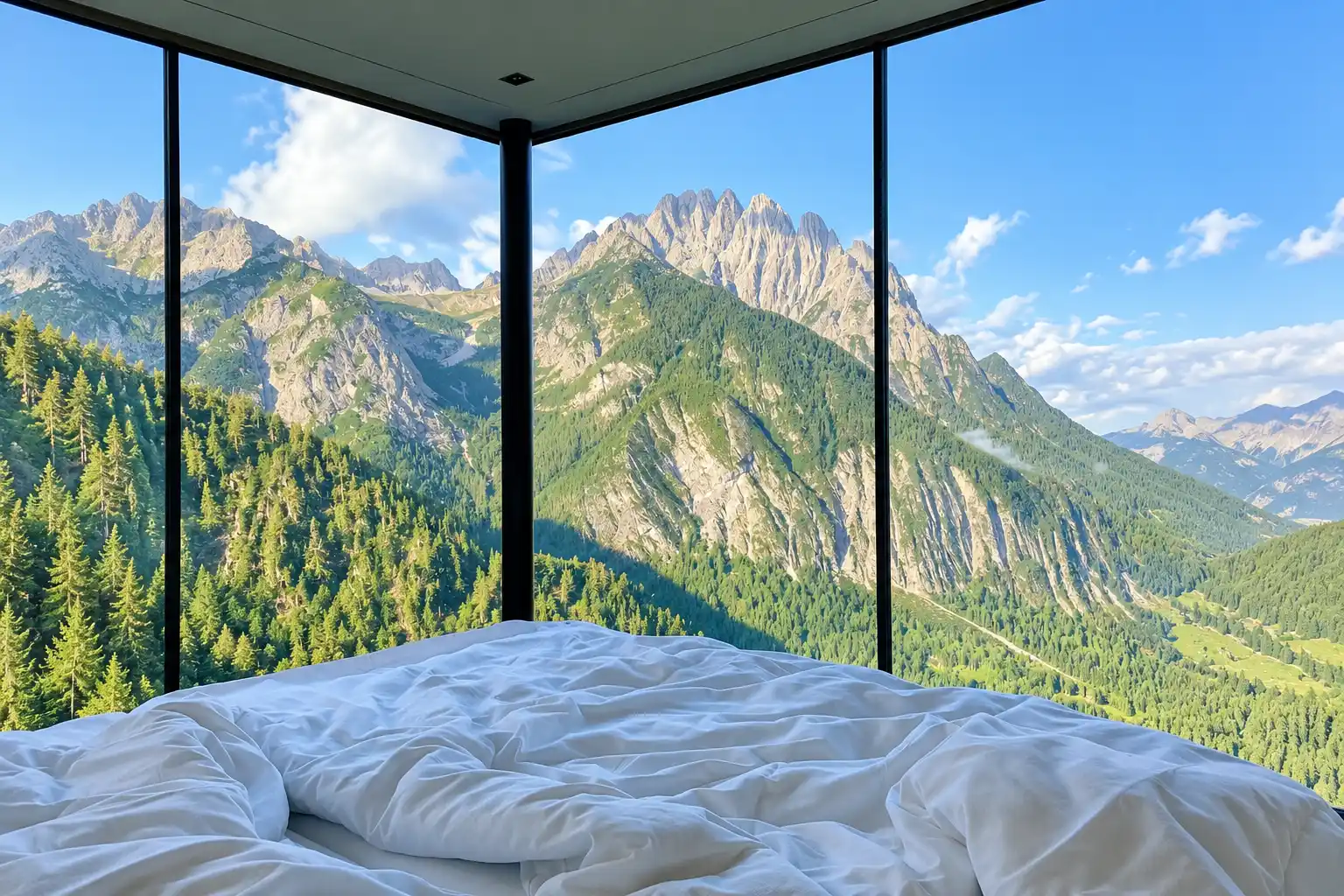
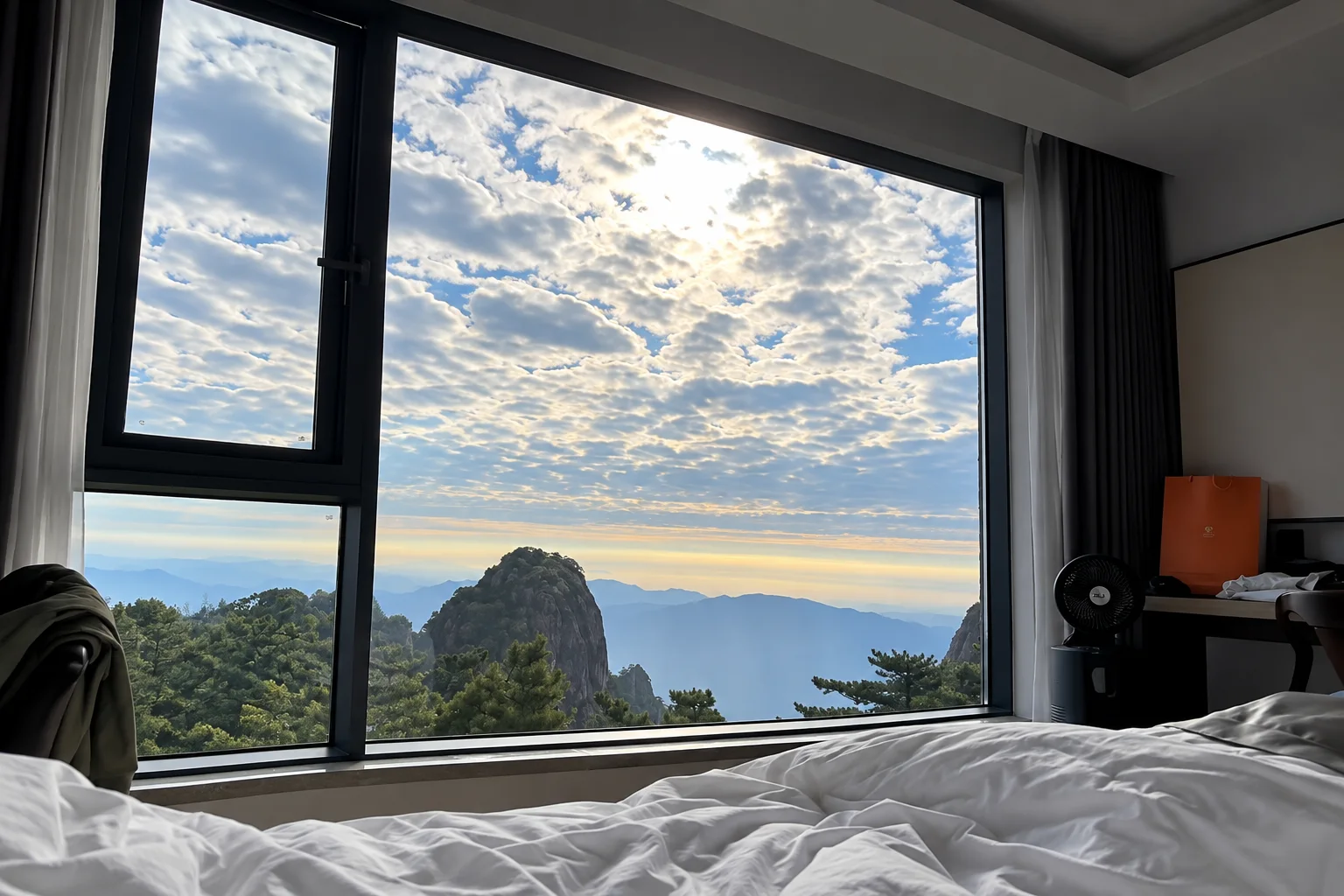
Stay overnight on the mountain if you want more time for summit walking, sunset, sunrise and changing cloud conditions. Choose the hotel area around your route: Beihai or Shilin works well for Back Mountain and nearby sunrise viewpoints; Xihai or Paiyun suits West Sea scenery and Danxia Peak; Baiyun in the Tianhai area is convenient for Bright Summit and a central mountain crossing; while the Yuping area fits travelers focusing on the Front Mountain and Guest-Greeting Pine. Mountain rooms are limited and usually more expensive than accommodation below the scenic area, so booking ahead is important.
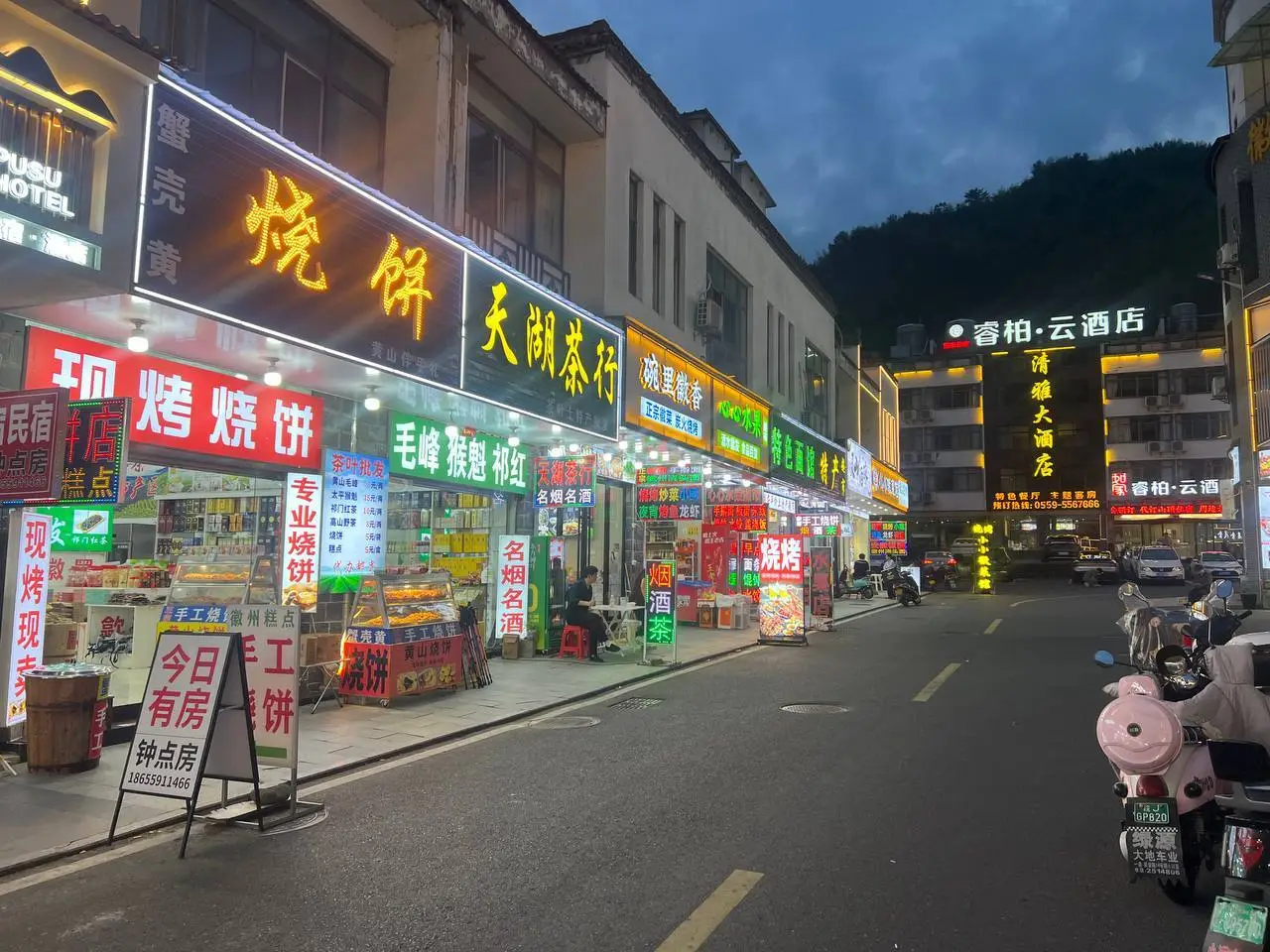
Tangkou is the most practical place to stay before an early Mount Huangshan visit. It sits close to the South Gate transfer area and has a wide range of hotels, restaurants and traveler services. Stay here if your priority is reaching the scenic-area shuttle buses early and starting the mountain without an extra transfer from Tunxi.
Tunxi is useful at the beginning or end of a Huangshan trip, especially if you want a wider choice of hotels, restaurants and city services. Tunxi Old Street also makes it easy to add Huizhou architecture, local food and an evening walk. It works better as a city base than as the starting point for an early morning on Mount Huangshan.
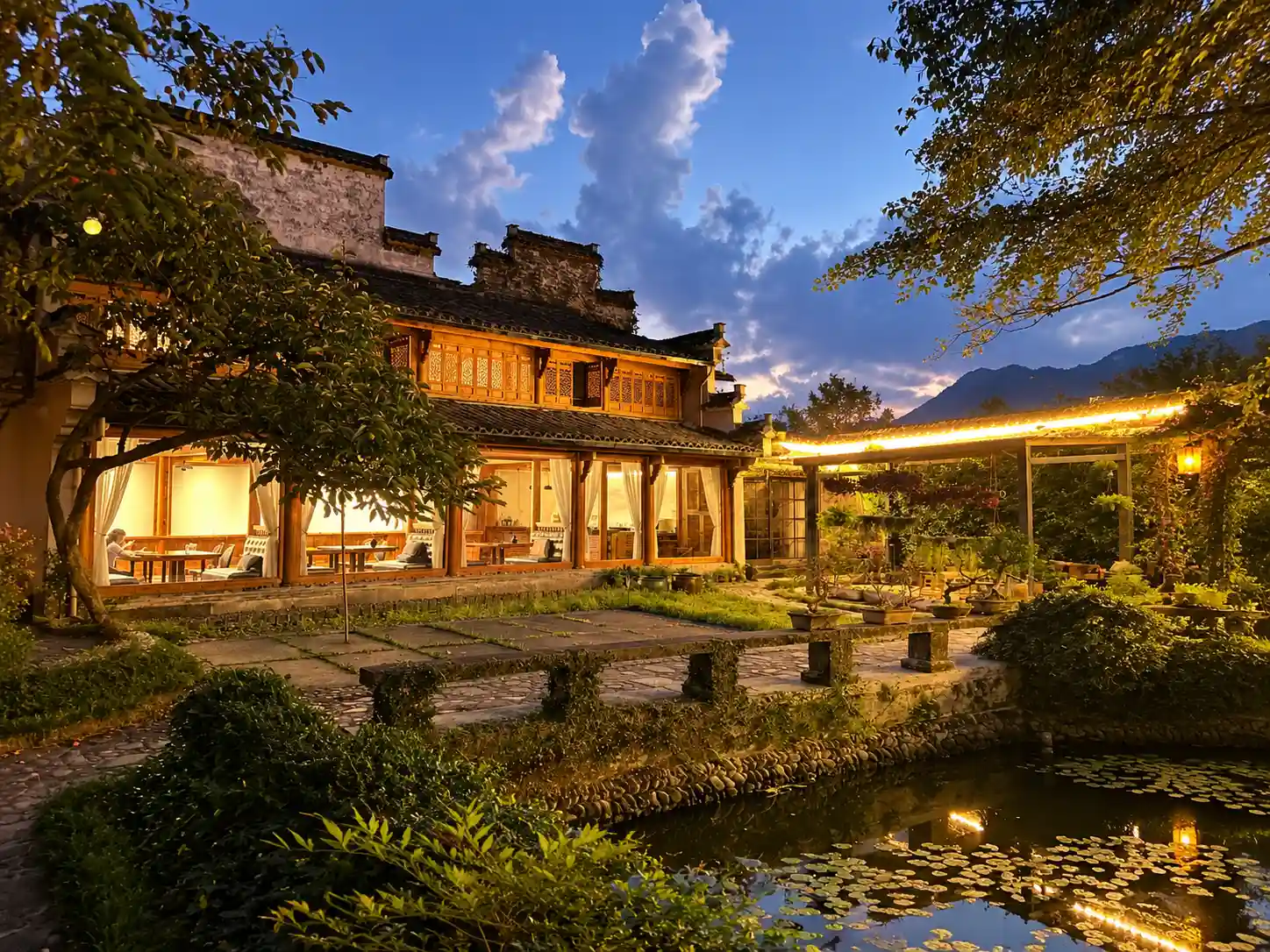
Stay near the ancient villages if you want to slow the trip down after Mount Huangshan and spend more time around Huizhou architecture, village lanes and traditional landscapes. This works particularly well on a 3–5 day Huangshan itinerary and can also pair naturally with arrival or departure through Yixian East Railway Station.
Choose accommodation according to the next stage of your trip. Tangkou works best before the mountain, a summit hotel adds more time on Mount Huangshan, while Tunxi and the ancient villages fit naturally before or after the main mountain visit. If you stay overnight on the mountain, choose the summit hotel area around the route you plan to walk the next morning.
Huangshan travel usually combines high-speed rail or flights with regional buses, hotel transfers and scenic-area shuttle buses. Huangshan North Railway Station is the most useful all-round rail gateway for many first-time visitors, Huangshan West Railway Station can work well for direct mountain access, and Yixian East Railway Station is especially convenient when your itinerary focuses on Hongcun, Xidi and the western villages.
For most independent travelers, high-speed rail is the easiest way to reach the Huangshan region. Huangshan North works well for Tangkou, Mount Huangshan, Tunxi and mixed itineraries; Huangshan West can be useful for travelers connecting directly with the mountain; and Yixian East is a strong option for Hongcun and Xidi. Once you reach Tangkou, visitors transfer to the official Huangshan Scenic Area shuttle system for access toward the mountain cableways and trailheads.
Huangshan North Railway Station is the most flexible railway arrival point for many first-time visitors. High-speed rail connects the station with major cities such as Shanghai and Hangzhou, while tourist transport continues toward the Huangshan Scenic Area South Gate, Hongcun and other regional destinations. Choose Huangshan North if your trip combines Mount Huangshan with Tunxi or several parts of the region.
How to Buy Train Tickets in China →Huangshan West Railway Station is another high-speed rail gateway with tourist transport connections toward both the North Gate and South Gate of Mount Huangshan. It can be a practical choice when your train stops here and your priority is reaching the mountain without first traveling into Tunxi or Huangshan North.
Yixian East Railway Station is especially useful for travelers visiting Hongcun, Xidi and the ancient villages of Yixian County. Tourist transport links the station with Hongcun and Xidi, so it can reduce backtracking when your itinerary places the villages before or after Mount Huangshan. It is less useful than Huangshan North if your main priority is Tunxi or a broader city-based stay.
Huangshan Tunxi International Airport serves the downtown Huangshan and Tunxi area. It can be convenient when a suitable domestic flight matches your itinerary, especially if you plan to stay in Tunxi before continuing to Mount Huangshan or the ancient villages. Compare flight schedules with high-speed rail before deciding which arrival method saves more time overall.
Tangkou is the main transport gateway for the Huangshan Scenic Area South Gate. From the transfer center, official scenic-area buses continue toward Yungu Temple and the Front Mountain access points for Yungu and Yuping cableways. Private vehicles do not simply continue to the main mountain trailheads, so build the shuttle transfer into your mountain-day schedule.
Plan Your Mount Huangshan Route →Regional transport connects Mount Huangshan with Hongcun, Xidi, Tunxi and the major railway stations. Public transport works well for straightforward point-to-point trips, while a private transfer can save time when combining several villages, railway connections and luggage on the same day. If Hongcun and Xidi are central to your route, Yixian East Railway Station is worth comparing with Huangshan North before booking your train.
See Suggested Huangshan Itineraries →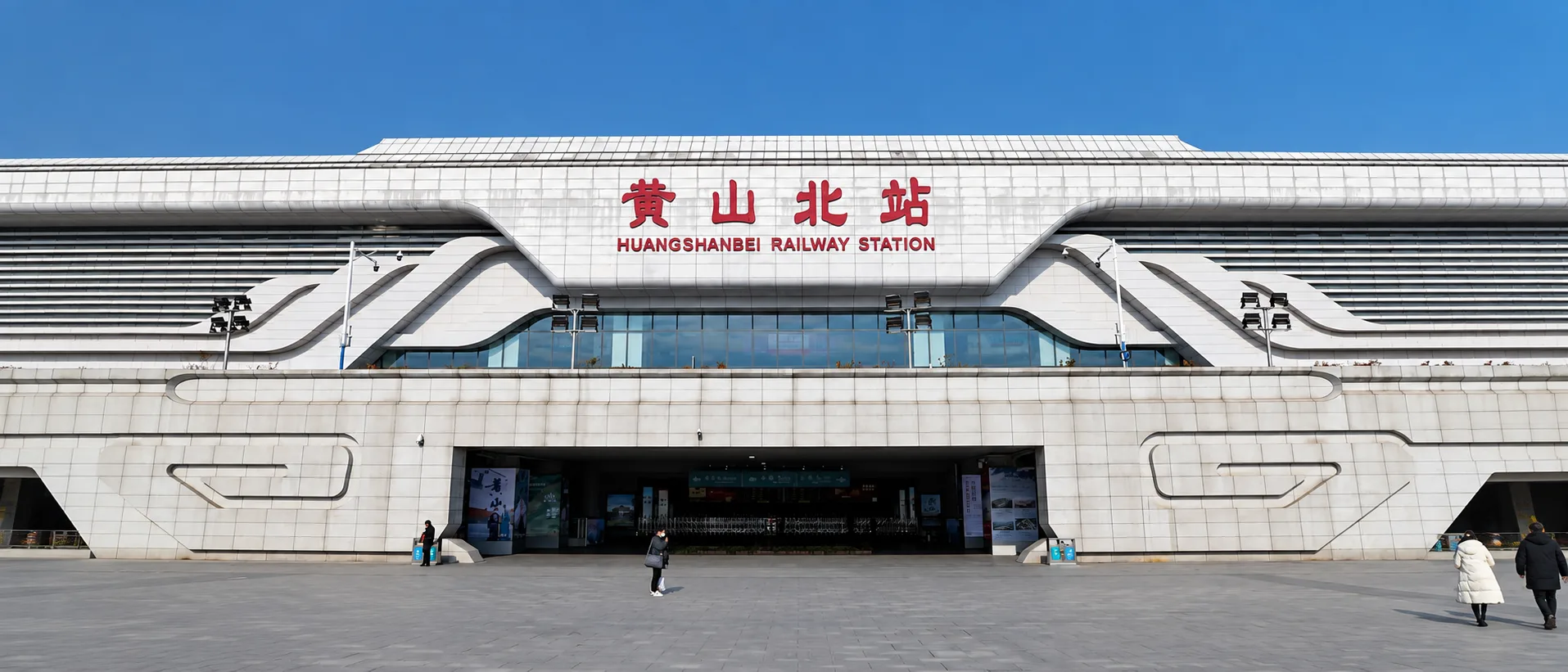
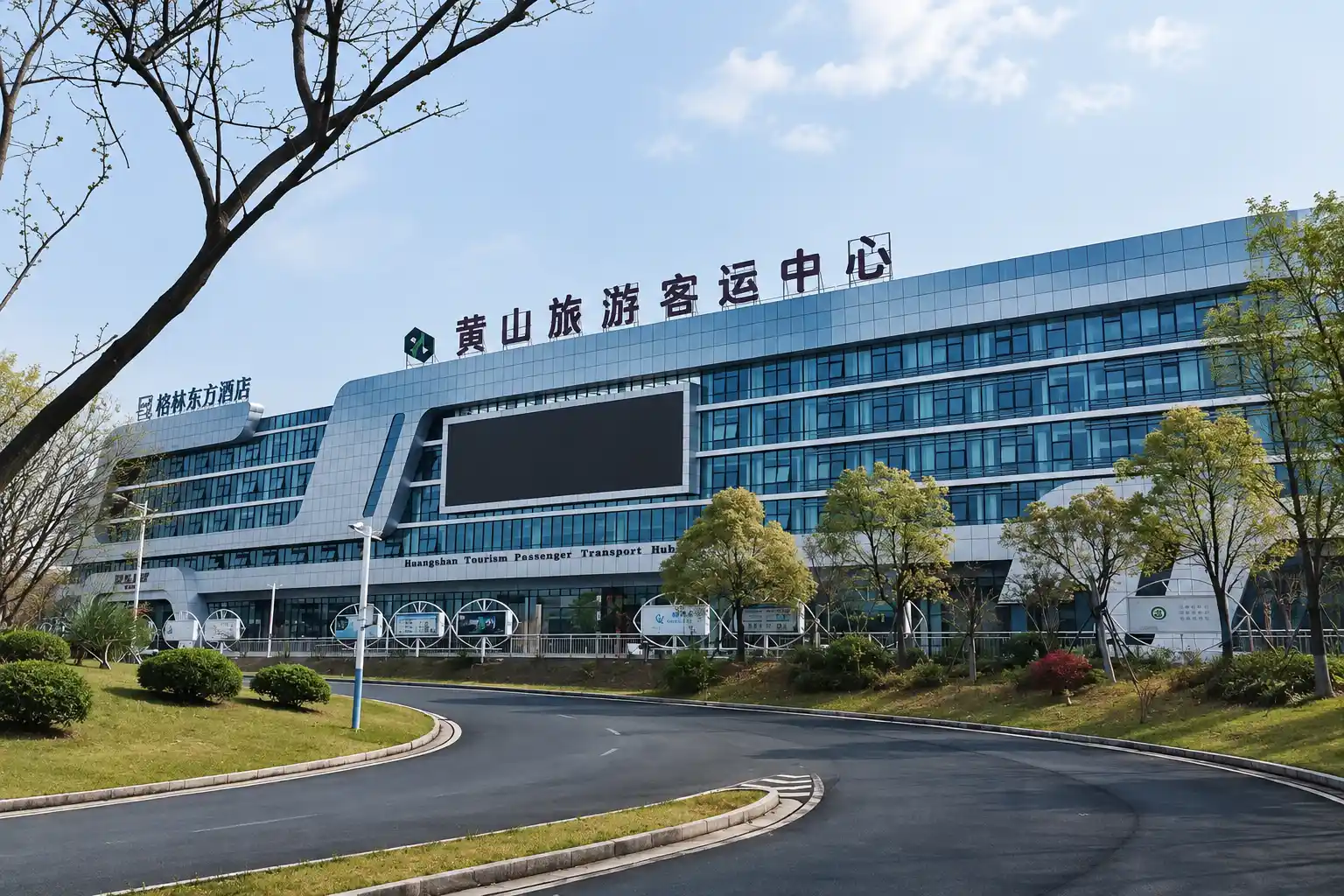
Private transfers can simplify a multi-stop Huangshan itinerary, especially when combining Mount Huangshan with Hongcun, Xidi, Tunxi or a high-speed train connection on the same travel day.
Huangshan fits naturally into a longer eastern China itinerary. High-speed rail makes it easy to continue toward Hangzhou and Shanghai, while routes west and southwest connect with Wuyuan and Jingdezhen in neighboring Jiangxi. Choose your next stop according to whether you want city life, classical scenery, traditional villages, ceramics or a deeper cultural journey.
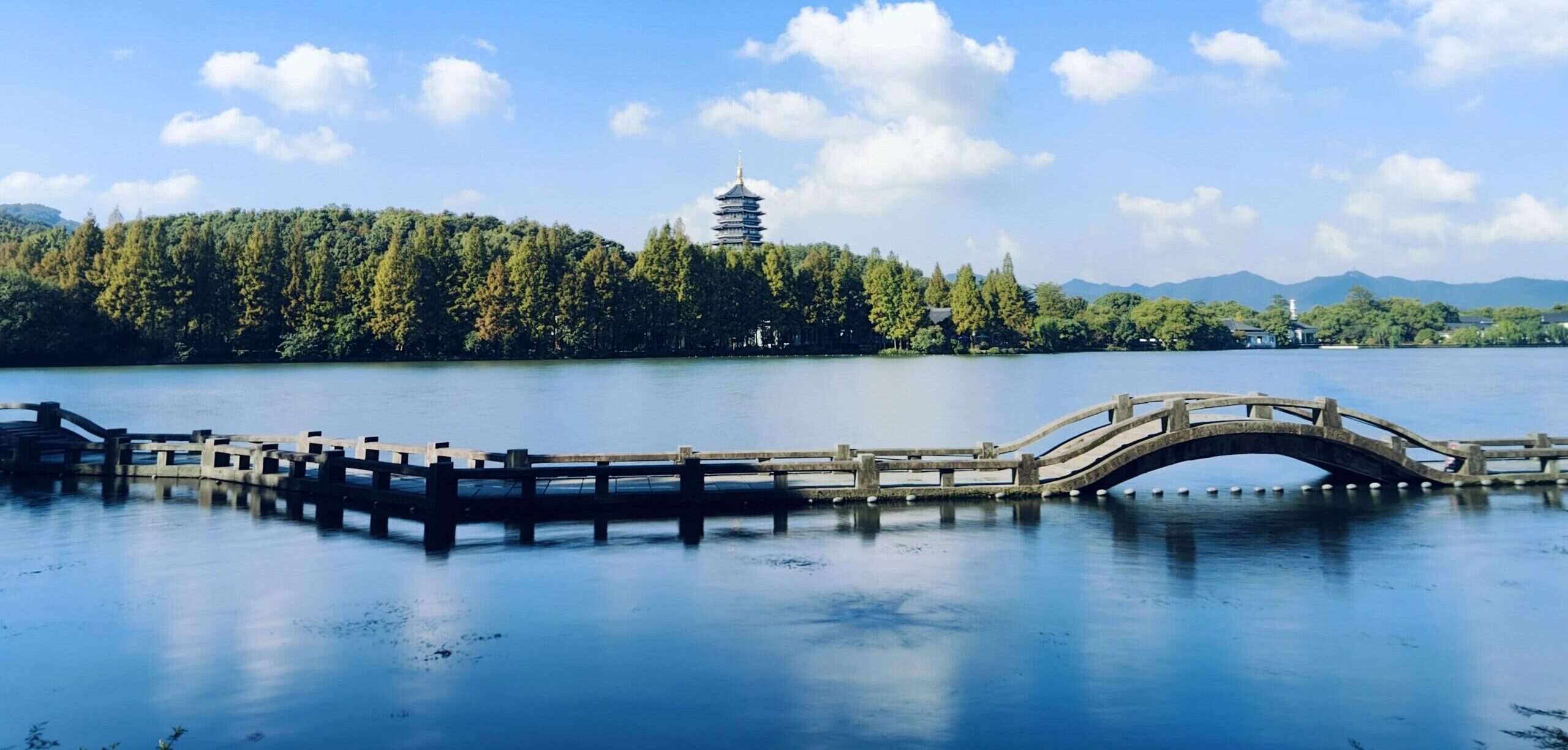
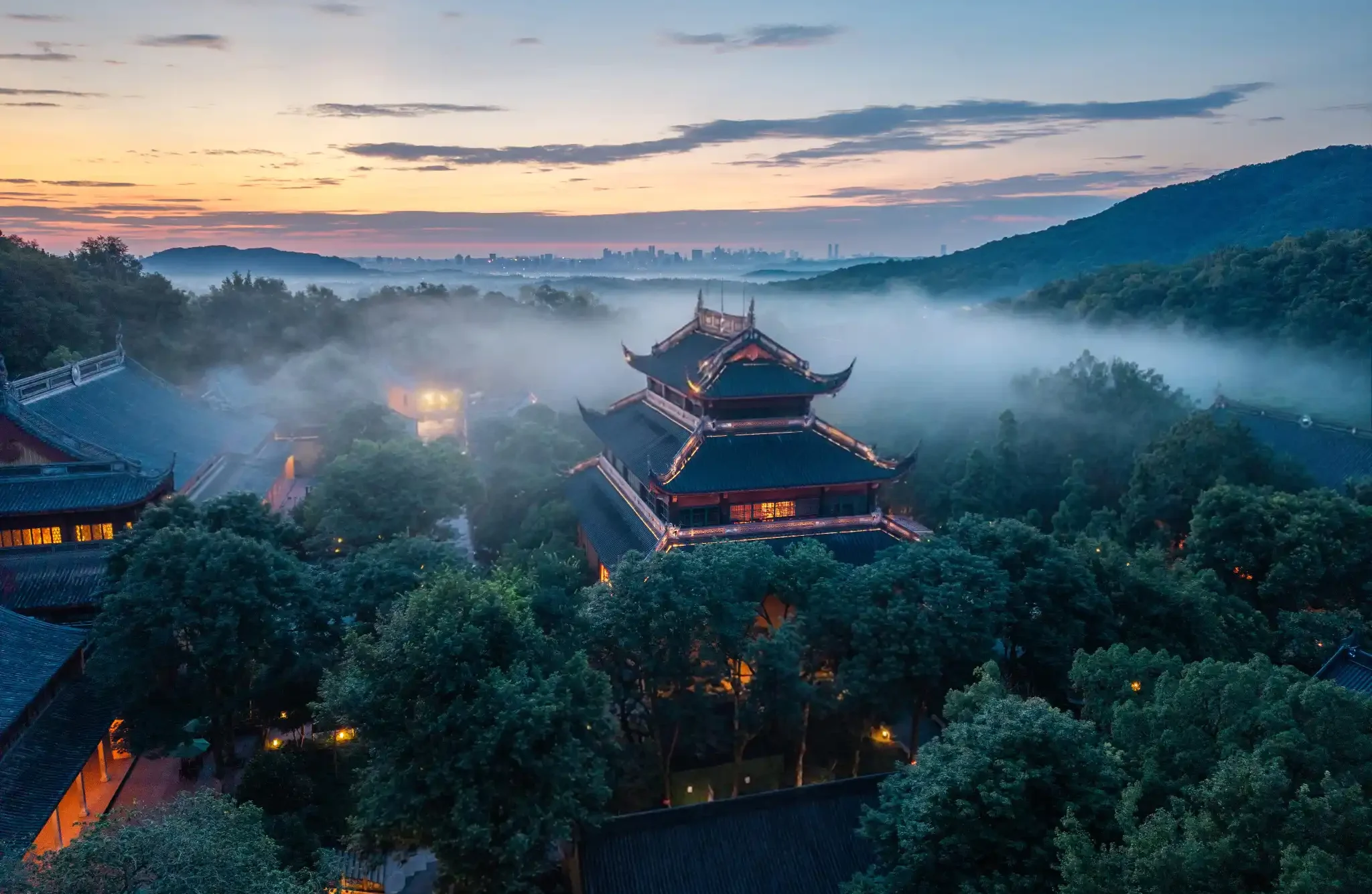
Pair Huangshan's granite peaks and Huizhou villages with Hangzhou's West Lake, temples, tea culture and classical landscapes in Zhejiang Province. High-speed rail makes this one of the most natural ways to continue east from Huangshan before traveling onward to Shanghai.
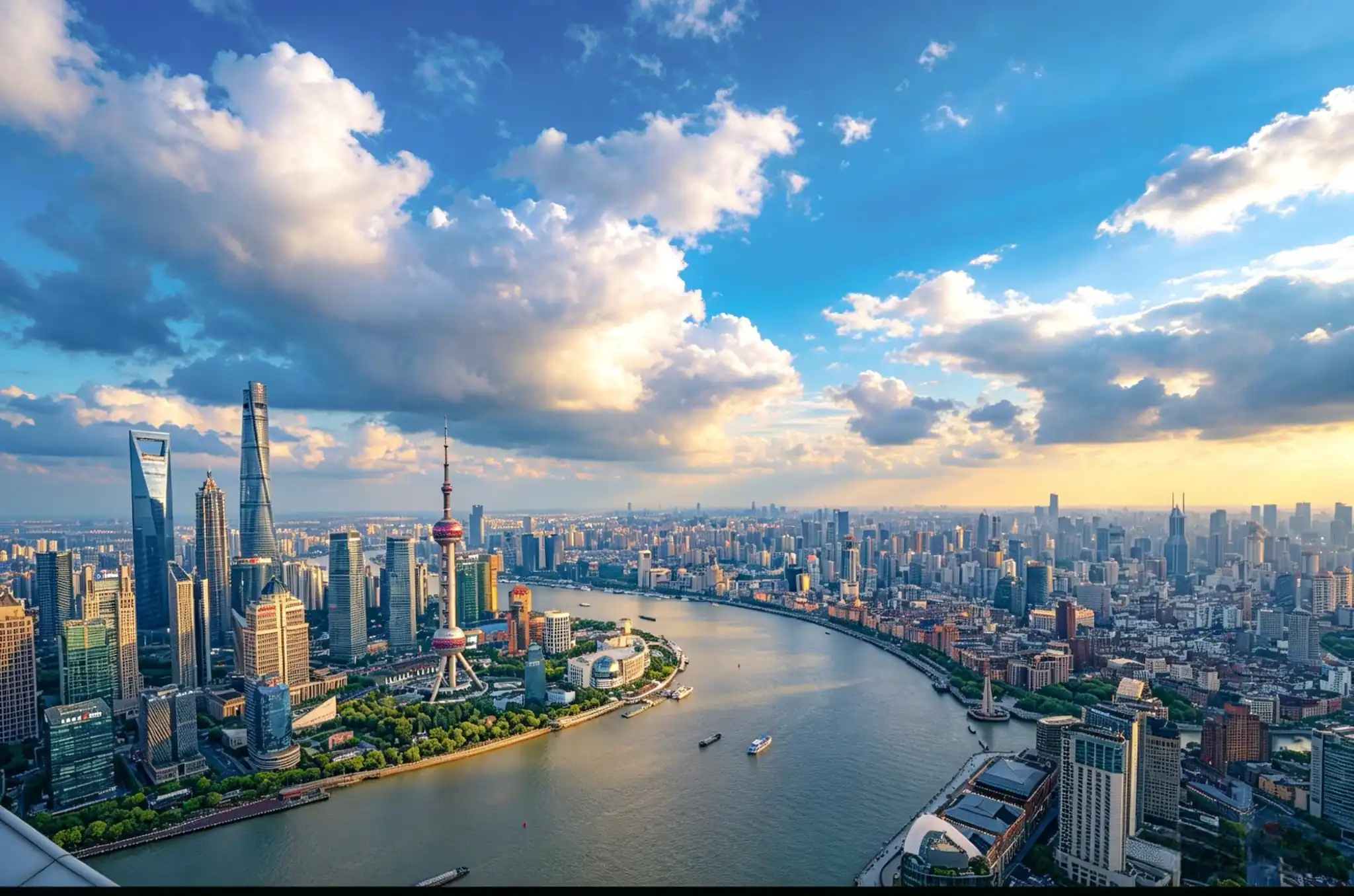
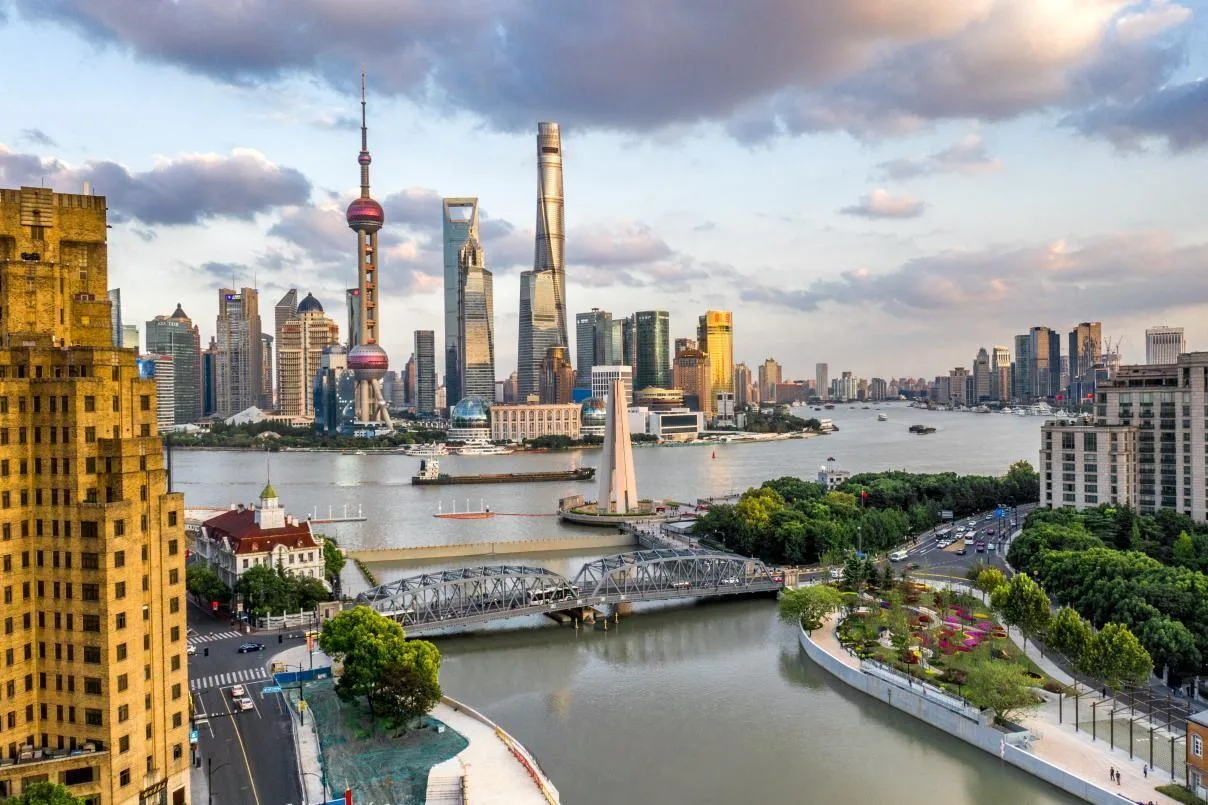
Continue from mountain scenery and traditional villages to one of China's largest modern cities. Shanghai works especially well as the international arrival or departure point for a Huangshan itinerary and combines naturally with Hangzhou on a longer eastern China route.
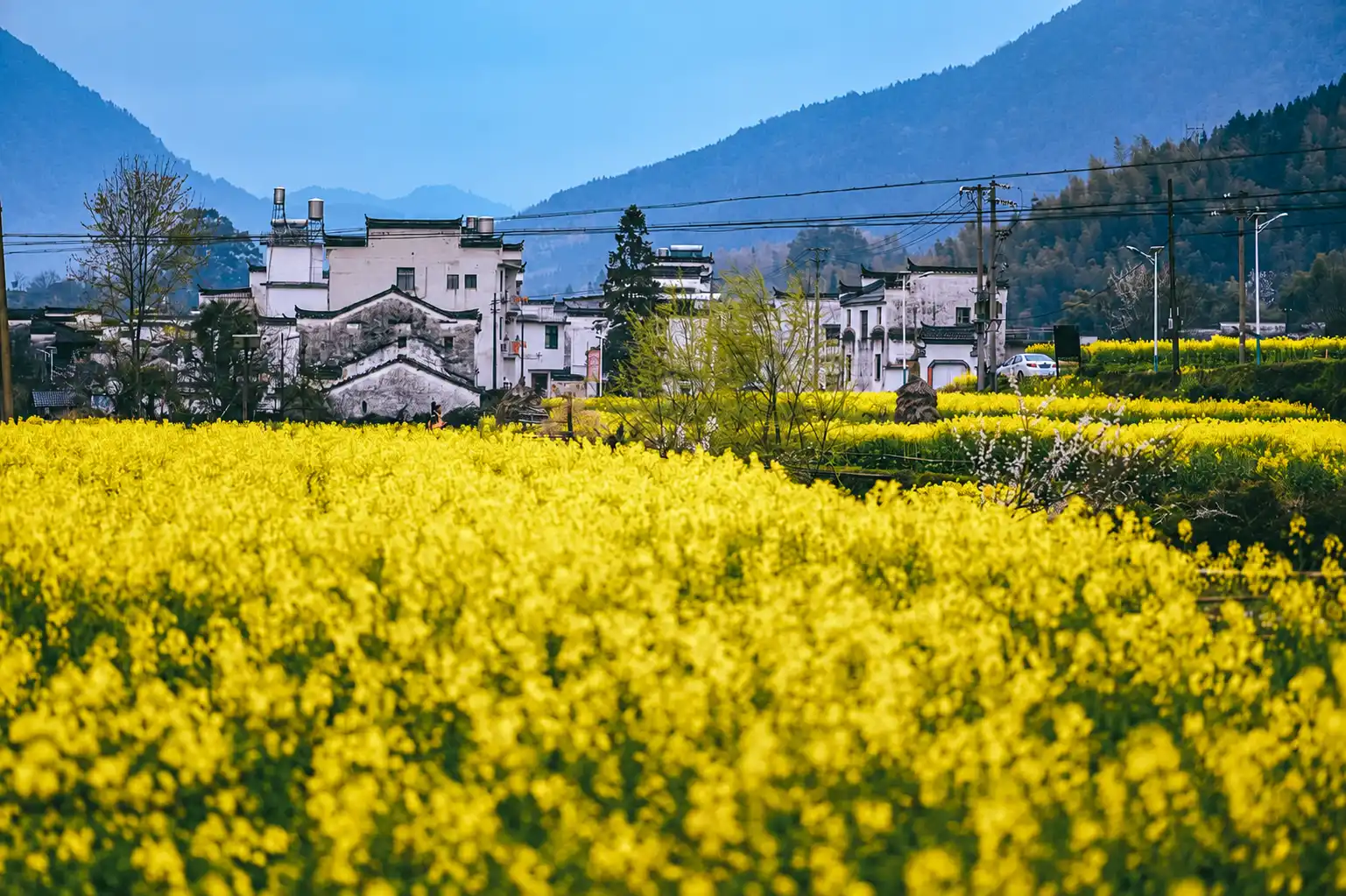
Wuyuan in Jiangxi continues the traditional village theme with rural landscapes, historic settlements, Huizhou-style architecture and seasonal countryside scenery. It suits travelers who prefer photography, village culture and slower regional travel after Huangshan.
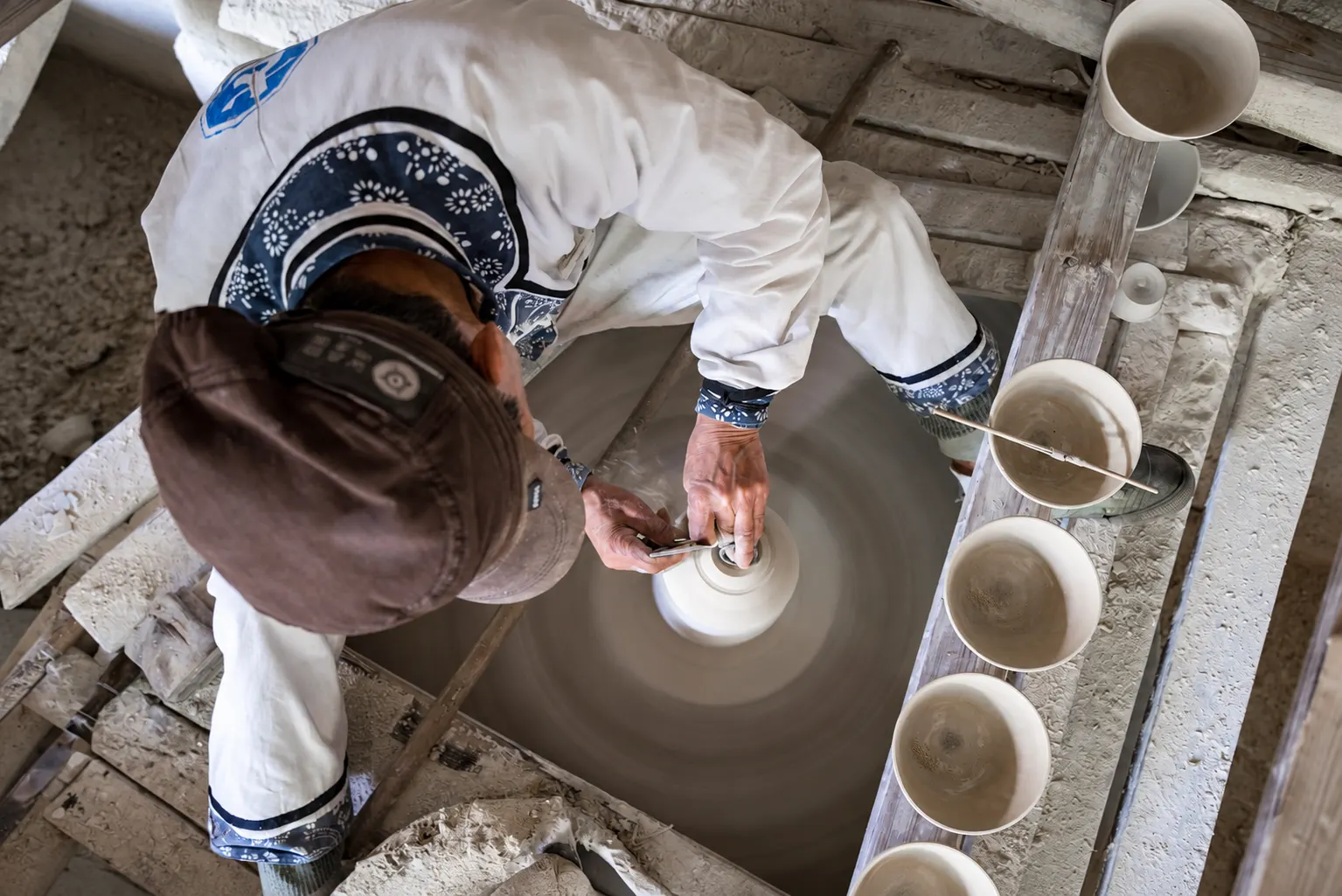
Add Jingdezhen in Jiangxi for a different cultural experience centered on Chinese porcelain, historic kiln traditions, museums, artisan workshops and contemporary ceramic art. It works particularly well for travelers continuing west from Huangshan on a craft- and culture-focused itinerary.
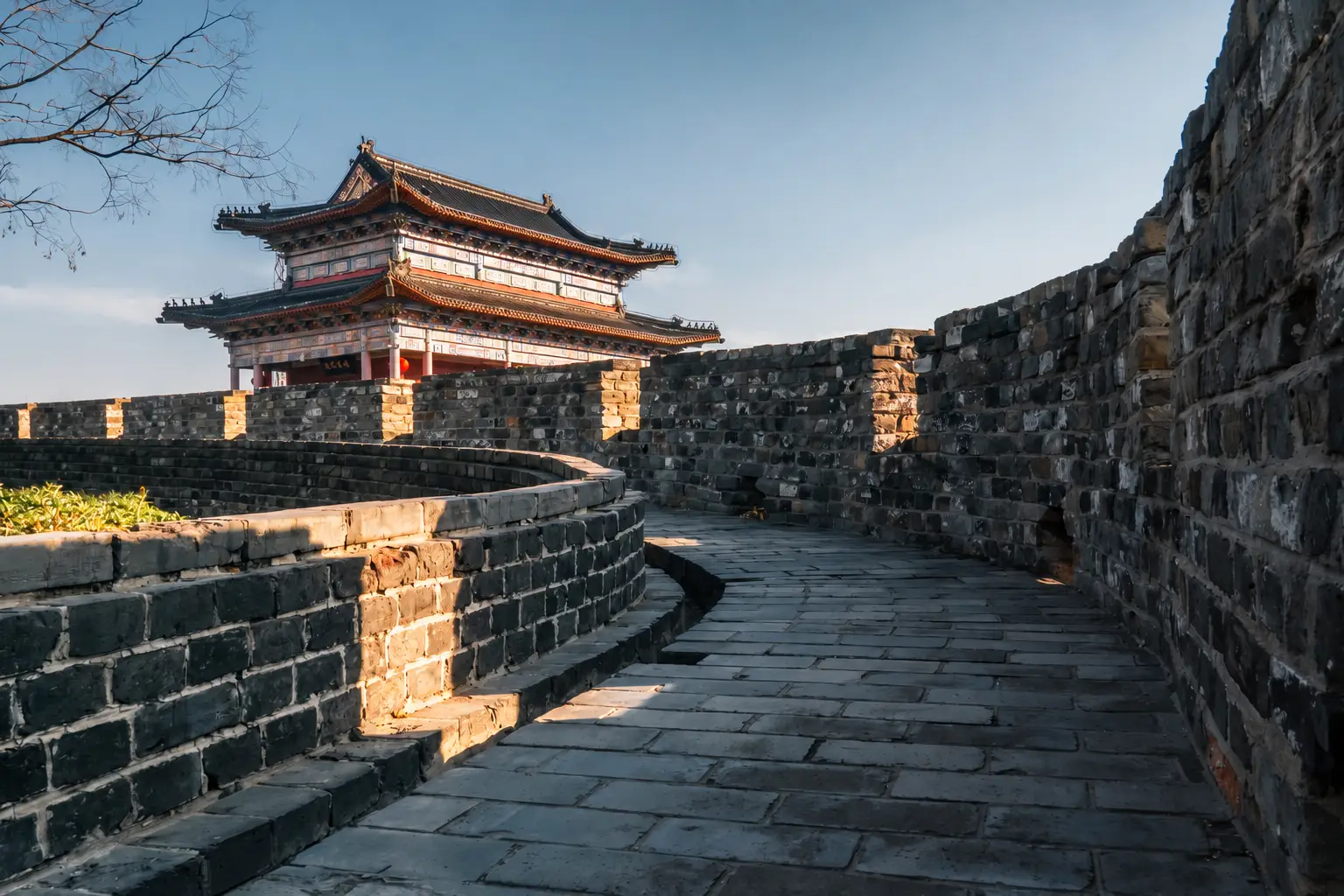
Nanjing in Jiangsu adds imperial history, historic city walls, museums, temples and lakeside scenery to a longer eastern China journey. It is a useful option for travelers continuing north after Huangshan and wanting a larger historic city before another major rail connection.
Choose a focused Mount Huangshan day trip, an overnight mountain journey or a longer private itinerary connecting Huangshan with Hangzhou, Shanghai and Jingdezhen. Short Huangshan routes can be customized around your walking level, hotel preferences and train schedule, while our published multi-city tours provide ready-made starting points for a longer eastern China journey.
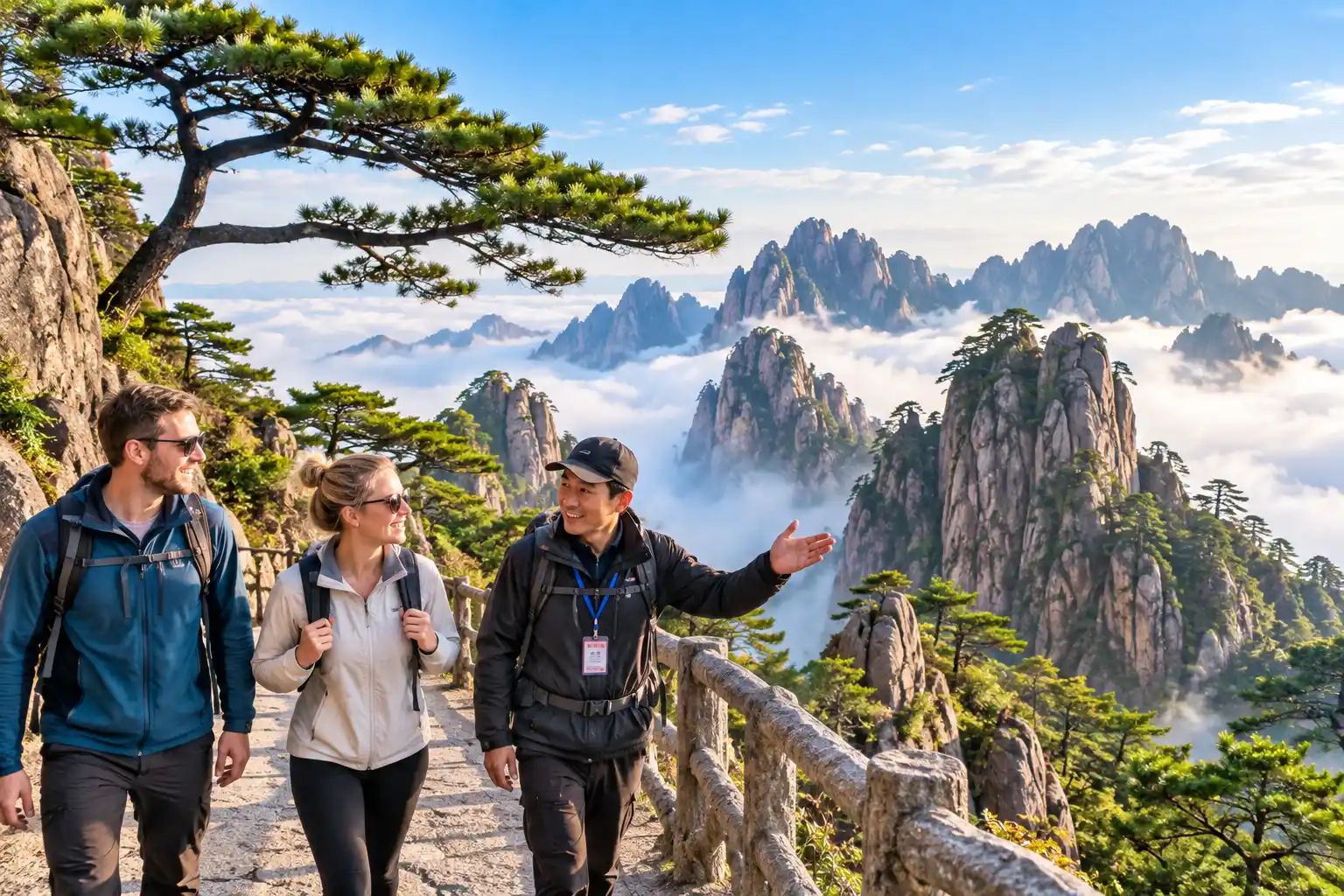
Combine an overnight Mount Huangshan experience with Hongcun, Xidi and the cultural side of the Huangshan region. This route gives the mountain enough time for a more relaxed crossing while leaving space for Huizhou villages without rushing every transfer into the same day.
Customize This 4-Day Route
Focus on essential Yellow Mountain scenery in one day, using scenic-area shuttles and cableways to reduce climbing time while still walking between key summit viewpoints.
Spend two days crossing the mountain with one night near the summit. This route allows more time for sunset, sunrise, cloud scenery and a less rushed walk between the Back Mountain and Front Mountain areas.
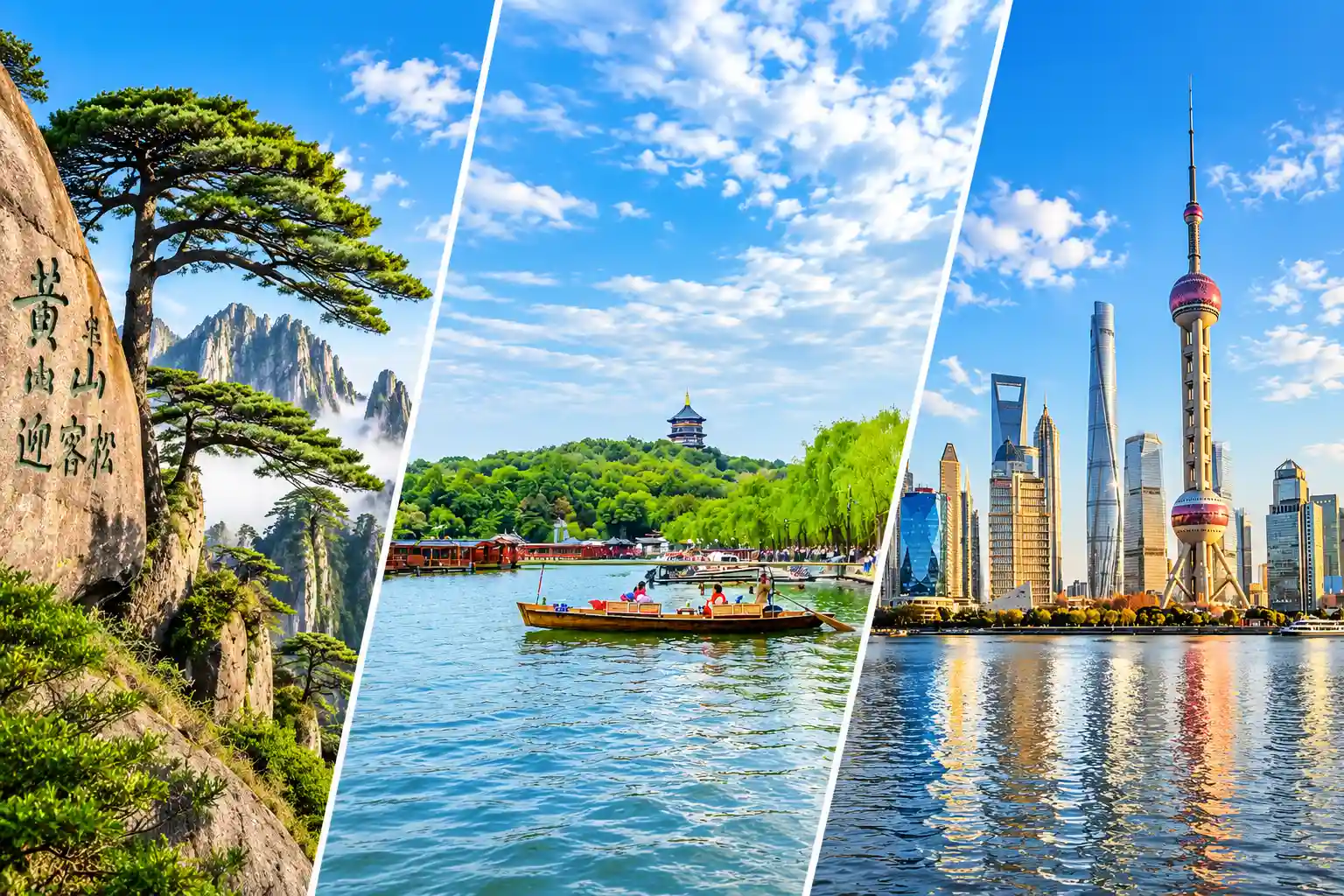
Combine Mount Huangshan and traditional village scenery with Shanghai's modern city experience and Hangzhou's West Lake, temples and tea culture. High-speed rail connects the three destinations into a practical eastern China journey.
Travel from Huangshan through Jingdezhen, Hangzhou and Shanghai on a deeper cultural journey combining iconic landscapes with porcelain heritage, hands-on crafts, tea culture and major eastern China cities.
Compare day trips, overnight routes, cableway-assisted visits and longer hiking options before deciding how much time to spend on Yellow Mountain.
Compare Mountain Routes →Compare 1-day through 5-day Huangshan travel plans combining Mount Huangshan, Tangkou, Tunxi, Hongcun, Xidi and the wider Huizhou region.
Compare 1–5 Day Itineraries →Compare ways to connect Huangshan with Hangzhou, Shanghai, Wuyuan, Jingdezhen and other destinations before choosing the longer route that fits your interests.
Explore Trip Extensions →Tell us your travel dates, group size, walking level, hotel preferences and the places you want to visit. Your Huangshan route can be adjusted around mountain weather, train schedules, village stays and your preferred travel pace.