
Chinese New Year Food: Traditional Dishes and Their Meanings
Chinese New Year food is an important part of Lunar New Year celebrations, representing family reunion, good fortune, prosperity, and hopes for the year ahead.
Unlike everyday meals, traditional Chinese New Year dishes are carefully chosen because their names, shapes, colors, and preparation methods often carry special meanings. Many foods symbolize wealth, long life, happiness, success, and family unity.
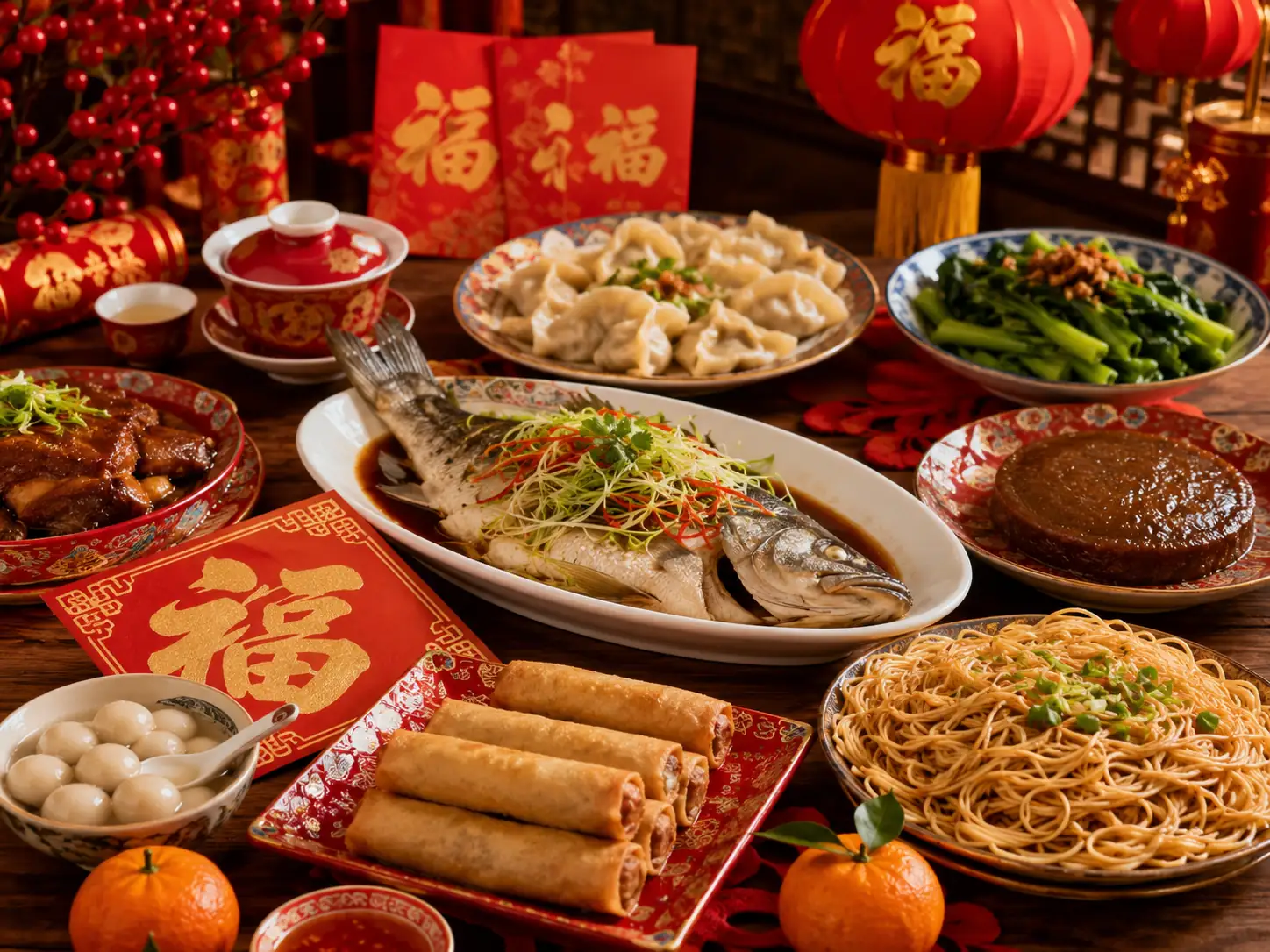
The most important meal is the Chinese New Year’s Eve dinner, also known as Nian Ye Fan (年夜饭), when families gather together to welcome the new year. From dumplings and steamed fish to sweet rice balls and New Year cake, every dish tells a story about Chinese culture and traditions.
In this guide, you will discover the most popular Chinese New Year foods, their symbolic meanings, regional differences, and where travelers can experience authentic Spring Festival food traditions in China.

Chinese New Year's Eve Dinner: The Most Important Meal of Spring Festival
The Chinese New Year’s Eve dinner is the biggest and most meaningful meal during the Spring Festival.
On the evening before Lunar New Year begins, family members return home from different places and gather for a special reunion dinner. For many Chinese families, this meal is the highlight of the entire holiday because it represents togetherness and the importance of family.
A traditional year’s eve dinner usually includes several dishes with symbolic meanings:
Fish for abundance and surplus
Dumplings for wealth
Longevity noodles for a long life
Chicken for family unity
Rice cakes for success and growth
Sweet foods for happiness
Many families prepare these dishes together, making the cooking process itself part of the celebration. Sharing food with loved ones is believed to bring good luck and create positive wishes for the year ahead.
Why Chinese New Year Foods Have Special Meanings
Chinese New Year foods are not chosen only because of their taste. Many dishes are connected with traditional beliefs about luck and prosperity.
These meanings usually come from three cultural ideas:
Similar Pronunciation
Some foods are considered lucky because their Chinese names sound similar to positive words.
For example:
Fish (鱼, yu) sounds like “surplus” (余, yu), representing having more than enough.
Nian Gao (年糕) sounds like “higher year,” symbolizing improvement and success.
Shape and Appearance
The shape of some foods represents wealth or reunion.
For example:
Dumplings resemble ancient Chinese silver ingots.
Sweet rice balls have a round shape representing family togetherness.
Spring rolls look like gold bars because of their golden color.
Family Traditions
Many Chinese New Year dishes have been traditionally eaten for generations. Preparing and sharing these foods allows families to celebrate Chinese culture and pass traditions to younger generations.
10 Traditional Chinese New Year Foods and Their Meanings
1. Dumplings (饺子) — Wealth and Prosperity
Dumplings are one of the most famous Chinese New Year foods, especially in northern China.
Their shape resembles ancient Chinese silver ingots, a type of currency used in imperial China. Because of this connection, dumplings symbolize wealth, prosperity, and financial success in the coming year.
During Chinese New Year’s Eve, many families make dumplings together. This preparation is an important family activity, allowing different generations to spend time together before the new year begins.
A popular tradition is placing a coin inside one dumpling. The person who finds it is believed to receive extra good fortune.
Dumplings are commonly served with:
Soy sauce
Vinegar
Garlic
Chili sauce
For travelers visiting northern China during Spring Festival, experiencing a homemade dumpling meal is one of the best ways to understand local Chinese culture.
2. Fish (鱼) — Abundance and Surplus
Fish is one of the most important dishes during Chinese New Year celebrations.
The Chinese word for fish, yu (鱼), sounds similar to the word meaning “surplus” or “extra” (余). Therefore, eating fish represents having abundance and good fortune every year.
A traditional New Year fish dish is usually served as a whole fish, including the head and tail. This represents completeness and a successful beginning and ending.
Popular preparation methods include:
Steamed fish with soy sauce
Steamed whole fish with ginger and green onions
Regional fish dishes from different parts of China
Many families intentionally leave some fish at the end of the meal because leftover fish symbolizes having extra wealth and prosperity for the year ahead.
3. Longevity Noodles (长寿面) — Long Life and Good Health
Longevity noodles are a traditional Chinese New Year dish representing a wish for a long and healthy life.
Unlike regular noodles, longevity noodles are usually served uncut. Their long shape represents continuity, longevity, and a smooth journey through the new year.
They can be prepared in different ways, including:
Noodles served in soup
Stir-fried long noodles
Noodles with vegetables and meat
Longevity noodles are also commonly eaten during birthdays and other important celebrations because they express wishes for good health and a long life.
4. Nian Gao (年糕) — Growth and Success
Nian Gao, also called New Year Cake, is a popular Chinese New Year food made from glutinous rice flour.
The pronunciation of Nian Gao has a special meaning:
“Nian” (年) means year
“Gao” (糕) sounds like “high” (高)
Together, it suggests reaching higher levels each year.
For this reason, New Year Cake symbolizes:
Career improvement
Higher income
Better academic results
Personal growth
Nian Gao is traditionally eaten during Chinese New Year’s Eve and is especially popular in eastern China, including Shanghai and Zhejiang.
Common versions include:
Sweet rice cake
Brown sugar Nian Gao
Fried Nian Gao slices
Its sticky texture represents holding things together, making it another symbol of family unity.
5. Spring Rolls (春卷) — Wealth and Gold
Spring rolls are another traditional dish enjoyed during the Spring Festival.
Their golden color and rectangular shape resemble gold bars, making them a symbol of wealth and prosperity.
Spring rolls are especially popular in eastern China, including areas such as Shanghai and Jiangnan regions.
They are usually filled with ingredients such as:
Vegetables
Pork
Shrimp
Bamboo shoots
After being fried, the crispy golden appearance represents good fortune and a prosperous year ahead.
Tang Yuan (汤圆) — Family Reunion and Togetherness
Tang Yuan, also known as sweet rice balls, is a traditional Chinese dessert closely connected with family reunion.
These round-shaped rice balls are usually made from glutinous rice flour and filled with sweet fillings such as:
Black sesame seeds
Red bean paste
Peanut filling
The round shape of Tang Yuan represents completeness, unity, and being together with loved ones.
Sweet rice balls are especially associated with the Lantern Festival, which marks the end of the Lunar New Year period. However, they are also enjoyed throughout the Spring Festival in many parts of southern China.
For Chinese families, sharing Tang Yuan represents the hope for a harmonious and happy year ahead.
7. Whole Chicken (鸡) — Family Unity and Completeness
Whole chicken is another important dish served during Chinese New Year celebrations.
A complete chicken, including the head and feet, represents wholeness, family unity, and a complete beginning to the new year.
Chicken dishes symbolize:
Family reunion
Good luck
Success
Happiness
In some regions of China, chicken is considered an essential dish for the New Year’s Eve dinner because serving the entire chicken expresses respect for ancestors and hopes for family prosperity.
Popular preparations include:
Steamed chicken
Soy sauce chicken
Cantonese-style roasted chicken
8. Chinese Sausage and Pork Dishes — Celebration and Richness
Pork and meat dishes are commonly prepared during Chinese New Year because they represent abundance and a generous celebration.
Chinese sausage, known as lap cheong (腊肠), is a popular festive food, especially in southern China.
It is often prepared with:
Glutinous rice
Vegetables
Other traditional year dishes
Other popular pork dishes include:
Braised pork
Sweet and sour pork
Roasted pork
These rich dishes reflect the traditional idea that the New Year should begin with plentiful food and a feeling of prosperity.
9. Lucky Vegetables — Growth and Good Fortune
Vegetables also play an important role in Chinese New Year meals.
Many leafy greens are chosen because their names or appearance represent positive meanings.
Common lucky vegetables include:
Chinese Broccoli (芥兰)
Chinese broccoli symbolizes growth and good fortune.
Napa Cabbage (白菜)
Napa cabbage is associated with wealth and prosperity because its pronunciation sounds similar to words connected with abundance.
Bamboo Shoots (笋)
Bamboo shoots represent growth, progress, and new opportunities because bamboo grows quickly.
These simple ingredients are often served together with meat or seafood as part of a balanced New Year’s meal.
10. Citrus Fruits and New Year Snacks — Luck and Happiness
During Chinese New Year, fruits and snacks are not only food but also symbols of good wishes.
Citrus fruits such as oranges and tangerines are popular because their bright golden color represents wealth and good fortune.
Other traditional New Year snacks include:
Red dates
Candies
Melon seeds
Sweet treats
Sweet foods represent a sweet and happy year ahead, while red dates are often associated with good luck and success.
These snacks are commonly served when families welcome guests during the Spring Festival period.
Regional Differences in Chinese New Year Food in China
China is a vast country with many different food traditions. Chinese New Year dishes vary greatly depending on the region, climate, and local culture.
Although the meanings behind these foods are often similar, each area has its own special dishes.
Northern China: Dumplings and Wheat-Based Foods
In northern China, dumplings are the most iconic Chinese New Year food.
Families often prepare large amounts of dumplings together on New Year’s Eve. The process of making dumplings is considered an important family tradition.
Other popular northern dishes include:
Long noodles
Steamed buns
Meat dishes
Cities such as Beijing and Xi’an are excellent places to experience traditional northern Spring Festival food.
Southern China: Rice Cakes, Fish, and Sweet Foods
Southern China has a stronger rice-based food culture.
Popular New Year dishes include:
Nian Gao (New Year Cake)
Tang Yuan
Steamed fish
Sweet desserts
In regions such as Guangdong, Shanghai, and Zhejiang, families often prepare elaborate reunion dinners featuring seafood, rice cakes, and traditional desserts.
Eastern China: Festive Snacks and Local Specialties
Eastern China, especially the Jiangnan region, is known for delicate and seasonal New Year dishes.
Popular foods include:
Spring rolls
Rice cakes
Fish dishes
Traditional pastries
Shanghai and nearby areas offer visitors a chance to experience both modern city life and traditional Chinese New Year food culture.
Where to Experience Chinese New Year Food in China
For travelers, Chinese New Year is one of the best times to experience authentic Chinese culture through food.
Different cities offer unique festival experiences.
Beijing
Beijing is a great destination for traditional northern Chinese New Year celebrations.
Visitors can experience:
Handmade dumplings
Temple fairs
Traditional snacks
Spring Festival markets
Shanghai
Shanghai combines modern city culture with traditional Jiangnan food traditions.
Travelers can enjoy:
Nian Gao
Spring rolls
Local New Year snacks
Family-style reunion dishes
Guangzhou
Guangzhou is famous for Cantonese New Year cuisine.
Popular experiences include:
Seafood dishes
Cantonese-style chicken
Traditional dim sum
Festive family meals
Chengdu
Chengdu offers a different Chinese New Year food experience through Sichuan cuisine.
Visitors can enjoy:
Spicy hot pot
Sichuan dishes
Local New Year celebrations
What Do Chinese People Eat on Chinese New Year's Day?
The first day of Chinese New Year has its own food traditions.
Many families continue enjoying dishes prepared during the reunion dinner, while others prepare special foods with symbolic meanings.
Common foods eaten on the first day include:
Dumplings
Sweet rice balls
Rice cakes
Fruits
Traditional snacks
The most important meaning behind these foods is not only the taste but the wishes they represent: health, happiness, prosperity, and being together with family.
Experience Chinese New Year Culture in China
Food is one of the best ways to understand Chinese New Year traditions.
From making dumplings with local families to tasting regional festival dishes, travelers can experience the stories, customs, and cultural meanings behind every meal.
Plan your China trip during the Spring Festival and discover authentic food traditions, local celebrations, and unforgettable cultural experiences across China.
Chinese New Year Food FAQs
What food is traditionally eaten during Chinese New Year?
Traditional Chinese New Year foods include dumplings, fish, longevity noodles, New Year Cake, spring rolls, Tang Yuan, chicken, and other festive dishes. Many foods are chosen because they symbolize luck, wealth, health, and family unity.
Why do Chinese people eat fish during Lunar New Year?
Fish is eaten because the Chinese word for fish sounds similar to “surplus.” Eating fish represents having extra wealth, good fortune, and abundance in the coming year.
What do dumplings symbolize during Chinese New Year?
Dumplings symbolize wealth and prosperity because their shape resembles ancient Chinese silver ingots. Families often make dumplings together during New Year’s Eve celebrations.
What does Nian Gao symbolize?
Nian Gao symbolizes growth, higher achievement, and success. Its name sounds like “higher year,” making it a popular Chinese New Year food.
What foods bring good luck during Chinese New Year?
Lucky foods include dumplings, fish, spring rolls, longevity noodles, Tang Yuan, and New Year Cake. Each dish represents different wishes, such as wealth, long life, reunion, and prosperity.
What is eaten during Chinese New Year's Eve dinner?
Chinese New Year’s Eve dinner usually includes fish, dumplings, chicken, noodles, vegetables, rice cakes, and other traditional dishes. The meal is mainly about family reunion and welcoming the new year together.
Get Inspired with Some Popular Itineraries