
Chinese New Year in China: Traditions, Celebrations, Dates & Travel Guide
Chinese New Year in China, also known as the Spring Festival (春节, Chūnjié), is the most important traditional holiday in the country. Based on the Chinese lunisolar calendar, it marks the beginning of a new year with family reunions, traditional customs, festive foods, red decorations, and celebrations that continue for up to 15 days.
For travelers, experiencing Chinese New Year in China offers a unique opportunity to see ancient traditions come alive, from New Year’s Eve reunion dinners and red envelopes to temple fairs, lion dances, dragon dances, and colorful lantern displays across cities and villages.

Chinese New Year Quick Facts
| Festival Name | Chinese New Year / Spring Festival (春节) |
|---|---|
| 2027 Date | February 6, 2027 |
| Calendar | Chinese lunisolar calendar |
| Celebration Period | Traditionally 15 days |
| Ending Festival | Lantern Festival |
| Also Known As | Lunar New Year |
What Is Chinese New Year in China?
Chinese New Year in China is the annual celebration marking the beginning of the new year according to the traditional Chinese calendar. Unlike the Gregorian calendar used internationally, the date of Chinese New Year changes every year because it follows a lunisolar calendar system based on both the moon phases and the solar year.
In China, Chinese New Year is commonly called the Spring Festival, or Chunjie (春节). Although it takes place during winter in many parts of the country, the name represents the arrival of a new season and the hope for renewal, prosperity, and good fortune in the year ahead.
Chinese New Year is more than a public holiday. It is a time when Chinese people return home, reunite with family members, honor ancestors, and continue traditions passed down through generations. For many families, the festival represents the most important moment of the year.
The celebration combines ancient beliefs, cultural customs, regional traditions, and modern celebrations. From hanging red lanterns and displaying the Chinese character “福” (fortune) to sharing meals and giving lucky money, every activity carries symbolic meaning.
When Is Chinese New Year in China?
The date of Chinese New Year changes every year because it follows the Chinese lunisolar calendar, rather than the Gregorian calendar.
Chinese New Year usually falls between January 21 and February 21. The exact date is determined by the first new moon of the lunar year.
Here are upcoming Chinese New Year dates:
| Year | Date | Zodiac Animal |
|---|---|---|
| 2026 | February 17, 2026 | Horse |
| 2027 | February 6, 2027 | Goat |
| 2028 | January 26, 2028 | Monkey |
| 2029 | February 13, 2029 | Rooster |
The festival begins on Chinese New Year’s Eve, the final day of the previous lunar year, and officially ends with the Lantern Festival on the 15th day of the first lunar month.
For travelers planning a trip to China, checking the Chinese New Year date in advance is important because transportation, hotel prices, and business schedules can change significantly during this period.
How Long Does Chinese New Year Last in China?
Traditionally, Chinese New Year celebrations last for 15 days, beginning on New Year’s Eve and ending with the Lantern Festival.
The official public holiday period in China is usually shorter, but the cultural celebration continues throughout the entire lunar new year period.
Each day has different customs and meanings:
New Year's Eve
The most important night of the festival. Families gather for the New Year’s Eve dinner, also known as the reunion dinner, before welcoming the new year together.
First Day of Chinese New Year
People visit family members, exchange greetings, wear new clothes, and wish each other happiness, health, and prosperity.
Second and Third Days
Many families continue visiting relatives and friends. In some regions, specific customs are followed regarding which family members should be visited first.
Seventh Day
Known as “Renri” (People’s Day), it is traditionally considered the day when human beings were created.
Fifteenth Day
The celebration ends with the Lantern Festival, when people enjoy lantern displays, solve lantern riddles, and eat glutinous rice balls called tangyuan, which symbolize family unity and togetherness.
Chinese New Year's Eve: The Heart of Chinese New Year Celebrations
Among all Chinese New Year traditions, Chinese New Year’s Eve is the most meaningful moment for families across China.
Millions of people travel long distances every year to return home for this special night. This massive movement of people is known as Chun Yun (Spring Festival travel rush) and is considered one of the largest annual human migrations in the world.
The Reunion Dinner
The New Year’s Eve dinner is the most important meal of the year.
Families gather together, often including grandparents, parents, children, and relatives from different cities or provinces. Even people who work far away usually try to return home for this family reunion.
The dinner usually includes symbolic foods that represent wishes for the coming year:
Fish represents abundance and having more than enough.
Dumplings symbolize wealth because their shape resembles ancient Chinese money.
Nian gao represents progress and a higher position in the year ahead.
Tangyuan symbolizes family togetherness and harmony.
Red Envelopes and Good Fortune
One of the most famous Chinese New Year customs is giving red envelopes, known as hongbao (红包).
Traditionally, senior family members give red envelopes containing money to younger family members as a blessing for good luck, health, and prosperity.
The practice is also connected with ya sui qian (压岁钱), which means money given to protect children and bring good fortune in the new year.
Chinese New Year Traditions and Customs in China
Chinese New Year traditions have been passed down for thousands of years and remain an important part of Chinese culture today. While celebrations vary between different regions, most customs share common themes: welcoming good fortune, saying goodbye to the past year, respecting family relationships, and hoping for a prosperous year ahead.
Many Chinese New Year customs are connected with traditional beliefs about luck, happiness, health, and protection from bad luck or evil spirits.
Spring Cleaning Before Chinese New Year
One of the most common traditions before Chinese New Year is thorough cleaning of the home.
Families usually clean their houses before the festival begins because it symbolizes removing the bad luck and problems from the past year and preparing for a fresh start.
However, after New Year’s Day, many people avoid sweeping or throwing away things because traditional beliefs suggest this could remove the good fortune that has just arrived.
This practice reflects the importance of renewal and welcoming positive energy for the year ahead.
Chinese New Year Decorations and Red Symbols
Red is the most important color during Chinese New Year celebrations.
In Chinese culture, red represents:
Good fortune
Happiness
Success
Protection from evil spirits
Homes, streets, shopping areas, and public spaces across China are decorated with:
Red lanterns
Red paper cuttings
Chinese New Year couplets
Year pictures (年画)
The Chinese character “福” (fortune)
A famous tradition is hanging the character 福 upside down. The pronunciation of upside-down “福” sounds similar to “fortune arriving,” symbolizing that good luck has come to the home.
Red decorations are especially common during the entire lunar new year period, creating a festive atmosphere throughout Chinese cities and villages.
Wearing New Clothes and Welcoming the New Year
Wearing new clothes during Chinese New Year is another popular tradition.
New clothing symbolizes:
A new beginning
Leaving behind the past year
Welcoming happiness and success
Many families choose red or bright colors because they are believed to attract good fortune.
Children especially enjoy this tradition because they often receive new clothes, gifts, and red envelopes during family gatherings.
Honoring Ancestors During Chinese New Year
Respecting family history is an important part of Chinese New Year traditions.
Many families honor their ancestors by:
Visiting ancestral homes
Offering food
Burning incense
Showing respect to previous generations
The practice reflects traditional Chinese values of family connection, gratitude, and respect for senior members.
For many Chinese families, Chinese New Year is not only a celebration of the future but also a time to remember those who came before.
Lion Dance and Dragon Dance Celebrations
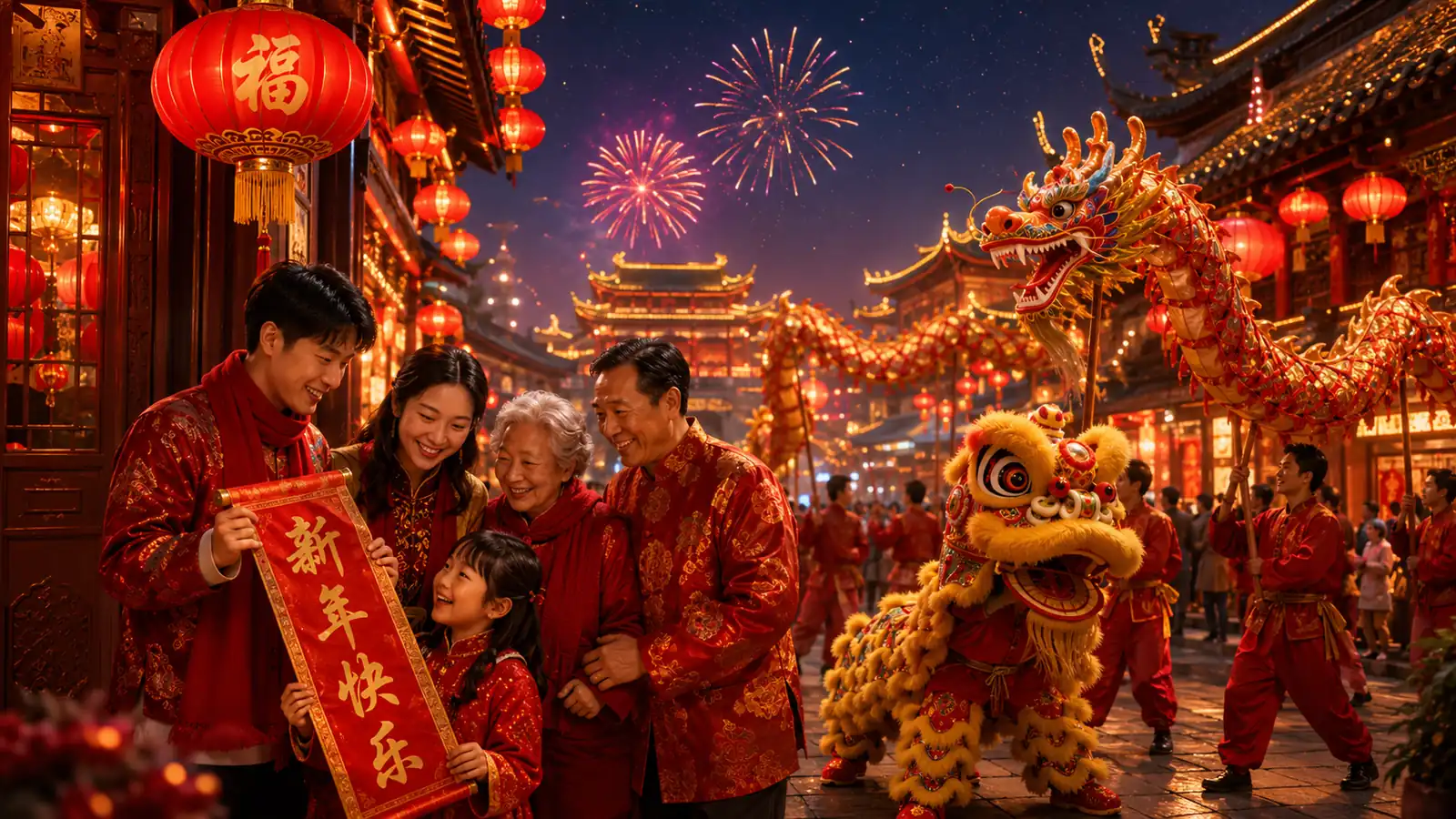
Lion dances and dragon dances are among the most recognizable Chinese New Year performances.
These traditional dances are commonly performed in:
Streets
Temples
Shopping areas
Community celebrations
The lion dance is believed to bring luck and drive away negative energy, while dragon dances symbolize power, strength, and prosperity.
During the festival period, visitors to China can often experience these performances in major cities, historic neighborhoods, and local temple fairs.
Spring Festival Gala: A Modern Chinese New Year Tradition
The Spring Festival Gala (春节联欢晚会), commonly known as the CCTV Spring Festival Gala, has become one of the most watched television programs in China.
Broadcast on Chinese New Year’s Eve, the program features:
Music performances
Comedy shows
Traditional arts
Dance performances
Cultural presentations
For many families, watching the Spring Festival Gala together after the reunion dinner has become a modern part of Chinese New Year’s Eve celebrations.
Traditional Chinese New Year Foods and Their Meanings
Food plays a central role during Chinese New Year celebrations. Many dishes are chosen because their names, shapes, or meanings represent wishes for wealth, happiness, and prosperity.
Different regions of China have their own special foods, but several dishes are widely enjoyed throughout the country.
Dumplings (Jiaozi)
Dumplings are one of the most popular Chinese New Year foods, especially in northern China.
Their shape resembles ancient Chinese gold and silver ingots, so they symbolize:
Wealth
Prosperity
Financial success
Many families prepare dumplings together on New Year’s Eve, making it an important family activity.
Fish (Yu)
Fish is a traditional Chinese New Year dish because the Chinese word for fish, “yu” (鱼), sounds similar to a word meaning surplus or abundance.
Eating fish represents the hope of having:
More wealth
More success
More good fortune in the coming year
A common saying is that there should be “surplus every year.”
Nian Gao
Nian gao (年糕) is a sticky rice cake commonly eaten during Chinese New Year.
The name sounds similar to “higher year,” representing:
Improvement
Career success
Growth
A better future
Tangyuan
Tangyuan are sweet glutinous rice balls traditionally eaten during the Lantern Festival.
Their round shape represents:
Family reunion
Unity
Harmony
They are especially popular in southern China.
Spring Rolls
Spring rolls are another traditional festival food, particularly in southern regions.
Their golden color resembles wealth and symbolizes:
Prosperity
Good fortune
Success
How Chinese New Year Is Celebrated Across China
Because China is a vast country with many ethnic groups and regional cultures, Chinese New Year celebrations are different from north to south.
Although the main themes of family reunion and good fortune remain the same, local foods, performances, and customs create unique experiences in different areas.
Chinese New Year in Northern China
Northern China has some of the strongest traditional Spring Festival customs.
Popular traditions include:
Making dumplings
Visiting temple fairs
Watching lion dances
Enjoying winter festivals
Cities such as Beijing and Xi’an preserve many historical celebrations, where visitors can experience traditional architecture, cultural performances, and festive decorations.
In many northern areas, families also spend time together indoors because Chinese New Year usually arrives during the cold winter season.
Chinese New Year in Southern China
Southern regions often celebrate Chinese New Year with different foods, flowers, and local customs.
Popular traditions include:
Flower markets
Decorative plants
Sweet foods
Temple celebrations
Cities such as Guangzhou, Shenzhen, and Hong Kong are known for colorful Spring Festival decorations and large public celebrations.
Southern China also has unique New Year foods influenced by Cantonese and regional traditions.
Chinese New Year in Rural China
Although modern celebrations in cities are increasingly popular, rural areas often preserve some of the oldest Chinese New Year traditions.
Villages may organize:
Temple fairs
Folk performances
Traditional ceremonies
Family gatherings
For travelers interested in authentic cultural experiences, rural China offers a closer look at traditional Chinese New Year customs that have continued for generations.
Best Places to Experience Chinese New Year in China
China is one of the best places in the world to experience Chinese New Year celebrations because the festival is deeply connected with local culture, history, and daily life.
From ancient temples and traditional performances to modern city celebrations and colorful street decorations, each destination offers a different way to experience the Spring Festival in China.
For international travelers, the best places to visit during Chinese New Year are usually cities that combine cultural heritage, convenient transportation, and unique festival activities.
Chinese New Year in Beijing
Beijing is one of the best destinations to experience traditional Chinese New Year in China.
As the capital city with more than 3,000 years of history, Beijing offers a combination of imperial culture, historic temples, and traditional Spring Festival activities.
During the festival period, visitors can enjoy:
Temple fairs at historic sites
Traditional performances
Red lantern decorations
Lion dances and folk shows
New Year celebrations around ancient neighborhoods
Popular places to experience Chinese New Year in Beijing include:
Temple of Heaven
Longqing Gorge Ice Lantern Festival
Ditan Temple Fair
Hutongs around traditional neighborhoods
Beijing is especially suitable for travelers who want to experience the historical side of Chinese New Year, with traditional architecture and cultural events creating a unique atmosphere.
Chinese New Year in Shanghai
Shanghai offers a different experience, combining traditional customs with a modern city atmosphere.
During Chinese New Year, Shanghai streets, shopping districts, and historic areas are decorated with thousands of red lanterns and festive displays.
Visitors can enjoy:
Yu Garden lantern decorations
Traditional food markets
Cultural performances
Riverside city views during the holiday period
Although Shanghai is a modern international city, many local families still follow traditional customs such as reunion dinners, giving red envelopes, and visiting relatives.
For first-time visitors to China, Shanghai is a convenient choice because it combines cultural experiences with excellent transportation, international services, and famous attractions.
Chinese New Year in Xi'an
Xi’an is one of the best places to experience ancient Chinese culture during Spring Festival.
As the former capital of several Chinese dynasties, Xi’an preserves many historical traditions.
During Chinese New Year, visitors can experience:
Lantern festivals around the ancient city wall
Traditional performances
Temple celebrations
Local festival foods
The Xi’an City Wall is especially impressive during the festival period, when colorful lights and decorations create a traditional New Year atmosphere.
For travelers interested in Chinese history, Xi’an provides a deeper connection to China’s ancient traditions.
Chinese New Year in Chengdu
Chengdu is a great destination for travelers who want a relaxed cultural experience during Chinese New Year.
Known for Sichuan cuisine, tea culture, and giant pandas, Chengdu combines modern city life with traditional celebrations.
During Spring Festival, visitors can enjoy:
Temple fairs
Sichuan food experiences
Lantern displays
Local cultural performances
Chengdu is also a good option for families because it offers a slower travel pace compared with China’s largest cities.
Chinese New Year in Guangzhou
Guangzhou is one of the most famous places in southern China for Spring Festival celebrations.
The city is known for:
Flower markets
Cantonese New Year traditions
Colorful decorations
Traditional foods
Before Chinese New Year’s Eve, many local residents visit flower markets to buy plants and flowers symbolizing happiness, prosperity, and good luck.
Guangzhou is ideal for travelers who want to experience the unique customs of southern China and Cantonese culture.
Traveling in China During Chinese New Year
Many travelers wonder whether they should visit China during Chinese New Year.
The answer depends on the type of experience you want.
Chinese New Year is one of the most culturally interesting times to visit China, but it is also one of the busiest travel periods of the year.
Advantages of Visiting China During Chinese New Year
Experience Authentic Chinese Culture
Chinese New Year is when many traditional customs become part of everyday life.
Visitors can see:
Families preparing festival foods
Streets decorated with red lanterns
Temple fairs
Traditional performances
Local celebrations
For travelers interested in Chinese culture, this period provides experiences that are difficult to find at other times.
Enjoy Festive Atmosphere
During the festival period, cities across China become colorful and lively.
Shopping areas, parks, temples, and historical attractions often feature:
Lantern displays
Cultural performances
New Year decorations
Special events
The atmosphere is very different from a normal travel season.
Things to Know Before Visiting China During Spring Festival
The Spring Festival Travel Rush (Chun Yun)
The biggest challenge is Chun Yun, or the Spring Festival travel rush.
Millions of Chinese people travel home during this period, making it one of the largest annual migrations in the world.
Transportation can become extremely busy:
Train tickets sell quickly
Airports are crowded
Popular routes may have limited availability
Travelers should book transportation early whenever possible.
Some Businesses May Close
Because Chinese New Year is a major family holiday, some small businesses, restaurants, factories, and local shops may temporarily close.
However, major tourist attractions, hotels, airports, and transportation services usually continue operating.
Large cities such as Beijing, Shanghai, and Guangzhou generally remain convenient for visitors.
Higher Travel Costs
During the peak holiday period:
Flights may become more expensive
Hotels in popular destinations may increase prices
Transportation demand is higher
Booking early is recommended, especially for popular destinations.
Is Chinese New Year a Good Time to Visit China?
Chinese New Year can be an excellent time to visit China if you want to experience authentic traditions and cultural celebrations.
It is especially suitable for travelers who enjoy:
Local culture
Festivals
Photography
Traditional food
Historical attractions
However, travelers looking for quiet sightseeing or lower prices may prefer visiting China outside the Spring Festival period.
The best approach is to plan carefully, choose destinations wisely, and allow extra time for transportation.
Chinese New Year Around the World
Although Chinese New Year originated in China, it is now celebrated by Chinese communities around the world.
Large celebrations can be found in:
Southeast Asia
Western countries
Chinese communities worldwide
Countries such as Singapore and Malaysia recognize Chinese New Year as a public holiday, while cities including Sydney, London, and New York host large cultural celebrations.
However, experiencing Chinese New Year in China remains the most complete way to understand the traditions, family values, and cultural meaning behind the festival.
Plan Your Chinese New Year Trip to China
Experiencing Chinese New Year in China offers a rare chance to see one of the world’s oldest cultural traditions in its original setting.
From the excitement of Chinese New Year’s Eve, the warmth of family reunion dinners, and the beauty of red lantern decorations to temple fairs, traditional foods, and regional celebrations, the Spring Festival reveals the heart of Chinese culture.
If you are planning to visit China during this special period, choosing the right destination and arranging transportation early can help you enjoy a smoother and more memorable journey.
Explore more China travel ideas:
Chinese Zodiac and Year of the Goat traditions
Chinese New Year 2027 guide
Best time to visit China
China private tours and customized itineraries
Frequently Asked Questions About Chinese New Year in China
When is Chinese New Year in China in 2027?
Chinese New Year in China will begin on February 6, 2027. According to the Chinese zodiac calendar, 2027 is the Year of the Goat.
The date changes every year because Chinese New Year follows the Chinese lunisolar calendar rather than the Gregorian calendar.
How long does Chinese New Year last in China?
Traditionally, Chinese New Year celebrations last for 15 days, beginning on Chinese New Year’s Eve and ending with the Lantern Festival.
The official public holiday period is shorter, but many traditions continue throughout the lunar new year period.
Why is Chinese New Year important in China?
Chinese New Year is the most important traditional festival in China because it represents family reunion, new beginnings, respect for ancestors, and hopes for good fortune in the coming year.
For many Chinese families, the reunion dinner on New Year’s Eve is the most important gathering of the year.
How do Chinese people celebrate Spring Festival?
Chinese people celebrate Spring Festival through family gatherings, reunion dinners, red envelopes, fireworks, decorations, temple visits, lion dances, dragon dances, and traditional foods.
Customs vary by region, but family and good fortune remain the central themes.
Is China closed during Chinese New Year?
China does not completely shut down during Chinese New Year.
Government offices, schools, and many factories usually close during the public holiday period, but airports, hotels, transportation services, and major tourist attractions continue operating.
Some smaller businesses may close temporarily while families celebrate the festival.
What is the best place to experience Chinese New Year in China?
The best place depends on your interests.
Beijing is ideal for traditional celebrations and historical culture.
Shanghai offers modern city celebrations with traditional elements.
Xi’an is excellent for ancient Chinese culture.
Chengdu provides a relaxed cultural experience.
Guangzhou showcases southern Chinese New Year traditions.
Get Inspired with Some Popular Itineraries